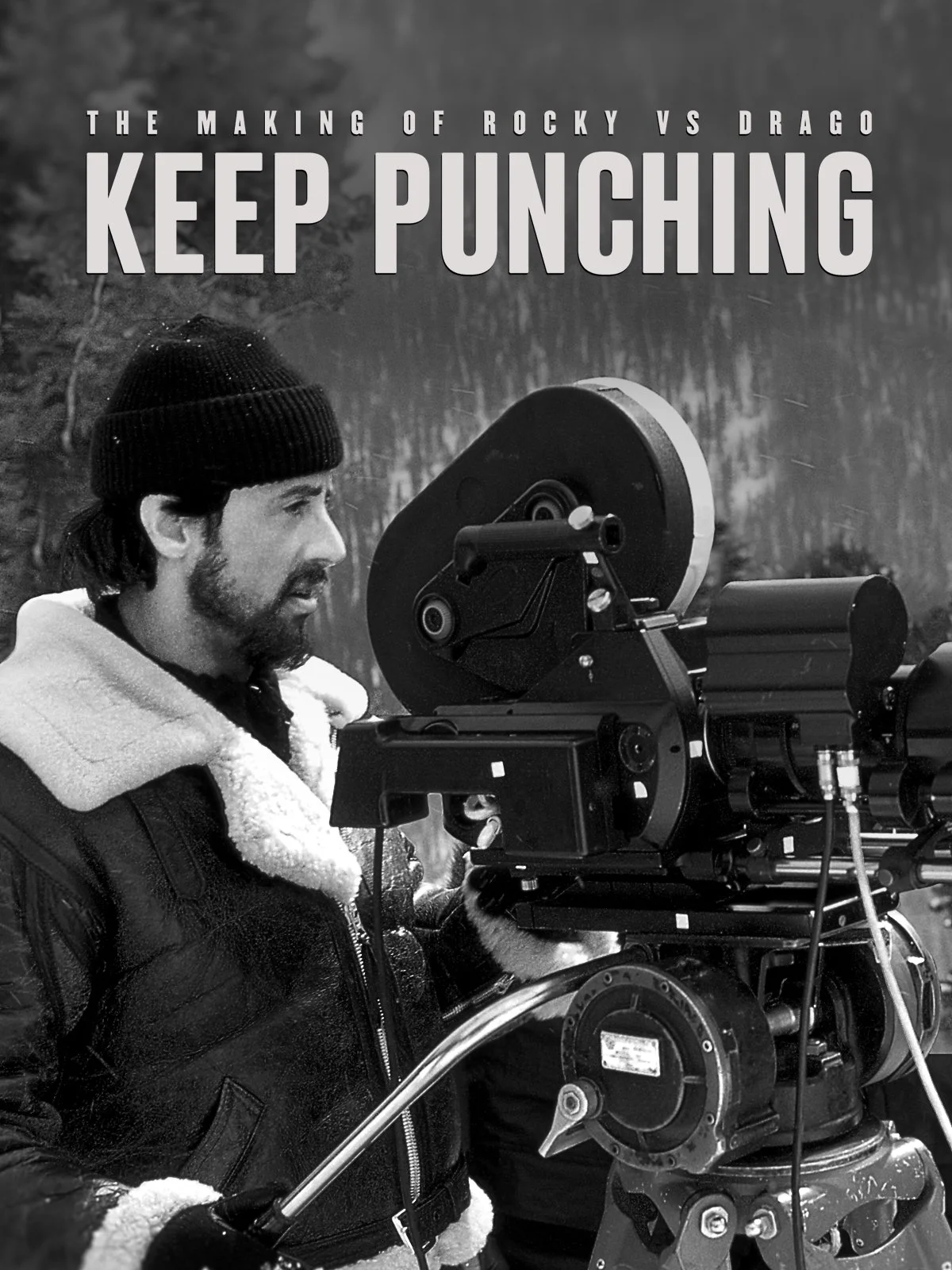
KEEP PUNCHING: THE MAKING OF ROCKY VS. DRAGO (2021)
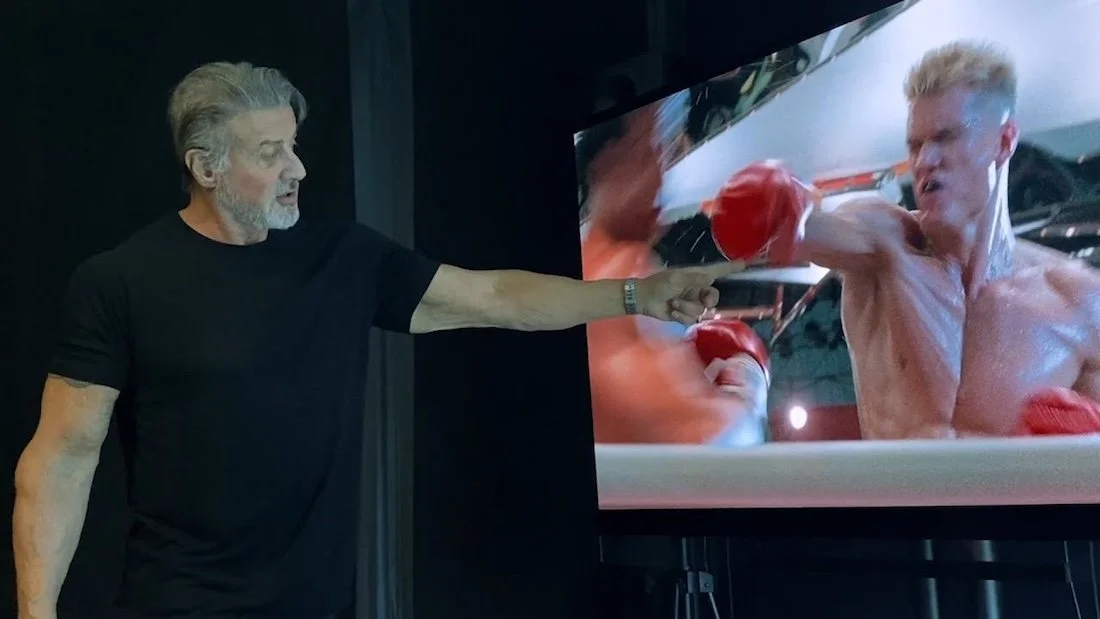
“In my life, as you walk forward, the ground behind you disintegrates, so there is no retreat,” says Sylvester Stallone on a break from re-editing a film he directed 35 years prior. “You either walk forward or you cease to exist.” For any other documentary dedicated to any other subject, that might seem like a cheap shot, but there is no separating latter-day Sly from his inveterate self-mythologizing. Not even the title is safe from the gym-rat koan that trails most of his Instagram posts like a bumper sticker — KEEP PUNCHING. If you want more of that, just look up any given interview with the man post-ROCKY BALBOA, watch Netflix’s buttoned-up answer to this, or reserve his upcoming autobiography, which swaps Rocky imagery for The Steps: A Memoir. What separates this wheat from so much late-show chaff is that Stallone isn’t here to tell the same old stories about his birth-defected smirk or dispense boxing-inflected philosophy. He still does, mind you, but in KEEP PUNCHING, they are involuntary reflexes, flop-sweat dabbed away by friend and director John Herzfeld, who’s heard it all before and more than most. This is not a behind-the-scenes documentary so much as a social experiment to see what would happen if 75-year-old Sylvester Stallone were trapped in a charmless editing suite over Sunset Boulevard with his 39-year-old self, as pretty, powerful, and pompous as he ever was.
“Obviously,” he admits, “I pontificate and vocalize a lot more now.”
The result is 93 minutes of Stallone pounding at one-way glass like McConaughey in INTERSTELLAR, desperately hoping that oiled-up master of the universe on the other side can hear even one of his slogans: “People don’t leave crumbs on the table, they leave entire banquets.” But the banquet in question, ROCKY IV: ROCKY VS. DRAGO – THE ULTIMATE DIRECTOR’S CUT, is held mostly out of frame. Its 40-some altered minutes, over half of the original and altered runtimes, are mostly explained in the abstract, not what he’s changing but why. Apollo Creed’s fatal pride takes center stage over Rocky’s Lambo-brand complacency. Every surviving frame of Dolph Lundgren’s performance is painstakingly scrutinized for first-timer wobbles, turning a Soviet golem into Frankenstein’s misunderstood monster: “Dolph, you owe me.” And, yes, Paulie’s life-partner robot has been returned to the great Sharper Image in the sky, a decision its creator blames on thwarted SAG checks. The writer-director-star-turned-editing-guru (original editors Don Zimmerman and John W. Wheeler go unmentioned, new editor Dov Samuel hides in a corner) neither confirms nor denies that but does offer a dispassionate eulogy: “We’re having a ROCKY IV yard sale.”
It’s tempting to say that Sylvester Stallone hates ROCKY IV. Nowhere does the film establish who asked who, between him and MGM, to field-strip the highest-grossing film in the entire franchise for its 35th anniversary, but given his flagellation and the scope of changes made, which does strain the studio’s allotted budget, Sly must’ve been losing sleep about this for a while. Everything that immortalized it as the most potent cultural artifact of Reaganite America—cartoonish Cold War propaganda, fetishized extremes of the semi-nude male form, clean 1.85:1 framing fit to be panned and scanned on VHS, a Billboard-charting soundtrack with multiple MTV videos ready-made in the edit—has aged into an affront for the auteur responsible. Stallone does concede that, whether or not his 1985 counterpart noticed, the film was an experiment in montage but just as quickly denounces it as a failed one, rejecting all historic context for his choices and value for the result. Not even its “classic ‘80s saturation” survives unscathed, a contemporary standard written off as a modern eyesore. To the older man, the younger’s unforgivable sin was using the blankest check of his career to make pop art instead of a proper sequel.
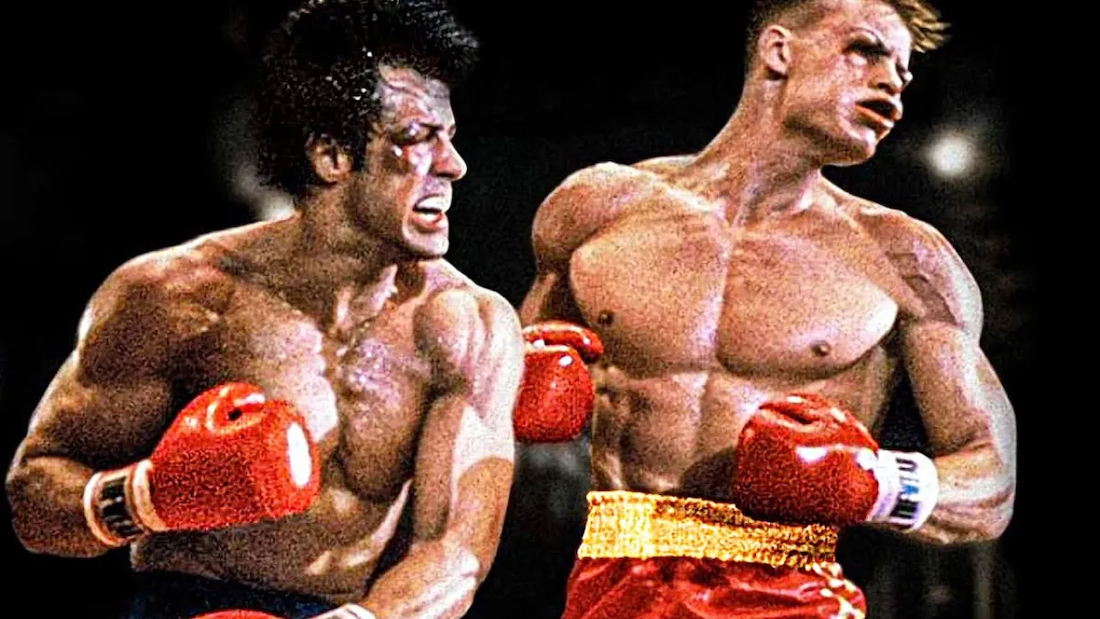
Of the few that he shares, Stallone’s fondest memory of the shoot seems to be when he almost died. Lundgren obliged his request to “take [him] apart” during the climactic bout and nearly exploded his heart, resulting in a nine-day hospital stay and two-week halt in production. He offers no reflection on death as it loomed then or now besides a momentary pause, then bounces back to finish the fight in both past and present. To him, the creative process, expression itself, is pain. Rockyonly exists because of his self-destructive belief in him, betting a non-existent Hollywood career that nobody else could play the part better, which means Sylvester Stallone as we know him only exists because of Rocky. Without a sweat to break, without a speedbag to pound, without a reason to fight, both are lost. In Herzfeld’s other behind-the-scenes documentary about his college pal, INFERNO: THE MAKING OF THE EXPENDABLES, the 64-year-old writer-director-star claims he’s doing all his own stunts to show his daughters who their dad used to be. Considering they were alive during the productions of ROCKY BALBOA and RAMBO, films literally and thematically predicated on proving their dad was still who he used to be, he didn’t rack up seven debilitating back surgeries just for better Father’s Day presents.
With ROCKY IV, Sylvester Stallone was king of the world. It matched the box office of his other 1985 sequel, RAMBO: FIRST BLOOD PART II, tying them as the highest-grossing star vehicles of his entire career. He had nothing to prove but did it anyway. And that’s why it bothered him for 35 years—there are no steps to run up when you’re already at the top.
KEEP PUNCHING: THE MAKING OF ROCKY VS. DRAGO BY SYLVESTER STALLONE closes the loop on the original series and does what special effects never could’ve by finally pitting Rocky against Rocky. Sylvester Stallone only knows creative fulfillment with a fist in his face and faced no contenders in ’85, so now he’s throwing the overdue punches himself. A “pathetic” continuity error is scrubbed without ever considering that it might’ve been chosen for emotion over accuracy. He squeezes silent frustration into a spring clamp while watching an alternate take that’s still too over the top for his modern sensibilities. The same handheld tic slows to a heartbeat during the fights like a subconscious ritual, trying to pump his blood back into the film itself. There is no quieter poetry than watching his septuagenarian frame, chest permanently puffed from the aforementioned surgeries, helplessly swiveling in tune with the younger man’s punches. “Imagine,” he beams, “getting a shot to re-edit your life.”
The line between Rocky and Sly, art and artist, has never been blurrier than this. Considering that he happily left directing behind with THE EXPENDABLES and has no further plans for Special Editions of his legacy, I suspect this is the last we’ll see of Sylvester Stallone, filmmaker. He is, by turns, self-serious and self-effacing, lyrical and confounding, tough as nails and too sentimental for his own good. By the end of this, he’s just an old man slumped on his couch, merrily and badly singing along to James Brown’s “Living in America.” And in that moment, it’s harder than ever to tell who you’re looking at.