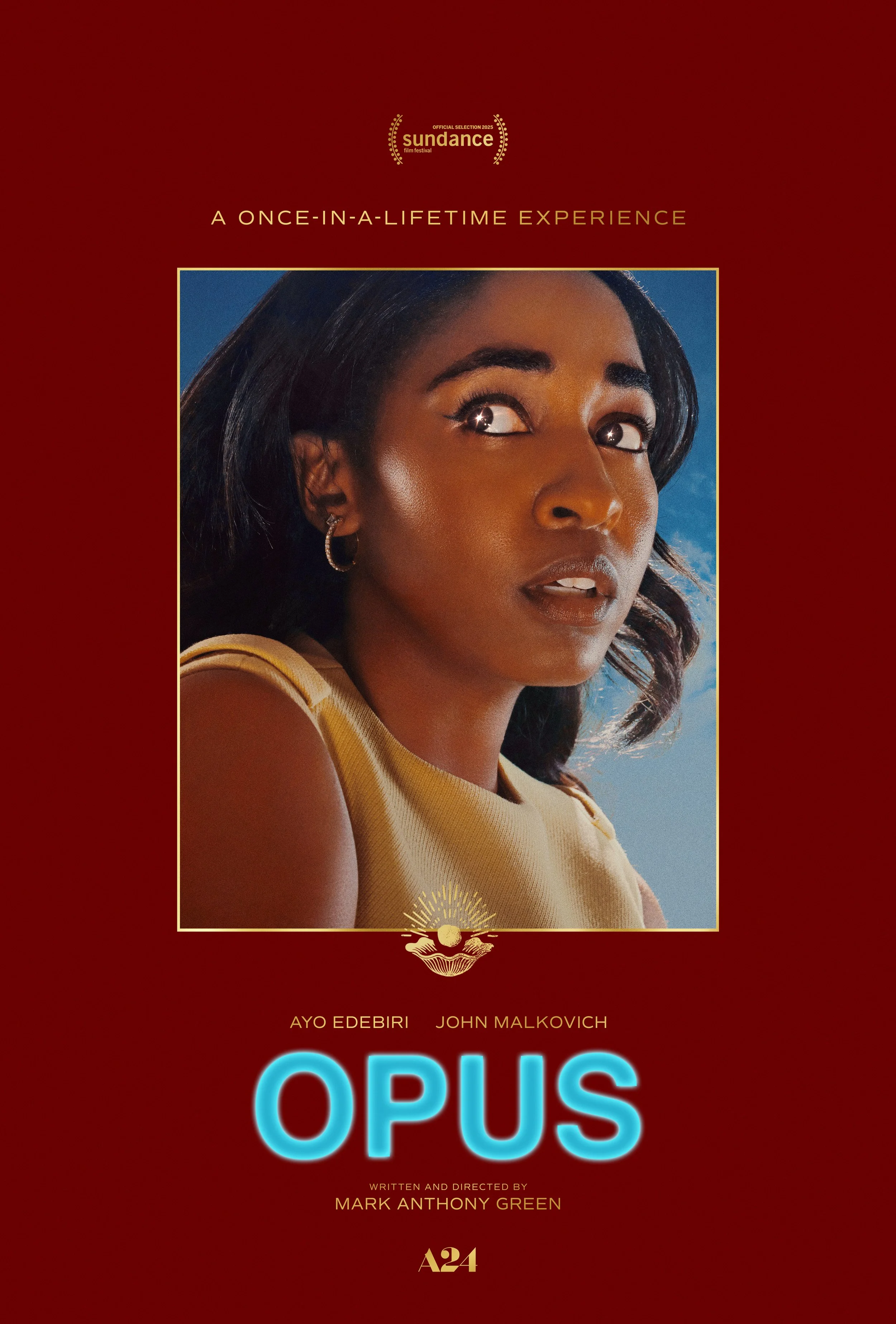
People judge OPUS harshly. The 2025 film bombed at the box office despite an all-star cast and large budget. Reddit and YouTube have accused it of being a less-complex take on THE MENU. I feel that it was an intended horror satire released at the wrong time. Yet the satire is exactly why more people should watch it.
We aren’t ready for a film like OPUS. It blatantly criticizes celebrity culture and how we let certain creators get away with terrible acts because their art is “great”. Instead of Roman Polanski fleeing the country and charges of statutory rape, we have a fictional Alfred Moretti taking advantage of celebrity worship and journalist fascination to spread his gospel.
The Album Release of a Lifetime
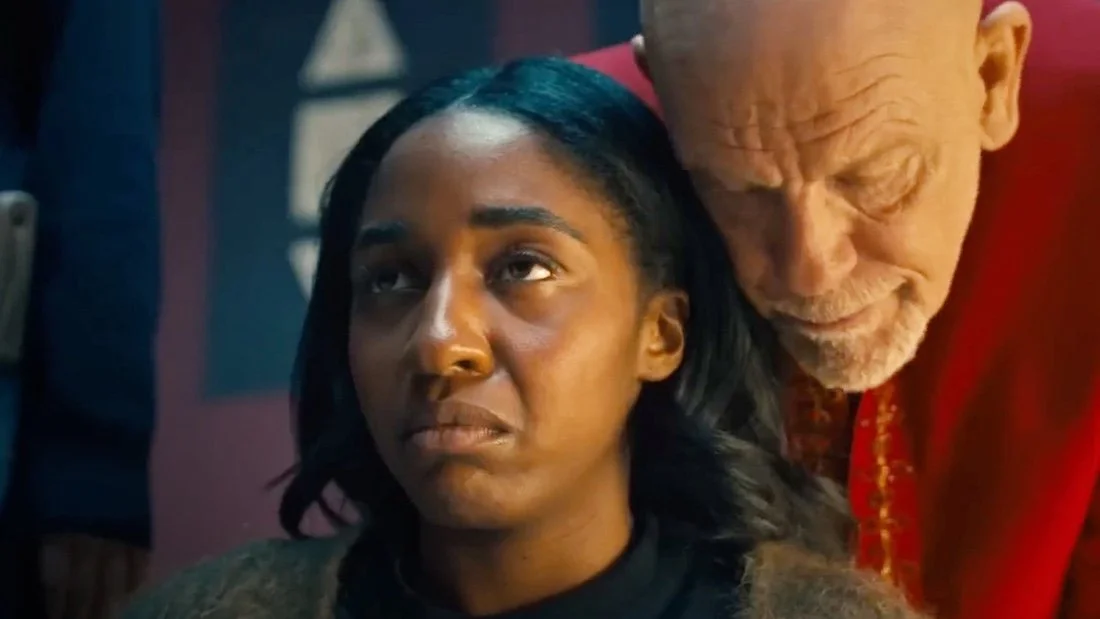
Ariel Ecton has done many fluff pieces for her paper but nothing with substance. Her boyfriend says it’s because she has no “life experience” and “nothing interesting to say,” which is quite a thing to tell a woman of color. Still, Ariel considers her options as exclusive and reclusive pop musician Alfred Moretti invites her and her boss Stan Sullivan to the release of his first album in ten years. They’re both surprised, as Ariel doesn’t have many publications under her belt. Not for lack of trying, but she’s small potatoes compared to Stan’s decades of experience. Stan introduces her to the other media guests: influencer Emily Katz, paparazzo Bianca Tyson, shock jock turned podcaster Bill Lotto, and talk show host Julie Armstrong. They have all met Moretti before or encountered him. Though each seems prickly, they remain civil with Ariel.
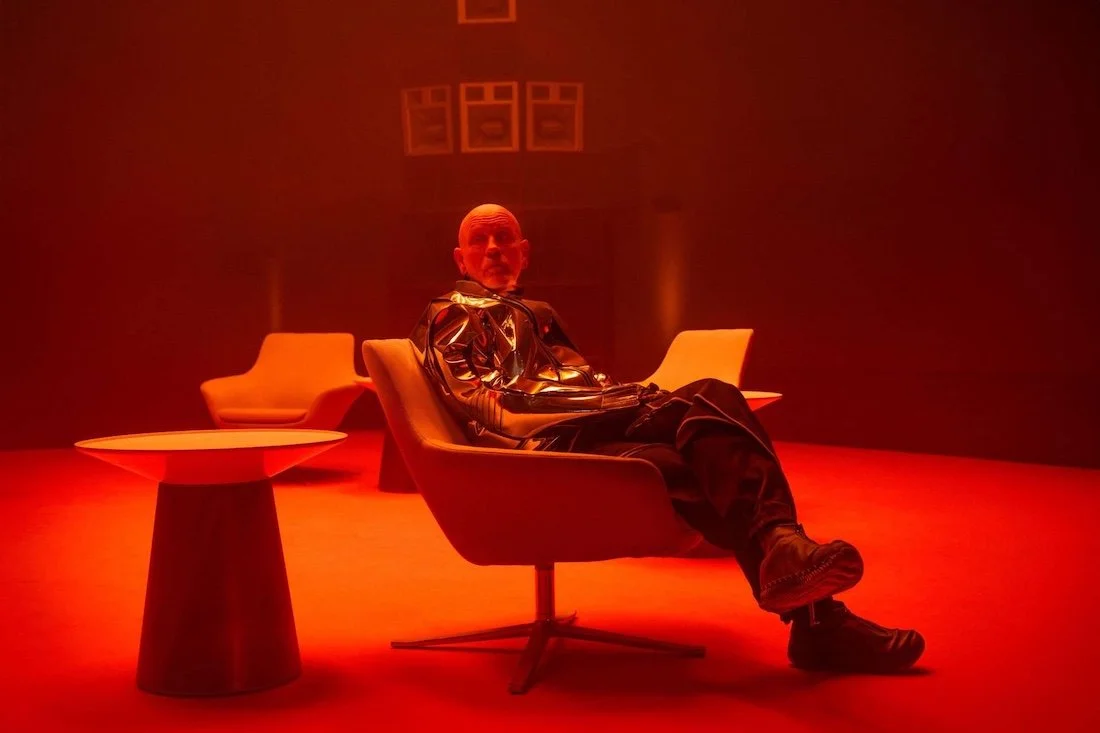
Stan asks Ariel to take notes for his feature piece on the album. Ariel records mini-concerts and the desert compound where Moretti and his Levelist followers live. She gets weirded out by the little rituals, like everyone taking a bite out of a large bread roll over dinner and a stylist shaving her bikini area. Ariel also questions how the Levelists confiscated everyone’s phones and laptops and how two media people disappeared over several days. Stan dismisses her worries, while everyone else bathes in Moretti’s glow. The glow obliterates obvious red flags and Ariel’s growing dread.
The Distance from Celebrity
Ariel doesn’t have the same attachment to Moretti that her boss and fellow media visitors do. She doesn’t sing along to his music in karaoke bars or long for the “old” days. Sure, she’s impressed by the wardrobe and concierge everyone receives; anyone would be. She does wonder, however, what his game is with this exclusive album release.
Moretti knows Ariel doesn’t buy into his star power. Far from warning her to stay away from his secrets, he seems intrigued and amused. He shows her different Levelist activities, reads over her shoulder and corrects her spelling. Ariel gets the creep vibes, even as she appreciates the music and dedication to children’s education.
Without spoilers, Moretti invited Ariel for a reason. The man wanted a writer who was a mirror rather than a character in her own story.
Why Is Ariel Our Narrator?
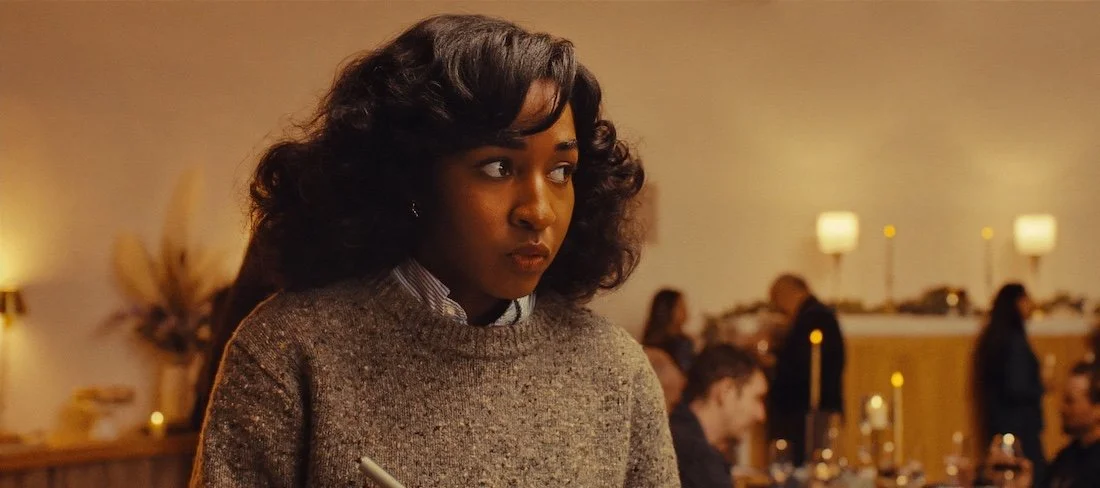
I don’t think it’s fair to say that Ariel’s writing style lacks substance. We don’t even see or hear her writing. Two people in the movie profess that judgement: the guy she’s dating and Moretti. Stan finds her writing decent but her notetaking better.
The movie infers that Ariel reports facts without an angle. She tells the truth based on observations, detailed notes, and research. While annoyed that the Levelists took her phone and laptop, she bounces back with a notepad. Her observations and neutral angle mean that she can serve as an audience surrogate. It means, however, that she can’t become a protagonist in her story. And Moretti takes advantage of that.
Moretti Believes in his own Hype
Near the climax, Moretti waxes poetic about how the paparazzi hound the rich and famous about their lives, warts and all. Apparently, everyone he invited except for Ariel has used their media influence to insult him. It didn’t matter if it was as small as noticing a bald spot or as large as mocking his grief for a dead pet; they were dead the minute they sent RSVPs.
This speech would have greater weight if not for one thing: Moretti has never had huge scandals. He’s had a few moments where the compound visitors mocked him, but no drugs, adultery, or grooming. The man isn’t even married.
Thus, it feels very absurd that he responds to relatively small insults with violence. His ultimate intention doesn’t diminish his fragile ego. Yet for Moretti to accept the insults, he’d have to accept he’s not a god. For him, being mortal is not an option.
What makes Moretti terrifying is that he truly believes he is the good guy. He has the right to lure six people from newspapers, television, podcasts and social media for this violent weekend. Moretti might have been a decent man once, but he is no longer.
Breaking Away from Celebrity Allure
SPOILER WARNING for the end of the movie.
The end of OPUS hammers home how Moretti manipulated his celebrity image. Revenge wasn’t his sole intention. He intended Ariel to escape, with stylist Rachel letting her go. Ariel does the sensible thing as soon as she gets to civilization offscreen: send the cops and stay far away from Moretti or his contacts.
Moretti knew very well that he’d still have fans despite having committed murder. (He’s sadly right, as many killers gain celebrity status or retain it. We don’t even need to cover just how many actors were cleared of manslaughter.) When Ariel writes a book about her traumatic experience, he invites her for one last prison chat. It’s not a confession that she expects; he tells her he didn’t kill the Levelists. They vanished, gained new identities, and are spreading his word.
No, his confession is a boast. Moretti tells Ariel he saw a blank slate who wrote the facts. Ergo, her immunity to his allure meant she didn’t see her book would send the wrong message. Those who love Moretti would take up the Levelist credo. True-crime enthusiasts reading the book would find it fascinating.
Ariel is horrified, and more troubled when seeing a TV talk show host wearing a Levelist necklace during an interview. She created a monster while trying to do her job as a journalist and has become complicit rather than atoning for surviving.
The message is clear: giving any red-flag celebrity attention is a bad idea. Ariel had good intentions ample trauma, but she gave into temptation. She played right into Moretti’s hands.
There is no easy answer to ending celebrity worship. Most people have their pedestals or guilty pleasures. But OPUS provides a cautionary tale about how we need to get celebrity worship in check. If we don’t, the dead bodies and ruined lives will only pile up further.