
TALES FROM THE HOOD (1995)
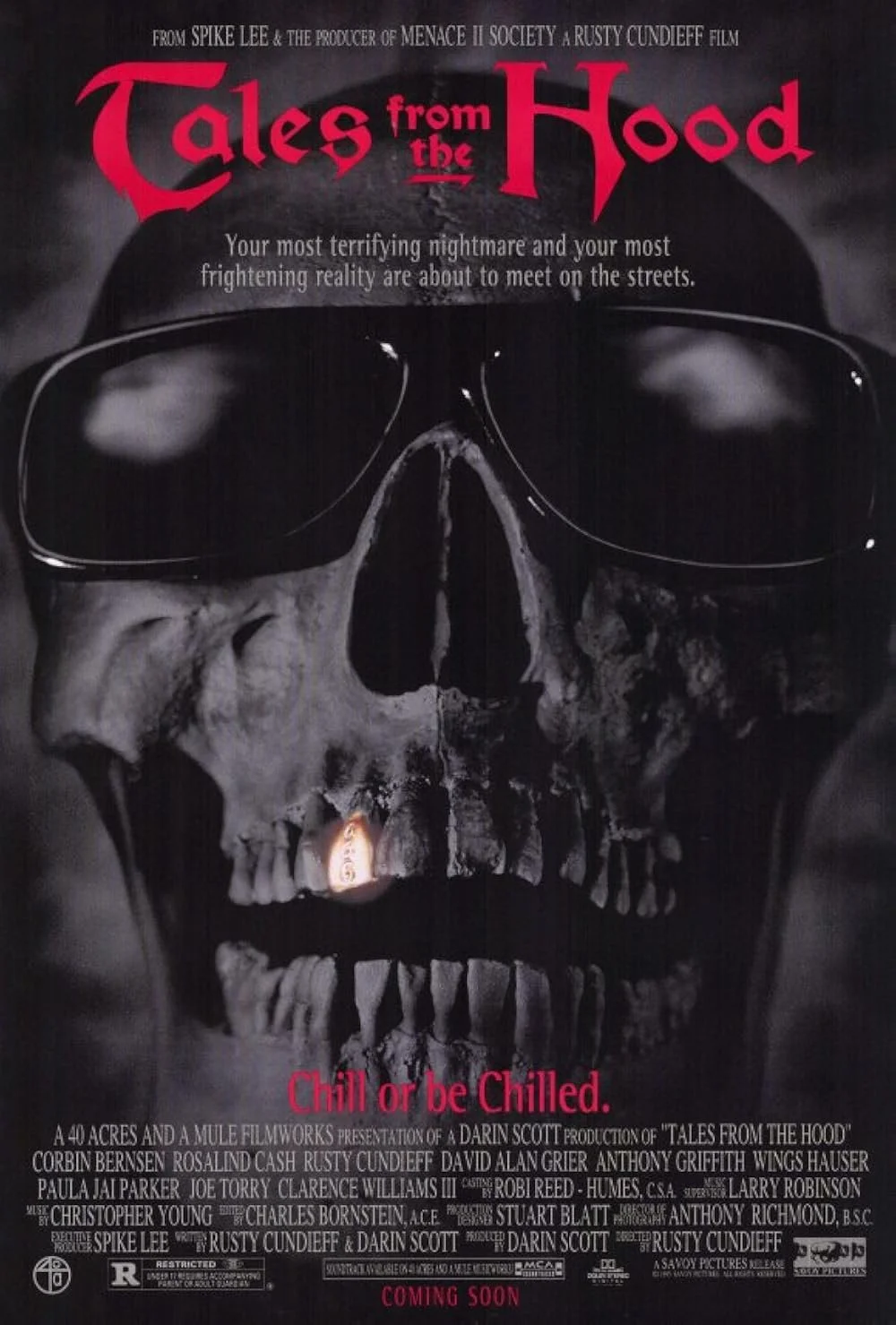
I believe Rusty Cundieff’s TALES FROM THE HOOD is one of the most disrespected films of my lifetime. The movie was released on May 24, 1995, but still flies under the radar of many alleged film critics. Meanwhile, the few who did see it are the reason it is just now reaching 58% on Rotten Tomatoes. The rating used to be lower, and that is why I set my sights on becoming a Rotten Tomatoes-approved critic. This seminal film is one of many examples of Black art suffering under the predominately white field of criticism. It skillfully tackles topics like police corruption, domestic abuse, racism, and gang violence—all topics that are still relevant today. However, it is made by Black folks, and it investigates how various systems fail us instead of offering nonstop Black trauma porn for white audiences. So, it was never going to go over well with people who do not want to see us as human.
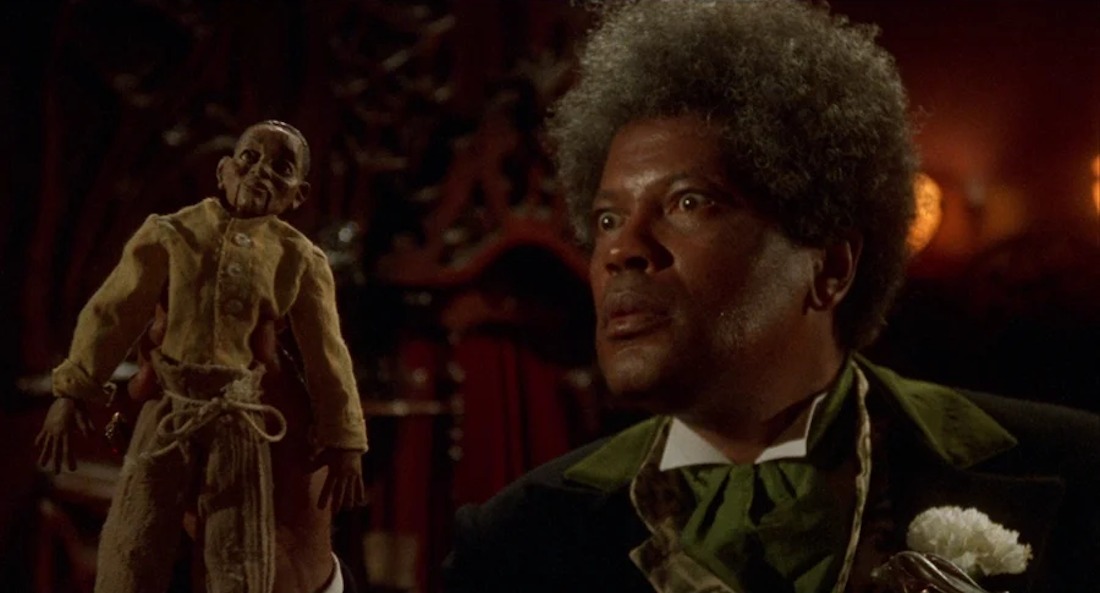
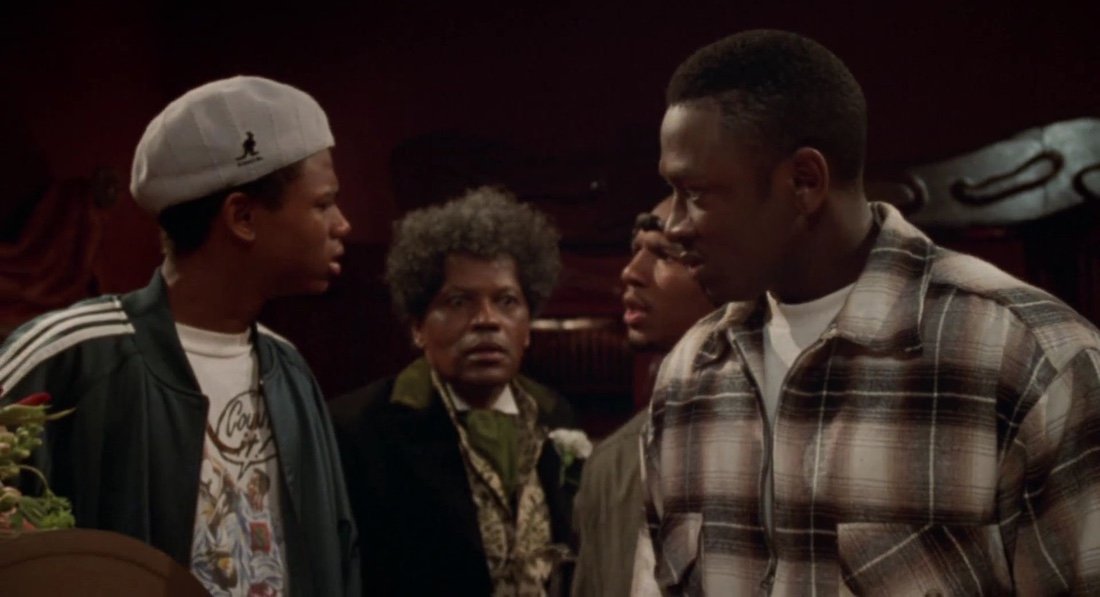
What Cundieff does with this anthology should be studied. The film consists of four segments woven together with a strong wraparound story. The prologue introduces us to Stack (Joe Torry), Bulldog (Samuel Monroe Jr.), and Ball (De'Aundre Bonds). They are three young men looking to pick up drugs from Simms’ Funeral Home, where they meet the eccentric Mr. Simms (Clarence Williams III). Simms takes the three men through the funeral home, telling them stories of revenge and broken systems. The morals of the stories are lost on the men who want to complete this drug deal and get on with their evening. However, when the last story strikes a nerve, things escalate. We get a chaotic (and highly quotable) ending that shook me and my siblings during our childhood. The final moments cemented TALES FROM THE HOOD as one of the best horror anthologies in my mind. It also confirmed it had the best (and one of the most cohesive) wraparound stories in the genre.
From the introduction of Simms’ funeral home to the end credits, TALES FROM THE HOOD is the kind of cinematic experience many of us dream of. The first story, "Rogue Cop Revelation," sees crooked cops get dealt supernatural consequences for their murderous deeds. It is followed by "Boys Do Get Bruised," which tells a story of domestic abuse and sees Rusty Cundieff step in front of the camera to play a concerned teacher (who is bad at his job). This story sticks out in my mind because how many abused kids get the power to take down their abusers? However, the third story, "KKK Comeuppance," about a racist politician in a plantation home, is what shook my generation. While we were stuck on the dolls causing chaos, we were also sadly getting notes about what it would be like to live in our current political climate.
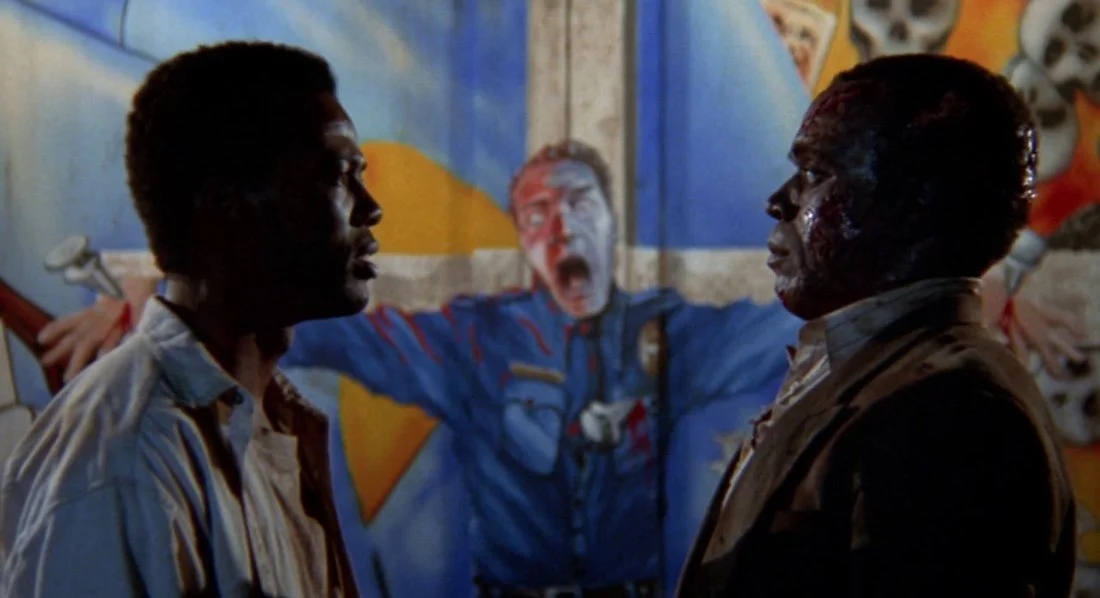
While I love the entire movie, it’s the fourth story that is my least favorite. "Hard-Core Convert" is as good as the other stories and possibly the most effective of the segments. I have also had the pleasure of listening to Cundieff share stories of young men who told him they left gang life behind them because of this story. As an aspiring screenwriter, I get why this is the perfect final story. It connects to the wraparound, and it pulls the air out of the room by refusing to let us laugh anymore. This is where TALES FROM THE HOOD shouts its thesis loudest for the people in the back. It utilizes real images of American racism and challenges the protagonist to change his ways before it's too late. We had an interesting chat about this segment on my podcast, where we discussed how Jerome "Crazy K" Johns (Lamont Bentley) was another person the system failed. However, in return, he is failing his community and harming innocent people, which makes it hard to root for him.
Aside from TALES FROM THE HOOD giving the audience much to chew on and just being that girl, it also allowed so many Black actors to show their range. The late Clarence Williams III serves an almost Doctor Who-level eccentricity that was denied to Black actors in that era. As a whovian, I can confirm that the show is another institution that is a predominantly white field. Williams makes Mr. Simms one of the most compelling characters I had ever seen on screen as a child. Every movement, vocal inflection, and even his posture was an event as he led his company through the funeral home looking for “the shit.” His performance is fun and dangerous. It sheds light on another Black actor who deserved even more than what he was able to squeeze out of the industry.
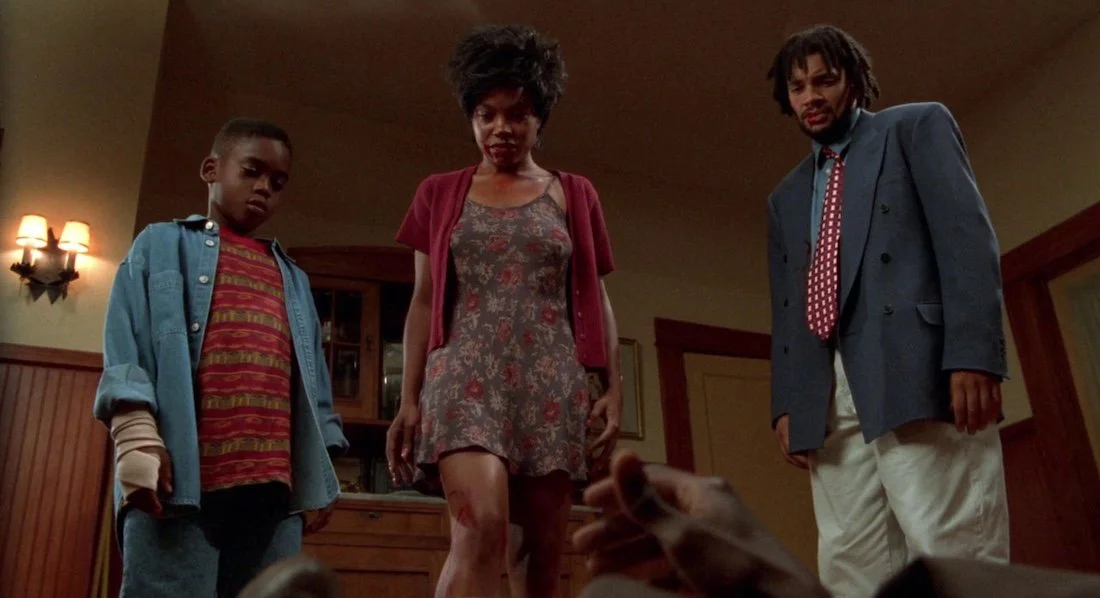
Another actor that stands out in TALES FROM THE HOOD is David Alan Grier. While the film is filled with comedians who get to prove they have range, it’s Grier who had the most shocking turn as Carl in "Boys Do Get Bruised." Coming off of IN LIVING COLOR and movies like BLANKMAN, I had come to expect Grier to be the person to make me laugh no matter what was going on. So, seeing him be the abuser/monster was the hugest shock of the movie for me as a child. I am always hoping he gets more serious roles because of it, as I feel this is just the tip of the iceberg of what he is capable of. While we all need a laugh, I want to see him do more sinister stuff. Like most Black actors, he has seemingly gotten shoved into a box to avoid giving him more opportunities.
TALES FROM THE HOOD is arguably the best (and most important) horror anthology in the canon. Many anthologies, including its own sequels, have tried and failed to capture the magic of this film. This is part of the reason I almost had an aneurysm when people celebrated THE MORTUARY COLLECTION but had never "gotten around” to Cundieff’s masterpiece. While I think THE MORTUARY COLLECTION is fun enough, its wraparound story made me think of TALES FROM THE HOOD. This film imprinted on me at an early age, and I am always shocked at how many horror fans assumed it was a horror-comedy they could skip over. Ironically, many of those same people watch horror comedies with white leads all the time. People's subconscious bias regarding the movie has turned me off from many individuals who love to scream that the horror community is inclusive.
I could gush about TALES FROM THE HOOD and how it deserves your time and attention all day. However, I hope you watch (or rewatch) it on this side of its 30th anniversary. Not just because I think it’s one of the best (and most important) movies I have ever seen. You should watch it because it opened the door for so many of the Black horror movies we love today. The film was a huge turning point from what came before it, such as SUGAR HILL (1974), BLACULA, and ABBY. Without TALES FROM THE HOOD, we wouldn’t have gotten GET OUT, THE BLACKENING, and so many more Black horror movies that found a place in the mainstream. It’s an important moment in horror history as well as Black cinema, and it should be required viewing for anyone who loves film.