CLIFFORD (1994)
For every move there is a counter. Each attack has a defense. Within the confines of this digital dojo we defend underloved works of art. It has been said that all art will eventually find its audience. We are that audience. Bow to your media. Bow to your device. Choose your fighter.
“From the beginning of time, children have dreamed of exciting and perilous adventures. Although the adventures are exciting for the children, they can be perilous for adults. This is one such story…”
“Grunkle Vito…” I hit pause. “Is the entire movie gonna be like this?” The year is 2050 and in utter defiance to good health, good taste, and god’s will, I am alive and showing my grandnephew one of my favorite films from when I was about his age.
“Like what?” I respond curtly. “Awesome?” Clearly not demonstrating the patience and understanding expected when discussing media with a child.
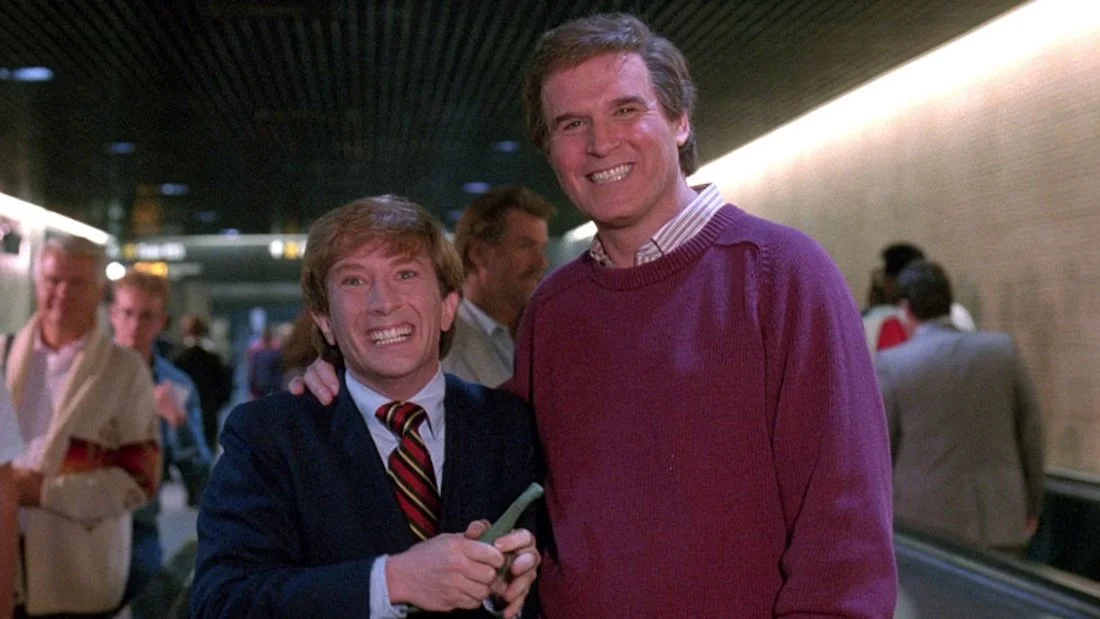
“It’s just so silly. I mean, is that short guy like 40? Why is he playing a 10-year-old? Why does he look so creepy? What’s a Walkman?”
“Wait. Just wait,” I grumble.
“Why are you dressed like a priest too? Are we Catholic?”
“What? No, we’re not Catholic. This is a film accurate cassock-style trench coat like Neo wore in THE MATRIX RELOADED (2003)!”
“But when does this movie get good?”
“Keep your future shirt on and let me watch.”
IMDb: 5.6 out of 10
Rotten Tomatoes: 20% Tomatometer / 67% Popcornmeter
Metacritic: Did not receive enough positive or mainstream reviews to calculate a Metascore
Letterboxd: 3.2 out of 5
Roger Ebert, the elder statesman of Chicago cinematic criticism, famously quipped “What we have here is a suitable case for deep cinematic analysis. I’d love to hear a symposium of veteran producers, marketing guys, and exhibitors discuss this film. It’s not bad in any usual way. It’s bad in a new way all its own. There’s something extraterrestrial about it, as if it’s based on the sense of humor of an alien race with a completely different relationship with the physical universe. The movie is so odd, it’s almost worth seeing just because we’ll never see anything like it again. I hope.” Now I’m no veteran producer or marketing guy but maybe we can consider this document the opening salvo in a bigger conversation and eventual scholarly symposium featuring real power players pointing out playfully prolific productive peculiarities of the maniacal motion picture marvel, CLIFFORD (1994)! No, I’d tell you if I was having a nervous breakdown. This movie sparkles so!
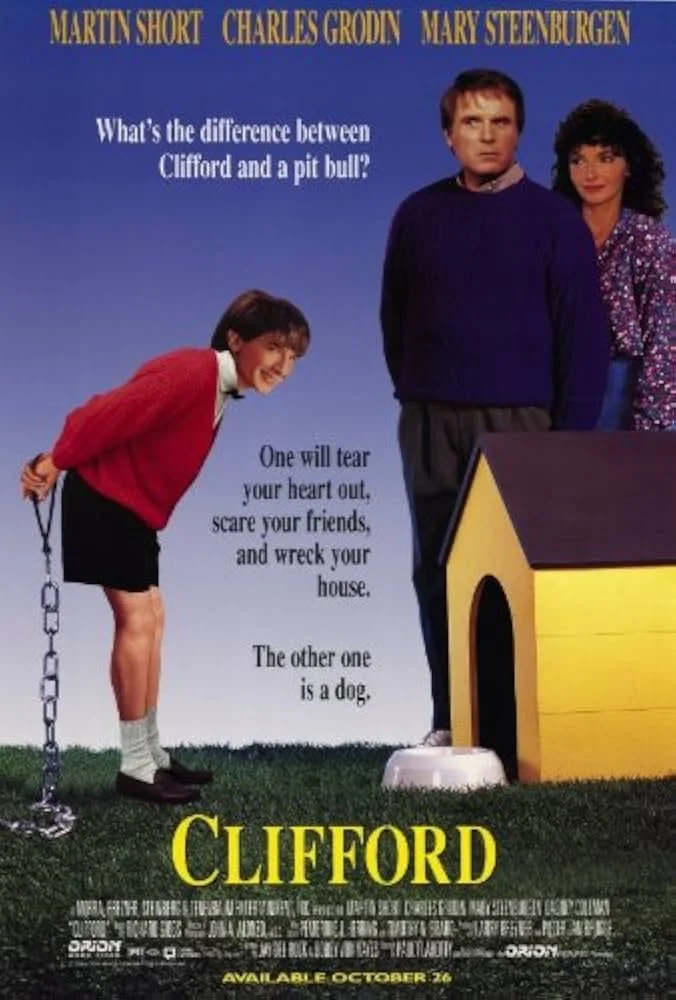
Not to be confused with a certain big red dog (that isn’t to say that Clifford Daniels doesn’t have that dog in him), CLIFFORD was conceived by the writing duo of Steven Kampmann and William Porter who were collaborators for the famously formative Second City comedy troupe and worked together as writers on the classically kitschy television sitcom WKRP In Cincinnati (1978-1982). The central conceit of their script was what if they remade the psychological thriller THE BAD SEED (1956) but made it a slapstick comedy. The plot consists of a terrifying tween who is fixated on visiting his dream theme park, Dinosaur World, no matter who he has to hurt to get there. While conventional casting could look towards the child stars de jour, Macaulay Culkin, Jonathan Taylor Thomas, Elijah Wood, the script found its way to SCTV/SNL alumni and star of ¡THREE AMIGOS! (1986) and INNERSPACE (1987)—the indefatigable Martin Short.
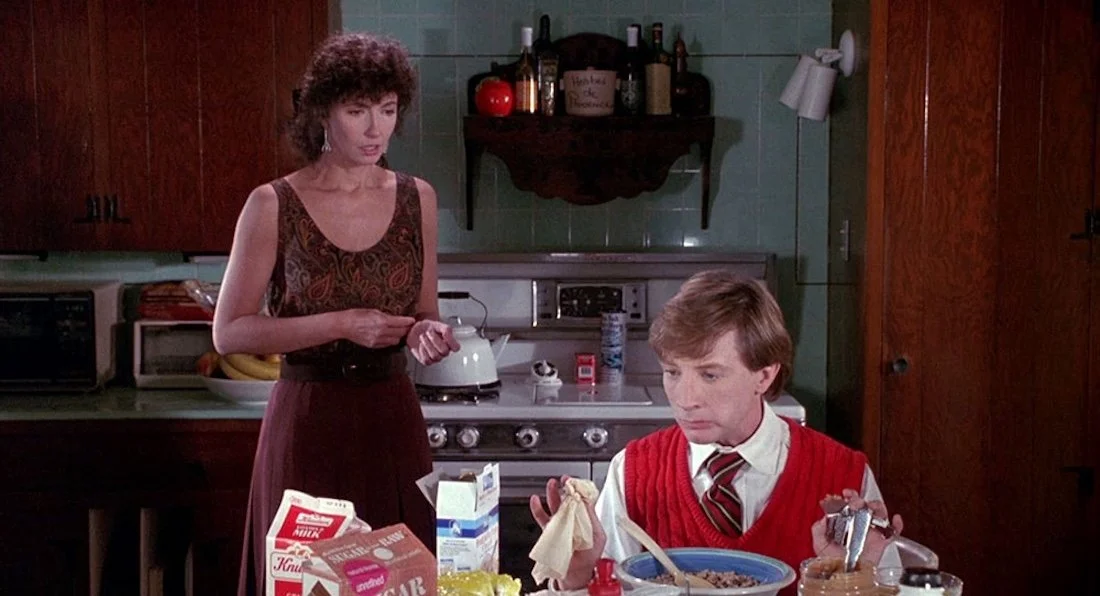
Curious but unconvinced, producers at Orion Pictures had Short do a screentest with co-writer Steven Kampmann to see if the middle-aged comedian could work as a sociopathic 10-year-old. Short’s commitment to the black comedy of the character persuaded Orion and with the addition of Charles Grodin, THE HEARTBREAK KID (1972), THE GREAT MUPPET CAPER (1981), MIDNIGHT RUN (1988), as Clifford’s Uncle Martin, Mary Steenburgen, MELVIN AND HOWARD (1980) and PARENTHOOD (1989), as Uncle Martin’s girlfriend Sarah Davis, and fellow SCTV alum Paul Flaherty, 18 AGAIN (1988) and WHO’S HARRY CRUMB? (1989), in the director’s chair, filming for CLIFFORD began in the fall of 1990. Screenwriter Kamplan alleges confidence in the project soared with Orion Pictures president Mike Medavoy watching an early cut with Harold Ramis, NATIONAL LAMPOON'S ANIMAL HOUSE (1978) and GHOSTBUSTERS (1984), and both agreed they had a certified hit on their hands. But all that bluster evaporated when the film was eviscerated by test audiences.
Despite the critical and commercial successes of DANCES WITH WOLVES (1990) and THE SILENCE OF THE LAMBS (1991) Orion Pictures found itself filing for Chapter 11 bankruptcy in December of 1991. The underperforming of films like GREAT BALLS OF FIRE, THE HOT SPOT, THE LAST OF THE FINEST, SHE-DEVIL, VALMONT all in 1989 and perhaps most disastrously with ROBOCOP 2 in 1990 put the production company in peril. With this unfavorable fiduciary footing CLIFFORD found itself delayed multiple times and eventually shelved indefinitely. After some re-cuts and reshoots the writing duo of Kampmann and Porter took their names off the project, opting to have the film credit the nom de plume Bobby Von Hayes and Jay Dee Rock respectively. The rest of the cast and crew pretty much gave up hope of CLIFFORD ever seeing the light of day if not for an attempt to capitalize on Charles Grodin’s revitalized box office draw with the immense successes of BEETHOVEN (1992) and BEETHOVEN’S 2ND (1993) leading them to finally release the film on April 1st, 1994.
So with big-time movie producers hinging all their hopes and dreams on CLIFFORD, how’d that work out for them? I’ll give you a hint… KABOOM! It bombed hard opening at #7 behind a cadre of comedic sequels consisting of MAJOR LEAGUE II (1994), D2: THE MIGHTY DUCKS (1994), and NAKED GUN 33 1/3: THE FINAL INSULT (1994). CLIFFORD grossed approximately $7.4 million at the box office against its budget of around $19 million. Critical reception wasn’t any better with Gene Siskel agreeing with his esteemed colleague Ebert with “two thumbs down,” Desson Thomson for The Washington Post calling it “an awful piece of business,” and Variety deriding it as “gimmicky” and “poorly conceived.” I prefer Martin Short’s more zen recollection of the release:
"I remember going to a critics' screening, sitting at the back, and the place was raucous. And yet the reviews did not reflect that. ... I think when a film is obscure enough, you feel it's now yours. Your parents don't know this film, but you do."
Short succinctly suggests the conflict of generational division intrinsic within the piece as well as how the production was perceived acts to schism audiences right through the proverbial Sepulveda Dam between childhood and adulthood. What proponents of the picture recognize that the detractors don’t is that surrealist slapstick satire is all done by design. It’s no accident that Clifford Daniels is creepy and that Dinosaur World is psychedelically shoddy. The creators consciously made oversized props and sets to sell the concept of Martin Short as a child and Charles Grodin playing Uncle Martin straight up until he breaks is essential to take audiences on the chaotic ride with the characters and thus giving a point of entry for relatability to viewers in different age brackets as they clash, intentionally straddling the line between moralistic family film and edgier dark comedy. And even if you happen to love Willie Nelson, let's not forget about the original score by Oingo Boingo’s Richard "Ribbs" Gibbs. Gibbs plays the compositions very true to mischievous child subgenres adding to the sinister undertone particularly with Clifford’s impish recorder tunes that serve to soothe himself while simultaneously annoying adults around him. The inherent push and pull between child and adult is perfectly summed up with the line “if you destroy everyone who stands in the way of your dreams... then you end up alone... with no dreams at all.”
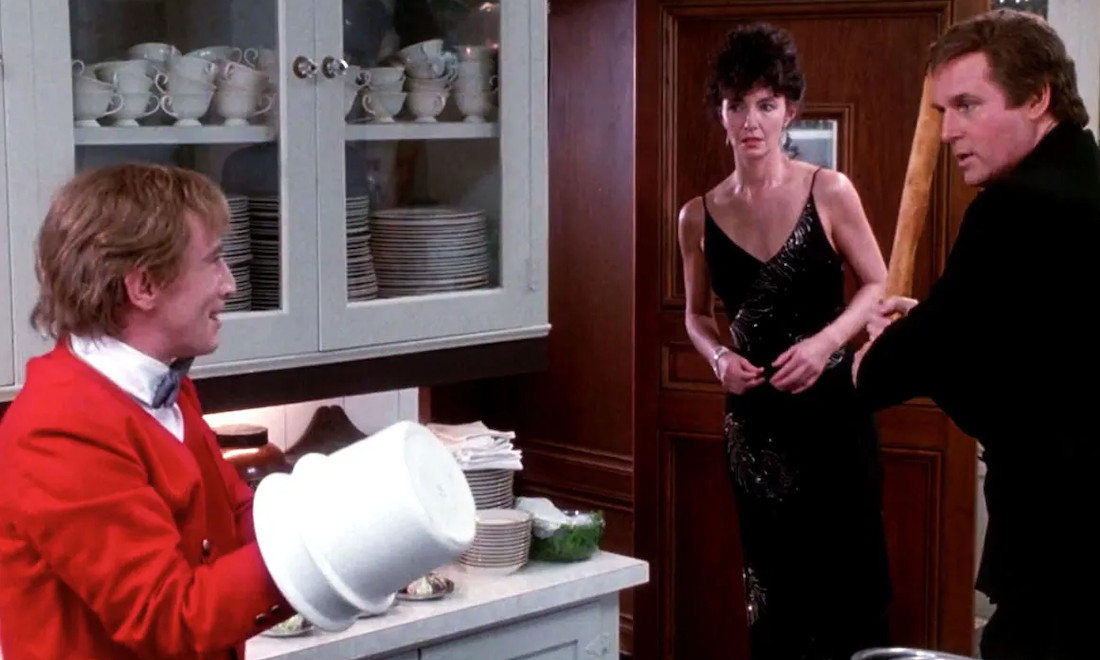
About a year after the release of CLIFFORD, Martin Short found himself on a flight with Nicolas Cage. When Short approached Cage to congratulate him on his recent Oscar win for LEAVING LAS VEGAS (1995) Cage responded by gushing about CLIFFORD, calling Short “a genius” and admitting to wearing out his VHS copy of the film by rewatching the baseball with a breadstick scene over and over again. And Cage isn’t the only A-lister to appreciate the flick. Mary Steenburgen describes instances of going over to Elizabeth Taylor’s home to find her cackling at CLIFFORD on her tv and singing along to “Larry The Scary Rex.” I even have receipts for Siskel and Ebert describing the Dinosaur World set piece as "shoddy and cheap with no imagination."
While shelved in limbo, Steven Spielberg got his hands on a copy of CLIFFORD and immediately called Short to inquire about the set design that was done for the scenes involving the Dinosaur World theme park. He said he was impressed and wanted to use that as inspiration for a project he was working on which was, as you’ve probably guessed, JURASSIC PARK (1993). It warms my heart to know that Cage, Taylor, and Spielberg are fellow practitioners of The Art Of Shelf Defense.
“Grunkle Mental Case?” Enzo Jr. asks with trepidation in his voice still processing the movie madness and moral he just viewed. “Maybe you could come over and watch CLIFFORD with me again tomorrow.”
I give him a wink. “As long as you can act like a human boy.” I turn to leave and retrieve an action figure out of my pocket. It’s 1/12th scale Neo from THE MATRIX and I whisper to it “Mission accomplished, old friend.”