
MOTHER TRUCKIN’ MAY: BIG TROUBLE IN LITTLE CHINA (1986)

Most movies are able to cleanly and concisely fit into a selected genre. Then there are those that can't be quantified: they exist in a space where one genre can't simply do them justice, and trying to pigeonhole them just makes you sound foolish. BIG TROUBLE IN LITTLE CHINA is one of those films. And it’s because of its inability to conform to any one genre that I love this picture and have since childhood.
Before it was known as BIG TROUBLE IN LITTLE CHINA, writers Gary Goldman and David Z. Weinstein envisioned a standard Western that, in a FROM DUSK TIL DAWN-style fashion, would be flipped on its head with the introduction of Chinese mysticism and martial arts. Inspired by stories of The Tong Wars as well as the resurgence of martial arts films in American cinema, the two men set out to write their script.
The screenplay, entitled LOTUS, and the final product, are similar in one way: the plot. Aside from that, they are vastly different. Taking place in the 1880s, the plot has Wiley Prescott, a cowboy who’s helping feed the Chinese railway workers, and his friend, Sun, as they attempt to rescue Sun’s fiancée, the titular Lotus, from the evil Lo Pan and his army of human and supernatural henchman. Playing much more seriously, the screenplay would delve deeper into Lo Pan as a character as well as giving Prescott a much darker edge, including killing his love interest at the end.
After a change in title, 20th Century Fox optioned the script, but the studio demanded changes that Goldman and Weinstein did not want to make, including updating the timeframe from the 1880s to the 1980s. Their refusal to alter the script led to their firing and the hiring of W.D. Richter. Richter had gotten acclaim as a screenwriter working on films such as the 1978 INVASION OF THE BODY SNATCHERS and BRUBAKER, but he’s most remembered (at least in this writer's opinion) as the director of THE ADVENTURES OF BUCKAROO BANZAI ACROSS THE 8TH DIMENSION.
Richter’s approach to the material, aside from updating the time period, was to bring a more lighthearted tone to the proceedings. That lighthearted tone came primarily from the changing of the central character of Wiley Prescott into the seemingly central character of Jack Burton. Turning a rough and tumble cowboy into a protagonist who talks a good game but only pulls through by the skin of his teeth, adding a nice layer of humanity to what could have been a cliche.
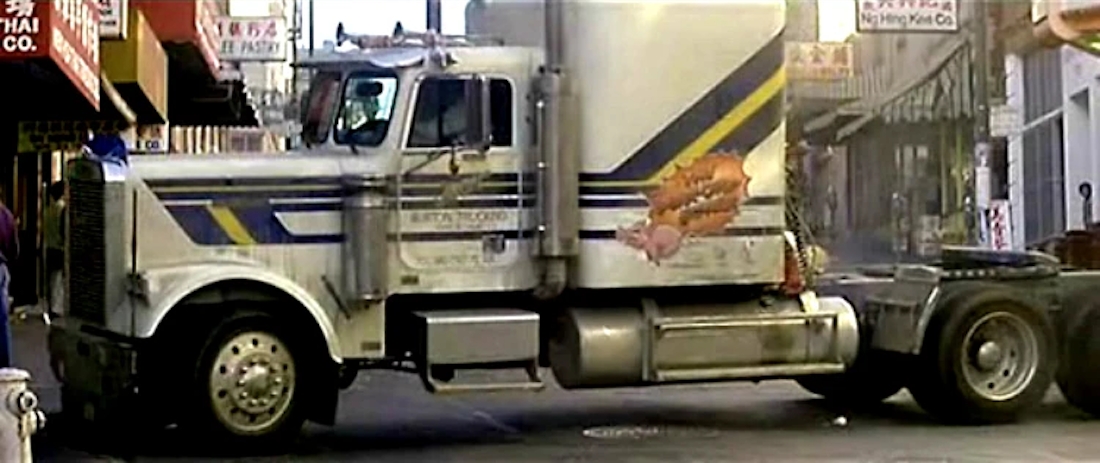
To say John Carpenter was the unlikely candidate to direct is a bit of an understatement. Predominantly known for horror and sci-fi, a martial arts spectacle seemed anathema to his aesthetic. But, as luck would have it, Carpenter is a diehard fan and making a martial arts film was a dream job of his for many years leading up to BIG TROUBLE.... They had a script, they had a director, but now they had a new wrinkle. A wrinkle in the form of Eddie Murphy.
Paramount Pictures was set to begin filming on their next Eddie Murphy vehicle, THE GOLDEN CHILD, a supernatural adventure film that - stop me if you heard this one - involves an everyman attempting to rescue someone from an enemy that uses mystical powers and has henchman with seemingly supernatural abilities. Fox was worried and thus they were rushing into production in October 1985 to make sure they had a solid Summer hit, but first they needed to find the right man for the lead. Someone who could fit into the comfortable boots of Jack Burton. The search was on.
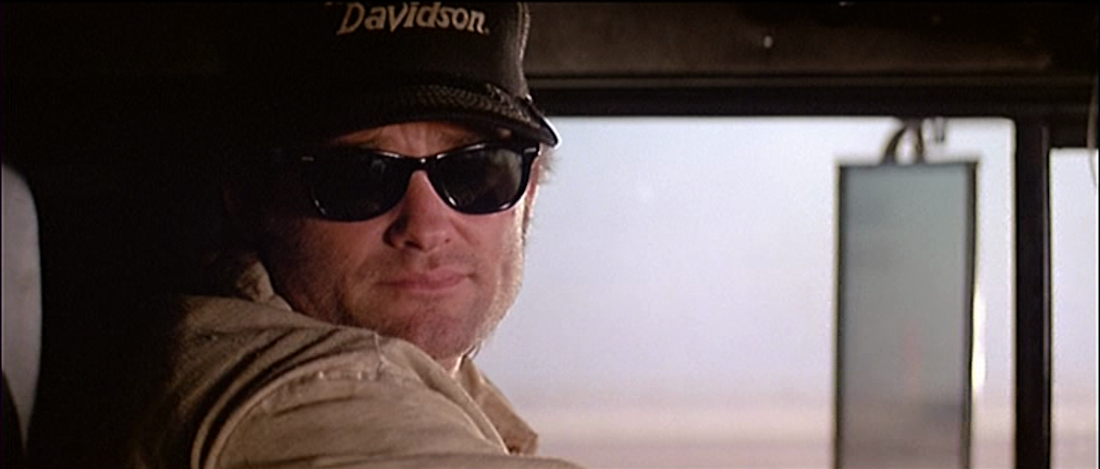
It seems like a no brainer that Carpenter would want his frequent collaborator Kurt Russell for the lead but, possibly to keep some of the original script’s Western aesthetic alive, Carpenter wanted to cast Clint Eastwood in the lead. After Eastwood was found to be unavailable and a few other actors—including Jack Nicholson—either turned down the role or were filming other projects, the studio suggested Russell. After some hesitancy about the material, Russell was assuaged by Carpenter and accepted the role and the rest, as they say, is history.
BIG TROUBLE IN LITTLE CHINA was released on July 2, 1986: Beating their competition to the screen by a solid five months which should have given them a fighting chance at box office success. Unfortunately, BIG TROUBLE... had to contend with the likes of THE KARATE KID II, FERRIS BUELLER’S DAY OFF, TOP GUN and the soon to be released ALIENS which was a massive hype machine. It never stood a chance and – like most of Carpenter’s output at the time – the film was a box office bomb. Eventually the film went to video and, thanks to the VHS market, gained notoriety and cult status and has become a go-to for many fans of Carpenter’s work.
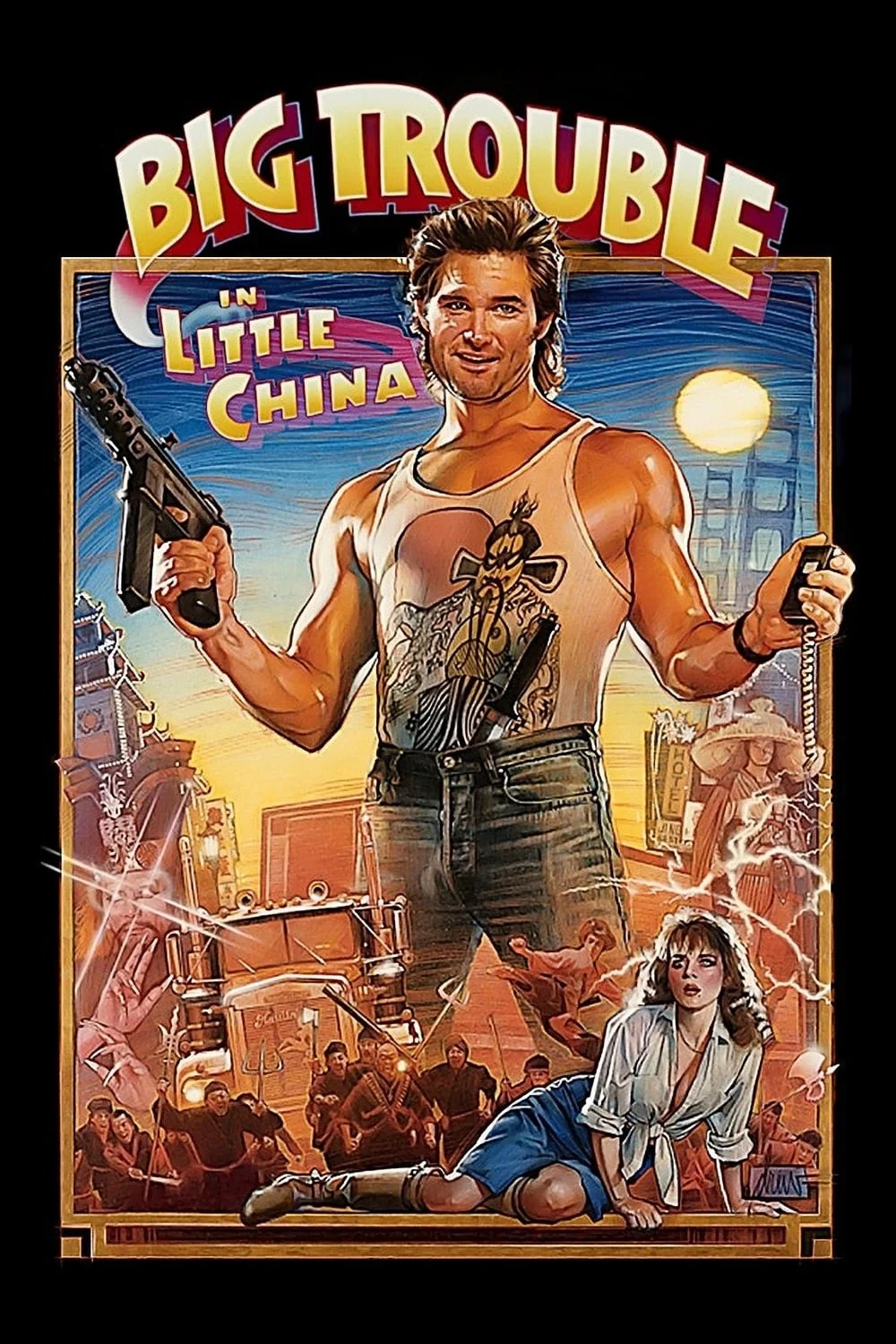
I can't honestly tell you what made me want to pick this up from the video store as a kid. It was likely the brightly colored VHS cover, drawn by the master artist Drew Streuzen and packed to the brim with everything you're about to see onscreen. Martial arts melee, the dastardly Lo-Pan and one of his Three Storm henchman, Kim Cattrall in a damsel in distress pose and—in the middle of it all—Kurt Russell's Jack Burton with a machine gun in one hand and a CB microphone in the other. My young mind was trying to comprehend how it was possible that someone saw this artwork and didn’t immediately snatch it up, but I didn’t think too long on it. Their loss was going to be my gain.
From the opening score until the moment Carpenter’s band The Coupe De Villes (consisting of Carpenter and filmmaking friends Tommy Lee Wallace and Nick Castle) started playing the theme song to the film (a requirement of any good ‘80s movie) my ass was glued to the seat and my eyes were glued to the screen. Growing up in small town Pennsylvania – and being all of 5 years old – I hadn’t seen any films that had martial arts in them, and this was blowing my mind. The stunt work being done by the spectacular performers—including a member of the Mount Rushmore of “That Guy Actors,” Al Leong—kept me riveted.
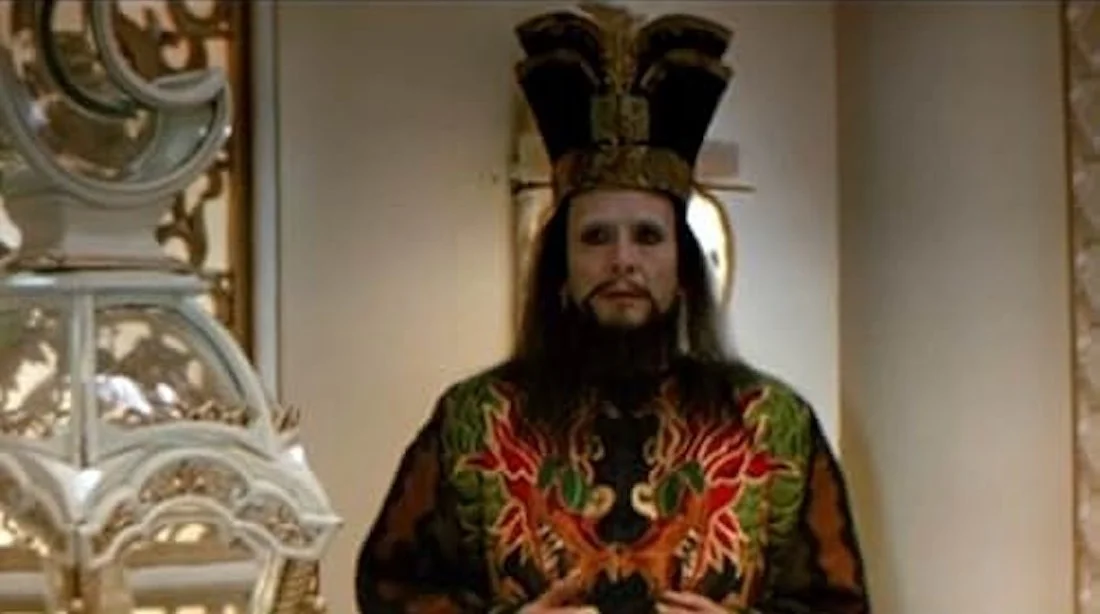
It helps that the film has the likability factor of Russell and his chemistry with everyone on screen including Dennis Dun as his best friend, and actual lead of the movie, Wang Chi, and the wonderful James Hong as the devious Lo Pan who is absolutely having a ball playing the decrepit version of the character while bringing incredible stoicism to his ghostly apparition form. Every moment from the small-scale character beats to the big action set pieces were enough to make me want to see this again...and I did. Any chance I could get to rent it or see it on TV I was doing it. While I always go back and forth between this and THE THING as my number one Carpenter movies, I feel like this is the one that I will go back to the most consistently.