
MOTHER TRUCKIN’ MAY: SMOKEY AND THE BANDIT (1977)
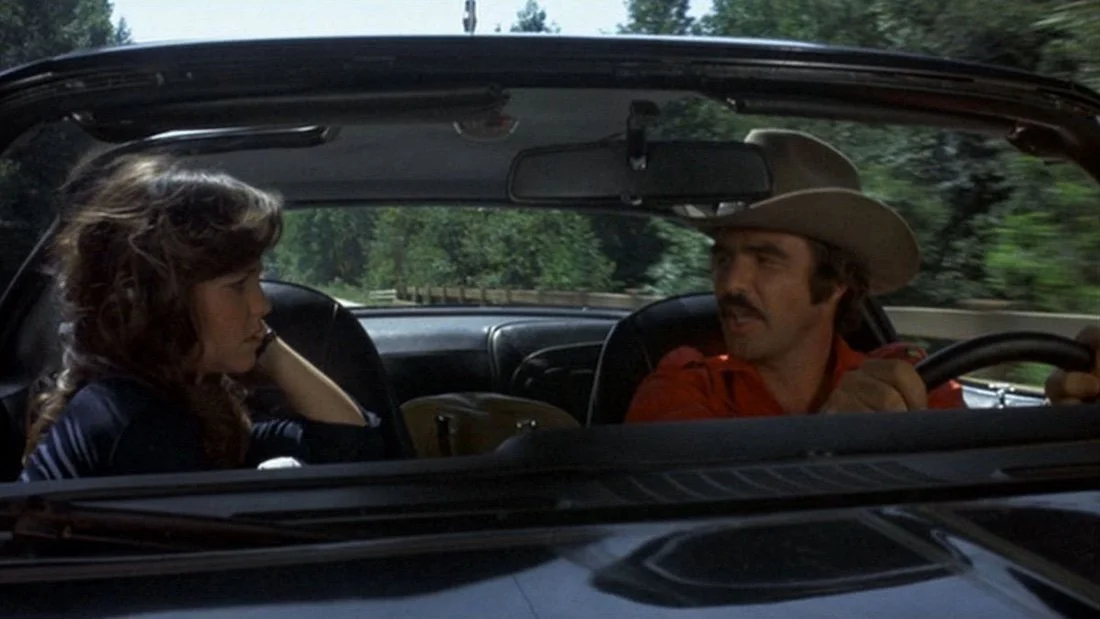
When it comes to movies, there is a list of things that I most fancy, and SMOKEY AND THE BANDIT (1977) checks off many of them:
A 1970s movie? Check.
Car chasing? Check.
Muscle cars. Check.
Cross country Three Stooges-style shenanigans? Check.
Wacky Races vibes? Check.
Burt Reynolds? Ten checks.
Sally Field? One thousand checks.
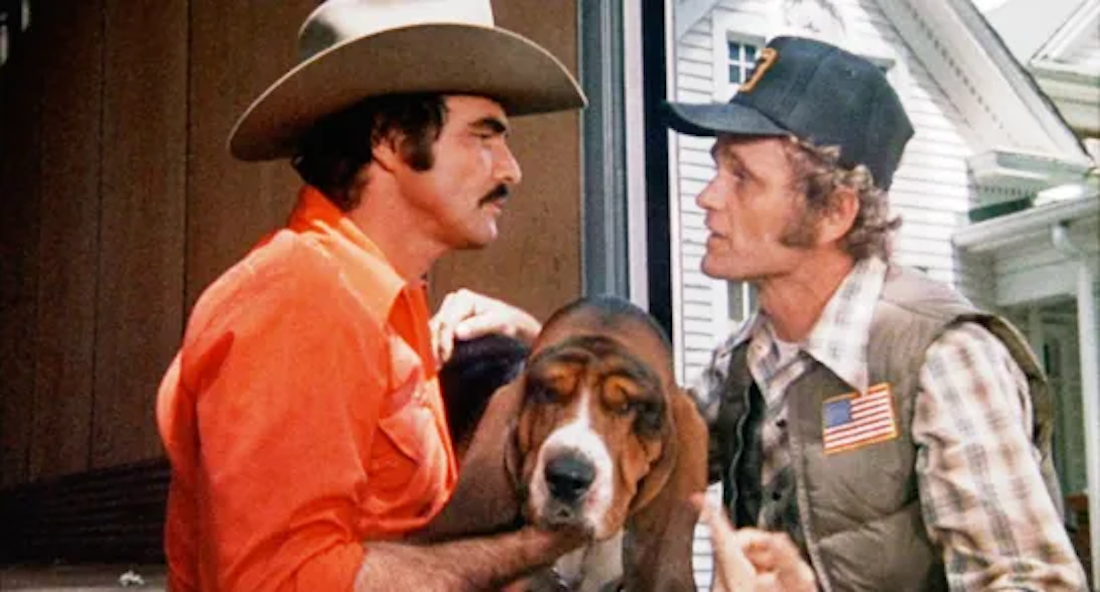
A long-eared hound dog named Fred? One million checks.
Did the director and writer Hal Needham know I would be born in the ‘80s, and that I would want this movie? Because it kind of feels like it was made for me. He also directed THE CANNONBALL RUN (1981), which I also have quite the love for (and you can check that out here). These two films could be considered siblings.
SMOKEY AND THE BANDIT is about a pair of truckers who take a job to smuggle Coors beer (then illegal due to its lack of preservatives) into the east beyond Texas. Their scheme is complicated by a runaway bride who jumps into Bandit’s car and joins the ride bringing her own baggage of police chasing her. It stars Burt Reynolds as Bo “Bandit” Darville, Jerry Reed (who also wrote the music) as Snowman, Sally Field as Carrie “Frog”, and Jackie Gleason as our villain. On the surface, it’s a goofy, over the top, hour and thirty minutes of hijinks, fast cars, and smooth talkers. Honestly, that’s enough to sell me on it. What I was surprised to learn on a rewatch is that it is a subtle, but cleverly disguised commentary on the general corruption of the police state particularly in the south, and how the communities that lie outside of that bigoted protection band together against it.
Let’s begin by talking about the iconic hold that Burt Reynolds had over television and cinema during his career. I first became aware of him by seeing him portray Quint in the early years of Gunsmoke. He played a half Native American character, which is unfortunate but commonplace for that time. I was too young to understand it was whitewashing, but I loved him anyway because he was supposed to be mixed race like me. Also, he was a blacksmith, so he was always bare armed and sweaty, and that didn’t hurt considering that Burt Reynolds looks like ya’ know, Burt Reynolds.
Seeing him in my favorites of his films, THE LONGEST YARD (1974) (and the 2005 version), GATOR (1976), THE CANNONBALL RUN, SMOKEY AND THE BANDIT, and even his appearance on The Golden Girls helped me understand that this was a man that not only oozed charm, was hilarious, but also an extremely competent actor. There will never be another like him. (But, if I had to choose a close second, it would be Pedro Pascal.)
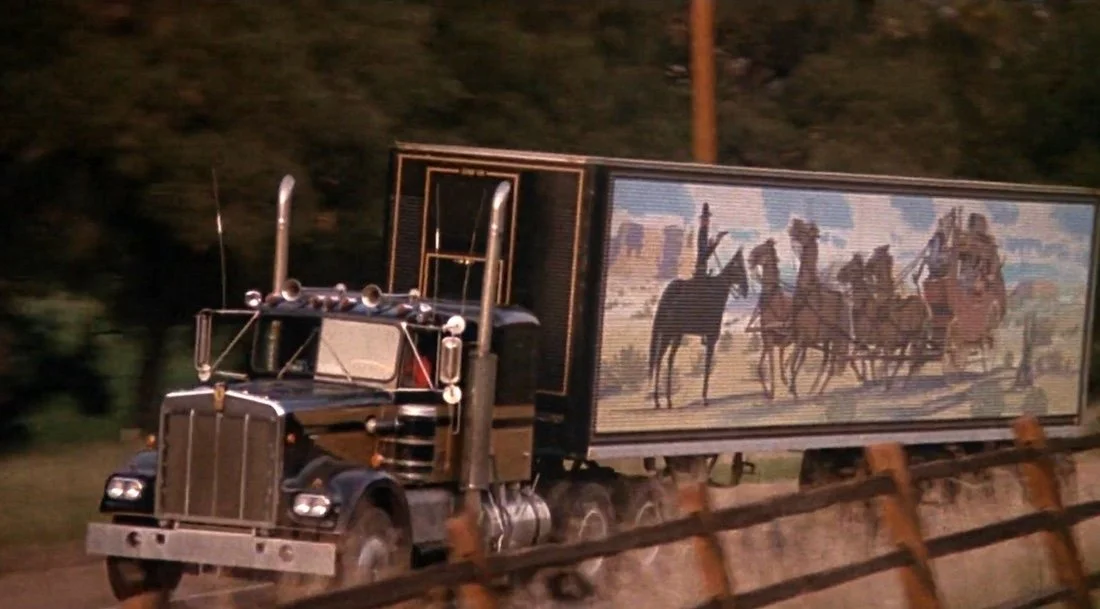
I love that we are introduced to Burt’s character Bandit, first by his semi-truck, and then by his iconic laugh. Right out of the gate, we already know what kind of character we are dealing with and all he had to do was laugh.
Jerry Reed is so doggone lovable as the Snowman and Bandit’s cornerstone. His presence on-screen provides a good balance that makes Reynolds’ portrayal of Bandit feel more realistic. The star of this movie though may actually be the jaw dropping amount of wholesome chemistry between Sally Field and Reynolds.
I cannot say enough that they are one of my favorite movie couples, and this is one of those examples where their chemistry off-screen translated on-screen as well. What I love about their moments on screen together is that the dialogue feels natural, tender, and simmering with vulnerability and curiosity about one another. In my research, I found that most of the dialogue was improvised, and I am very glad for that. These two together are a work of art. For me, they are right up there with Tom Hanks and Meg Ryan, Katharine Hepburn and Spencer Tracy, and Peanut Butter and Jelly.
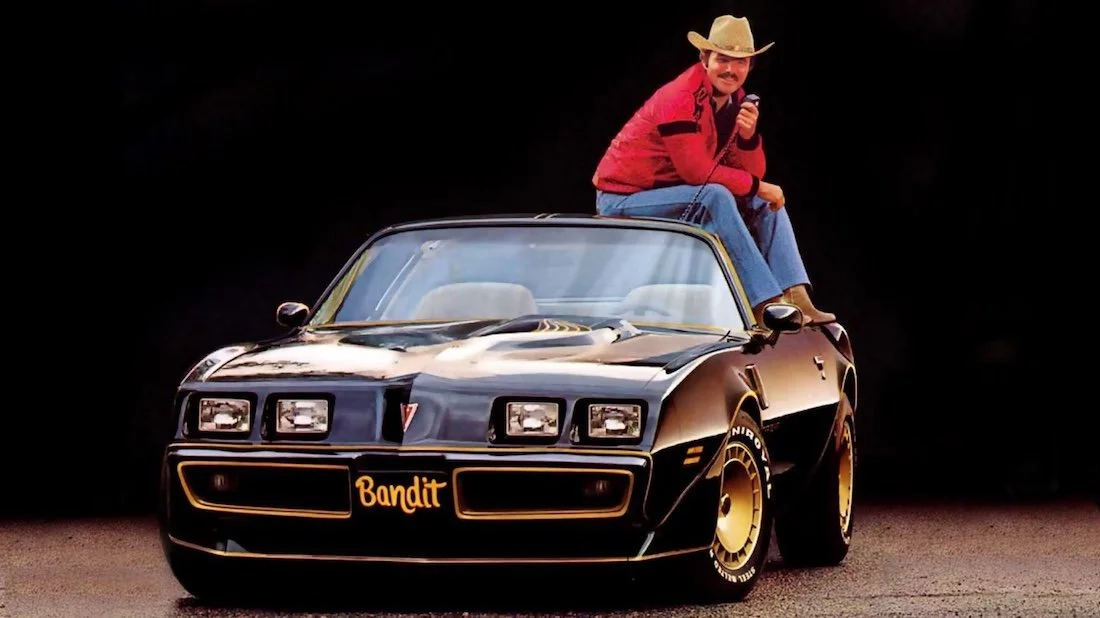
One of the most surprising aspects of this film to me on rewatch was the social commentary between marginalized people and the police. Aside from the Confederate flag on the license plate of the famous Pontiac Trans Am that Bandit drives, the message here is clear that the good guys were considered outside of the protection of the law. Sheriff Buford Justice, played by Jackie Gleason, is a racist, abusive, and corrupt officer of the law. We see this play out in his treatment of the Black Sheriff, his references to lynching, the threats to beat his wife, his arrogance that he has infallible power outside his jurisdiction, and more. He uses his rage to get his way. The irony that his last name is “Justice” should not be lost on us. It is also somewhat of an Easter egg, as Reynolds’ father worked with a police officer with that name.
Meanwhile, the heroes and comrades that aid Bandit and Snowman are often that of oppressed peoples like, people of color, women, teens, and even sex workers. It is implied that Bandit and Snowman have already established a network of friends across the country, and this is why they have always been successful. These are people often targeted and terrorized by corrupt police officers. This movie is ACAB all the way, and I love it for that. I also love how the CB radio plays such an influential role in the storytelling. Through it we get the cat and mouse narrative of a thriller, the feel of this chase being community-driven, because it is being played out on broadcast for all to hear, and we even get some adorable illustrations of bonding between Bandit, Snowman, and Frog.
CB radio is one of those technologies for which I still feel nostalgic. My grandparents would take us on long hauls around the country and even to Canada for weeks-long fishing trips, and the part that us grandkids loved the most was using the CB to stay in touch with our caravan and getting to know friendly truckers. There was one that even did Disney voices for us. I distinctly remember how that shared communication was used to create a sense of community among drivers sharing warnings of dangerous roads ahead, police presence, good and bad places to eat, where to get gas, (it was 47 cents for diesel in this movie, by the way), etc. Having these experiences with the CB radio from my childhood only reinforced my belief that this legend of Bandit and his supportive community could be true. There’s something magical but deeply important about strangers helping one another, responding to distress, simply because they want to be on the right side of things, all centered around being on the road together. This movie is much more about community than people give it credit for, and I wish I had recognized it sooner.
If you haven’t seen SMOKEY AND THE BANDIT, and you like a good jaunty movie, I think you’ll appreciate it. If that’s all it were, it would be more than enough for me to sing its praises. But surprisingly, it really does go that deep if you are willing to look for it.