
MOTHER TRUCKIN’ MAY: SORCERER (1977)
In 1977, SORCERER director William Friedkin was working at the peak of his filmmaking powers and at the height of his Hollywood popularity. The director had just made back-to-back masterpieces: the crime thriller THE FRENCH CONNECTION and the horror classic THE EXORCIST. Sorcerer's leading man was similarly riding a high of popularity and awards contention. Roy Scheider had just earned himself the first Oscar nomination of his long career for his supporting work in Friedkin's THE FRENCH CONNECTION, before appearing in the biggest film of his career, playing Chief Brody in 1975's JAWS. Though SORCERER was not originally planned to be a reunion between the FRENCH CONNECTION filmmaker and star (Steve McQueen, Robert Mitchum, Marcello Mastroianni, Lino Ventura, and others were originally approached for SORCERER roles), Scheider feels like an obvious pick for the busted-nose getaway driver with bad luck who is thrust into the doom-laden scenario in the fictional South American jungle country.
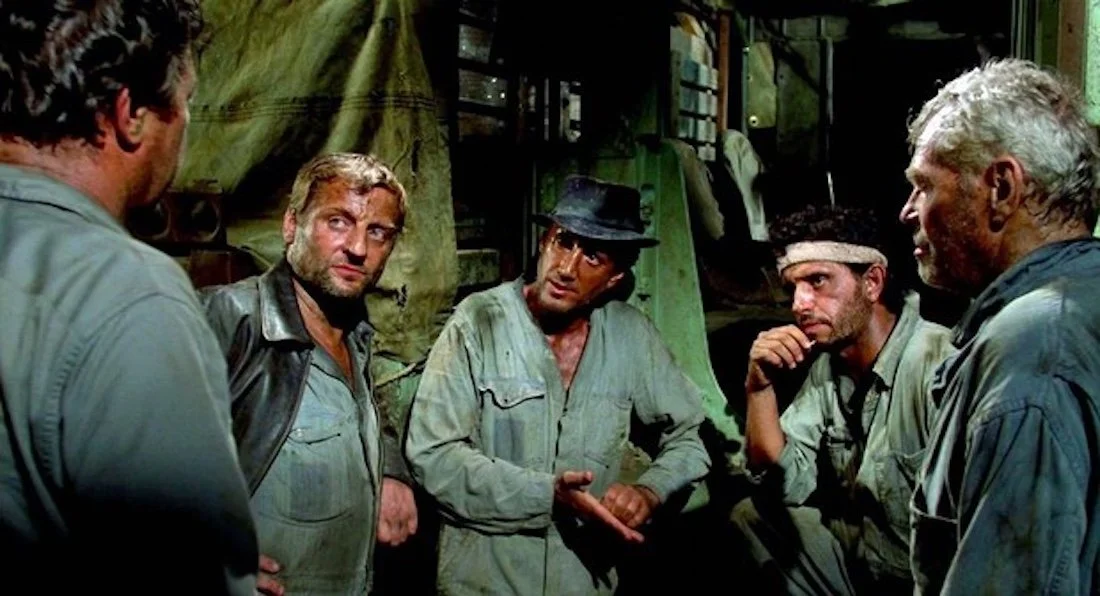
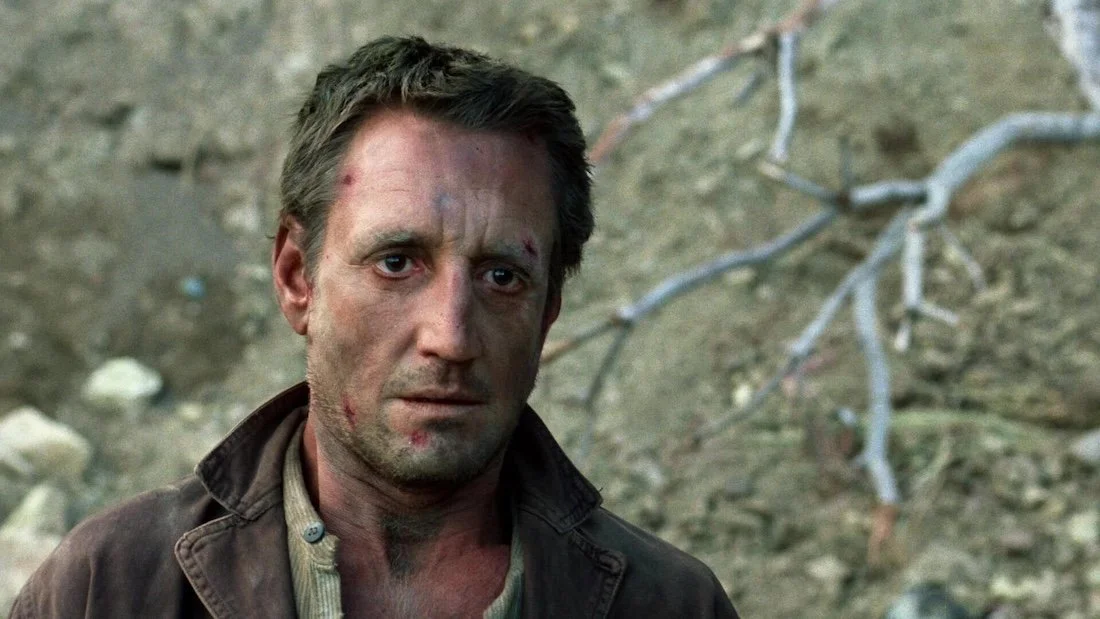
It's 17-minutes into the film before Roy Scheider appears on screen as a blue-collar crook robbing the mob in New Jersey. Until that point, the story bounces around the globe, visiting our three other primary protagonists as they each make their escapes from fate. Francisco Rabal makes his Hollywood debut as a cold-hearted assassin. Amidou plays a Palestinian militant on the run after detonating a bomb. Bruno Cremer plays a French banker escaping Paris and the accusations of fraud that would destroy him. There are no 'heroes' in this story -- every man is entirely driven by desperation and the need to flee their circumstances. When the film finally does catch up with our leading man, Roy Scheider is performing getaway driver duties for a small group of dysfunctional criminals who make the ill-advised decision to rob a church run by a criminal family. The car crashes during the getaway, and Scheider's character makes a bloodied, limping escape, later meeting up with a friend who has arranged to get him out of the country. The four men all end up in the same muddy, sweaty, downtrodden village in South America (SORCERER was filmed primarily in the Dominican Republic). Here, they waste their lives away waiting for a chance to make it somewhere better.
In addition to being considered one of the great American films of the 1970s, SORCERER should also be considered one of the best remakes of all time. Based on the 1950 French novel by Georges Arnaud titled The Wages of Fear, the story had previously been filmed and released in 1953 by filmmaker Henri-Georges Clouzot. For his part, Friedkin considered SORCERER a second adaptation of the source material rather than a direct remake of the Clouzot film. Just the same, though, Friedkin sought Clouzot's blessing before making SORCERER, and the film is dedicated to the French director in the closing credits. Both films are incredibly tense masterworks, with sequences so thrilling that the viewer is often left in awe, wondering how the filmmakers managed to achieve certain scenes without seriously harming the actors. Personally, I prefer SORCERER to the French adaptation of the novel.
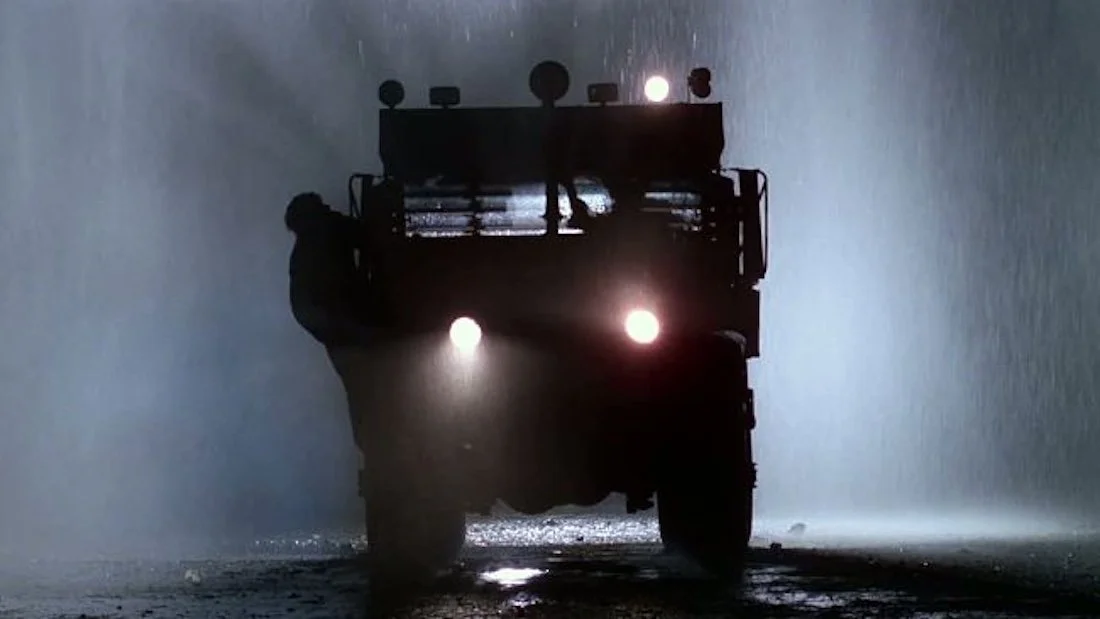
It's almost an hour before the main thrust of the film gets underway as our characters adapt to their roles as truck drivers for the oil company. Considering it takes that long before getting to the major truck sequences, there might be a temptation to call the film a slow burn. I don't know if I agree, though. While it takes a bit to get where it's going, I think every scene leading up to the jungle trucking is so full of doom and the threat of death that we hardly notice time passing. Death comes for our characters – both named and unnamed – without warning or pity. Even a throwaway moment at the church early in the film, where the camera takes time to focus on the bride with a black eye, tells us that pain and disaster await everyone within the story. When our characters finally start driving through the jungle with volatile cargo in the back, we understand that their lives can be claimed at any moment, because the film has revealed itself to be so pitiless toward everyone involved in the first hour.
Before going out into the jungle with their cargo of explosives, the men have to repair their trucks by making use of a graveyard of rusted-out vehicular carcasses. Once the trucks are assembled, the four men split up and drive two trucks down the winding backroads across hundreds of miles to their destination, where a burning oil field awaits them. On their travels, they face one challenge after another. There is one moment of levity when a native plays on and around the moving vehicles, unaware that any misstep could kill him and everyone else. The truck drivers scream for the man to get away while he continues to laugh and play.
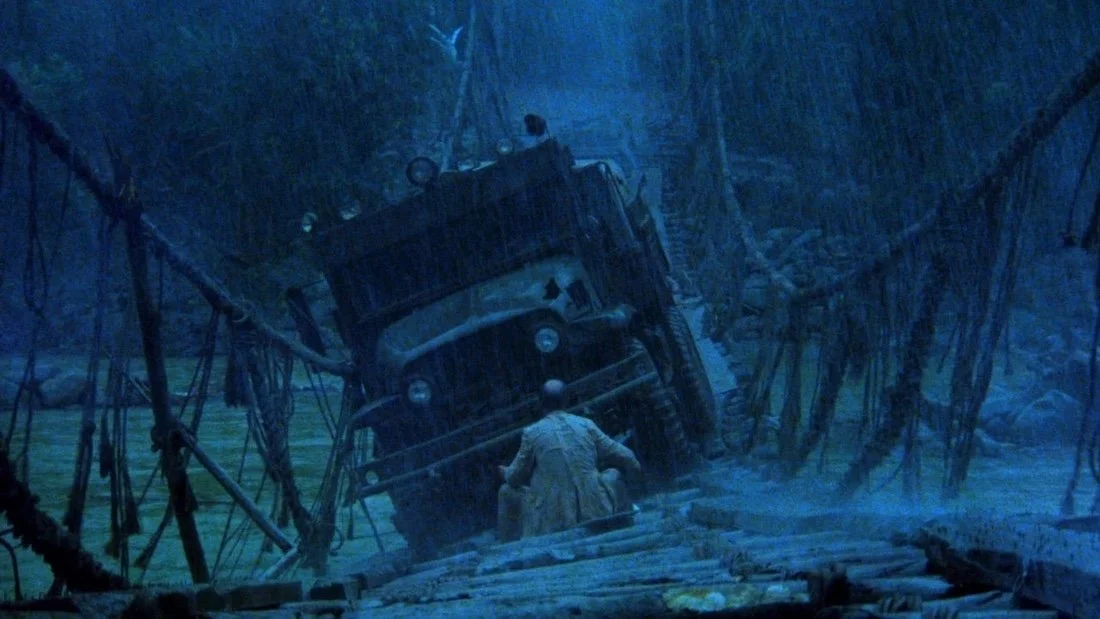
Perhaps the main draw of the film is the tense bridge sequence, in which the truck drivers must slowly navigate a swaying, rapidly decaying bridge that hangs precariously over a raging river. It's in scenes like this where most of the time I would ask, 'How did they do that?' Except, in this case, I wondered more, 'How did they do that without getting anybody killed?' It's a thrilling, edge-of-your-seat sequence. And then, once the truck is across, we are reminded that a second truck awaits. We're doing the bridge sequence again now. What might've felt repetitive in another film feels all the more intense in SORCERER, where the second time across is even more suspenseful than the first. These bridge scenes are among the most impressively crafted sequences of man vs. nature ever committed to film, calling to mind FITZCARRALDO, APOCALYPSE NOW, AGUIRRE, and others.
For most of the film, SORCERER keeps its protagonists at arm's length from one another, never allowing male bonding to take place. It's a cruel joke that the film finally allows for two of the men to bond, relate to one another, and tell something about their stories before they ended up in this hellish place, right before a sudden tire blowout causes the truck to careen over a cliff, violently shifting the explosive cargo, and resulting in their deaths.
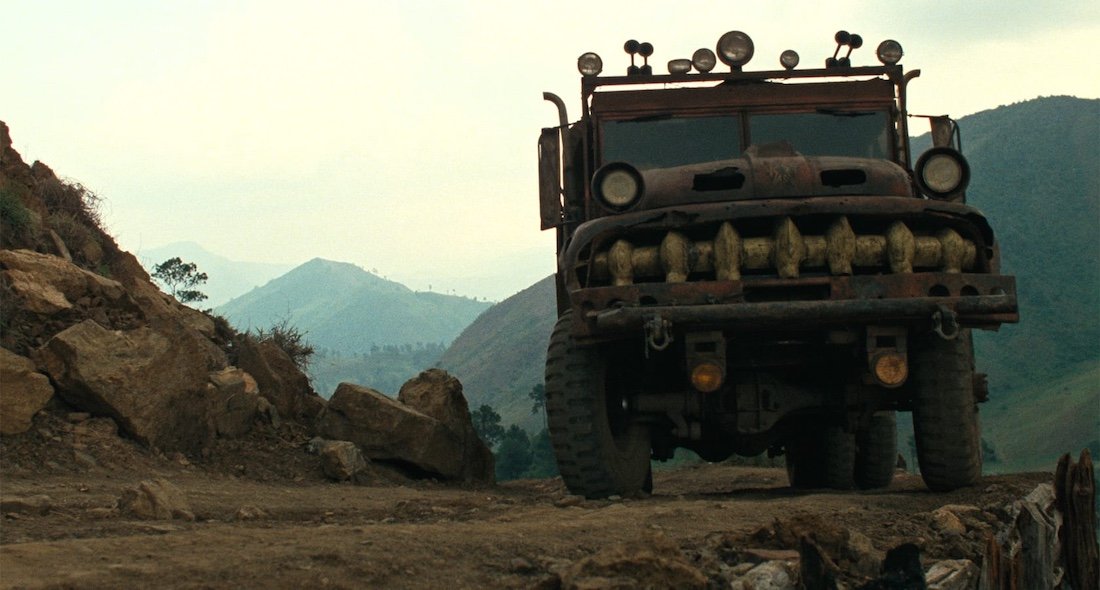
In the final moments of trucking, Roy Scheider navigates his truck out of the jungle and into a rocky wasteland that appears so alien that he might as well be driving across the surface of the moon. All the death and misfortune have gotten to Scheider's character. It's here that the film takes on a strange, almost supernatural quality, where the dead laugh maniacally and the living descend into madness.
The doom that presided over the film from the first scenes cannot allow for a happy ending. Even once the job is done and the lone survivor of the trucking quest is welcomed back to town as a hero to the oil company, a forgotten plot thread resurfaces. The ending is ambiguous, but I think it's pretty clear that nobody is getting out of this story alive. In SORCERER, there is no room for hope and other foolish notions, not for these men.
When SORCERER debuted in 1977, it received mixed reviews and poor box-office results. Many blame the film's poor box-office performance on the fact that the original STAR WARS was still dominating the box office at the time. Others claim that the film's title led to confusion about its genre, potentially scaring audiences away. Regardless of the cause of its initial lackluster success, the film has since found its audience at home and is commonly regarded as one of the best movies of its decade. Friedkin wrote that it was the most challenging film of his career, but also his best. And I agree.
There are some films I love sharing with people who haven't seen them, and SORCERER is one of my favorites in that regard.