

Number 1 — SEVEN

For the month of October, we’re counting down the best horror movies of 1995! Check back every day for a new entry in the list.
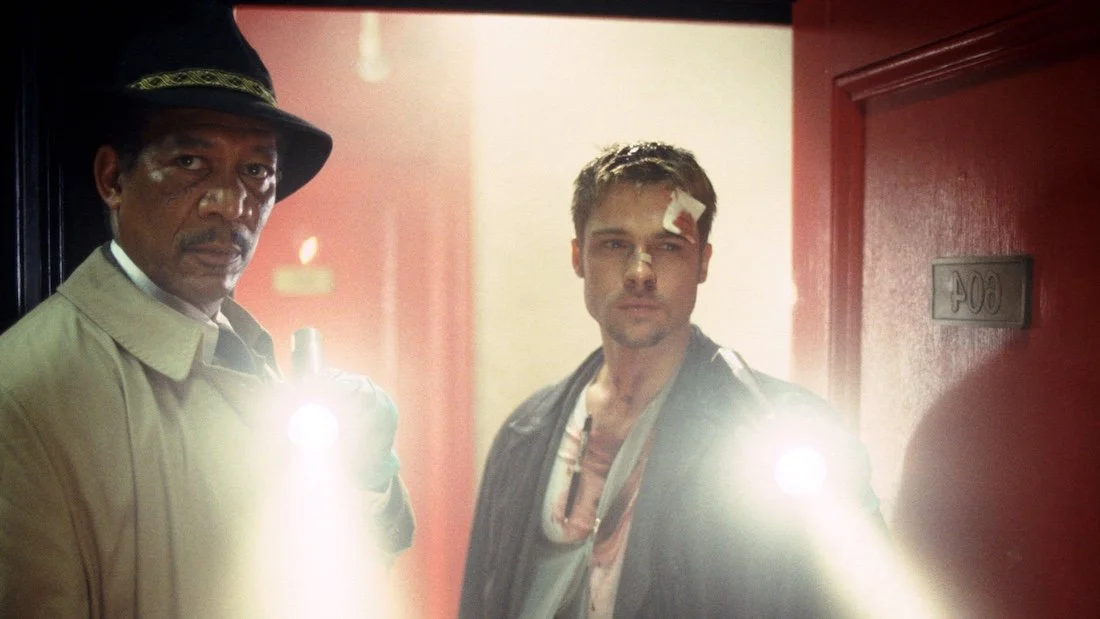
In 1995, I was in fifth grade. It was a transitional year for many. But for me it was a time of contemplation and confusion. You see, I was raised in the Methodist faith but educated within the Catholic school system. The ‘95-‘96 school year was when Catholic students would be preparing to receive the sacrament of Confirmation. It was an academic requirement that I’d have to study for the rite of reaffirming the faith begun at Baptism. But the sacrament itself I was forbidden to participate in as a non-Catholic. All that preparation and memorization for nothing but a grade. Just a spiritually empty A+ on the report card. This was the year I first felt at odds with organized religion. In adulthood, I became a proud member of the Church Of Don’t Be A Dick. Be a good person. Do good things. Goodness for goodness’s sake. Just…don’t be a dick, basically.
I think that’s part of the reason I believe David Fincher’s crime drama/religious extremism horror SEVEN (often stylized as SE7EN) really stood out to me in the pantheon of the thriller genre. I remember sitting in the theater with my parents and, like many theatergoing experiences before, I was the youngest member of the audience. But no matter age or creed, we were all there for the same things: We wanted to be entertained, to be thrilled. We anticipated a mystery, an intriguing police procedural, and the eventual satisfaction of catching the bad guy.
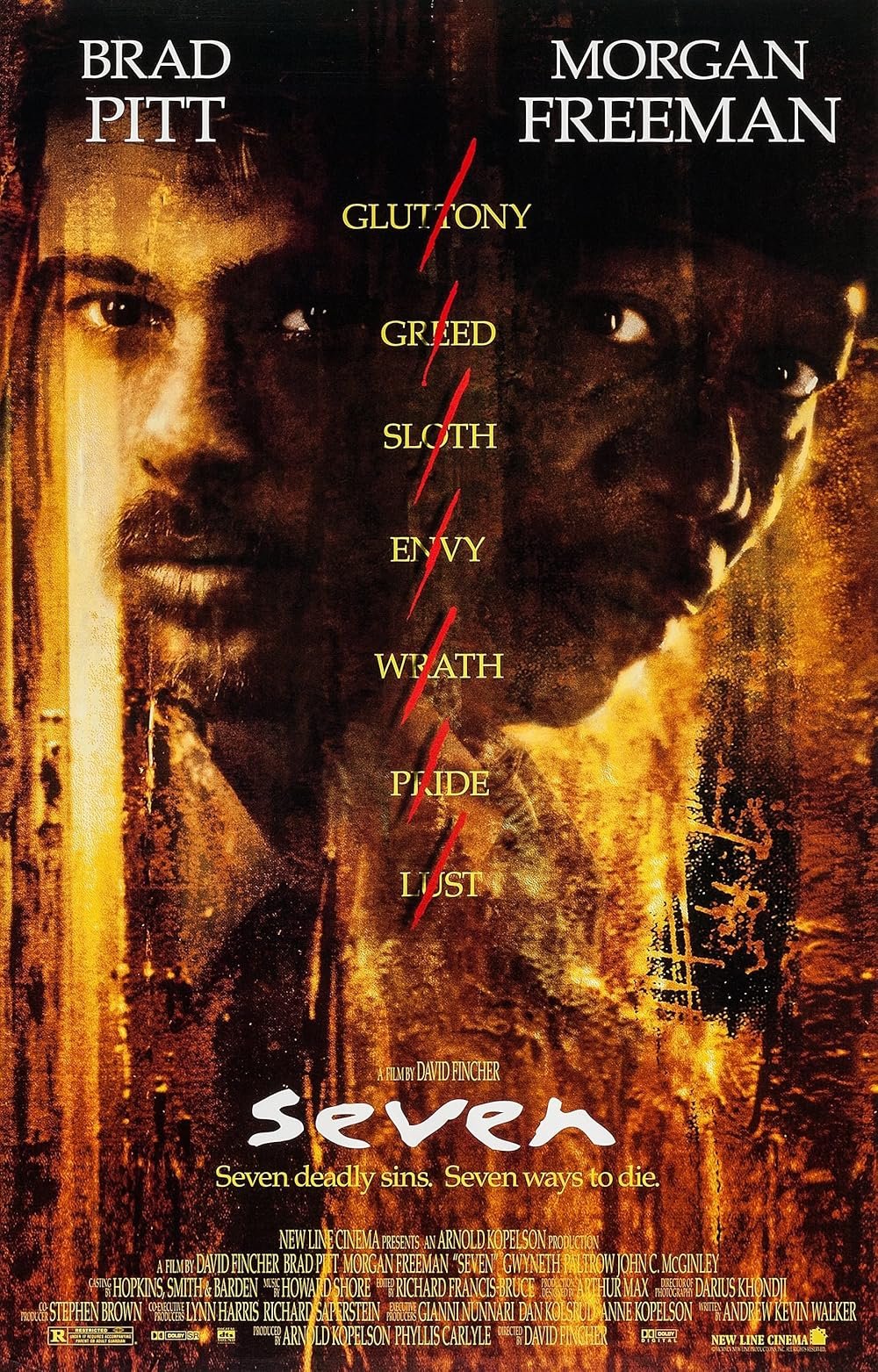
Boy, were we in for a surprise. From the hellish opening montage set to the perfect remix of “Closer” from Nine Inch Nails, to the collectively stunned silence at the end credits, SEVEN was something special.
Fincher’s eye for classic noir elements paired with urban blight under a near constant downpour made for entrancing visuals. Howard Shore’s pounding score, the elevated good cop/bad cop pairing of Detective William Somerset (Morgan Freeman) and Detective David Mills (Brad Pitt). All the elements were there. Yes, SEVEN was a crime drama. But it was also an intellectual exercise in dissecting core Christian concepts. And it’s something in which I felt a strange and timely thematic connection.
But let’s start at the beginning.
Detective William Somerset is days away from retirement. The reserved, soft-spoken man of intelligence has seen far too much of the unnamed city he’s served. The violence, the indifference, the sounds and sights of a suffering city—it’s all just another day at the office for most. But it’s certainly new surroundings for young, brash Detective David Mills and his wife Tracy (Gwyneth Paltrow). In a stunning display of idealism, Mills requested a transfer to this city with the hope of doing some good where it's needed most. Somerset’s years of experience and emotional exhaustion and Mills’ uneven temperament are instantly at odds, making the detectives an entertaining odd couple to crack the latest case.
But just as Somerset is about the turn in his papers for good, he soon realizes that this particular homicide is more than just murder for greed or passion. It’s the prelude to a sermon. And he and Mills are the congregation to the crimes who must decipher the meanings behind them to catch the killer.
By the time the second crime is committed, Detective Somerset sees the pattern and lays out the modus operandi for their killer with support from biblical texts and literature alike. Detective Mills is the stand-in for the audience as he crams Dante’s Divine Comedy and the works of Saint Thomas Aquinas in hopes of finding contextual clues. Again, a sort of forced learning I can certainly sympathize with.
Gluttony. Greed. Sloth. Lust. Pride. Envy. Wrath—these are the seven deadly sins of Christian understanding. And each victim in SEVEN is a tableau to the sin in which they represent. But there’s one sin missing in namesake.
As it turns out, the seven deadly sins that we now know were something of a work in progress. Way back in the 4th century, a monk by the name of Evagrius Ponticus first drafted what would become the list of deadly sins for which Christians would receive eternal damnation if they did not repent. And that list had 8 entries. In the centuries and canonical revisions that followed, the 8th sin was tweaked and eventually encompassed by the sin of sloth, then omitted from the list. According to Ponticus, that mortal sin was called acedia.
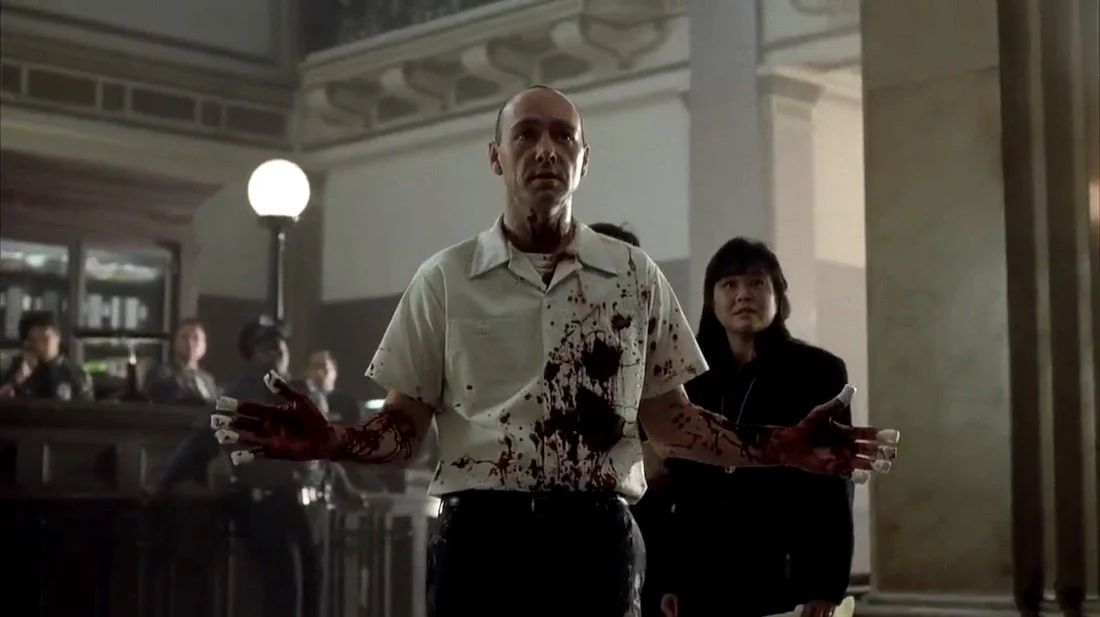
Acedia is a word of Greek origin that translates to listlessness, a sense of hopelessness and despair in life. In short, acedia is likened to apathy. And with regards to SEVEN, apathy could’ve had top billing as character all its own. From the city noise dulled to the rhythm of Somerset’s metronome, to the many instances of nameless victims referred to only by their sins, to the bending-the-law ways Somerset and Mills investigate the crimes…apathy is in the tonality, the setting, the theme.
The central characters even argue the presence of apathy and what it means in their profession, with Mills refusing to acknowledge the world as Somerset knows it to be. Even the killer, known formally as John Doe (a downright chilling Kevin Spacey), is a self-professed testament to the apathy of society. Of “seeing a sin on every street corner” and not caring. Doe then makes himself martyr to his own religious fanaticism when he takes on the sin of envy and suffers David’s wrath, thereby completing the reaffirmation of his faith.
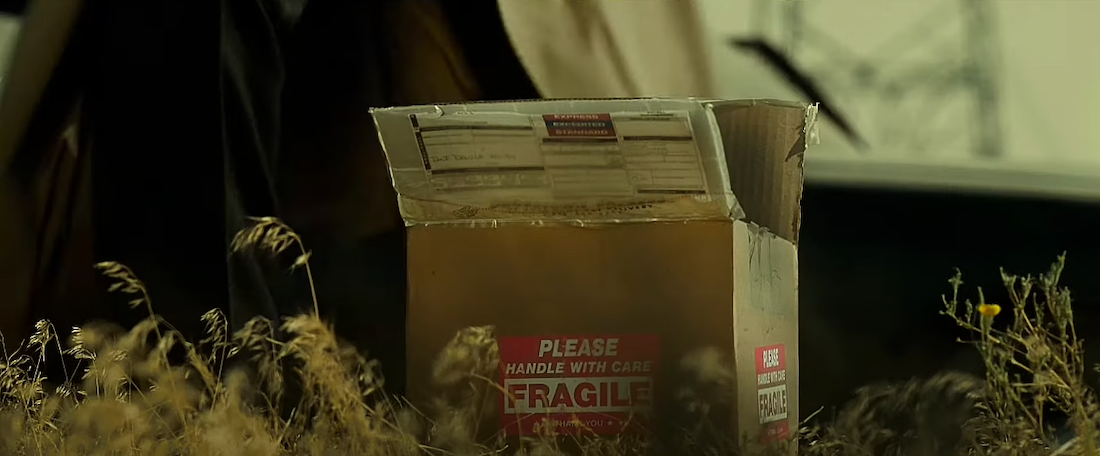
So what’s in the box then?
Gwyneth Paltrow’s head, of course—a shocking ending which David Fincher smartly insisted upon. But there’s more. It’s something Somerset saw coming, and it’s not a happy ending. Let’s unpack the box by first doing a deep-dive on its recipient. Hotheaded, young, hopeful for change but green to the dire surroundings he’s chosen. He’s the hero on a personal quest. His fatal flaw? Arrogance. And within that infamous box, next to the severed head is the exodus of this play. As the credits roll, we realize it. This wasn’t just a crime thriller. This wasn’t just a horror movie about a serial killer motivated by Christian fervor and the need to proselytize. This was a Greek tragedy.
And in the years of film criticism and analysis that followed SEVEN’s release, John Doe was right in the end. “People will barely be able to comprehend but they won’t be able to deny…What I’ve done is going to be puzzled over and studied, and followed forever.”
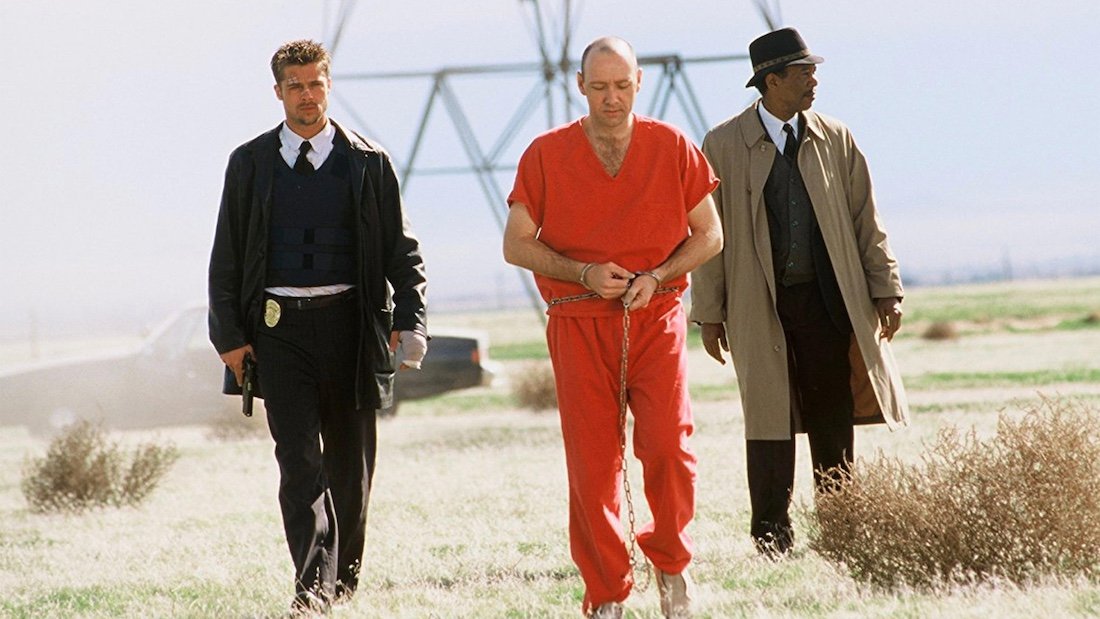
There’s a lot that can be said about SEVEN. But in the end, perhaps the biggest takeaway is the easy allure of apathy…and the horrors it would take for us to collectively care as a society.
People are being kidnapped off the street by masked men.
Families are facing starvation because nutritional aid is being denied.
Healthcare premiums threaten to bankrupt the sick.
I wonder, exactly how much more horror can we ignore in the name of acedia? Maybe you’d like to join me in the Church Of Don’t Be A Dick. They’re always looking for new congregants.