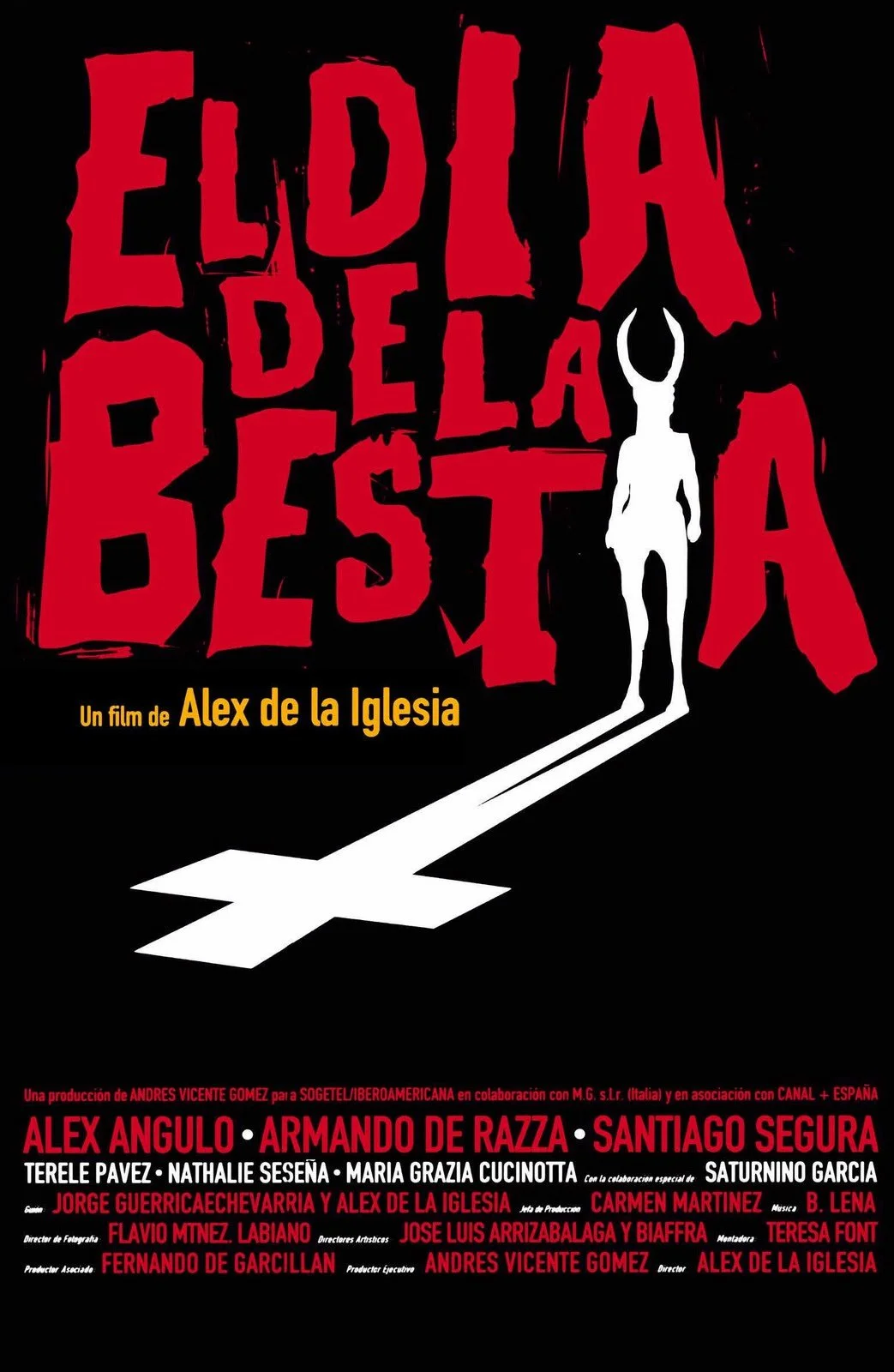
Number 20 — EL DÍA DE LA BESTIA

For the month of October, we’re counting down the best horror movies of 1995! Check back every day for a new entry in the list.
“Knock, knock.” I meekly utter while gently rapping my knuckles on the finely sanded mahogany door. The air in the office is thick with smoke but not from a gnawed on stogie but rather from the fumes hastily rising from the back of an overworked projector as my editor burns through genre movies with the speed and voracity of Johnny 5 consuming input in SHORT CIRCUIT. The celluloid clacks ominously like a firing squad.
“Door!” He bellows from behind a massive, darkly stained, walnut, vintage, partners desk and gesticulates wildly in my general direction as the beam of light from the ajar aperture is cast through the darkened office onto his busy screen. I flinch and hastily shut the door. He juts a hand stiffly across the intimidating escritoire and grumbles, “Dazzle me.” I shakily surrender my latest articles for Neon Splatter. With one eye still fixated on the flickering projections, the other scans my most recent monuments to obscure references and run-on sentences. “They’re crap.” He sighs heavily and proceeds to flip through my slew of spelling and syntax sins on sheets of printer paper. “Crap. Crap. Mega-crap. I’ll take ‘em.” Just as I turn to sheepishly skulk back to my humble workstation, the active volcano that is my editor erupts. “Wait a second! What’s all this poppycock about Christmas and Coca-Cola? This is supposed to be an article on a horror picture, dammit!”
“But R.D.,” I plead, “it all makes sense when you think about it in six degrees of separation sorta way! Let me see if I can arrange this theological death metal pop culture thought jazz more succinctly.”
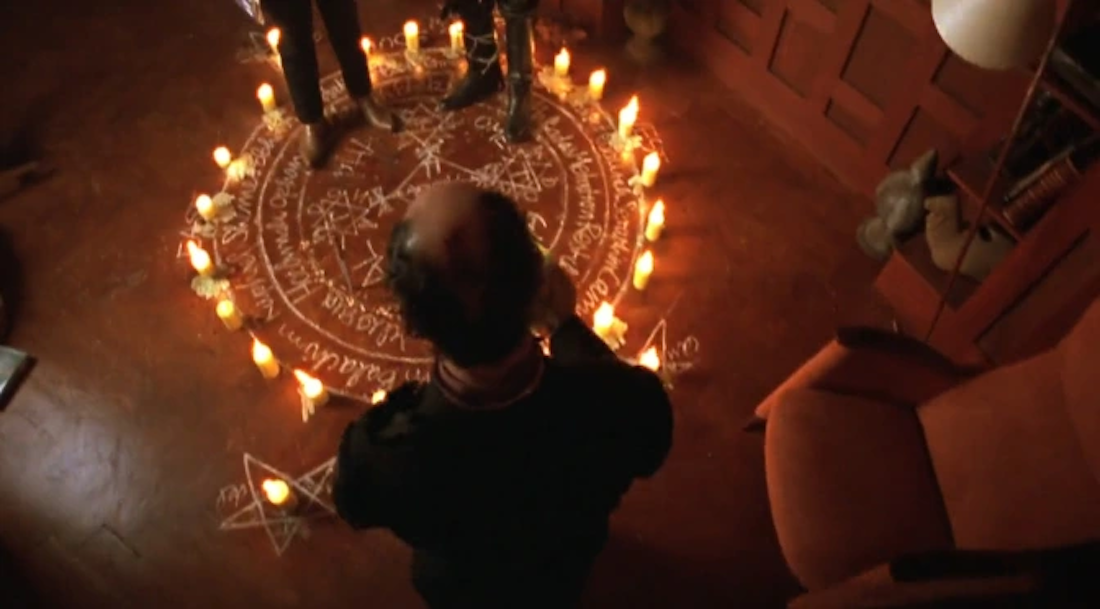
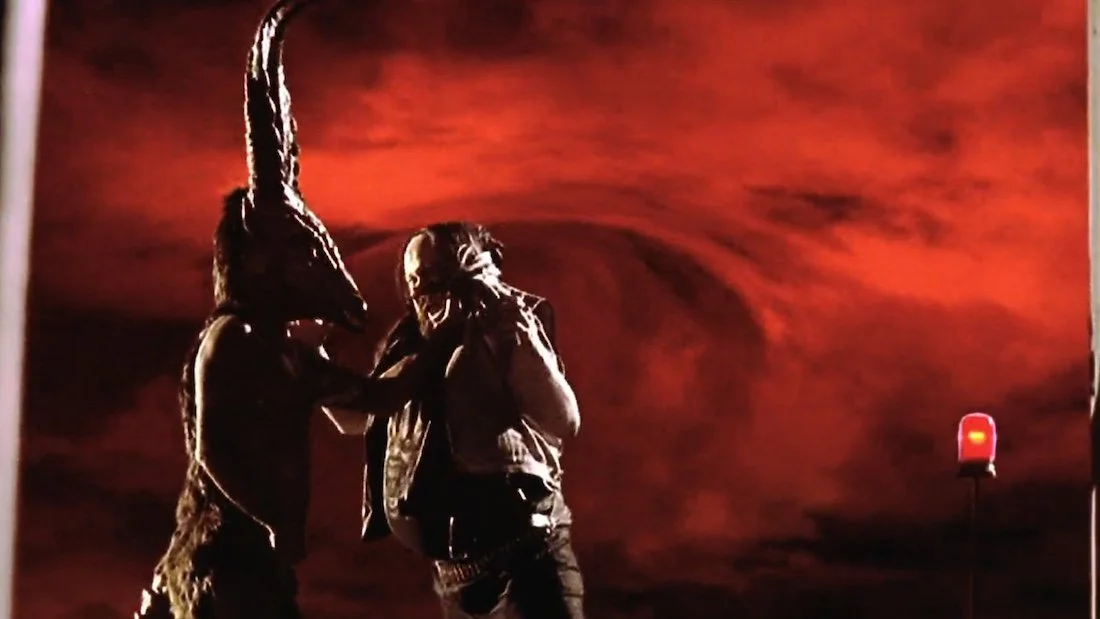
While far right wingnuts rally without much resistance for what would be the fiftieth predicted rapture in my lifetime, our hero Cura prefers a more proactive approach to damnation in Álex de la Iglesia’s EL DÍA DE LA BESTIA (1995) or THE DAY OF THE BEAST as it’s called in The King Of Queens’ English. Though ostensibly a modern retelling of The Ingenious Gentleman Don Quixote Of La Mancha with Cura as Don Quixote and metal head José María playing the part of Sancho Panza, EL DÍA DE LA BESTIA is ultimately about the potential for evil and chaos a seemingly harmless person is capable of, especially when motivated by fanaticism. Cura is a Spanish priest who utilizes the ciphers of Johannes Trithemius to determine the birthdate of the Antichrist decoded via the Book Of Revelation. He embarks on a mission to commit as many sins as possible to invoke Satan in order to stop the coming apocalypse, leading him to maneuver through Madrid to mete out muggings, murders, mayhem and metal for a merry Christmas caper!
That’s right, gang, we got us a Catholic Christmastime chiller on our hands! Not in a Norman Rockwell/Coca-Cola way (more on that later) but served with substantial sides of satire and slapstick with a flavor that is decidedly Spanish. Think more Sam Raimi’s EVIL DEAD II (1987) and less William Friedkin’s THE EXORCIST (1973). Its horror is tempered by almost cartoony violence and physical farce à la The Three Stooges, thus fitting right in with the oeuvre of Raimi. Societally speaking, Spain underwent some dramatic changes in the years following Francisco Franco’s totalitarian dictatorship (1939 to 1975) based on "National Catholicism” and the philosophies expounded in this film are very much a contrarian response to that. For the first half of the film, we as the audience find ourselves questioning the validity of Cura’s blind faith. Socially, the embracing of skepticism and secularism in response to the dethroned draconian dogmatic domain that dominated the preceding decades in favor of the newly adopted parliamentary democracy. Narratively, it’s not until a very true to form satanic invocation ritual that we learn that Cura’s faith-based calculations turn out to be correct but it’s a bit of a nail-biter getting there.
Now that we’ve established the cultural climate, let’s chat about the Christmas context. Christmas is a big deal in Spain (secular city-state be damned) and works perfectly for co-opting the Nativity (homogenized from the pagan winter solstice celebration Yule) for the prophesied Antichrist to mock the Catholic faith. Americans experienced a similar cultural reinvention and assimilation in the 1930s via Coca-Cola. Our current perception of Santa Clause and Christmas was largely informed by an ad campaign designed to spike slumping soda sales during colder winter months. Think of our present-day conception of Old Saint Nicholas in a red hat and coat with white trim and black boots. Those are Coke colors! Now, I’m not accusing Coca-Cola of being the devil, but this is certainly a detail worth noting and one can’t help but make the comparison. Soda also plays an important part in the story of EL DÍA DE LA BESTIA with a damn thrilling action set piece atop a giant neon Schweppes sign in which our protagonists dangle from. That’s Schweppervescence!

Fast forward a few years and what multi-national soda conglomerate would sponsor a big budget push to bring Marvel Comic’s Spider-Man to silver screen? Why none other than Cadbury Schweppes, of course. Parent corporation for product-placed Dr Pepper and newly acquired by The Coca-Cola Company in 1999. And who should sit in the director’s chair to bring Ol’ Webhead to life in living color? You guessed it: Samuel Marshall Raimi.
“Ok, you’ve made your point. We’ll run with it! Now will you stop sending me pictures of Julia Roberts in a thong and get me a damn decent photo of that menace Spider-Man!”
I nod enthusiastically. “Right away, chief!”
As a postscript I feel compelled to disclose that the final draft of this piece was completed during our regularly scheduled rapture which never came like a Grubhub order canceled only after it was too late to order from somewhere else.