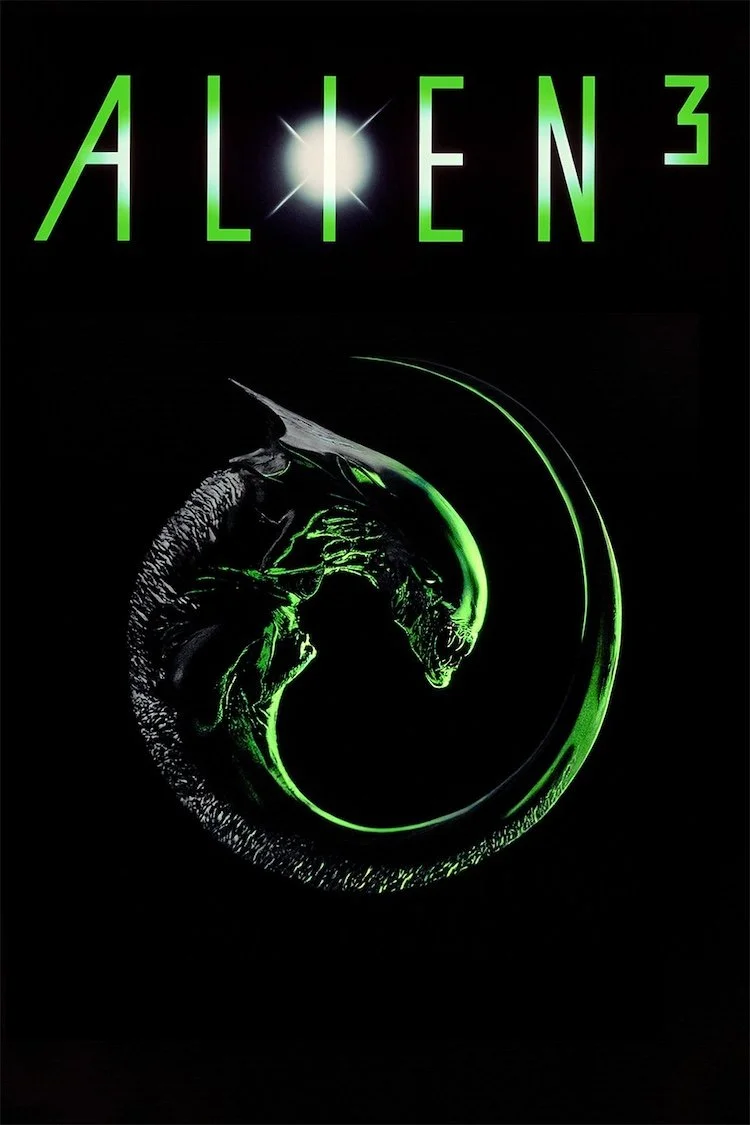
UFOctober: ALIEN 3 (1992)
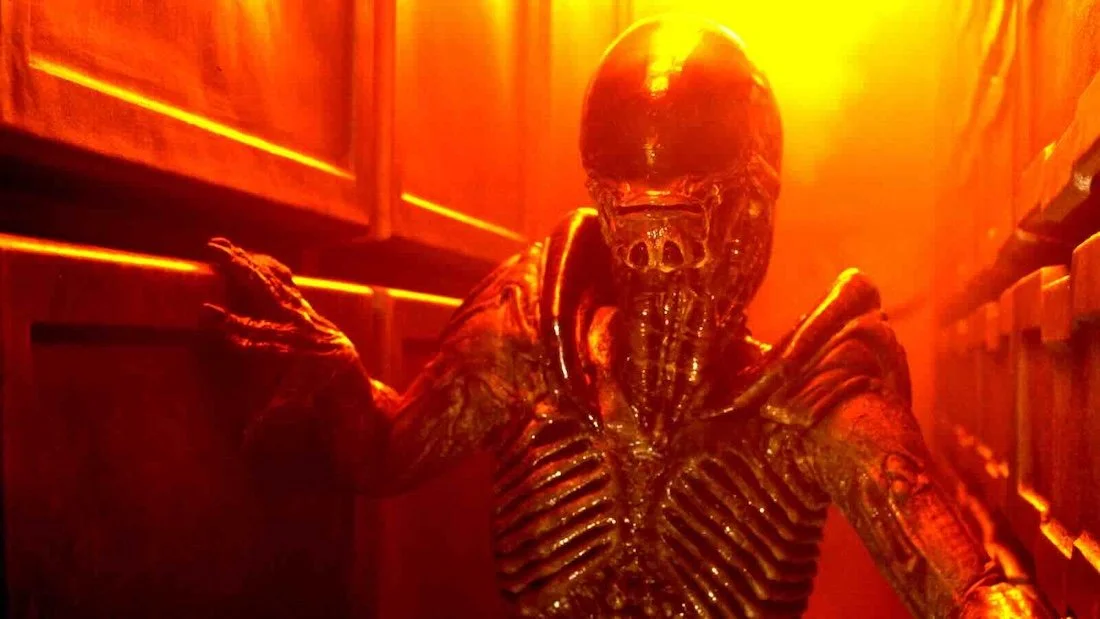
The Alien franchise has seen its fair share of discourse. From the constant handwringing over the prequels, PROMETHEUS and ALIEN: COVENANT, to the takes that point towards James Cameron’s ALIENS being the film that “ruins” the series. After 47 years since Ridley Scott’s original first terrified audiences in 1979, there isn’t a take that hasn’t been said. And while I may take issue with those who deny the greatness and impact of Cameron’s sequel (a film so iconic it’s arguably as influential as the original STAR WARS with how many films have copied it since, all while still remaining perhaps the Gold Standard in action horror filmmaking. And that’s before looking at its influence being so pronounced it practically created an entire genre of video games), the truth is the real dividing line in the series began with David Fincher’s directorial debut, ALIEN 3.
ALIEN 3’s development Hell is well-documented at this point. Coming just six years after James Cameron’s film, the threequel suffered through conceptual and pre-production issues such as exchanging through a litany of well-known creative hands, with their differing ideas tossed around, rejected, or both; production challenges that saw the film switch cinematographers and shoot without a finished script (to say nothing of the film’s original teaser trailer which had nothing to do with the eventual film that released); it’s a miracle the film was even semi-coherent by the time of its release in May 1992. And it didn’t help that both critical and commercial reception to the film wasn’t that warm either.
And much of that critical consternation came from the film’s original sin: Killing off Hicks, Newt, and Bishop. Throw in an all-male prison planet full of rapists and murderers, a desperation that sees said men killed off one by one, and a finale that ends with Ripley sacrificing herself to kill off the Xenomorph menace for good, and you have a recipe for what many consider a bad time. And while I’ve never had a problem with the death of these stalwart characters (maybe it’s because I have the remove of not being there in the six-year gap between ALIENS and ALIEN 3. Or maybe I’m dead inside), to some extent, I get it. When ALIENS began, Ripley had nothing. Tucked away in cryo sleep for 57 years, she awoke to a lost daughter, no job, and a universe she hardly recognized. By the film’s end she made herself a surrogate family with Newt as her daughter, Hicks as her husband, and Bishop as their lovable, bisected uncle. Things were looking up for Ripley and the sole survivors of LV-426. That is, until a couple of Facehuggers decided to ruin the mood and crash land them on Fury-161, killing everyone save Ripley, thus starting the series’ stalwart heroine at minus one.
It’s a move that instantly sets the mood for the film to come. And I still love it. Why? Well on one hand, anyone who knows me knows I love a messy film. And a lot of that love is in part due to me being able to see one’s creative vision shine through all the cracks that make up the mess (and make no mistake, while the Assembly Cut is my preferred version of ALIEN 3, it is an exceptionally messy film). Yet on the other hand, horror is infamously a transgressive genre meant to shock and scare. So why wouldn’t I embrace the bold choice to rob Ripley of any sense of normalcy? Especially in a series where the corporation responsible for the events of the previous two films was willing to wipe out a crew of blue-collar space truckers and let an entire colony be annihilated nearly 60 years later, all so they could net a profit. If regular working joes and human colonists aren’t safe, why would a half-blind marine, a little girl, and a bisected android not be on the chopping block either? Moreover, despite the film’s bleak tone, and willingness to kill off beloved characters, I find Fincher’s debut to be arguably the most hopeful in the series. It’s uninterested to play it safe and from that daredevil attitude suggests a final form of closure for one Ellen Ripley and her ongoing struggles against the Xenomorph and the Weyland-Yutani corporation.
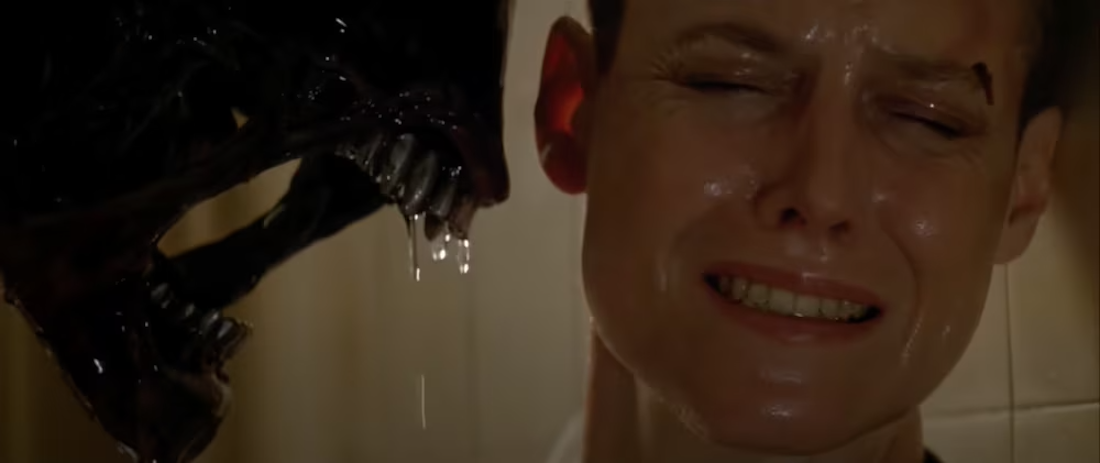
But with that in mind, if there’s an angle I want to praise the film that may have been previously uncovered in the nearly 35 years since its release, it’s the film's ending as a representation of a bygone era. You see, back during this period when the third film released, the idea of a sequel was seen as a cash-grab and typically “lesser than” with no hope of a follow-up matching the thrills of the original. There’s a reason why the saying “No good sequels exist unless you’re THE GODFATHER PART II or THE EMPIRE STRIKES BACK” was bandied about back then, either due to the quality of the film or the money it made in relation to its predecessor. Unlike how many films are made today, for the longest time, films had no expectation of a continuation, and as such when they ended, they ended. Look no further than the FRIDAY THE 13TH or NIGHTMARE ON ELM STREET series. Each film ended with Jason or Freddy being defeated. If those films stopped before their “Final” films came along, the result was still the same: the day was won and the evil was defeated. Figuring out how they came back was a problem for the next film. And the same went for the ALIEN franchise. How did the original 1979 film end? With Ripley in cryo sleep. The same for its sequel in 1986, only this time with a few survivors tagging along. But Fincher and company opted to shoot for an ending that more or less put a definitive stamp on Ripley’s story for good.
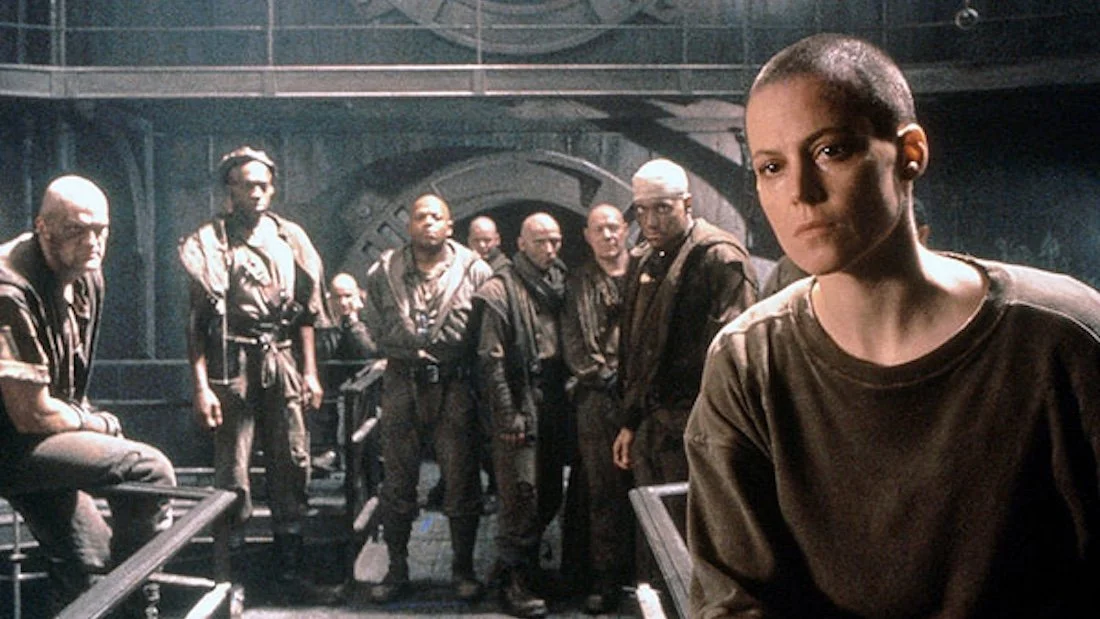
Returning to my argument of the film’s finale as “hopeful,” for my money this is due to the fact that the film is allowed to end things on its own terms. There is no worry of setting up what comes next. No pretension of trying to keep the series going in perpetuity. Fincher comes in, tells his story, and ends it (and yes, I’m actively ignoring ALIEN RESURRECTION — a film I like — for the purposes of my argument). And in that ending, Fincher gives Ripley both the victorious final laugh, and peace. In the face of hopeless odds against both creature and capitalist institution, a group of strangers make a stand. Disposable men whose lifetimes of degeneracy have left them as expendable as both the crews on the Nostromo and Sulaco, make a choice to do one good deed before their lives are snuffed out. A woman, robbed of her job, livelihood, family, and any sense of normalcy takes a fatal situation and turns it into one last middle finger toward the company that wronged her time and time again. Together, repentant prisoners and a beleaguered heroine give everything they have to make it count. Their final act is monumental: the perfect organism is destroyed and, as a result, the same institution that spent so much time and resources across half a century is robbed of the very dollar they were chasing. It’s bittersweet, yes, but poetic in its own way. But perhaps the biggest of all is that Ripley finally gets to rest. No more company. No more alien nightmares. Just peaceful, eternal rest.
ALIEN 3 has had its fair share of defenses throughout the years. From Charles S. Dutton’s fire and brimstone spiritual leader Dillon (who for my money has one of the great cinematic rallying speeches), religious imagery and overtones, the sprawling British supporting cast filled with TV, character, and thespian actors, Elliot Goldenthal’s ambient yet operatic score; the works and more. The film has its merits and then some. But for this UFOctober if there’s one thing I want anyone to walk away the next time they watch David Fincher’s messy directorial debut it’s this: Even though your beloved supporting characters are dead, at the “ass end of the universe” there’s still hope that even the worst of the worst can still make a difference. And if that’s not hopeful, I don’t know what is. And that’s why I love ALIEN 3. Cue the outstanding fanfare.