

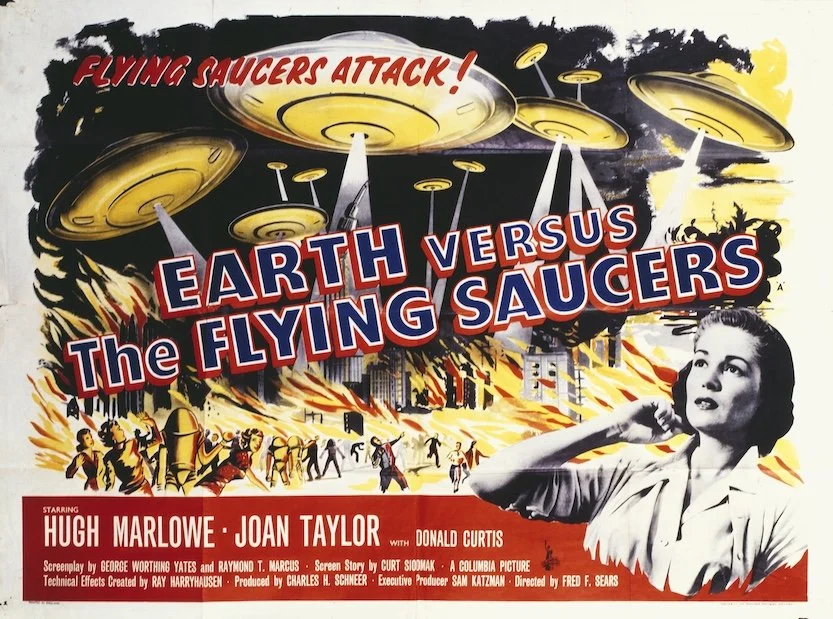
UFOctober: EARTH VS. THE FLYING SAUCERS (1956)
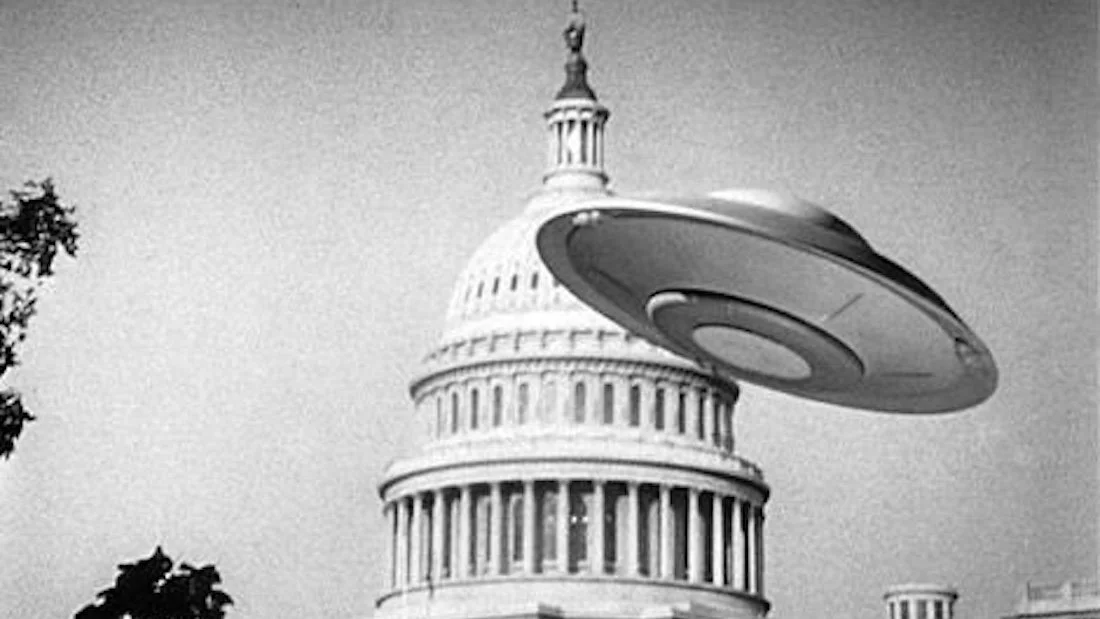
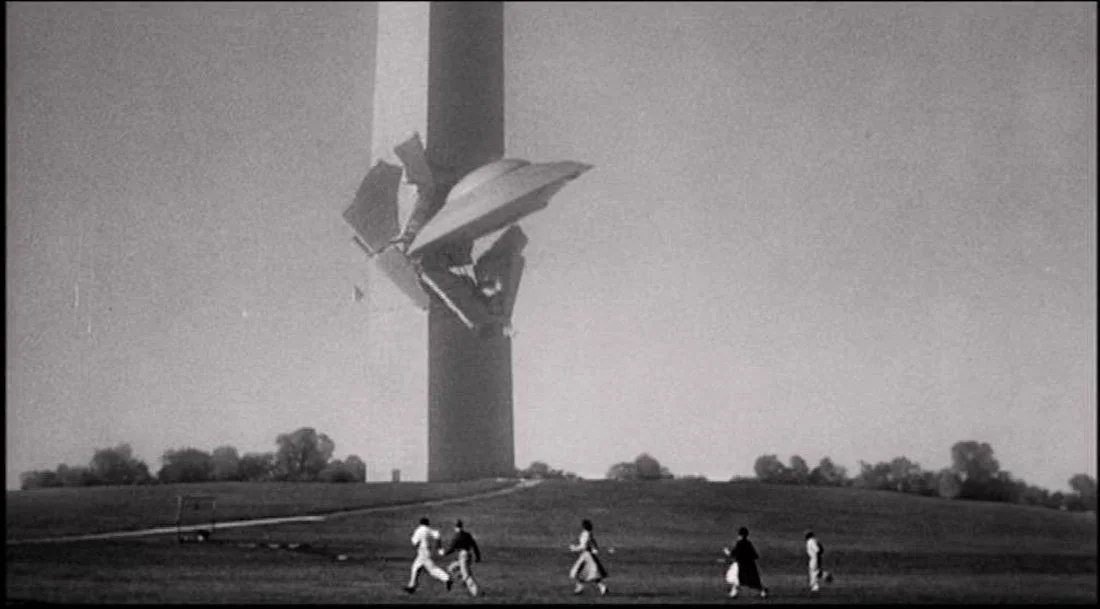
EARTH VS. THE FLYING SAUCERS marked a turning point in special effects, turning B-movie spectacles into an art form. Ray Harryhausen received the budget to show off his stop-motion animation skills. And show off he did, combining animation with real-life footage from military accidents. Harryhausen did what he could when the film couldn’t give him creative aliens, aiming for the militant, menacing look. The destruction of the Washington Monument stunned me; that was all done with stop-motion animation?
Special effects can only go so far, however; the movie focuses on its story and emotional beats. The script gives off strong Twilight Zone vibes; given that The Twilight Zone would premiere later in 1959, the narration, tone and music influenced the show’s style. Curt Siodmak wrote the script for EARTH VS. THE FLYING SAUCERS and later became a Twilight Zone veteran, so he carried his chops from one project to the other.
What emotional motifs reign supreme? That acting on fear and using violence as a first resort will only lead to more devastation. And to remember when you don’t need to be the smartest guy in the room, or the world.
Earth’s Atmosphere as a Battleground
Much of the film focuses on how the Americans are responding to an invasion. We don’t see how the world, especially the Soviet Union, responds to flying saucers clogging up their airways. (Coincidentally, The Soviet Union would launch the Sputnik I satellite in 1957, starting the space race a year after this film premiered. If the production crew had known about this fact, they could have incorporated Sputnik’s development in tandem with the other destroyed satellites at Skyhook.) The US military has all the guns at hand at their bases, and they fire at the slightest threat.
Unfortunately, the aliens have better tech. They can dissolve entire trucks and soldier formations in seconds and explode any obstacle in their way. While they mention that they called to signal their intentions, the wrong frequency meant that Dr. Marvin (Hugh Marlowe) didn’t understand. They acknowledge the error and make some adjustments. Still, Dr. Marvin and the US military treat them with caution. A benevolent group of aliens wouldn’t have wiped out an entire unit.
Fear Is Not the Answer
Given the postwar atmosphere and Red Scare, one can assume that the movie’s approach on the “Shoot first, ask questions later” takes as many shots at this notion as the military does at the aliens. The military’s directive to fire on the approaching aliens leads to all of Skyhook wiped out within minutes. Dr. Russ Marvin and his wife, Carol (Joan Taylor), survive because they stayed underground for the launch.
Plagued with guilt that he didn’t receive the alien’s message in time, Dr. Marvin strives to communicate with them again. He’s scared, and Carol is as well—but he feels that he must atone for that mistake. The aliens arrange a meeting, which Dr. Marvin attends despite governmental orders to stand down. Carol insists on coming with him, and her intellect is valuable. She’s twice as scared, especially when learning the aliens took her father hostage. Yet she insists on staying and helping where she can. Carol earned that medal she receives at the end of the film.
The aliens also reveal that they sometimes resort to fear, showing they are imperfect. They explain that they shot down the satellites sent into the air because they feared the devices were defensive weapons. Safe to say if they hadn’t done that, they could have made a better first impression on Earth. Dr. Marvin realizes quickly that the aliens don’t have good intentions. He’s terrified of going to see them after surviving the Skyhook assault but still goes. The man doesn’t want to risk more senseless deaths. It’s his courage that makes him figure out how to prevent the invasion.
Arrogance Causes A Saucer to Fall
The aliens’ main fatal flaw is their arrogance. On Earth at least, most leading armies wouldn’t land in the middle of a military base. They not only land but also march out with guns in hand. That was not the first impression they wished to keep. If the aliens had realized that Dr. Marvin hadn’t responded, they could have avoided this conflict and staged a negotiation akin to what the Kanamits would later do in the short story and Twilight Zone adaptation, “To Serve Man.”
What the aliens don’t anticipate is Earth fighting back once realizing they are outgunned. They assume that a display of power means that all the nation leaders will fall in line, not willing to risk that many lives. Taking a general hostage adds icing to the cake, showing they can control him. Knowing everything on Earth, which they prove when Dr. Marvin’s group, including his wife and the soldier assigned as a bodyguard, asks a series of questions related to culture and history, they also assume that the countries mid-Cold War will not come together against a common enemy. (In real life, they may be right as we were once bad day away from total nuclear destruction.)
Instead, scientists from around the world collaborate to create a counter-weapon for the aliens’ armor. The politicians swallow their pride when facing a threat that can wipe out all their tanks and destroyers. Experts from India, the U.K., and even the Soviet Union rally together. They figure out how to cut through the saucers’ earth field and learn from the aliens’ bodies and armor.
The scientists also learn from their mistakes at Skyhook. When Dr. Marvin and the others get wind of the aliens spying on them, they quietly evacuate the facility and decide to test the electronic gun on the approaching saucer. Not a moment too soon, as the saucer opts to blow up the lab after being forced to take flight. Even then, the survivors have to navigate a burning forest and figure out how to get their gun to Washington D.C.
When You Need to Swallow Your Pride
The blatant critique of a “strike first” mentality would later appear in certain episodes of The Twilight Zone like “The Monsters are Due on Maple Street” and “The Shelter,” but others exist. You can tell the writers remembered war and its consequences when people reach for the guns first.
While EARTH VS. THE FLYING SAUCERS, it sets the standard for what an alien invasion allegory needs to accomplish. It sets stakes, establishes the invaders as a threat while showing the humans as imperfect, and shows off glorious effects on a budget. Harryhausen takes the opportunity to flex. But most importantly? It shows to not act rashly, learn from your mistakes, and don’t let pride get in the way of handling a crisis.