

The Clash Between Fear And Curiosity
THE THING FROM ANOTHER WORLD cemented many tropes associated with ice and alien discoveries. From a mysterious creature trapped in the ice to an antagonist killing dogs to indicate its evil qualities, you can see how the film inspired similar visuals. The iconic climax where the alien is set on fire also involved practical effects without stunt doubles; it also seems to lack modern 2020s actor union protections given the high risk of killing or injuring everyone needed for the take.
You can tell that the movie has the trademark loving kitsch of the early science fiction movies. The plane scenes remind me of DR. STRANGELOVE without the threat of nuclear war or obsessive war generals. Based on set design, the locations like Anchorage didn’t feel like Alaska to me, though the winds did. (I was lucky to travel a few years ago on vacation with my family.) At the same time, the stakes remain high along with the tension as a monster hunts those at the military base.
With a higher budget, THE THING could have adapted the source material’s plot of a shapeshifting alien; since the filmmakers lacked the funds to engage in doppelgänger horror, they went for the next-best option. In hindsight, this deviation makes the 1951 THING more unique as it focuses on primal fear rather than mistrust, avoiding comparisons to INVASION OF THE BODY SNATCHERS. Rather than identifying a true human or a monster masquerading as one, we have a crew of intellectuals having to overcome personal disagreements to stop a hostile threat in a threatening environment. Primal fear takes priority as the temperature drops with the number of characters.
What Lies Beneath An Icy Surface?
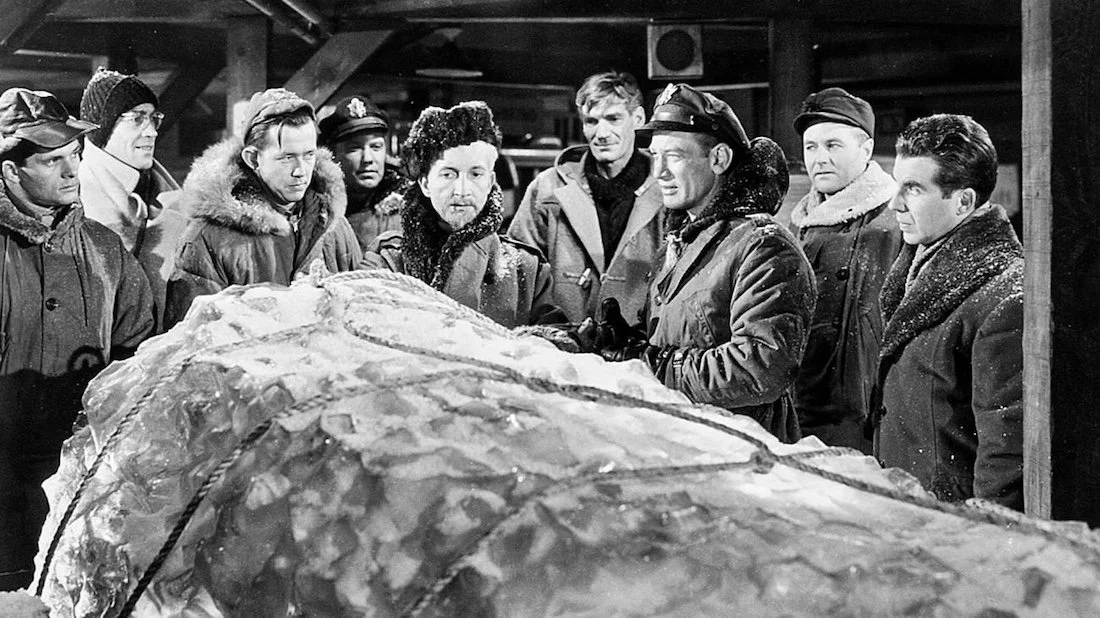
Based on the novella “Who Goes There?” by pulp science fiction writer and editor John W. Campbell, THE THING FROM ANOTHER WORLD shows early isolation horror in black-and-white. A journalist and scientist fly from a cozy Anchorage base to an Arctic output in the middle of nowhere with Captain Pat Hendry and Corporal Barnes as well as a small flight crew and sled dogs. Why? Because the base’s military crew found a plane trapped in the ice. Unearthing it reveals a frozen alien creature, one they cannot identify.
Captain Hendry takes charge; they take the block of ice with the alien trapped inside under surveillance and refuse to let any updates reach Anchorage. Thanks to a scared watchman using an electric blanket, the ice melts. It turns out the alien is hostile and shrugs off bullets, wanting blood from any warm body. The crew has to work together before it wipes them out, and the creature has a brain.
When Is Fear the Appropriate Response?
The main interpersonal conflict involves multiple characters disagreeing on what to do with the alien. Captain Hendry and Corporal Barnes believe in withholding the knowledge until they get further information, while Dr. Carrington wishes to communicate with the creature, and journalist Ned Scott wants to report this discovery to the press.
Captain Hendry fears that whatever the creature is, the awakening can only bring devastation. Before it establishes itself as hostile, Hendry and other crew members point out that even if the creature is harmless, it could carry germs and bacteria from another planet, microorganisms that no Earth antibiotics could treat. (Given the polio vaccine came out in the 1950s, you can see the rationale.) He would rather initiate a lockdown pending orders from his general. As a war veteran knees-deep in the Red Scare, fear would become the captain’s default response. He is responsible for everyone at the base; any wrong decision could lead to him and Barnes facing a court-martial.
In contrast, Dr. Carrington wants to learn from the creature. He’s upset on learning that the attempts to unearth the plane destroy potentially useful discoveries and alien technology. The alien itself is their only lead. We can commend the doctor’s empathy but not his stubbornness, which the others attribute to sleep deprivation and stress.
Scott cares only about his story. He mentions that proof of aliens is a game-changer for humans. A picture would provide the icing on the cake, and alas, 1950s technology means that he can’t snap a Polaroid as soon as they set up the frozen alien at the outpost. Though unlike Dr. Carrington, he switches priorities on finding out the alien kills humans and dogs
The movie seems to take Captain Hendry’s side, given that the alien awakening and Dr. Carrington’s attempts to negotiate with it lead to several deaths. Unlike other science-fiction movies of the time, which warned against acting rashly against a hostile threat, the crew doesn’t have time to think carefully once the alien melts out of its popsicle prison. Wanting it and any relevant news under lockdown becomes the best response. Captain Hendry only gives Scott permission to spread the story once they handle the threat.
Wanting to Learn from the Enemy
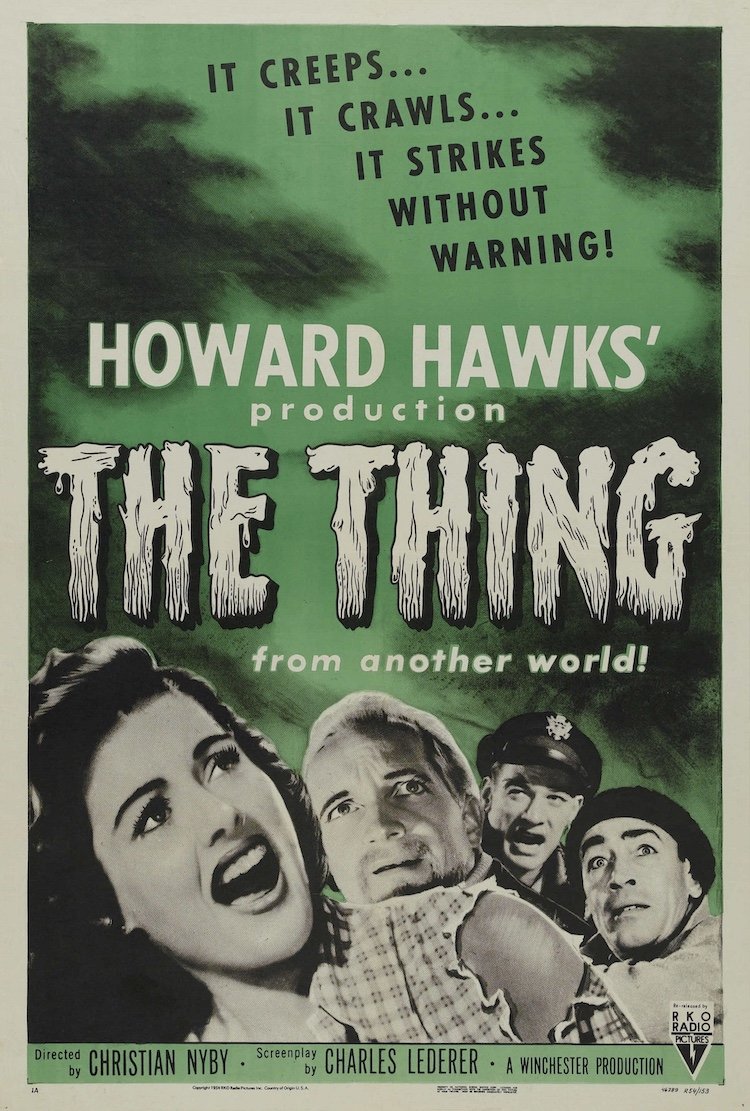
THE THING FROM OUTER SPACE became a science-fiction classic thanks to its directorial decisions. Unlike other alien movies, the production crew made the best of the limited budget to focus on story and atmosphere. They succeeded, with the film becoming a box office hit during a year of alien movies.
Teaching people to fear mysterious creatures has become dated with hindsight, but the creative techniques to increase tension and conflict haven’t. Ultimately, the human characters carry the weight of the movie with their flaws and clashing perspectives. The isolation brings out their best and worst qualities, more often the worst. Snap judgments produce better results than retrospection does, necessitating quick thinking. When those who hesitate are lost, violence truly becomes the reasonable reaction.