
UFOctober: THE X-FILES: FIGHT THE FUTURE (1998)
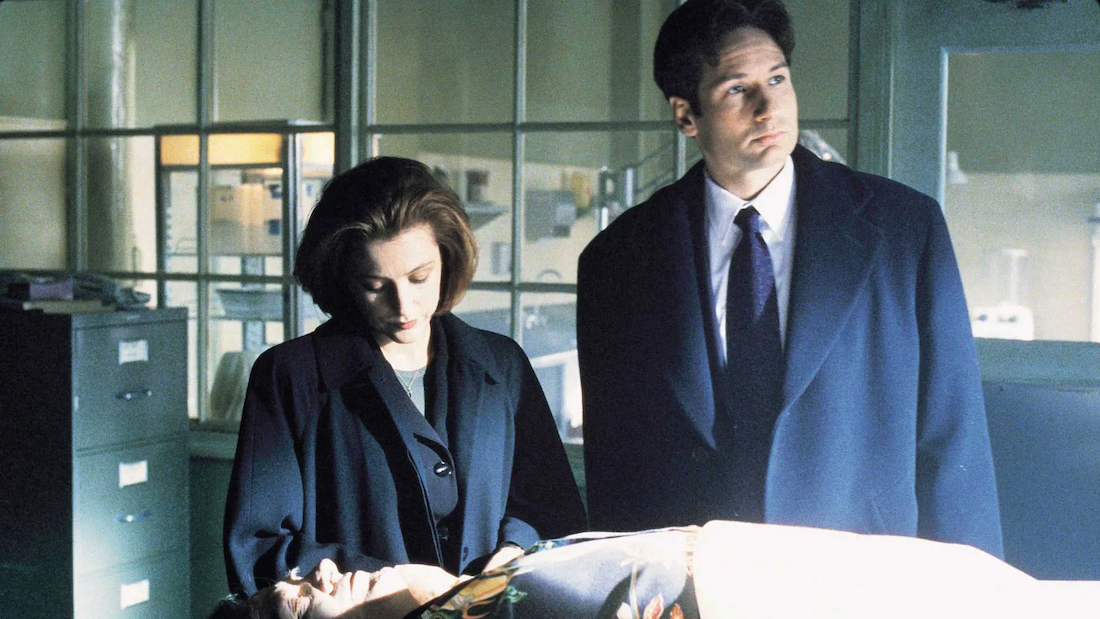
There are a few shows and films that became my personality over the years, and The X-Files is definitely one of them. From the opening moments of its pilot back in 1993, the series became something more than just another television drama for me. It was my weekly invitation to question what we thought we knew about our world, to look deeper for patterns where other people saw just coincidence, and to believe that there might be something enormous happening just outside the boundaries of our ordinary lives. And by the time THE X-FILES: FIGHT THE FUTURE arrived in theaters on June 19, 1998, I was already totally and completely invested in that universe and then some. I had been doing weekly viewing parties with friends throughout high school (and beyond), my second kitty was named Mulder, I was a part of the original fan club for years, I went to The X-Files Fan Expo back in the day, and my friend Tom and I decided to dress up in suits and make FBI badges for opening night of FIGHT THE FUTURE.
So yeah, I was (and still am) a total X-Phile, as I just have always really loved the world of The X-Files. That being said, I was extremely nervous but very excited to see this world given the cinematic treatment, and I think that what surprised me was just how successfully the series made the leap to the big screen. My own bias aside, you could just tell that this wasn't simply a feature-length episode or a piece of fan service designed to reward only an established audience. It was a genuine expansion of The X-Files mythology, built on a scale that television could not always provide while retaining the characters, atmosphere, mysteries, and uneasy sense of discovery that had made the series so compelling in the first place.
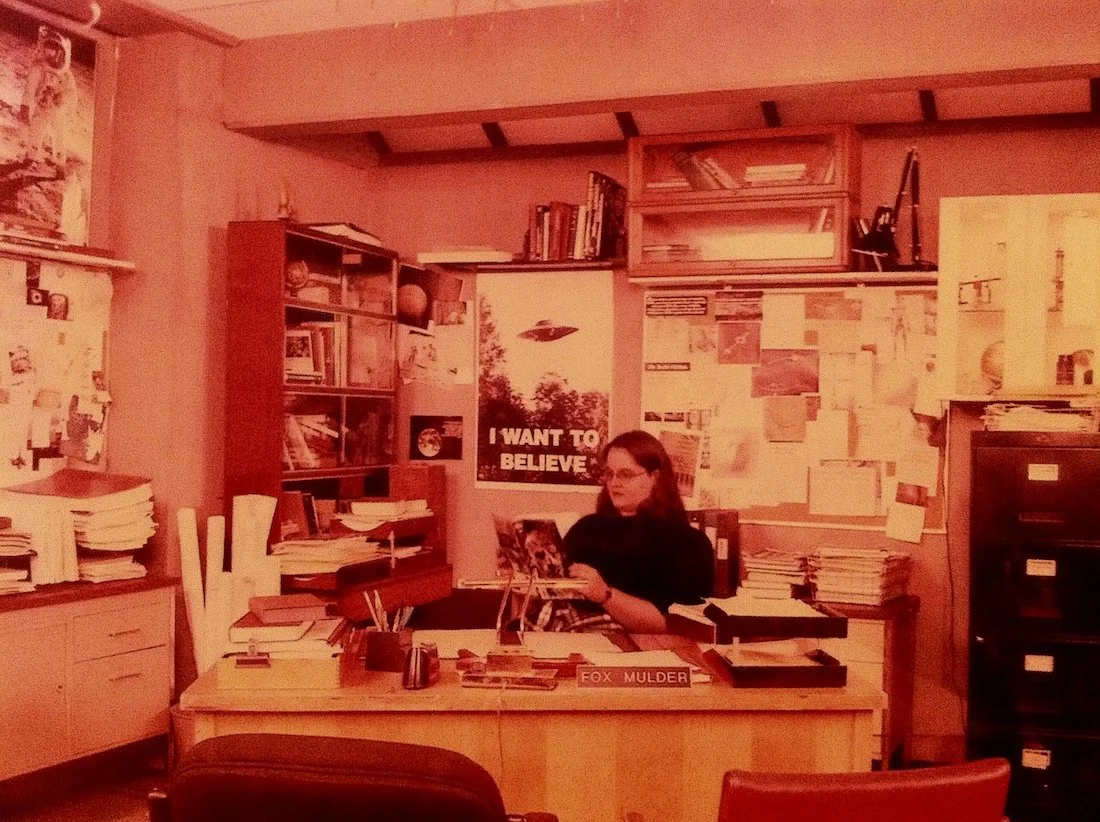
To me, that distinction is important because the history of television-to-film adaptations wasn’t always a successful road to travel, as some became oversized versions of their respective television series, while others relied so heavily on nostalgia that the resulting movie felt more like a reunion than a continuation. There are notable exceptions, including the Star Trek films, THE SIMPSONS MOVIE, and, later, SERENITY, but FIGHT THE FUTURE occupies a particularly interesting position because it was released in the middle of The X-Files' original television run. The series wasn't being resurrected in theaters, and it wasn't looking backward either. It was actively moving forward, and THE X-FILES: FIGHT THE FUTURE became part of that ongoing story. That allowed creator Chris Carter and director Rob Bowman (who was a part of the series’ legacy already) to use the theatrical format not simply to revisit the show's mythology but to make it feel bigger, more dangerous, and considerably more cinematic.
Without a doubt, Bowman's direction is central to that transformation. Rob had already directed more than 20 episodes of The X-Files before he took the helm of FIGHT THE FUTURE, so he understood its visual grammar from the inside. He knew how to capture the shared chemistry of our heroes Mulder (David Duchovny) and Scully (Gillian Anderson), how to use darkness and negative space to get under our skin, and how to create the feeling that something terrible might be waiting just beyond the frame. At the same time, FIGHT THE FUTURE gave him the opportunity to push those ideas considerably further. The movie opens in prehistoric Texas before jumping to 1998, as a small boy falls into a hole in Texas and Mulder and Scully find themselves investigating a bombing in Dallas simultaneously. From there, the story moves through government conspiracies, alien colonization, deadly viruses, secret facilities, abandoned buildings, Arctic landscapes, and enormous underground spaces. The geography of the story itself becomes part of FIGHT THE FUTURE’s appeal. These characters, who had spent years investigating strange phenomena within the relatively contained framework of a television episode, suddenly feel as though they are moving through an enormous world that exists far beyond the FBI offices and darkened basements we know so well. It just felt so larger than life sitting there in a theater and watching these characters that I loved doing such “big” things for a change.
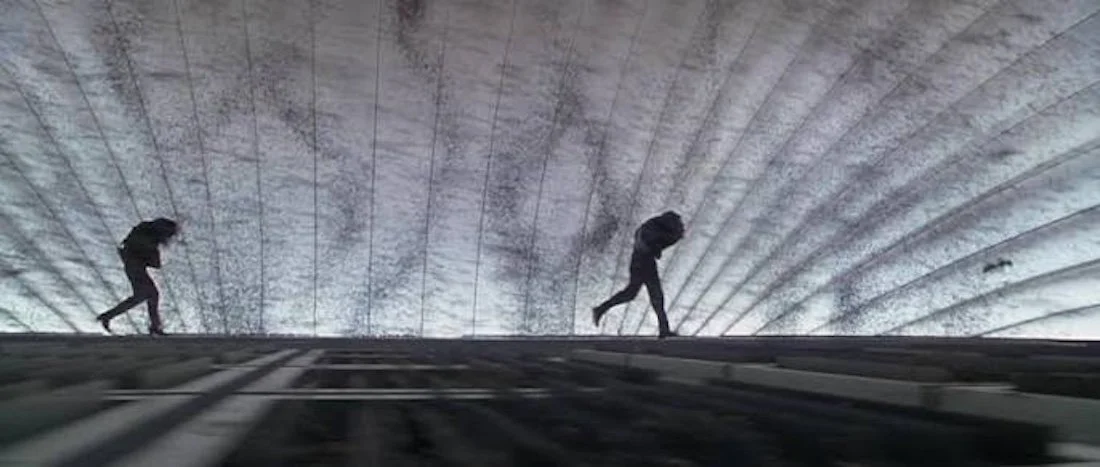
That scale is especially effective because Bowman never allows spectacle to overwhelm the characters in THE X-FILES: FIGHT THE FUTURE, either. The movie's set pieces are impressive, but they are always connected to Mulder and Scully's investigation and, more importantly, to the increasingly complicated relationship between them. The bombing sequence immediately establishes a larger sense of danger, while the chase scene through the cornfield gives FIGHT THE FUTURE one of its first truly cinematic bursts of suspense. The sequence at the abandoned warehouse, where these deadly bees become one of the film's most important pieces of this world’s mythology (even though they had been somewhat introduced earlier in the series), and the climactic sequence in Antarctica all demonstrate how effectively The X-Files could operate when freed from the practical limitations of weekly television production. Yet, none of those sequences feel disconnected from the series – they feel like the logical extension of what Carter’s show had already been doing.
Chris Nowak’s production design is another major part of that success. His approach to FIGHT THE FUTURE clearly understood that the world of The X-Files should never look completely comfortable. Even when the movie moves into spaces that are larger or more elaborate than anything the television series could routinely construct, there is still a sense of institutional coldness as government buildings, laboratories, warehouses, underground facilities, and remote landscapes all contribute to the movie's particular visual language of secrecy and isolation. FIGHT THE FUTURE's environments feel like places where information has been deliberately buried, and in that regard, that makes the production design more than just decoration here; it becomes an extension of the mythology itself.
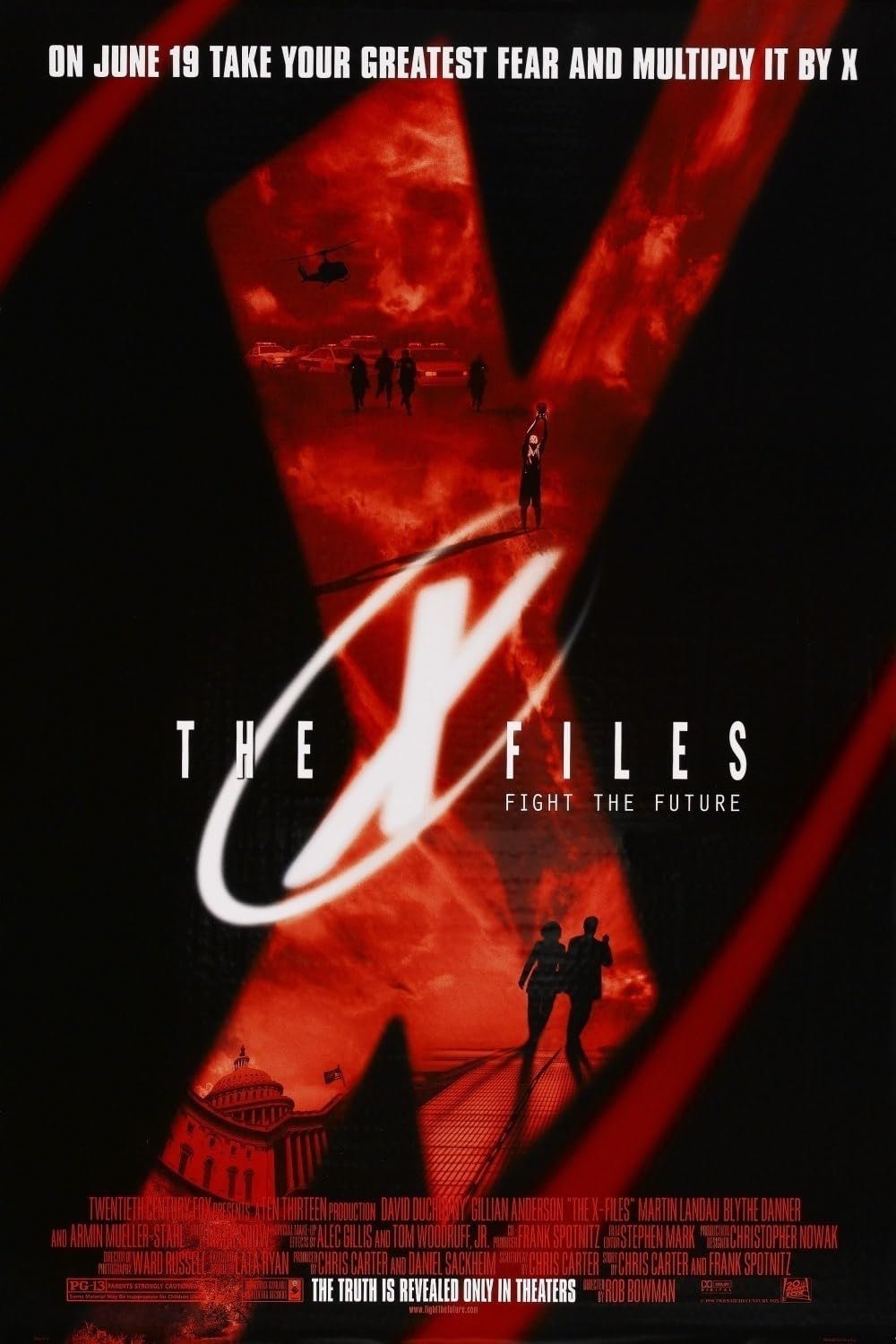
The same is true of Mark Snow's score for FIGHT THE FUTURE. Snow had already created one of television's most recognizable musical identities with The X-Files, but the film allowed that sound the room to expand without ever losing its essential character that so many of us had loved for years at that point. There is a greater orchestral sweep to Snow’s music, but it still carries the eerie restraint and unresolved tension associated with the series. In that way, it feels like his score understands something fundamental about what we enjoy the most about The X-Files: that mystery is often more effective when it is suggested rather than explained, so even when FIGHT THE FUTURE is showing us something enormous, Snow's music maintains that sense that there is still something we don't understand even as we’re watching everything unfold.
The practical and visual effects were also equally important to THE X-FILES: FIGHT THE FUTURE's ability to expand the mythology of this world. The alien elements of The X-Files series had always depended on a mixture of practical effects, minor visual effects, atmosphere, and the power of suggestion, and FIGHT THE FUTURE maintains that balance, but also kicks everything up a notch, too. The black oil, the alien virus, the bees, the colonization mythology, and the extraordinary Antarctic finale of FIGHT THE FUTURE all give the conspiracy a tangible physical presence, and what I think is so smart on the part of Bowman and his crew is that this film doesn't simply tell us that the stakes are enormous; it shows us what those stakes actually look like in ways we hadn’t really seen in the series before. And to me, that makes the mythology of The X-Files feel less like an abstract collection of clues (which can sometimes happen with stories of this nature) and more like a developing threat with huge consequences for the entire human race.

And yet, for all of that scale, the reason the movie works so well for me remains Mulder and Scully. FIGHT THE FUTURE clearly understands that audiences didn't come to The X-Files simply for aliens or conspiracies; they came for the relationship between these two amazing characters that we have been invested in for years, and the tension created by their fundamentally different ways of understanding the world. Mulder wants to believe because belief gives meaning to the mysteries he has spent his life pursuing and trying to contend with his familial trauma. Scully demands evidence because her scientific training and personal experience have taught her to question everything. Their partnership has always existed somewhere between professional loyalty, friendship, intellectual conflict, and an emotional connection that neither of them has ever quite been able to define. FIGHT THE FUTURE begins to push that connection into more openly romantic territory, most notably in the almost-kiss between them, but it does so without sacrificing the foundation of their relationship.
When Scully's life hangs in the balance, Mulder's determination to find and save her is rooted in everything they have built together as partners, but there is also something deeper driving him, something that has been quietly developing beneath the surface for years. FIGHT THE FUTURE never needed to turn that feeling into a sweeping declaration or conventional romance. Instead, it trusts the history between these two characters to make Mulder's desperation meaningful, allowing the emotional stakes of his search for Scully to feel just as significant as the larger conspiracy surrounding them. In a story about alien colonization and the potential end of humanity, it is ultimately the very human bond between Mulder and Scully that gives THE X-FILES: FIGHT THE FUTURE much of its emotional weight.
I think what I love most about FIGHT THE FUTURE is that it never treats its audience's affection for The X-Files as an excuse to stop telling a story. There are certainly pleasures for longtime viewers everywhere, from the return of familiar characters to the continued development of the alien conspiracy, but the film doesn't exist simply to remind us of things we already love. It introduces new information, changes the circumstances of the mythology, expands the conspiracy, and leaves Mulder and Scully facing a future that feels considerably more dangerous than the one they inhabited when the series began. In that sense, the movie isn't simply just a nostalgic celebration of The X-Files; it is an extension of it.
That may be why FIGHT THE FUTURE remains such a satisfying example of a television series becoming a feature film. The movie understands what should be preserved and what can be expanded. It retains the characters, humor, skepticism, paranoia, atmosphere, and mythology of Carter’s series while feeling bigger without feeling unfamiliar, as it smartly holds on tight to the strange intimacy that made the television show so very special to so many of us.
For someone who had been watching The X-Files from its very first episode, that was an extraordinary thing to get to experience. FIGHT THE FUTURE gave me practically everything I could have wanted from an X-Files movie: bigger set pieces, larger mysteries, spectacular production design, a terrific score, impressive effects, and a story that genuinely mattered to the mythology. But more importantly, it demonstrated that a television universe could make the transition to the big screen without sacrificing the qualities that made people fall in love with it in the first place. Bowman’s movie didn't simply take The X-Files to the big screen – it showed us in new ways how enormous this universe had been all along.