

HOPPING MAD: The Wild History Behind Jiangshi
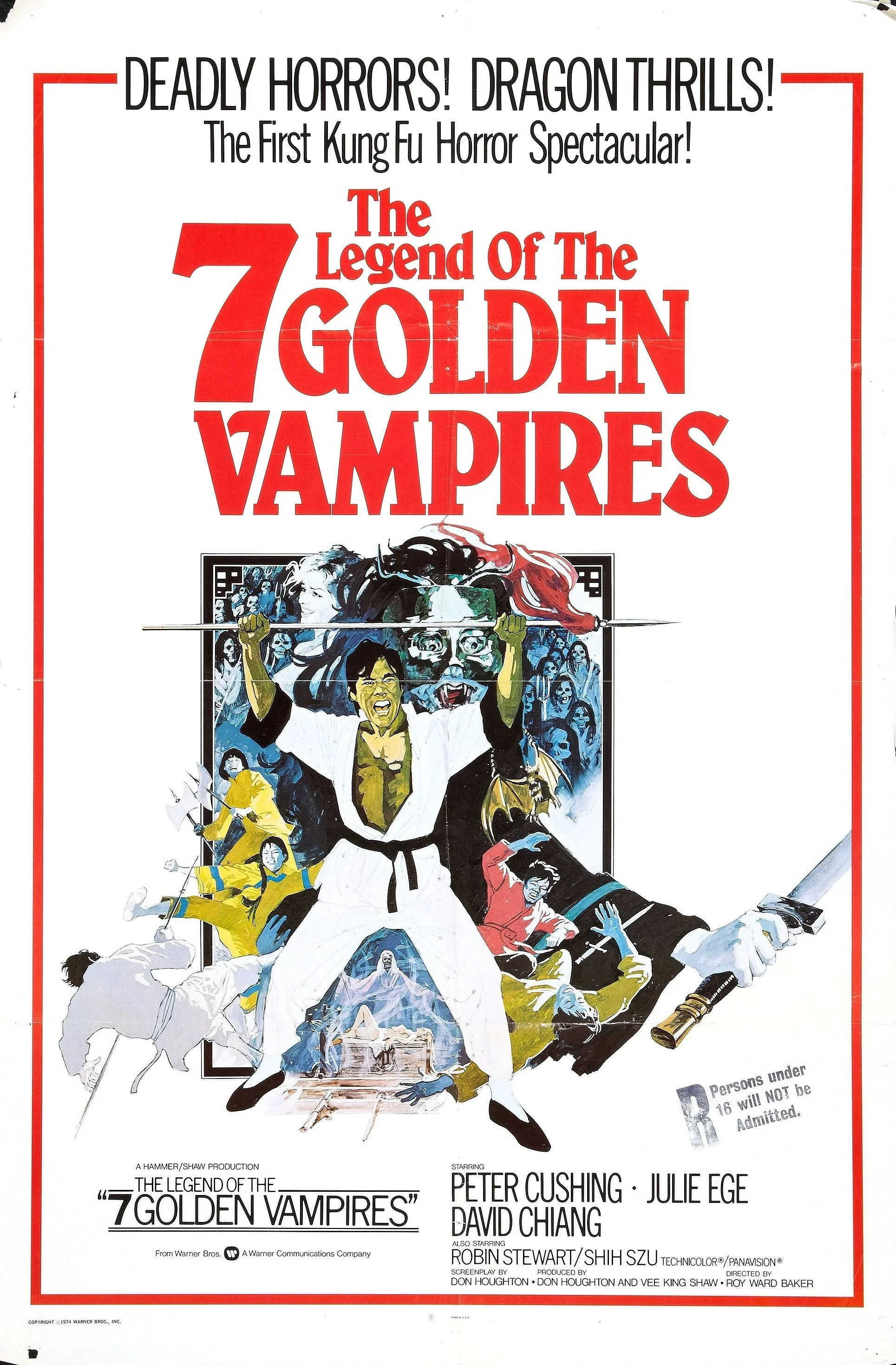
It’s a funny thing the way our nostalgia plays tricks on us. Our memories are filled with the sweet feeling of an event or object, but the actual details themselves are not always as we remembered. This happened to me recently when I was researching the “Jiangshi,” the Chinese folklore vampire. A core monster memory for me unraveled to be something totally different. You see, I always thought my introduction to “Jiangshi,” the hopping Chinese vampire in Qing Dynasty dress, was from THE LEGEND OF THE 7 GOLDEN VAMPIRES (1974). In the film, Peter Cushing reprises his role as Professor Van Helsing. He travels to China for a lecture on vampires, and he is led down a rabbit hole where he eventually discovers the real Dracula has been brought back to life and has unleashed other vampires on a small rural town. It’s a joint effort by The Shaw Brothers and Hammer Films. As a devoted fan of both movie companies, I was over the moon to know this film existed. What’s more, to have it led by the tremendous Peter Cushing, and there are martial arts vampires? It all seemed too good to be a real movie. But it is real, and while others may tell you differently, it’s unique and a lot of fun.
Unfortunately, during a rewatch in research for this article, I found that the vampires did not hop and the closest thing to the Jiangshi I had associated it with was the martial arts and green monster masks. But what LEGEND OF 7 GOLDEN VAMPIRES did not give me, MR. VAMPIRE (1985) more than provided.
MR.VAMPIRE (1985) is the quintessential Jiangshi film It is often credited for catapulting the Jiangshi into its own horror genre. The Qing style of dress, the hopping motion, the long nails, the paper talismans, the inability to see, the martial arts, the corpse driver leading them...MR. VAMPIRE made these undead monsters movie stars.
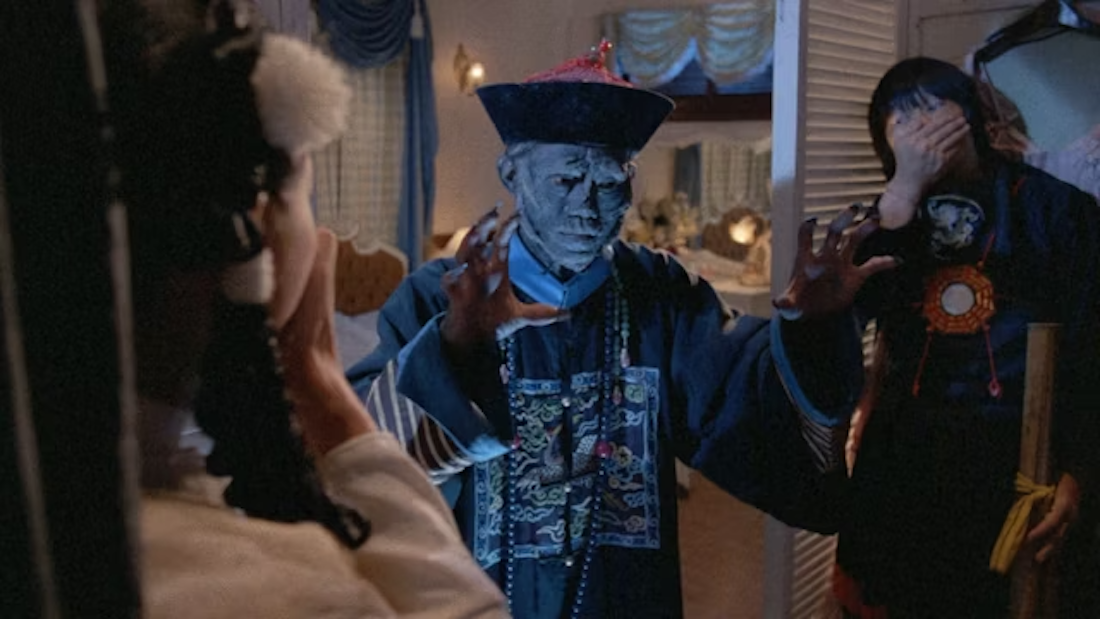
MR. VAMPIRE (1985) is directed by Ricky Lau and produced by the legendary Sammo Hung. Lam Ching-Ying of THE PRODIGAL SON (1981) stars as the lead and is in most of the sequels as well. It follows the lives of a Feng Shui Master and his two apprentices. It is a horror comedy, full of camp and Jackie Chan-esque hijinks. The apprentices are well intentioned but bumbling. The master is patient but tired. The Jiangshi are hopping. The women are beautiful. The wire fu has the undead club poppin’. It is a spectacle for the eyes both in aesthetic and fight choreography. Above all, it is grotesque fun that has aged very well and should be in every horror comedy fan’s collection.
My favorite part of all of this is that if you know the history of how and why Jiangshi came to be such a mesmerizing force in Chinese folklore, the MR. VAMPIRE movies feel like they have a huge payoff. While the undead zombie vampire Jiangshi are fiction for sure, much of the design and actions of the Jiangshi (and corpse drivers) are steeped in accurate history. It’s one of those cases where the truth is more bizarre than the fantasy.
The Jiangshi bridge the gap between zombie and vampire. It is also sometimes called a “hungry ghost” (DeGroot 10). While lacking consciousness and a soul, they are undead bodies that still feed on life force (qi, or “Chi”). This can be blood, but it can also be in a more metaphysical sense. One of the many things I appreciated about MR. VAMPIRE was the scene where the Master is explaining what makes vampires. They are “those that die with one last breath within them, whether it be regret or anger.” Basically, the strength of this qi keeps the body alive seeking more. In that sense, I cannot help but look at Jiangshi with anything other than sadness. What is it that holds you here? Why can’t you move on? It’s all too relatable that we keep on searching for something that will complete us. It’s no wonder people in Chinese history found it so easy to believe that the Jiangshi could really be “alive.” To be fair, if you saw bodies hopping through the night seemingly without assistance, it would be hard to convince me otherwise, and this is what Chinese people saw during the Qing Dynasty.
During the Qing dynasty, the Feng Shui belief around death and burials was that people could not rest in the afterlife if they were buried or disposed of away from their homeland and family. For those who passed far away from their native homes—like laborers, merchants, or even criminals—the families would pay Taoist priests or “corpse drivers/corpse walkers” to transport the bodies home (Yang, 2024). As these priests and corpse drivers were often walking hundreds of miles, there would usually be more than one cadaverous client. When there was a group of bodies, two men would have two long bamboo rods tied between them. The partially decomposing stiff bodies would be lined up as if standing in a row with their arms tied to the bamboo rods. Thus, when the corpse drivers would lift and walk with them, the bodies would look like they are bouncing or hopping along. It did not help that the corpse drivers in the back were often covered with a black shroud and camouflaged against the night’s darkness. The Taoist priest in front would often carry a lantern, ring a bell, and toss bits of paper as a symbolism of money to pay the way in front of them. If you looked out at night and saw this happening in the road in front of you, at first glance it would absolutely look like the dead are hopping in a line by their own accord behind a priest (Schulte, 2024).
Another account from an oral history recovered by Liao Yiwu, writer and political activist, is in his book called The Corpse Walker. In this instance, two men worked together and took turns carrying one corpse across the country. The man in the back would be covered in a black shroud, and the decomposing body lay across his back while the face of the deceased was masked. The man in front would carry a lantern to light the way and perform various symbolic gestures to bless theirs and the deceased’s journey home. The men would rotate positions along the way, so the burden of weight was fairly distributed (Yiwu, 2011).
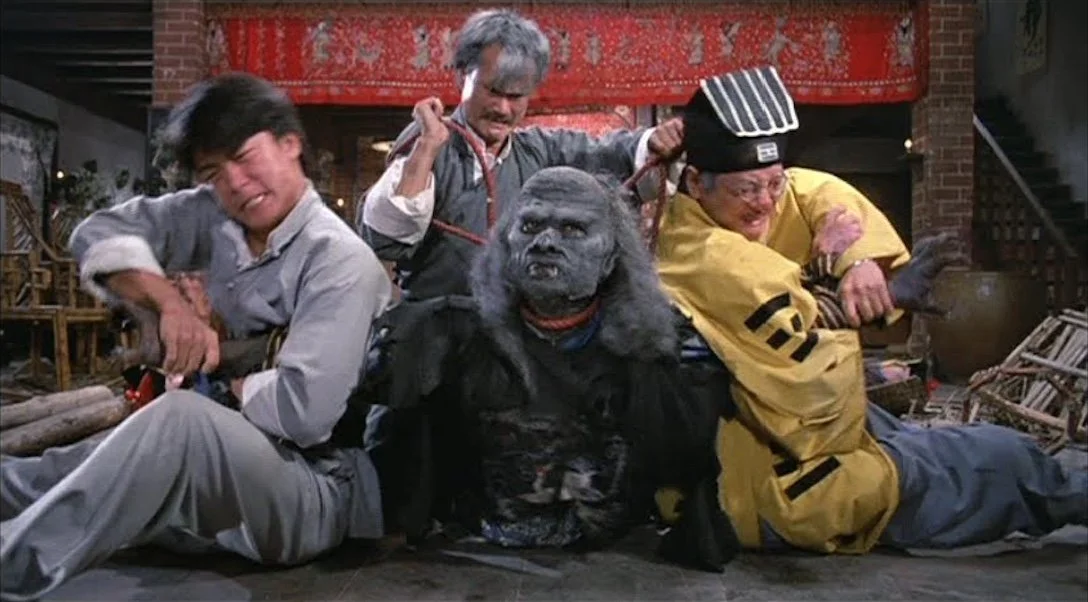
Corpse drivers tried to do most of their traveling at night. Not only would the sight be more horrific under the natural light, but this job (while in demand) was considered one that only “untouchables” would do. When rest and shelter were needed, the corpse drivers would pay higher fees to stay at select inns. This was often a secret agreement made between inn owners and corpse drivers, because neither wanted the public to know of their presence. With the end of the Qing Dynasty, the practice of corpse driving became illegal, but it was nevertheless still prevalent. Traveling by night and hiding in lodging during the day became even more necessary (Yiwu, 2011).
The now established popular culture imagery of the Jiangshi wearing Qing Dynasty robes, bloodthirsty with long nails, and at times even flying, only to be fought off with Feng Shui, an Earth magic of the old ways, tells us a lot about the political climate of where the folklore was born. The power of these creatures was often built around anti-Qing sentiment, and the traditional beliefs that Feng Shui would save them feels outdated to contemporary peoples (Yang, 2024). The Jiangshi now seem to be seen as a cautionary tale for making sure to not die with an impure heart. This is a feeling most mythologies around the world share. Ultimately, all the rituals and supernatural creatures people create to cope with and explain death is more a reflection on how people try to manage grief and the fear of the unknown. If it is something we can control or defeat, then it is something we have power over. If a Jiangshi appears, there’s a set of rules that will always put it down. Yet, if my beloved sister dies five hundred miles away, there is no magic button I can push to make that pain go away. I can at best pay someone to walk her lifeless body back to me and hope that brings me some kind of closure.
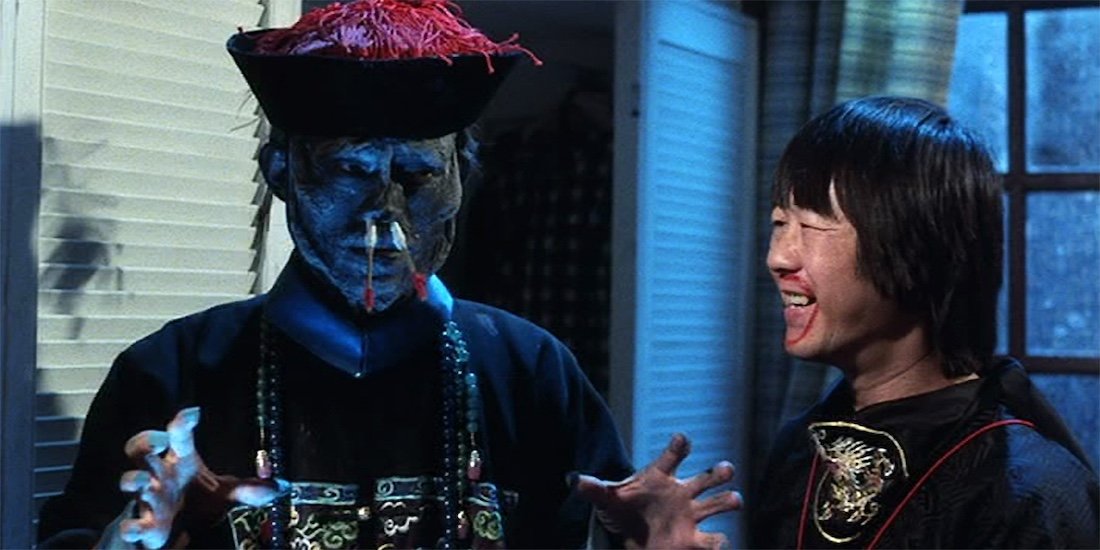
I think the actual history of corpse driving is much more remarkable than the monsters themselves. The very real things humans do and will do in their lifetime to cope with the stress of living is so complex and nuanced that it almost seems preferable to make monsters the simple answer instead.
I don’t know why my memory decided to alter THE LEGEND OF THE 7 GOLDEN VAMPIRES in my head to be associated with Jiangshi. My best guess is that I was confused, because it was my first experience of the East Meets West trope in horror, and given my heritage (Asian American), that is a trope that calls to me. Nonetheless, there is a lesson to be learned in my incorrect memory: Emotions shape memory more than facts. When I remembered this movie, I loved it so much that I wanted it to be the one that was correct about Chinese Vampires. When people died far away from their families in the Qing Dynasty, there were men who carried these bodies many miles, reminding those who saw them about the ugly reality and burden of death. Maybe a monster is less scary.
As far as my now corrected memory, MR. VAMPIRE (1985) is the granddaddy of Jiangshi movies and must not be missed if you are thrilled by these creatures. Not only is it a fun, and spectacular ride, it’s a curious little peek into a Chinese history that may be stranger than fiction.
References
De Groot. "10, Spectres with a Material Body, Vampirism". Religious System of China, Volume 5. p. 745
PBS. (2024). The Ancient Terror of the Chinese Hopping Corpse, Jiangshi. YouTube. Retrieved 2025, from https://www.youtube.com/watch?v=Yx3QjM6oP-U.
Yang, Y. (2024). Walking dead. South China Post.
Yiwu, L. (2011). In The Corpse Walker (pp. 28–40). essay, Pantheon.