Fantastic Fest 2026: GIMME TRUTH (2026)
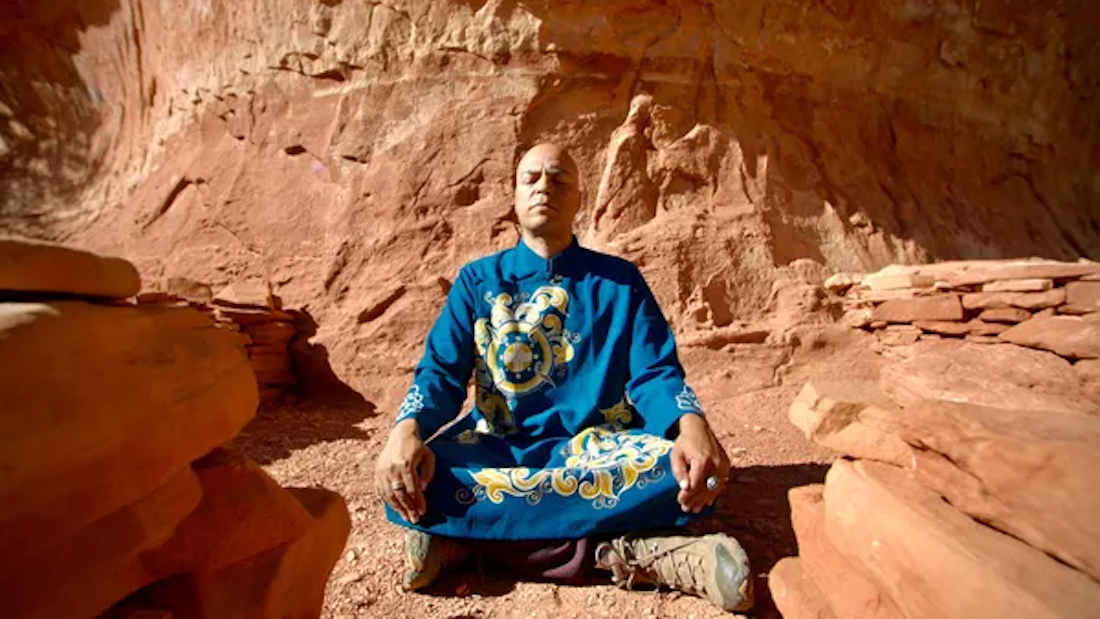
In the first chapter of her book, The Resonance of Unseen Things, author and cultural anthropologist Susan Lepselter writes about the experiences of conspiracy theorists and UFO experiencers and hits at an underlying truth in all of them: “People telling these uncanny stories can only wonder about what really happened; but they just know something is wrong.” This kind of unlocated anxiety feels universal to anyone living in our current times. Indeed, Lepselter’s approach throughout the book is empathetic and open, sharing the stories of people who have experienced the uncanny and how their journeys to the fringes of belief began in the first place. GIMME TRUTH, the documentary directed by Simon Ennis and Brad Abrahams, takes a similar approach: following several conspiracy theorists and other people who have found themselves in esoteric spaces, but with empathy and openness.
The documentary touches on all kinds of belief systems, from QAnon to COVID conspiracies, to chemtrail watchers and starseeds, to folks who believe that rock formations used to be buildings of a sprawling pre-human utopia (Meltology, for the uninitiated). We meet several figures from these communities and learn about how they came to their beliefs. In the hands of any other filmmakers, a documentary like this one could feel like pure spectacle. Here, Ennis and Abrahams have taken their shared appreciation for oddballs and outsiders present in their previous films (like THE HOBBY and LOVE AND SAUCERS, respectively) and utilize it well here, interviewing subjects like Mikki Willis, the director of the PLANDEMIC film series, with a patience and nonjudgmental nature that would elude most other filmmakers—or anyone who doesn’t share their subjects’ beliefs.
GIMME TRUTH remains clear-eyed throughout its runtime, refusing to give in to punching down on its subjects no matter how fringe or extreme their beliefs may be. This gives the subjects space to be full people on screen and not just fodder for punchlines. For instance, the doc spends a lot of time with Erica Roach, an ex-QAnon conspiracy theorist, and charts the path the fringe movement set her on, and how she got out of it. Roach, a domestic abuse survivor, is candid and open about her former work in the group and how she was able to break away from it. One of the most moving moments in the documentary centers on Roach and another former QAnon conspiracy theorist confronting the truth they spent so long denying by visiting the 9/11 Memorial & Museum. The camera stays with them, acting as a neutral observer as the women take in the physical, tangible proof of what happened that day. We see them share a moment of silence at one of the reflecting pools, leaving a rose before departing. It’s heartening to see the progress the two women have made. It’s also a moment that reinforces the strongest and most important thesis the documentary has to offer: the subjects that make up the heart of GIMME TRUTH are human, and their humanity deserves to be honored.
Even when GIMME TRUTH spends time with folks who populate spaces like the Conscious Life Expo, an annual gathering of those who wish to “participate in the conscious co-creation of a new world,” according to their website, it’s handled with an affectionate touch by Abrahams and Ennis. It takes a special talent to meet people where they are at, and even more so to capture them comfortably on camera. It’s clear that the filmmakers have put a lot of care into working with their subjects to create something earnest. When audiences come to documentaries to understand more about the world around them, especially about people or places they may never encounter in their day-to-day lives, it feels imperative that the documentary plays the role of patient observer. Documentarians like Les Blank understood this implicitly, allowing his camera to linger over scenes of everyday life for his subjects, creating a window that arches out across time and space. Ennis and Abrahams have created a similar effect here, letting audiences sit with their subjects as fully formed people and nothing less.
In a world that so often wants us to think and operate in binary thinking, a film that doesn’t shy away from real nuance and consideration feels like a breath of fresh air. It can be easy to dismiss people who become enraptured in stories and beliefs that can feel completely alien to outsiders but it takes real patience and skill to consider the more complicated alternative. GIMME TRUTH succeeds at this, letting audiences spend time with its subjects, not laughing at or punching down at them. Instead we are challenged to consider them with more nuance, and to reflect on ourselves as well. People who are taken in by conspiratorial belief or fringe science are not as far removed from others as we’d like to believe. The average person is more easily able to fall into the whirlpool of niche conspiratorial circles today than they were over 30 years ago. Thanks to the Internet, increasing usage of AI and other misinformation tools, and the scourge of isolation growing, we are all closer to the edge than we realize.