There are many clichés about the transformative—and transportive—power of film. It can be a mirror, a window, a gateway, or even a time machine if all the right conditions are met. Les Blank’s CHULAS FRONTERAS from 1976 is the rare film that lives up to the last cliché and, for this Tejana who was raised on the border between Texas and Mexico, exceeds it. A masterful documentary that captures the stars and culture of Mexican Norteño music in rich detail. It’s a music documentary that is unlike any other thanks to Blank’s observational approach, which allows the medium to be truly magical: a time capsule that I cherish deeply.
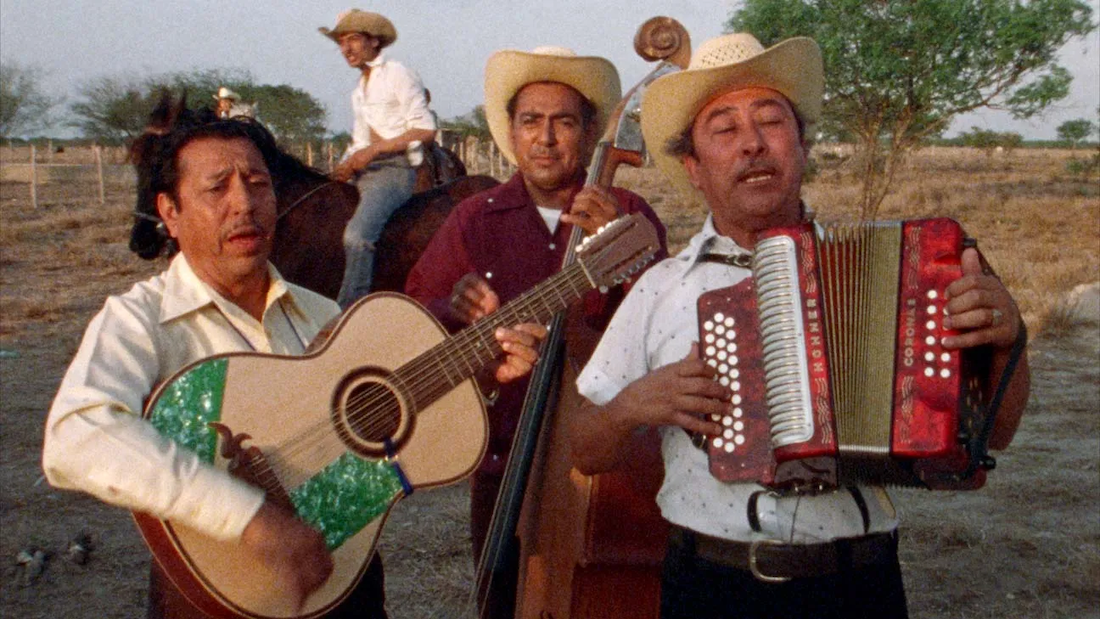
While most music documentaries take a more constructed approach, with talking head interviews and performances structured just-so, Les Blank shows the audience the ins and outs of Norteño music culture by playing songs in their entirety as we watch scenes of everyday life. Lyrics are translated with subtitles under the scenes, framing the work of fieldhands picking vegetables with songs of resistance. It’s an approach that foregrounds the real life and lived experiences of the people behind the music, adding a rich and essential contextual layer to the music we’re being introduced to. Blank’s approach lets the camera linger over singers performing, but also in their home lives. We see Lydia Mendoza, a verifiable star of the genre, preparing tamales in her kitchen, the chatter of family and friends rising up around her. Then we’re taken to a performance of hers in a crowded restaurant.
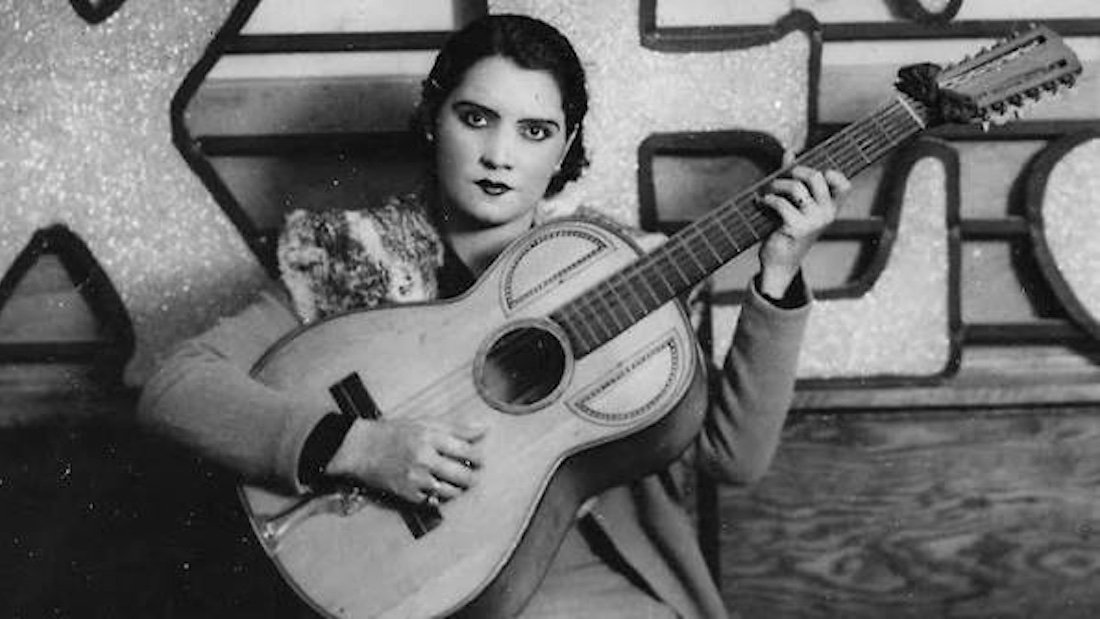
Lydia Mendoza
It’s a balance that feels realistic, especially if you’re someone who grew up hearing this genre of music spilling out from car radios, at family barbecues, and during big celebrations. If you’re not, the feeling is still there because of Blank’s positioning: when we’re not seeing active scenes of daily life on the Texas-Mexico border, we’re seeing archival photos, either chronicling the lives of the artists singing the song in the scene, or the lives and subjects of the songs themselves. It feels like looking through a scrapbook or photo album, a more personal walkthrough than the typical documentary techniques. The culture speaks for itself, to the film's benefit. If it was anything else, it would read as false, an outsider making sense of something they don’t know intimately. Instead, with the musicians and artists behind Norteño music leading the way, CHULAS FRONTERAS feels like we’re with them, even if it’s just for a little less than an hour.
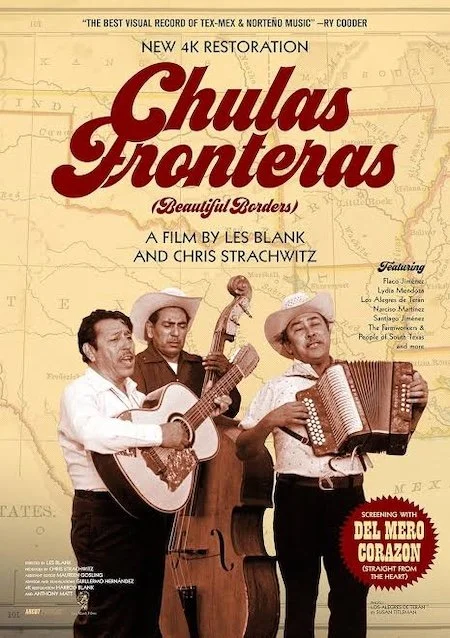
Through these techniques and the visual cues, we get to learn about not just about the music and the culture of Norteño artists, but about their personal lives too. There are a few sequences that come to mind throughout the film: a man goes about his normal workday at the Gladys Porter Zoo in Brownsville, Texas as we hear his songs playing over the video, sons sit next to their dads as they play music together and talk about how their music connects them. We sit in on cookouts, 50th wedding anniversaries, and afternoons bathed in golden light, connecting the music with the people behind it, remembering how tethered the two are to each other. The film feels so all-encompassing of a time and place, it’s as if time has stopped and let us look in on this bygone time.
It’s a precious thing: the ability to freeze time. When I watch this documentary, it strikes me that the people, places, and time on screen are part of a moment I will never get to experience in any tangible way. It’s the Texas of my grandparents and parents, but it is tinged with the colors I grew up with: the crimson of pork in red salsa, the pale green of a nopal cactus. This time can feel far away from me, a time before memory. Then I watch this movie and I’m given a rare gift: an opportunity to be there for a moment. The first time I watched it, I immediately called my grandparents to tell them about it, and how close it made me feel to them despite the geographical difference between us. It’s been many years, and things have changed (I have one set of grandparents left, and one of them is living with Alzheimer’s disease).
This is the way of life, with time marching on relentlessly, but CHULAS FRONTERAS made it stand still. For a moment, I can be with my family in an impossible way. I can step into the dancehalls, the ranches, the record stores of 1976 Texas and get to look around as if I was there myself. As I take in the scenery, the music, the heart of the film, there is pleasure in the pause. All the awful and cruel consequences of time have not happened -- my grandparents are all alive and well, my parents are teenagers figuring themselves out, and the future reaches out as far and wide as any Texas sunset. This is not to say this time was better or easier, but just that it’s precious because it has gone. It’s a blessing that Blank was able to capture it with joy and rigor before it passed us by.
CHULAS FRONTERAS is available to stream via Kanopy or The Criterion Channel.