
As a lifelong horror fanatic, few things truly frighten me. I’ll always admit to the occasional jump scare that manages to pull off an adrenaline rush without being cheap. And I’ll forever champion the movies that really intrigue, inspire, or fascinate the part of my brain that’s hardwired for horror. But there are only a handful of films that have gotten under my skin and stayed there long after the credits rolled. And there’s one specific title that deserves its own cerebral nook in my subconscious for that very reason. Kiyoshi Kurosawa’s CURE (1997) is that movie. A crime noir/horror in the vein of David Fincher’s SEVEN, Kurosawa gifts viewers with an antagonist so enigmatic, we’re left to wonder not only his true identity, but our own.
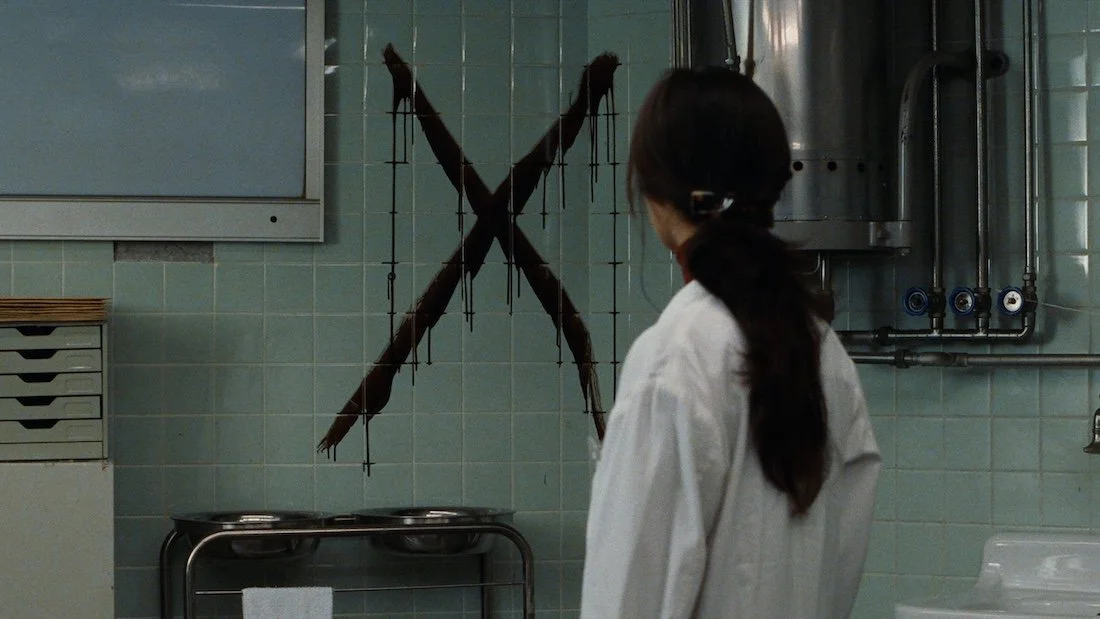
CURE opens with weary Tokyo Metropolitan Police detective Kenichi Takabe (Koji Yakusho) connecting three seemingly unrelated perpetrators of brutal homicides in which their victims’ carotid arteries were severed by an ‘X’ carved into their flesh. In each case, the murderer experiences a sudden urge for violence for reasons unknown to them. Takabe enlists his friend and colleague, psychiatrist Shin Sakuma (Tsuyoshi Ujiki) for criminal profiling. And much like Detective Somerset (Morgan Freeman) of Fincher’s SEVEN, Sakuma lays out the core of the story from the very beginning: We want crimes to have meaning. But most of the time, they don’t.
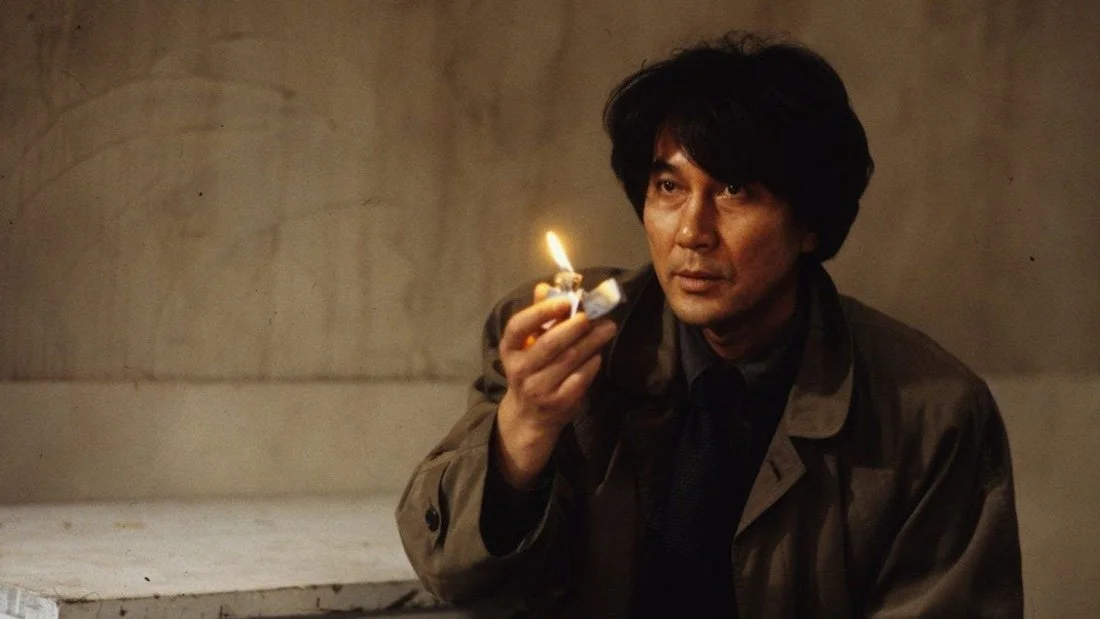
And it’s then the villain appears on an isolated beach, staring into the sky like he ascended by some sort of supernatural conveyance. He has no idea where he is, or who he is. But once he crosses paths with Takabe and Sakuma, the investigation veers immediately into darker territory than either could have imagined. While the mysterious stranger may have no memories of his own identity, he has an uncanny ability to probe into the minds of anyone he encounters. And if you think you’ve seen all there is to see in cat-and-mouse cinematic investigations, trust me. You haven’t.
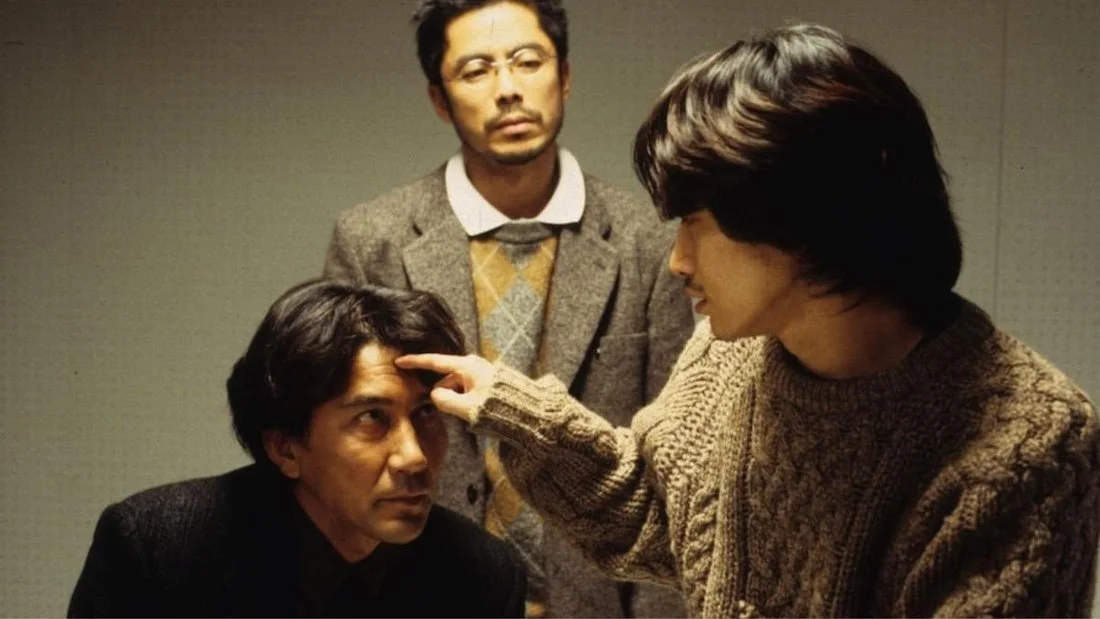
Takabe is tired of the violence, exhausted by the mindfuckery of interrogating an unsettling amnesiac, and at the absolute brink of insanity in his home life. Takabe’s wife, Fumie (Anna Nakagawa), is mentally ill, and frequently gets lost in their neighborhood. Her lapsing memory and confusion also has their clothes drier constantly running an empty cycle. The mechanical whir of their drier’s drum is an increasingly foreboding rhythm of an otherwise quiet home. And that’s Kenichi Takabe’s life—a tedious, empty cycle. He loves his wife, or at least he loved her before the burden of her illness upon their relationship. And his worry and care for her makes his already tenuous mental health an all-too-inviting arena for the mysterious Kunihiko Mamiya (Masato Hagiwara) to wander. It doesn’t take much prodding on Mamiya’s part for Takabe to unravel the terrible truth: he resents having to care for his wife. He hates her, in fact. Mamiya own supposed amnesia becomes the surrogate for Takabe’s contempt for his wife’s fleeting memory. And one question immediately springs to mind: Who is interrogating who?
If you know anything of true crime and criminal profiling, the key to finding the perpetrator—the who—is finding the why. What is the motive? Find the why and you’ll find the who. But Kenichi Takabe is trying to solve for ‘X’ in an unsolvable equation. Is there ever truly a meaning behind violence? Motive and meaning are not interchangeable in Kurosawa’s CURE. Much like the maligned apathy surrounding the grimy inner-city setting within David Fincher’s SEVEN, sin and crime abide.
CURE is a psychological study of identity, of public facade and private rage. And as the viewer learns more about Mamiya’s previous identity, we somehow know even less. And that’s the point. Who he is, or who he was previously is irrelevant. Who we are is only who we claim to be. The true self, the resentment and rage we keep hidden from polite society is who we really are. Kurosawa’s intended “cure” to the cultural malaise of Japan’s hierarchal social structure, is accepting that there is no true identity. No good, no evil. Everyone is equally capable of unspeakable acts of violence, even against those we love. And that thought is truly terrifying.
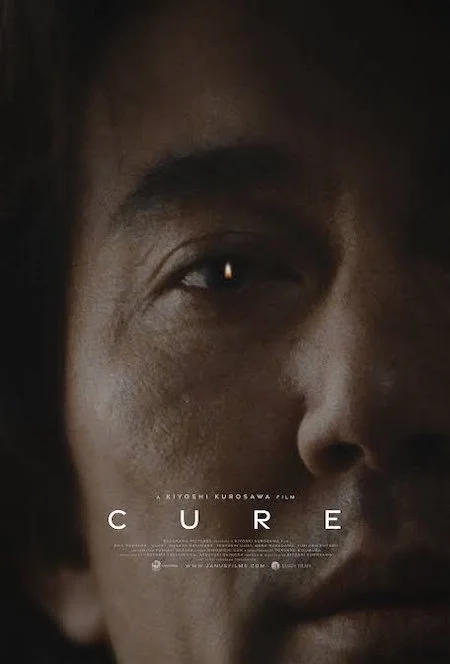
In the Criterion release of CURE there is a bounty of supplemental story through behind-the-scenes interviews and retrospectives from cast and crew. And while Kiyoshi Kurosawa has said his intention was to make an Americanized horror film for the Japanese audience, he made so much more. Kurosawa made a film entrenched in the Japanese collective identity that truly transcends genre—a dread-soaked story on the vagaries of human nature. It’s a cerebral crime drama, a psychological horror, a dark fairy tale, a dreamlike excursion, a waking nightmare. To speak in certain terms would plant this article firmly in spoiler territory. And if you haven’t yet experienced CURE, that’s one place you don’t want to find yourself. Go in blind. I’ve told you far too much already.
I picked up the Blu-ray of CURE at Barnes & Noble on a whim during one of their Criterion Collection sales. And while it’s shocking that I somehow neglected it until now, I’ll be forever haunted by this vicious remedy. If you’ve seen Kurosawa’s 2001 techno-horror KAIRO (or PULSE) and were as mesmerized by its palpable dread and overwhelming sense of isolation, you need to watch CURE. And then watch it again. And again. And again…
X