

DEMENTIA (1955)
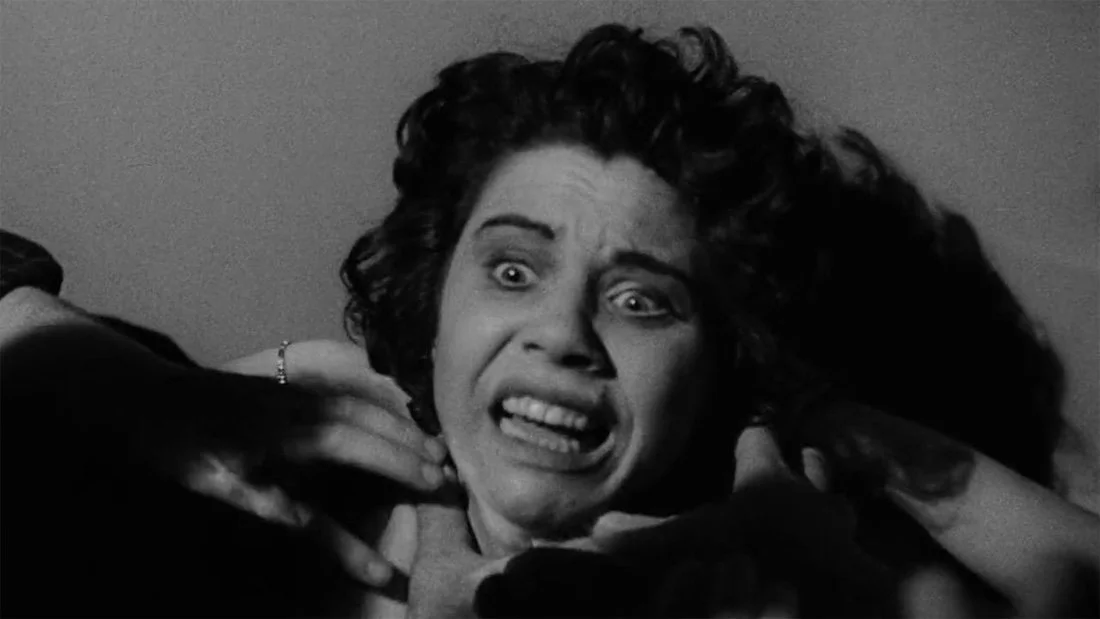
DEMENTIA opens with a glowing testimonial from filmmaker Preston Sturges: "It stirred my blood, purged my libido. The circuit was completed. The work was a work of art.” Those words etch themselves onto the film, particularly given that the New York State Film Board banned the movie when it was first submitted in 1953. There’s a very clear reason DEMENTIA would have been banned: its grisly violence against women. Its surrealist, almost liminal quality rushes like a night terror when the clock strikes 3 am, the witching hour.
Very little is known about director John Parker. DEMENTIA remains his only credit as a director. It’s a bit strange that Herk Harvey’s only film credit is 1962’s CARNIVAL OF SOULS, which bears a striking resemblance to the former in tone, quality, and emotional heft. Together, the two films double-punch with similar themes about death, violence, and the agonizing march through time and space. The narratives twitch on their axes, as though something is truly amiss with human nature itself.
DEMENTIA features absolutely no dialogue. Only laughter and environmental sounds poke through the soundtrack, composed by George Antheil and Shorty Rogers. Gunshots, violent slaps and punches, and the sharp sting of glasses punctuate the extreme nature of the imagery. The story follows a woman known only as The Gamin (Adrienne Barrett) who awakens in her Skid Row apartment. Her mind terrifies her. But that’s nothing compared to her discovery of a switchblade in her drawer. To quiet the ghouls inside and outside of her brain, she takes a late-night stroll through the city, but she can’t get away from the dark presence haunting her.
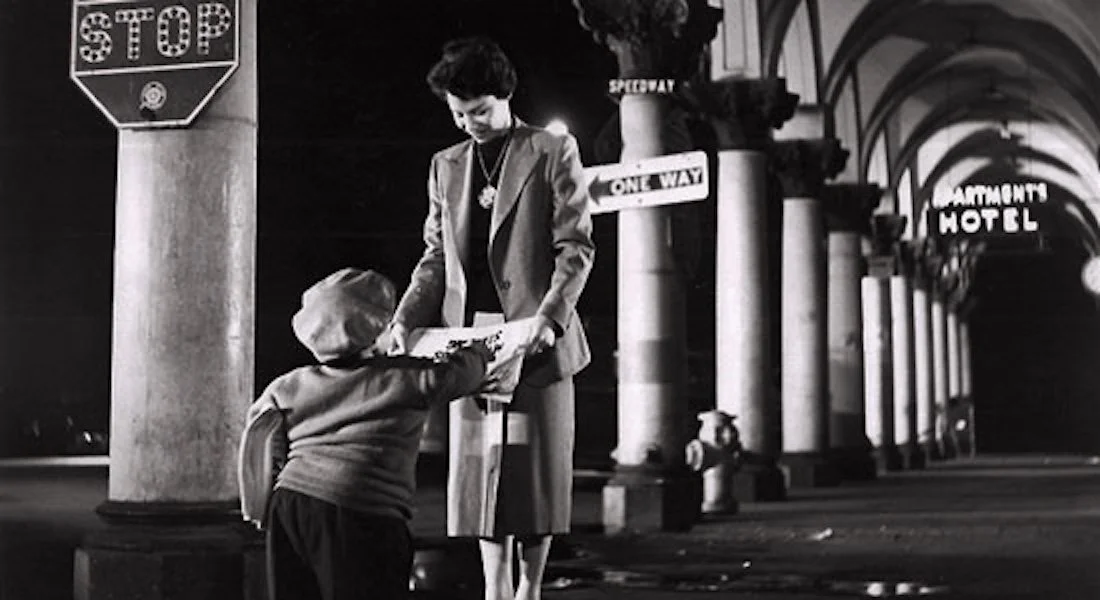
She continues seeing a newspaper headline that reads: “Mysterious Stabbing.” She can’t recollect what that means or if it involves her lapsed memory. She makes her way down dark, sticky alleyways and encounters winos and various other perverse men seeking someone to abuse, blame, and cast into the ditch. Parker distorts reality as presented through the film, but it’s the truth as The Gamin sees it and experiences it. An undertone of violence, as well as the brutally overt sort, threads throughout her story.
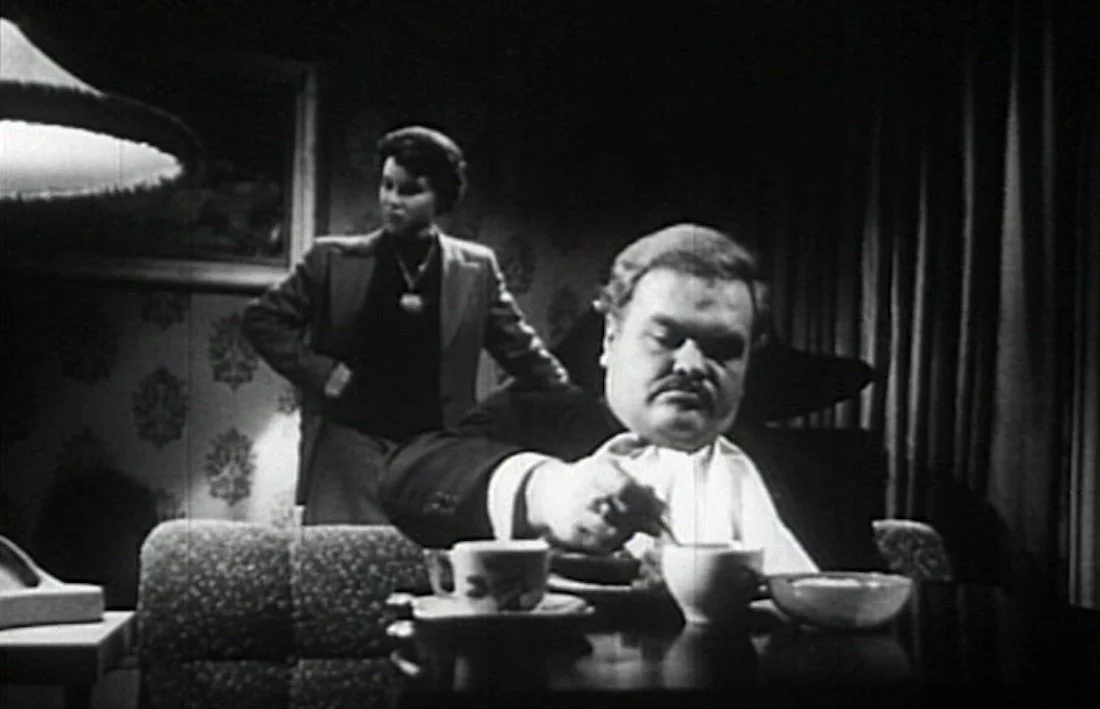
She eventually meets a rich man (Bruno Ve Sota) who takes her to lavish nightclubs and secret lounges around the city. He showers her with the best money can buy, but when they climb the stairs to his apartment, the air changes. Her ignores her presence, and she becomes merely a ghost. She reveals her switchblade and stabs him in the back, his body then tumbling to the earth way down below. Mumbling crowds gather and look on in shock and terror. The rich man clutches The Gamin’s silver medallion in his hand, and distraught, she cuts off his hand with her switchblade knife before darting back into the darkness.
This act of defiance leads to a manhunt, and she’s at the mercy of passersby and clubbers, who eventually erupt into delirious laughter, akin to the bus scene in CARNIVAL OF SOULS. Parker borrows an earth-scorching thread from revenge films (think: MS .45) for murderous intent and a woman’s reclamation of her identity. As we see every day in headlines, society fails women, so it’s not surprising that many films, including 2017’s fang-toothed M.F.A., become cathartic vehicles. Viewers live vicariously through leading women on screen as they exact perfectly bloody revenge and forge a fiery path ahead into the ruin.
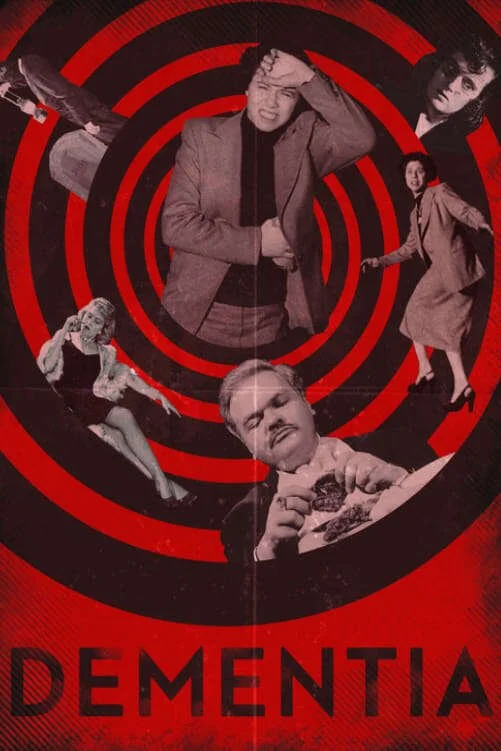
Director of photography William C. Thompson (PLAN 9 FROM OUTER SPACE) supplies ample visual style that sends the audience into a state of psychosis. Paired with bizarre set designs (e.g., the flashbacks portrayed in the cemetery) further blend reality and fantasy. Are these things really happening? Or are they a byproduct of The Gamin’s mental deterioration? John Parker asks these questions of himself but also of the audience. It all feels like one of those dreams that feels too real to just be a trick of the imagination.
From the crackling visual aesthetic and choice to have zero dialogue to Adrienne Barrett’s hypnotic, evocative lead performance, DEMENTIA is certainly a precursor to the out-of-body experience of watching The Twilight Zone, which Rod Serling created four years later. In an era when talkies were still relatively new and flashy, it’s an intriguing decision to rely solely on physical performance to tell the story. It’s as though the audience gets a front-row seat inside The Gamin’s mind as she’s put through the torment and ridicule of being a woman in 1950s America. And truth be told, it’s an evergreen snapshot of womanhood in the world, as relevant i 2026 as it was then. That’s the ultimate tragedy of all this.
