FACES OF DEATH (2026)
I’ve never seen the original FACES OF DEATH movies. As I’ve written about in other pieces, I was not a fan of horror movies as a kid. Despite growing up in the ‘80s during what many fans consider one of the golden ages of the genre, I didn’t come around to horror until I was a teenager. But while I caught up to many of the popular and infamous horror films of my youth at a later age, I always skipped out on FACES OF DEATH simply because I had no interest in the movie or its sequels. I had heard enough about them to understand the conceit and I just didn’t really need to see faked snuff sequences without any context and especially had no interest in watching real footage of animals being killed or the aftermath of real fatal accidents. Without the added entertainment value of a bunch of twelve-year-olds huddling together to try and figure out if the whole thing was a hoax or not, what was the point? Besides, how many people actually want the snuff footage they’re watching to be real?
And then the internet came along. For a horrifying couple of years in the late ‘90s, it felt like within ten minutes of meeting someone new who found out I was into horror movies, they would inevitably ask if I’d gone to some site (rotten.com was a popular one) that showed the kind of fatal accident footage that FACES OF DEATH had built its reputation on (mostly) faking. It turned out that the answer to my question was that a lot of people actually wanted to see the real thing. At first, I got offended that people would assume I was into looking at pictures of suicide victims or autopsy footage just because I had casually mentioned liking THE EVIL DEAD. After a while, I just politely demurred when such sites were brought up to me and eventually no one recommended them any longer as the internet proved to not just be a fad and the existence of horrible, violent footage was well-known to just be a Google search away.
I had no interest in seeing the remake of FACES OF DEATH when it was announced. But then news hit that it was being made by Daniel Goldhaber and Issa Mazzei, the team behind the tremendous CAM, a movie that so perfectly captured the horrifying implications of deepfakes and how they could destroy people’s lives that just a few years later it feels like a documentary. Between that film and Goldhaber’s excellent HOW TO BLOW UP A PIPELINE, I was suddenly very interested in what direction they would take a remake of what was—in my estimation—a creatively bankrupt movie that only had its infamous reputation going for it.
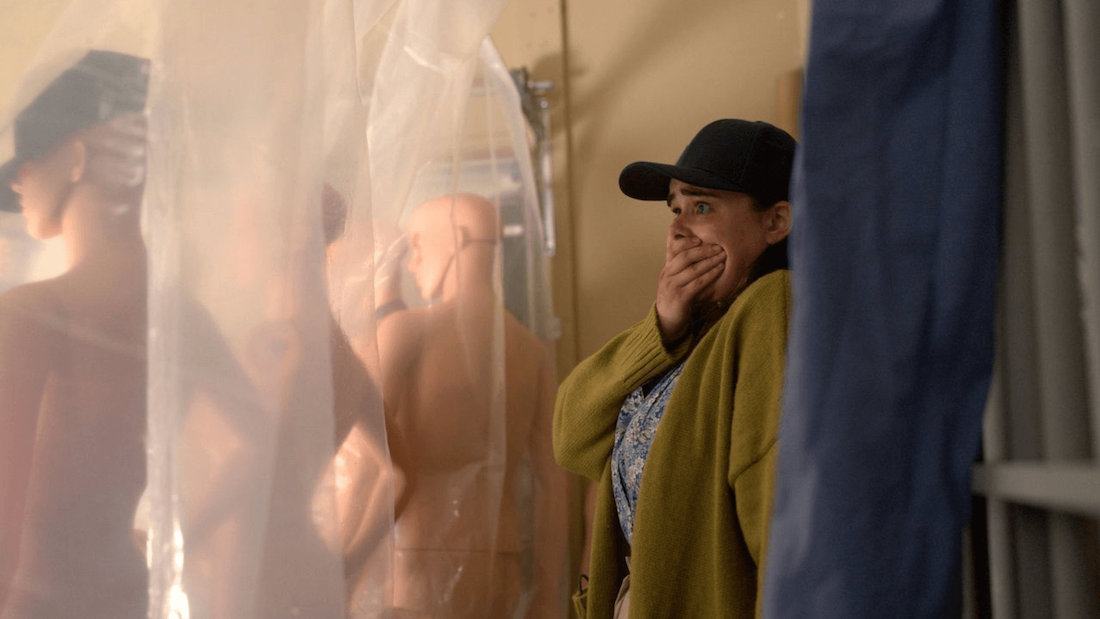
The plot setup, while simple, is fairly clever. Margot (Barbie Ferreira) is a content moderator at a social media site. Every day, she is inundated with sexual, violent, and otherwise questionable content that she either flags for removal or approves with brief explanations of her decisions. Like most people, she assumes that most of the violence she sees is fake and barely gives a second thought to silly/creepy videos that start to pop up of staged executions that occur with mannequins dressed in costumes looking on as a man gets decapitated or another of a victim being beaten over the head with a hammer. But eventually, Margot starts to smell a rat and makes the always poor decision to go down a Reddit rabbit hole, leading her to believe that some psychopath is recreating the fake scenes from the original FACES OF DEATH, but is doing them for real.
This being a modern horror film, no one believes Margot and suggest that she’s merely overreacting due to (everyone say it with me now) a recent trauma from which she has never recovered. At least here, that modern genre staple/crutch of shorthand character building is relevant to the theme of the film as Margot used to make silly videos as a wannabe influencer, but things went bad when one of her videos resulted in her sister being hit by a train. When police leaked the video, Margot became a viral star in the worst kind of way that drove her into hiding. But being internet famous is what drives the villain here, making him the perfect flipside of the coin to Margot’s tortured lead.
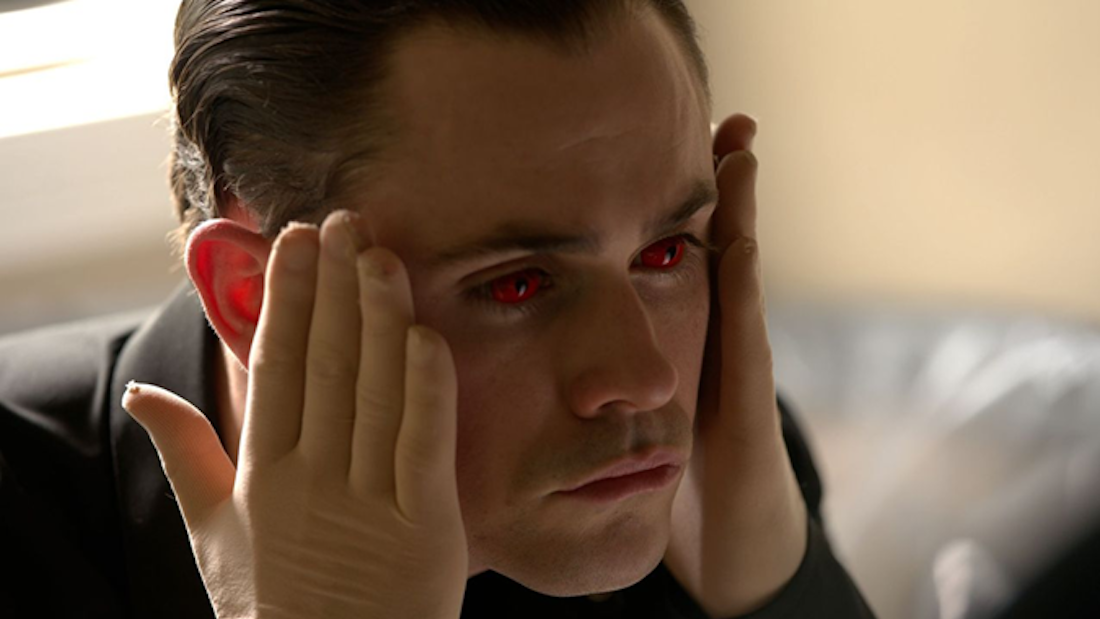
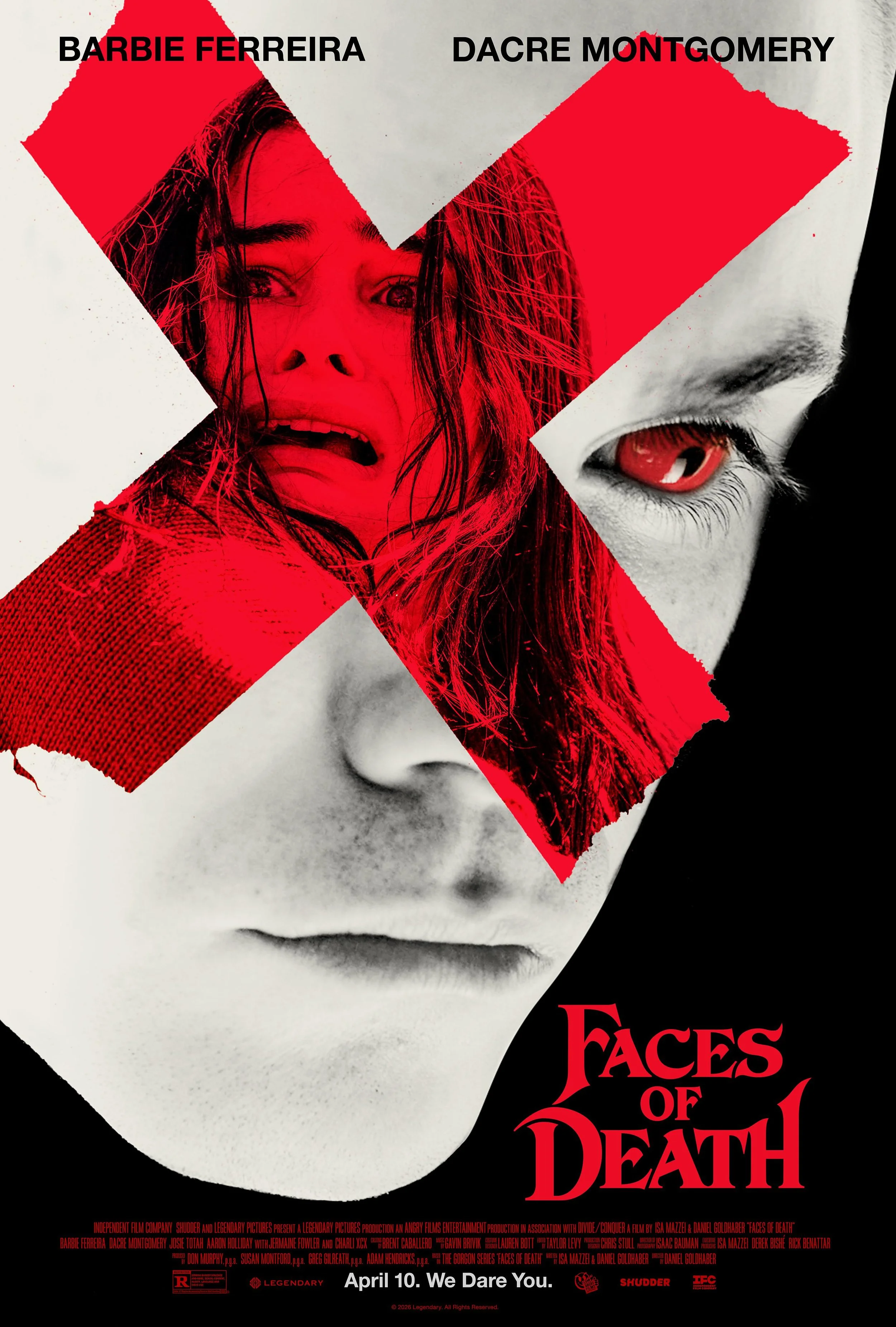
In a refreshing turn, Goldhaber and Mazzei are not interested in playing coy. They reveal very quickly that Margot’s theory is correct. The killer behind the videos is Arthur (Dacre Montgomery). Arthur is a hiding-in-plain-sight type of movie psycho, holding down a day job (that conveniently gives him access to potential victim’s online footprints) and living in a suburban mcmansion left to him by his deceased parents. Not only is he indeed recreating sequences from the original FACES OF DEATH, he is using victims who are internet famous (an influencer, a newscaster, a muckraking documentary filmmaker) to become internet famous himself. Are we starting to see a theme here, folks?
Despite the decent budget and the financial might of Legendary Pictures as the production company, the FACES OF DEATH remake somehow wound up being theatrically distributed by IFC Films and barely made an impression. Overall reviews were polite and tilted slightly to the positive side, but word-of-mouth among audiences was more negative. After a month in theaters, it quietly went to streaming where it sat for nearly another month before I even knew it was available.
How could a movie with the hook of remaking one of the most infamous of video nasties come and go so quietly? The answer is that while it’s a clever takedown of influencer culture, has some fun with the meta elements, and is a continuation of exploring the numbing effects on viewers of extreme corners of the internet that was found in CAM, Goldhaber and Mazzei are just not very interested in making a horror movie.
Arthur’s motivations beyond being famous are fuzzy, even while he is given monologues so blunt they would have made George A. Romero wince. There are a couple of good suspense sequences, but there are also torture porn elements that feel perfunctory with some haphazard gore. And, most crucially, the film feels almost hostile toward the gorehound crowd that ate up the original films. Not surprisingly, this is the most interesting aspect at play in the movie, and it is why I sort of love it despite it not being what I would traditionally call a good horror film.
There is a real risk at play when making a film that turns around and asks the audience “is this really what you want to see?” Michael Powell’s disturbing PEEPING TOM does it extraordinarily well and it basically ended his career as audiences and critics were outraged. I personally hate both versions of FUNNY GAMES for doing the same thing, but then again, I tend to hate that nebulous subgenre of torture porn. The original version of that film, if not liked, is at least admired by a lot of people for accomplishing what it set out to do. I can acknowledge that, even if I didn’t need the lesson.
Another personal example of encountering a filmmaker turning on the audience is far more intriguing to me. I was all in on the premise of INGLORIOUS BASTERDS when it was announced. Then, all my giddiness at the idea of seeing angry Jewish soldiers torturing, maiming, and killing Nazis went out the window when it came to actually watching Eli Roth beat a man to death with a baseball bat. I feel like I may be in the minority in recoiling at that scene, but I could not help but feel a little betrayed that Tarantino built up to that moment and suddenly flipped from his usual stylized violence to realism. It was a bold move on his part, but it is also what makes that film the only one of his that I’ve never re-watched.
But turning on the audience of the original FACES OF DEATH films strikes me as hilarious and I appreciate the gusto with which Goldhaber and Mazzei dig their own graves. The movie practically clucks its tongue and wags its finger at the viewer while asking “Why do you like those movies? Aren’t you ashamed of yourself?”
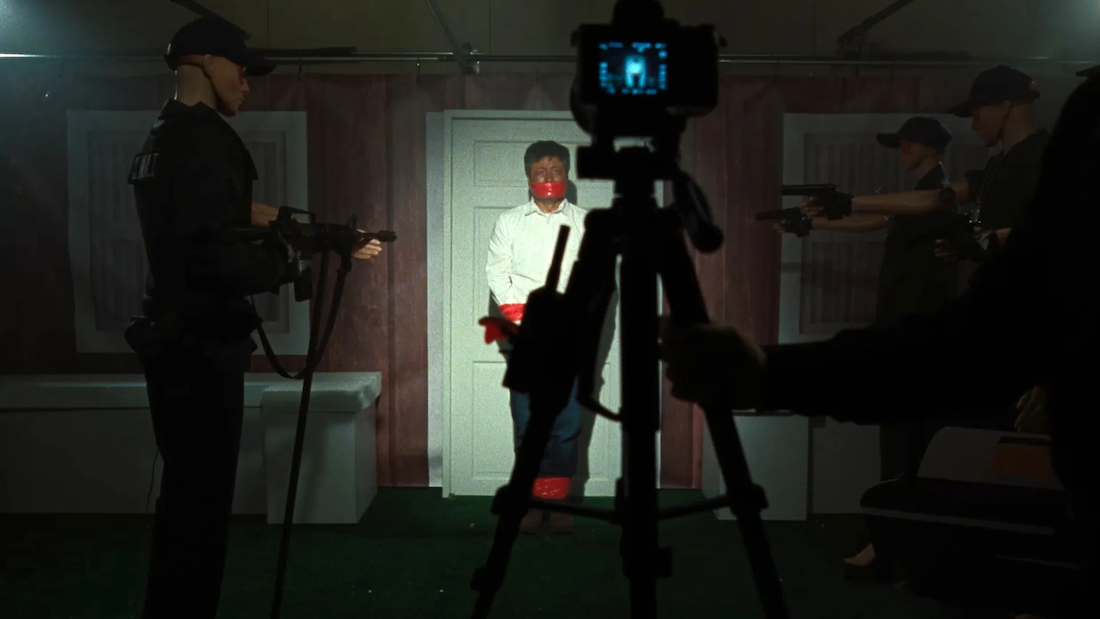
The sardonic tone carries over from questioning the motivations of the viewer and offers up some bleakly hilarious moments of real-world satire. Arthur pointedly lives in a sparsely populated Florida suburb and it’s played for deadpan laughs that none of his neighbors call the cops or show any interest when he fires a rifle in his expansive backyard at an escaping would-be victim. Less funny, but just as nastily satirical, is a scene where a brutalized Margot brings the cops to Arthur’s home, but he is able to flip the cops into suspecting her as a stalker who hurt herself to get him into trouble. I’ve seen several comments online that say this is an unrealistic scene, but I have to ask if those people have paid attention to the news for the last, oh, ever?
But it’s the absolutely merciless skewering of the ethics of watching something like the original FACES OF DEATH in the first place—let alone liking it—that makes this a memorable film for me. No, it’s not a great horror film. It’s barely even a horror film in the traditional sense. But it is a middle finger to the people who used to snidely claim that finding the real thing online was “real horror.” Sure, it was. You get no argument from me there. But why would you want to watch it? That still confuses and depresses me. And it seems to do the same to Goldhaber and Mazzei.
