As much as I enjoy the Halloween hustle—and, as a horror filmmaker, I’m contractually obligated—that last week of October just gets me jonesing for the next big festivity. Not Christmas or Thanksgiving, mind. Sanctity aside, they can keep their Hershey Kiss commercials and canned sauces. No, what I spend all year looking forward to is bigger than the both of them. I am, of course, referring to James Bond season.
By now, I’ve spent more holidays with Agent 007 than my own extended family, and that tradition began, as most late-20th-century American rituals do, because nothing else was on.
On the evening of November 29th, 1992, the TBS Superstation kicked off its week-long “30 Years of James Bond” marathon with the first re-airing of the CLIMAX! TV adaptation of Casino Royale since 1954. The ratings immediately turned it into an basic-cable institution. Over the next eight years, “Seven Days of 007” became “13 Days of 007” and finally “15 Days of 007,” always expanding but never leaving that inter-holiday window. In 2001, ABC outbid TBS for the broadcast rights as a fall-season insurance policy against looming WGA and SAG strikes. When both guilds reached agreements without incident, the network instead began airing the films sequentially in January 2002 as “The Bond Picture Show” before quietly cancelling the program after only eight installments due to low viewership. ABC had no interest in renewing its deal, so Viacom swooped in and scored the lot for The National Network, a former country music channel flailing for identity in a sea of American Gladiator reruns.
TNN bet big on Bond. Coinciding with the November 22nd release of DIE ANOTHER DAY (2002), stars Pierce Brosnan and Halle Berry hosted a week-long “Bond at his Best” marathon. A second marathon the following month, “007 Days of Christmas”, gave the station not only its highest ratings of the year but a new lease on life. Until 2009, the rechristened Spike TV, “The First Network for Men,” was the unquestioned home of holiday Bond-a-thons, further innovating the form with day-long “samplers” showcasing all of the actors and weekend odes to each of them.
The latest film or video game release might’ve maintained his standing as a pop icon, but these marathons preserved him as a cultural presence, unavoidable but never unwelcome. At least in the Herbert household. Long before I’d completed the “James Bond 007 Collection” of VHS tapes or borrowed my library’s supply to near-death, I absorbed the entire series by seasonal osmosis.
Which is not without its side effects. Given the nature of broadcast days and grade school bed times, I was beholden to whichever entries happened to be on, however far along they may be. To a kid who did not yet recognize context clues like the presence of Duran Duran or the size of Sean Connery’s eyebrows, it was difficult to tell which Bond movies I was weaving in and out of. This led to slow association by gimmick. Is 007 in Japan? Must be YOU ONLY LIVE TWICE (1967), “the Japanese one.” Is Timothy Dalton auditioning for MIAMI VICE? Must be LICENSE TO KILL (1989), “the MIAMI VICE one.” Does it star a guy who looks like Sean Connery but is not? Must be ON HER MAJESTY’S SECRET SERVICE (1969), etc.
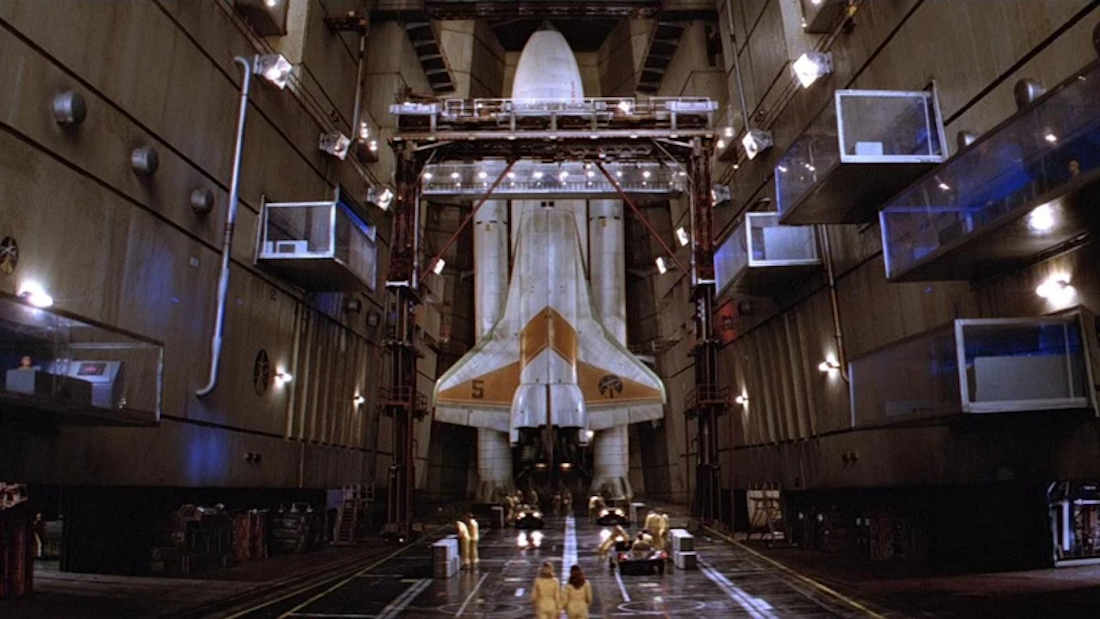
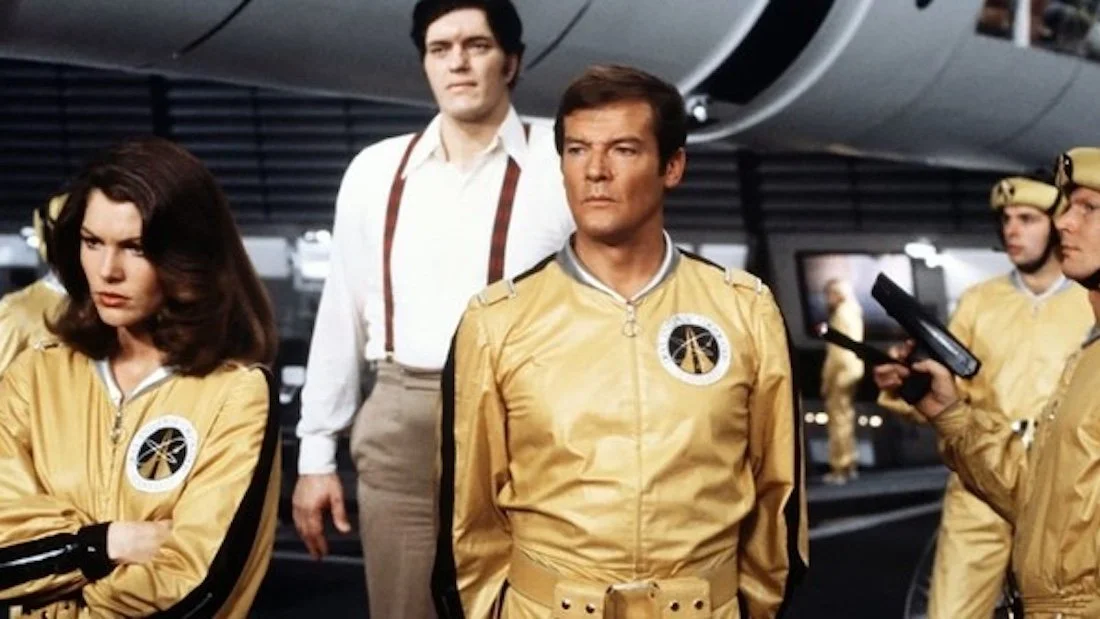
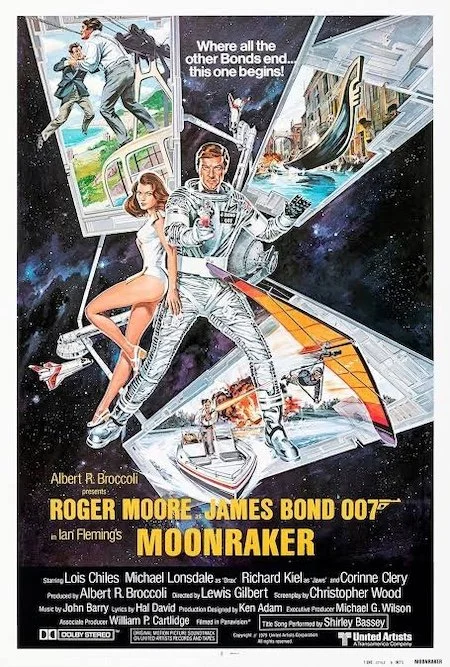
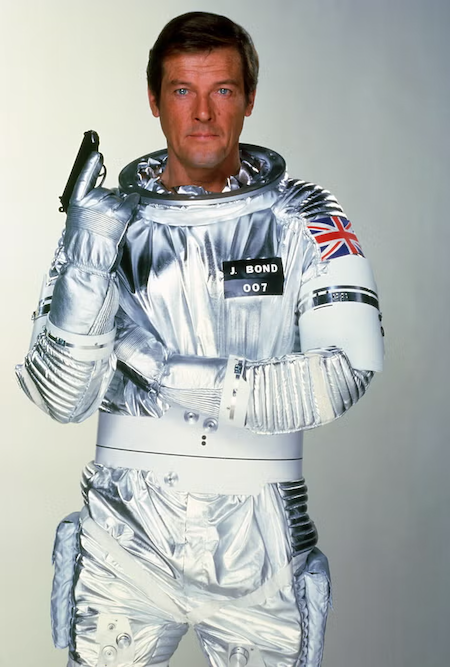
To me, MOONRAKER (1979) was “the space one.” To everyone involved, however, it was “the STAR WARS one.” 1977’s THE SPY WHO LOVED ME, Roger Moore’s third turn down the gun barrel, finally and firmly established his brand of cocked-eyebrow espionage with audiences, setting a new box office record for the franchise, but not even 007 could take down the Death Star. In a bid to prove Carly Simon’s title song correct, that nobody does it better, the producers scuttled plans to adapt For Your Eyes Only as the next film and fast-tracked MOONRAKER in its place. Despite Fleming’s 1955 novel never leaving England, let alone Earth, that title was the easiest excuse to arm James Bond with a laser pistol on the poster.
However, he doesn’t even leave orbit until the last half hour, so I spent my formative years assigning the first 80 minutes of MOONRAKER to every other Roger Moore mission. On review and in my defense, it is structured less like a conventional motion picture and more like an all-you-can-eat Bond buffet.
The shot is called immediately. After being denied entry to the mile-high club at gunpoint, 007 is pushed out of a plane by his returning, dentally gifted nemesis Jaws. The following two-minute fall required five weeks of photography and 76 jumps, each only netting about two seconds of usable footage at best. It ends with the villain—not actor Richard Kiel, but almost-as-tall skydiver Ron Luginbill—crashing into a circus tent at terminal velocity. Accept no substitutes for cheap thrills or death defied—there’s no big top bigger than MOONRAKER.
Consider the acts in the same order I did—none particular:
Torture by NASA training module. Gondola chases. James Bond in cowboy drag, complete with a fake mustache and the theme from THE MAGNIFICENT SEVEN (1960). Hover-gondola chases. Brawls between passing cable cars a thousand feet above Rio. Ninja showdowns in literal museums of glass. Aquatic wrestling matches with reticulated pythons. Speedboats fully loaded with missiles, depth charges, and emergency hang gliders in case of Amazonian waterfall. Uncanny costumes and attempted murders in the heart of Carnival. The jingle used to make extraterrestrial contact in CLOSE ENCOUNTERS OF THE THIRD KIND (1977). An incongruously impressionistic mauling by attack dogs that ranks among the franchise’s most disturbing moments, and a double-taking pigeon that still reigns as its all-time silliest.
And then Roger Moore zips into a flight suit for the world’s largest game of laser tag. The only bummer is that it was also the world’s most expensive, with a series-record budget of $35 million. Accounting for inflation, it held onto that title until TOMORROW NEVER DIES (1997), 18 years, five sequels, and two actors later. The gamble did pay off—dollar for dollar, it also remained the highest-grossing entry until 1995’s GOLDENEYE—but United Artists was in no financial shape to keep upping that ante. Ever since, in body and spirit, MI6’s costliest asset has remained earthbound.
MOONRAKER is not the best Bond film—that cultural barometer currently hovers between FROM RUSSIA WITH LOVE (1963), ON HER MAJESTY’S SECRET SERVICE, and CASINO ROYALE (2006). It’s also not the most outlandish—DIE ANOTHER DAY self-consciously trips over itself in ways no Moore outing ever could. But it is, as designed, the most Bond film, and the most likely to confuse a child across dozens of incomplete viewings.
In 2009, after outbidding Spike for the rights three years prior, the USA Network premiered CASINO ROYALE and consigned holiday Bond-a-thons to fellow Comcast subsidiary Syfy, where they slowly shrank around Thanksgiving weekend until 2015. The last marathon didn’t include Roger Moore, Timothy Dalton, or George Lazenby at all. In the 11 years since, James Bond has not returned to basic cable en masse. Premium channels like Epix have intermittently carried the flame and Pluto TV sometimes adds a dedicated fast channel this time of year, but between the cost and sequential programming, it’s just not the same—you can’t be pleasantly surprised by 007 anymore.
Though the Bond-a-thons of yore kindled my now-encyclopedic affection for the franchise, I miss believing there was always another globe-trotting adventure that I’d never quite seen in full, only the choicest cuts between hanged ornaments over years of chilly Sunday afternoons. When I miss that mythical Bond film most, along with the televised tradition that conjured it, I put on MOONRAKER. To paraphrase (and correct) the title song to OCTOPUSSY (1983), this is his all-time high. Around the holidays, you can’t ask for a much better gift than that.