Fantasy horror is a hard nut to crack. Beyond it being a rarity, the genres of fantasy and horror are often at odds with one another. Hefty budgets are typically associated with fantasy films due to their visual effects, props, and more. By contrast, the horror genre generally consists of lower budgets, using darkness, limited locations, and lesser-known actors to conjure up terror. So, it is easy to understand why the genre fusion is hard to come by. Instead, we find fantasy films that have a tinge of horror to them rather than being an equal mix of the two (see instances such as Jack meeting Meg Mucklebones in Ridley Scott’s LEGEND or Peter Jackson bringing his horror sensibilities to many sequences throughout The Lord of the Rings trilogy).
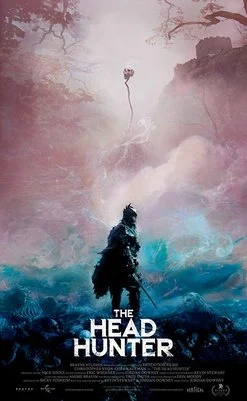
Enter: Jordan Downey’s THE HEAD HUNTER.
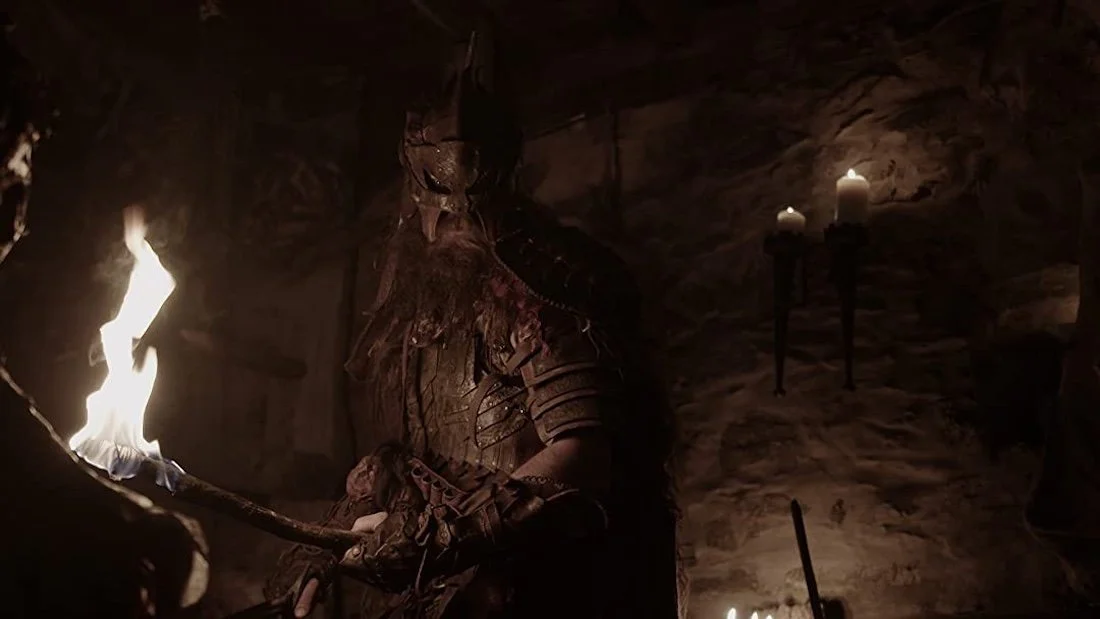
Premiering at the Sitges Film Festival in 2018, the film follows the Father (Christopher Rygh), a monster hunter for a local kingdom who awaits the return of the creature that killed his daughter (Cora Kaufman) so that he can take his vengeance upon it. On the one hand, the film feels like a part of The Witcher series with its monsterhunting protagonist and oppressive world. On the other, it aesthetically borrows from imagery such as The Elder Scrolls V: Skyrim and depictions of middle age Vikings. Linking these fantasy references together is the DNA from an unlikely source: Tales From The Crypt. Together these elements form a cyclical tale of death, grief, and revenge, with one final twist of the knife that makes THE HEAD HUNTER stand with some of the best of the genre, and I’m going to outline why it’s worth visiting this 72-minute dark fantasy film.
Ironically, the film’s extraordinarily low budget flies in the face of the typical conventions that define many fantasy films. Costing a mere $30,000, director Jordan Downey crafted a moody and atmospheric tale of revenge that is both economical and intimate; while still feeling grand in its world building and scope. Featuring an array of gorgeous vistas (the film was shot in Northern Portugal, Norway, and Mammoth Lakes, California by cinematographer Kevin Stewart), armory detail, and monster effects, it expertly utilizes the confines of its budget to focus on the story of the Father. Purposely conceiving of a film with a small cast and minimal dialogue at the script stage, the Father is largely silent outside a few grunts and groans when he isn’t reminiscing to himself or speaking to his daughter’s grave. He exists by performing the same routine every day, which includes a ritual of concocting a strange black elixir from the bloody remains of his defeated foes—one that can heal any wound, albeit painfully. He prepares his armor and hunts whatever monsters the local kingdom sends his way before adorning their severed heads to his trophy wall. His life is spartan and joyless while he waits for his chance at revenge.
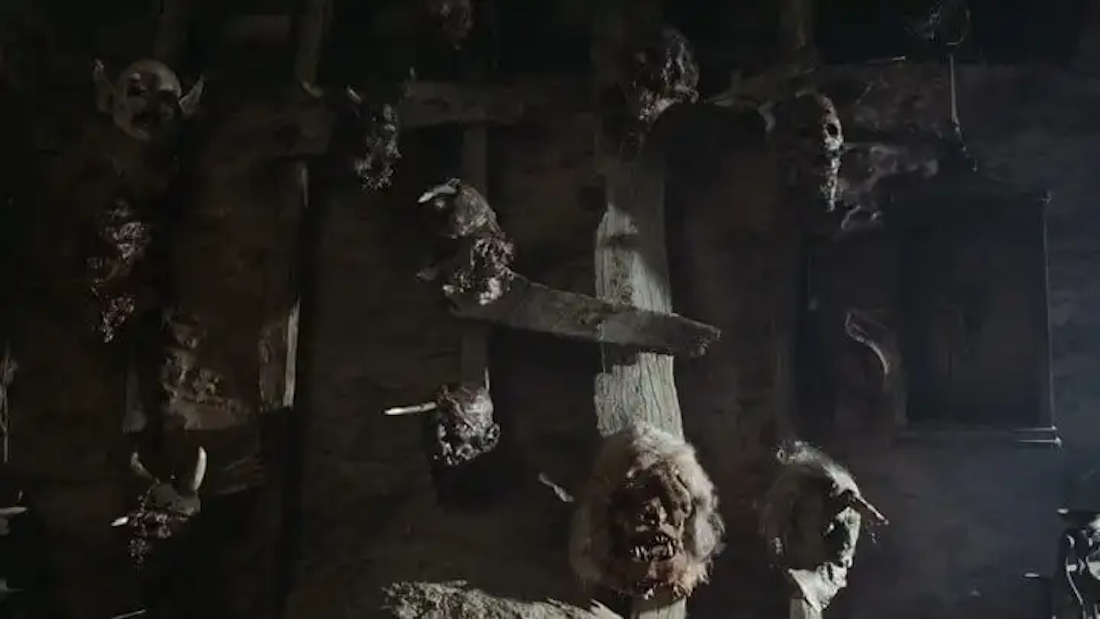
In contrast to the starkness of the Father’s life, the world around him suggests a grandiosity that puts most films with budgets in the hundreds of millions to shame. Yes, the variety of monsters in this film are heard rather than seen, but they succeed in communicating the grim realities of the Father’s existence. Unknown creatures squall in the night, before the Father takes their heads and pikes them around his hut to serve as a warning. Later, the roar of a nearby dragon can be heard before its shadow engulfs the land, a harbinger of the painful hunt to come. In a clever moment of characterization and world building, while on the hunt, the Father stumbles across the skull of a hunter much like himself. He questions out loud what might have killed the hunter, at first suggesting a troll but then dismisses the idea because in his experience trolls don’t travel that far North. Moments later, the roar of a troll is heard and he chuckles at the possibility that they are nearby.
Traveling the next day, he overhears a local castle celebrating much to his annoyance as he steps on another human skull laying out in the field. In the context of the Father’s profession and his status of living outside the castle walls, these back-to-back scenes hint at a larger world full of class complexities in which kingdoms treat the disposal of neighboring monsters like blue collar work they offload to outside help. These individuals are expendable, lacking even the dignity to be properly buried while the wealthy celebrate, unaware and uncaring of those who give their lives to ensure their safety. It’s sequences like this where Downey and Stewart utilize their limitations to fuel the narrative engine that is the Father’s grief-stricken quest for revenge. But that doesn’t negate the fact that the world of THE HEAD HUNTER is brimming with possibility and potential around every corner, even in death.
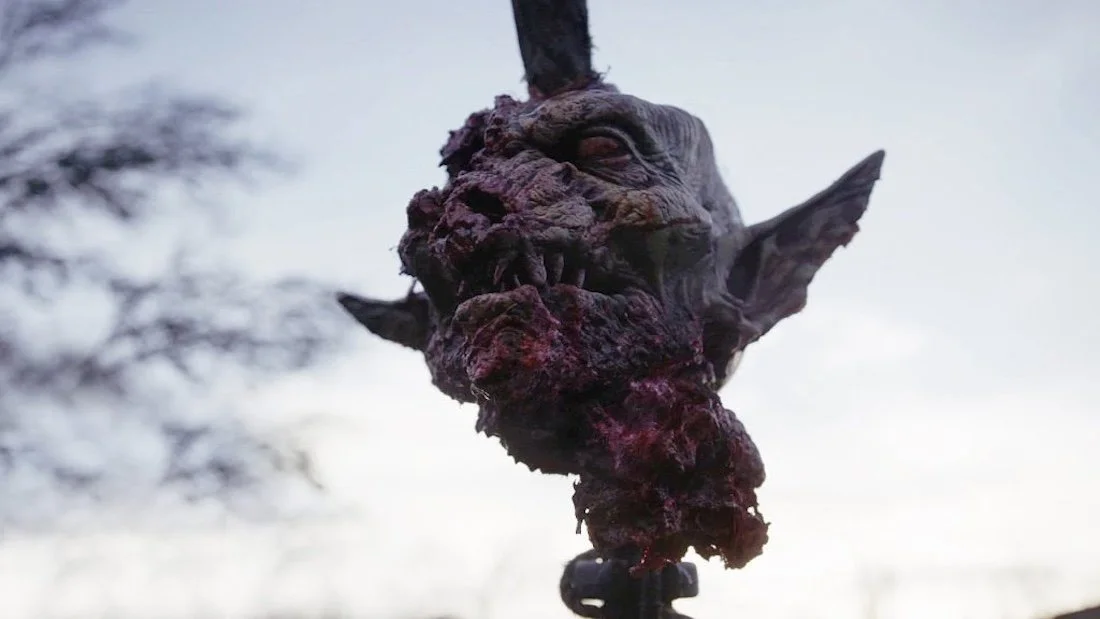
Death is the immutable presence that permeates every frame of the film. From the opening scene in which the Father protects his daughter from a horde of off-screen monsters to the bitterly ironic twist-of-fate ending. At the center of all this death is ‘The Head,’ the third “character” of the film, and the monster responsible for killing the Father’s daughter. A special effects marvel of Troy Smith, the film’s creature designer, the monstrosity is a grotesque skull capable of speaking only rudimentary words and sentences. The design of the creature stands out due to its simplicity, in which the wriggling spine functions as a tool, weapon, and a form of movement all at once. Featured most prominently in the second half of the film, Stewart photographs it in deep shadows which brings about its writhing menace even when its facial features are barely legible. This helps to both obscure and exaggerate the reason why it becomes such a threat to the Father: because of its ability to use its spine to insert and extract itself into bodies, dead or alive. To say more would be to spoil the third act—but suffice to say that by the time Winter dissolves and Spring begins to blossom, there is a literal and metaphorical rebirth taking place that is as symbolic as it is ironic. It just isn’t the one you might expect.
THE HEAD HUNTER functionally exists as the last story in a series of unpublished pulpy Robert E. Howard-esque books and comics that featured the Father going on many adventures in a “monster of the week” kind of series (something I posited 3 years ago). Questions are laid out that suggest life before, during, and after the events of the film. Was the Father always a hunter or did he take up that profession after his daughter’s death? What is lifelike in this dark fantasy world for those not housed in castle walls and at the mercy of the land’s many monstrous denizens? What happens to the character after the film ends? It’s a film brimming with possibilities, one part of me wants more of it due to the rich world that exists at the edges of the frame. But then again, I’m happy that this exists in the singular and definitive fashion that it does.
To me, THE HEAD HUNTER is inspirational. It exists as an exciting achievement of genre film that showcases every stretched dollar on the screen. It’s bursting at the seams with stories and ideas, all packed into the details heard and not seen, gestured and alluded to. What Downey and Stewart have achieved with this at the budget they had is nothing short of tremendous and deserves to be lauded. THE HEAD HUNTER isn’t just a worthy addition to the Hall of Fame of best fantasy films, it is a personal North Star in the execution of vision and scope for independent genre filmmaking.