

THE HITCHER (1986)
Last month André Øvredal’s PASSENGER was released in theaters. While the film itself is not particularly good, its central antagonist, the ‘Passenger,’ reminded me of classic monster-of-the-week episodes that populated shows like Buffy, Millennium, The X-Files, Supernatural, and many more. Specifically, the film’s depiction of the mythology surrounding the entity and how it tied into hobo communications with one another felt like a throwback to a certain kind of folklore that pre-dates our current digitally connected world. From the Mothman, and the Killer in the backseat, to the Hookman, and Devil Chairs; history is littered with legends from across the world. And many of them are parables rooted in real world lessons and principles that are meant to teach just as much as they are meant to entertain.
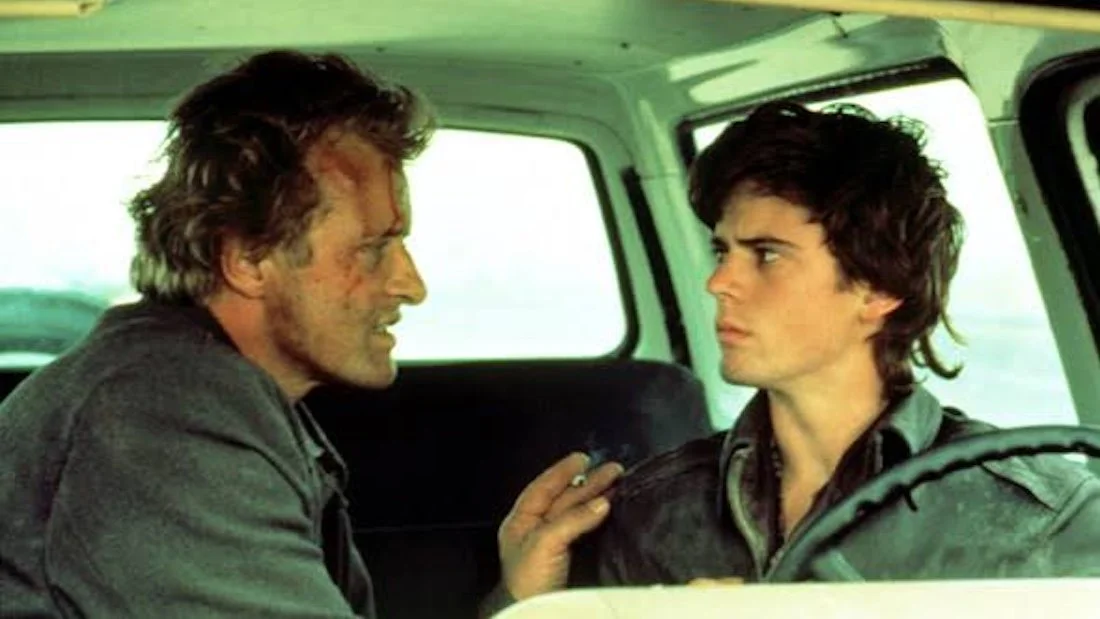
For the 40th Anniversary of Robert Harmon’s THE HITCHER, I want to postulate a different reading that positions the film as a form of cinematic folklore or urban legend in the making. One that is centered around its titular character played to incredible effect by the late, great Rutger Hauer. Ostensibly the film plays out like THE TERMINATOR, only trading a cyborg from the future and the urban jungle of L.A for a nigh-supernatural like John Ryder (Rutger Hauer) who relentlessly pursues Jim Halsey (C. Thomas Howell) across the dusty back roads of West Texas. But where in Cameron’s film the machine’s singular murderous purpose is meant to halt the coming future war, in Harmon’s, Ryder’s single-minded persistence is far more enigmatic. And what follows will be my own reading into what that is, and why.
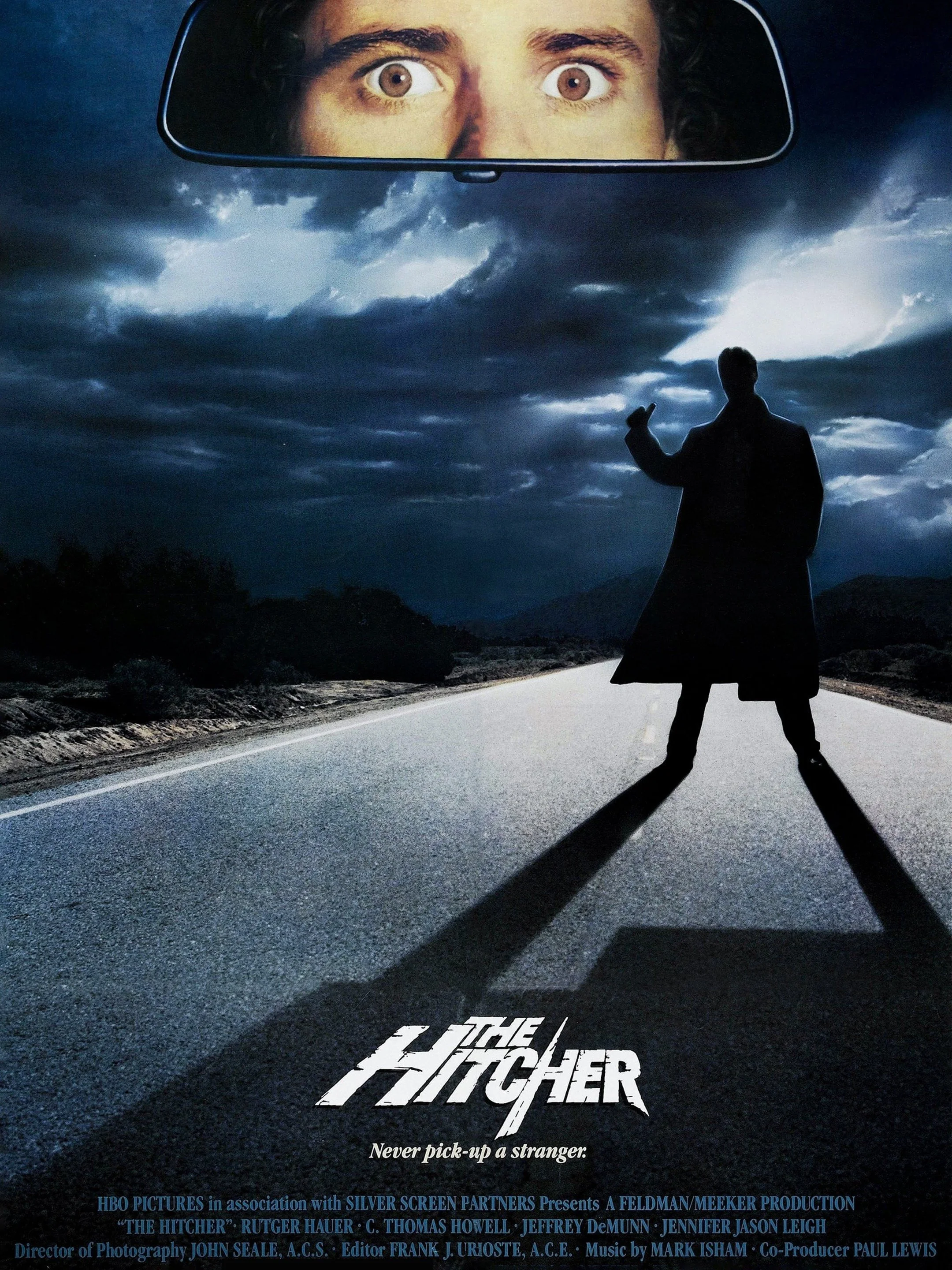
Much has been written about the film in the intervening thirty-nine years since its release. Be it the homoerotic subtext at the center of Jim and Ryder’s violent relationship, or whether or not the titular hitcher is in fact the very personification of evil, there are scores of readings on the film. However, in relating to the previously mentioned notions of myths, folktales, and curses, I want to offer an alternative idea: What if there was a purpose to John Ryder’s pursuit of Jim Halsey? What if Ryder was cursed to wander the lonely highways, forever bringing death and destruction? And that by encountering Halsey, Ryder’s ultimate goal is to pass off his ethereal malediction to the young man so that he can finally be at peace? And what if that larger goal was accomplished as a result of Ryder’s death at the end of the film? The choice of this particular reading is due to not wanting to rely on previous hypotheses already analyzed by the many others who came before myself, but more so how Harmon’s film depicts a form of cinematic folklore and mythology.
To start, the hitcher’s very identity is one shrouded in mystery. He appears in the rain, seemingly out of nowhere after Halsey nearly crashes into an oncoming truck. Even the name he offers to Jim, “John Ryder”, feels like a false pretense. Like how “John Doe” is used to describe a person whose identity is not known, John “Ryder” sounds like the hitcher knowingly making a play on the word “rider” given his then at the moment status as a passenger in Jim’s vehicle. And it’s just the first misdirect of many he conceives of throughout the film. From his vague reasoning as to why he’s tormenting Jim, to joking he’s from Disneyland when under interrogation from the police, at every turn John Ryder obfuscates his true identity to everyone he comes across.
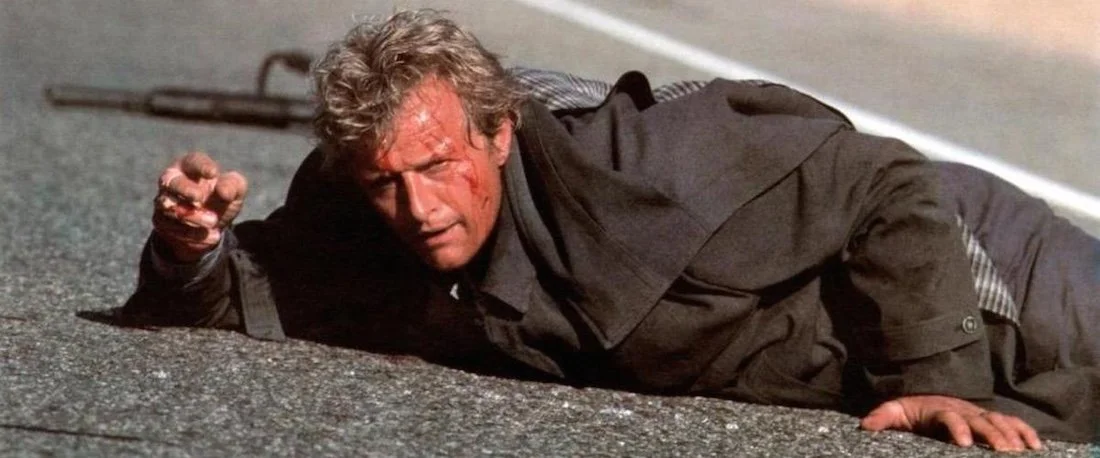
Further lending credence to Ryder’s unknowability is his supernatural ability to appear at random when Jim least expects it. From getting Jim falsely accused of crimes that he committed and then springing the young man from jail while leaving a trail of dead bodies in his wake, to disrupting several close calls between Jim and the police, Ryder is present at Jim’s most desperate moments. Through these examples, Ryder’s enigmatic existence is shrouded in mystery as the audience is given little to no explanation for who or what Ryder is, let alone his penchant for sporadic and violent reappearances. The establishment of such is what gives the film its mythic quality and timelessness as a form of cinematic folklore.
If Ryder’s status as a violent enigma cursed to haunt lonely highways looking for victims is the lynchpin that makes THE HITCHER a depiction of cinematic folklore, then what is his purpose? What drives his pursuit of Jim Halsey? I would argue Ryder tells Jim exactly what he wants when he holds the driver at knifepoint saying: “I want you to stop me.” His intention is clear, and his following command to Jim when the young man begs for mercy being “I want to die” can be further read as an extension of Ryder telling Jim how to stop him specifically. From these two pieces of dialogue, it can be argued that Ryder is looking to put an end to his eternal suffering by finding someone to take his place. Jim pushing Ryder from his car when he refuses to repeat “I want to die” is the moment of realization from Ryder that Jim will become his successor. Thus, his pursuit of the young man throughout the film is in fact Ryder preparing Jim for the consequences of undertaking the curse. All of which must be done before the final ritual is enacted which will transfer it from Ryder to Jim.
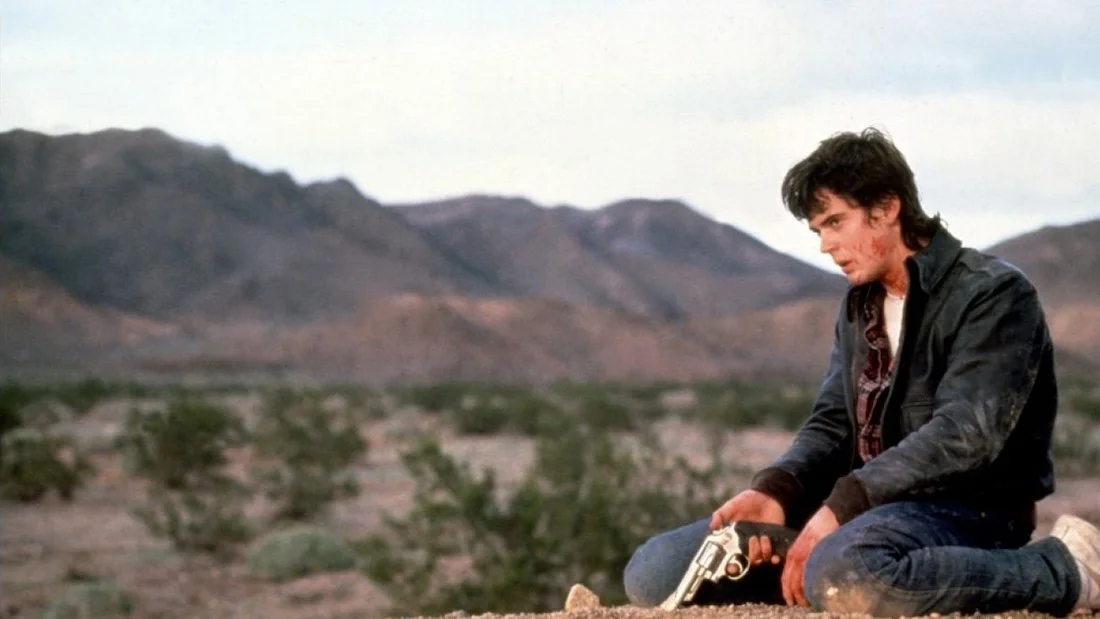
In preparing Jim for the curse, a part of Ryder’s strategy is to test Jim’s willingness to kill him. The first comes during a tense diner exchange where Jim has Ryder at gunpoint, with the former pulling the trigger on an empty revolver after being goaded by Ryder. In the moment Ryder looks elated that Jim was so willing to kill him as to him it’s a confirmation that his protege in the making is well on his way to taking his place. Furthermore, it's an expression contrasted with the brief look of empathy he gives when Jim asks why the hitcher is tormenting him, as if Ryder feels bad about what he’s putting Jim through.
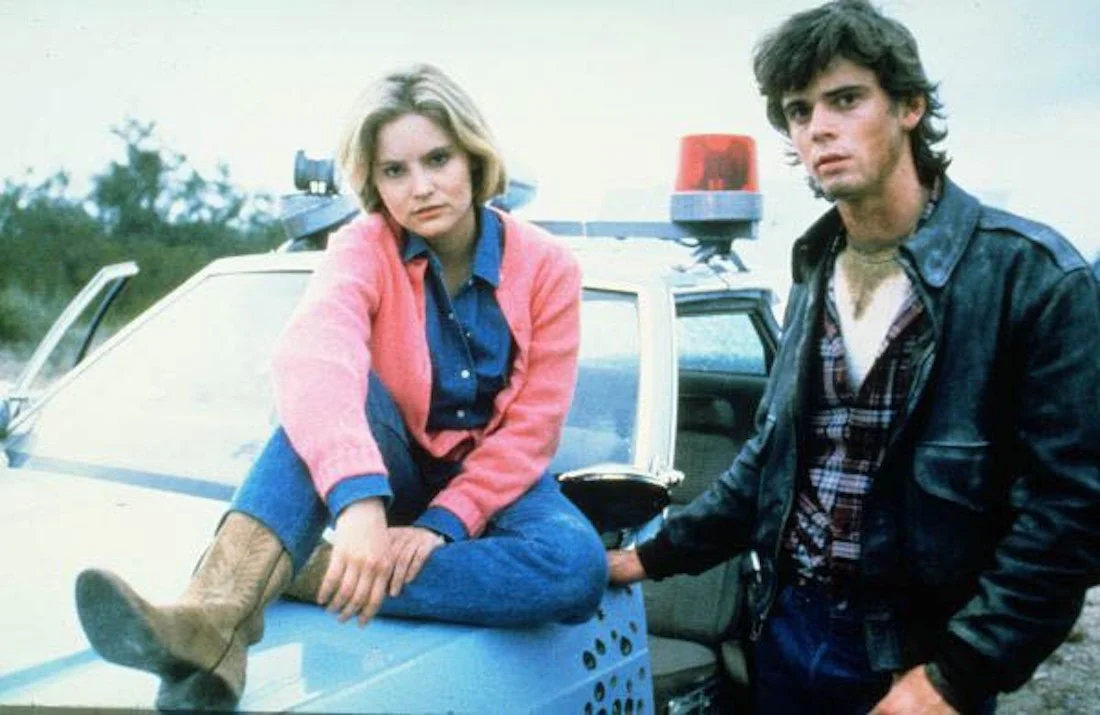
The second act of Ryder’s preparation doubles as a lesson that Ryder wishes to impart on Jim which involves the iconic truck scene that culminates in the violent off-screen death of Nash (Jennifer Jason Leigh), a woman that Jim has struck up a friendship with throughout the film. In it, Ryder has Nash tied between a truck and its trailer hitch with his foot on the gas. He threatens to tear her apart unless Jim shoots him. It’s a no-win scenario for Jim that is Ryder imparting a cruel reality unto his unwilling protege: That to undertake the curse — to become the proverbial hitcher meant to wander the empty roads — there can be no attachments to the real world. So when Jim refuses to kill Ryder, for the hitcher it’s a bitter disappointment knowing that Jim is still choosing the life he could have versus the one that’s coming, evidenced by his line “You useless waste.” And as such he makes the choice for Jim and kills Nash, robbing his young charge of that potential life.
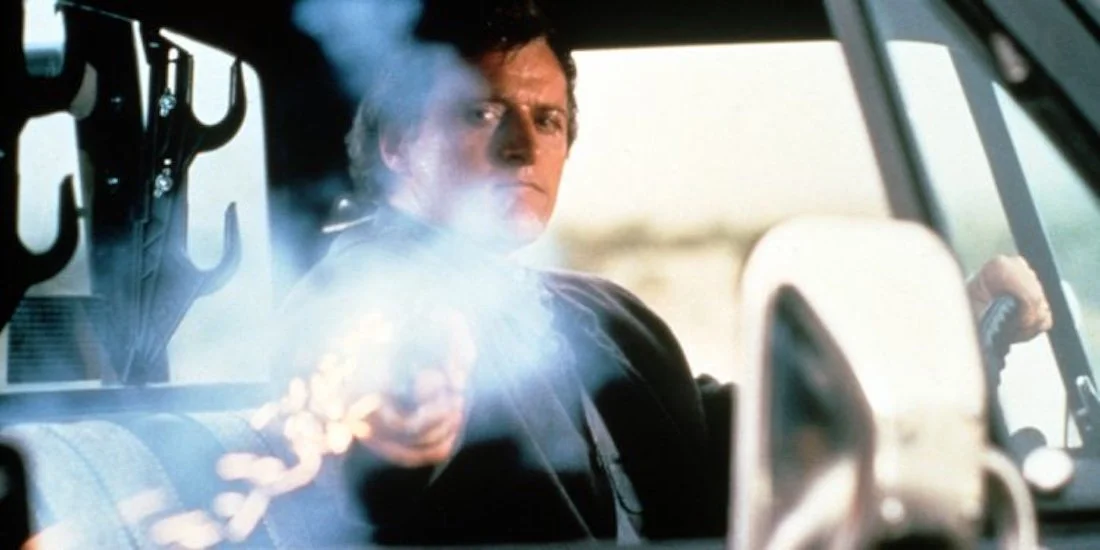
Finally, the last 15 minutes of the film deals with Jim coming full circle as he accepts the inevitable, which further helps to fully realize the central thesis of this piece. It’s the culmination of his character arc, one that is conveyed as much by Jim’s clothing as it is his demeanor. He trades a flannel shirt for a leather jacket, becoming moodier, more determined and self-assured of things, mirroring more and more of Ryder’s cynical abandon. When the hunted becomes the hunter and Jim finally goes after Ryder, he does so by stealing the car and gun of Jeffery DeMunn’s Captain Esteridge (perhaps the one other person besides Nash who has been looking out for the young man throughout the course of the film), leaving the cop on the side of the road. It’s an acceptance and acknowledgement of Ryder’s earlier lesson in regards to Nash and having no attachments to the real world (to say nothing of his actions once again mirroring those of Ryder’s when Jim and the hitchhiker first met). All of which climaxes with Jim running down an escaped Ryder before repeatedly shooting the hitcher with a shotgun, killing him.
This violent, decisive act is the bloody hand off that transfers Ryder’s curse over to his unwilling acolyte. It’s a hollow victory for Jim as he is left alone without any hope for companionship, with those who mattered most throughout his journey either dead or long gone. And now like his precursor before him, he is fated to haunt the back roads of West Texas killing until he finds one much like he once was. He exists forever as a grim cautionary tale to those helping strangers on unknown roads and the doom that awaits them should they do so.