HOWARD THE DUCK (1986)
For every move there is a counter. Each attack has a defense. Within the confines of this digital dojo we defend underloved works of art. It has been said that all art will eventually find its audience. We are that audience. Bow to your media. Bow to your device. Choose your fighter.
A door opens, casting a swath of light over the bright green expanse of manicured bunchgrasses encircling Skywalker Ranch as circus music along with the trumpet of an elephant accompanied by laughter can be heard emanating through the muted Marin midnight until muffled by the abutting aperture. A figure with flapping footsteps makes his way through the reeds to the serenity of Ewok Lake as a brood of waterfowl paddle away. “Sellouts.” The figure grumbles as the retreating drake and hen cast wary glances while they corral their fledgelings to the opposite end of the pond. He digs in his suit pocket to retrieve a book of matches from the Club Mallard. Out of the corresponding compartment he claims a cigar, a fine Quacanudo, chomps it, strikes a match, and lights it illuminating the beak of Howard the Duck.
“The special effects aren’t even done yet.” The measured rasp of George Lucas startles Howard slightly. Howard turns to face his host and exhales a dense fog of smoke causing George to cough. “They’ll get it. When it’s all done, they’ll get it. Come back inside and enjoy the party. It’s all for you, HOWARD THE DUCK (1986).”
IMDb: 4.8 out of 10
Rotten Tomatoes: 13% Tomatometer / 38% Popcornmeter out of 100%
Metacritic: 28 / 100 Metascore, 4.9 / 10 User Score
Letterboxd: 2.5 out of 5
Winston Churchill famously said, “Kites rise highest against the wind - not with it.” George Lucas could have used Big Winnie Bulldog’s quips of encouragement in the face of adversity when he notably lamented “My greatest regret in my career is that John Landis was unable to direct HOWARD THE DUCK. I feel the movie would have been far more successful and saved me years of hardship following its release.” 1986’s HOWARD THE DUCK might seem like a miraculous mallard for Marvel Comic’s momentous maiden migration into motion pictures without some historical context. I'm about information not infamy. To quote one of Churchill's intellectual equals, Ace Ventura, "Fiction can be fun, but I find the reference section much more enlightening."
“I bet you were born from a very hard-boiled egg, Duckie.”
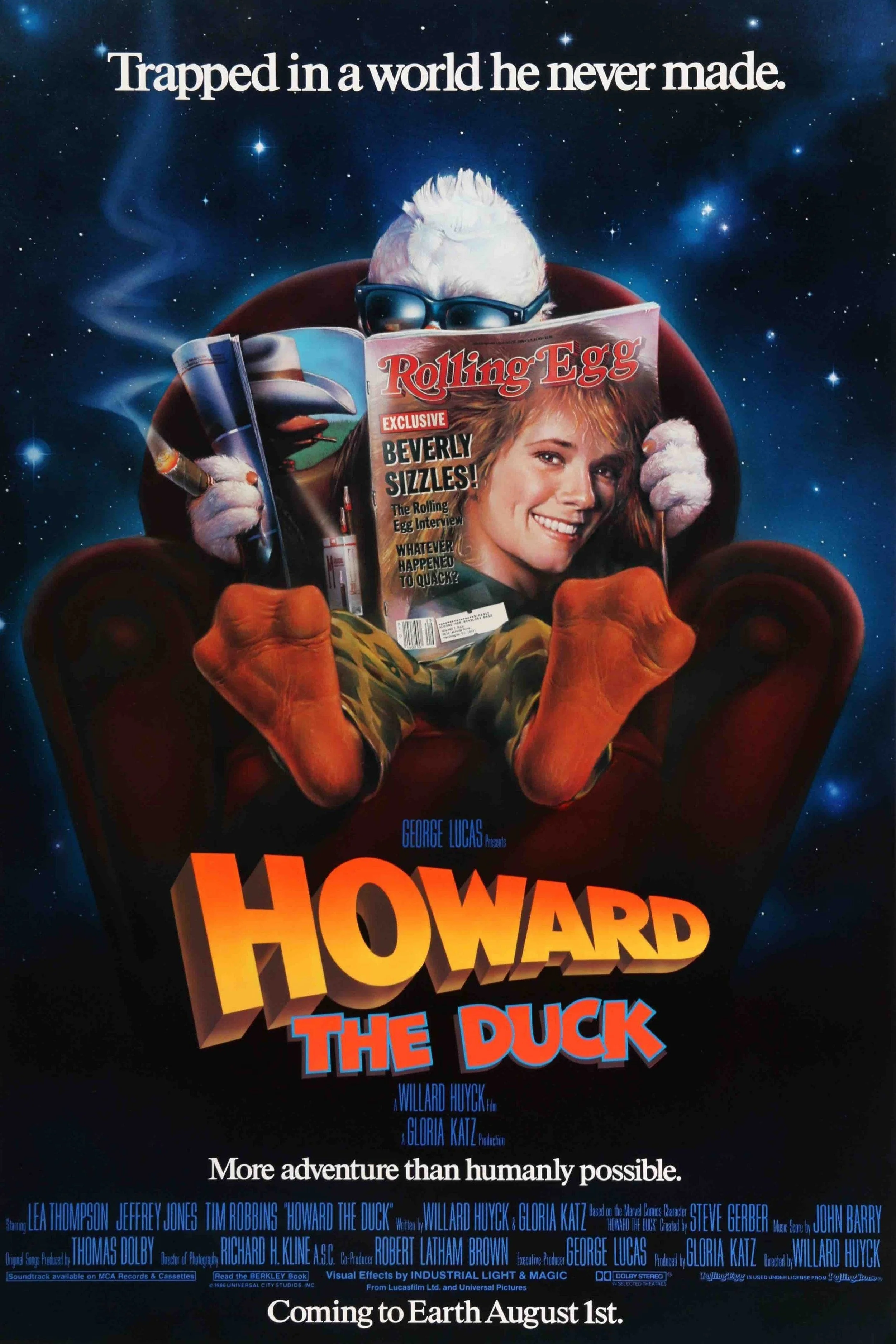
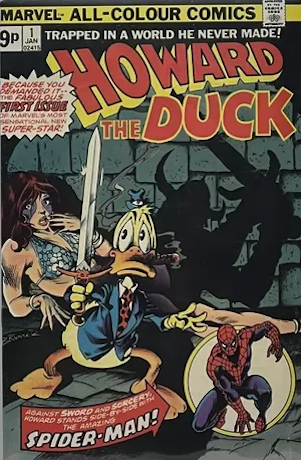
What began as a throwaway visual joke in Marvel Comic’s Adventure Into Fear Issue 19 (1973) became a meteoric rise to illustrated immortality. Writer Steve Gerber and artist Val Mayerik crafted the concept of an inter-dimensional anthropomorphic duck smoking a stogie, clad in a Stetson, suit, and necktie. By popular demand this singular sight gag received his own comic, was referenced in a Pretenders song, popped up in pieces by Stephen King and Phillip K. Dick, and in 1976 even campaigned garnering substantial write-in votes for the presidency of the United States. Underestimating the intense animal magnetism of Howard, Marvel only printed the bare minimum of a run (275,000 copies) thus selling out immediately and making Howard The Duck Issue 1 (1975) highly sought-after on the secondary market. In subsequent issues Howard would parody pop culture and grapple with esoteric antagonists as well as the absurdist existentialism intrinsic in modern living, lampooning Jean-Paul Sartre’s philosophical slogan "condemned to be free” with the tagline “Trapped in a world he didn’t make.”
“This is obviously no place for an intelligent, sensitive duck.”
At the same time, Marvel found itself a duck out of water in the moving picture business. The famed funny book publisher experienced a little licensing boom in the 1970s with live-action adaptations of The Incredible Hulk (1977–1982) and The Amazing Spider-Man (1977–1979) finding their way onto CBS as televised serials alongside made-for-tv movies for Doctor Strange (1978) and Captain America (1979) which were attempting to serve as backdoor pilots for both of those properties until an unfortunate shift in corporate philosophy. All these comic book adaptations (in addition to Wonder Woman (1975–1979) licensed from DC Comics) despite performing well in the ratings were cancelled from their respective time slots due to CBS executives not wanting to be known as “the superhero network,” a creative, commercial, and cultural blunder akin to firing Steven Colbert. In the realms of movies and television, comic books were still stigmatized as not legitimate entertainment and largely considered to be disposable.
“Talk about an identity crisis.”
One fan of our fedora festooned fowl still had faith: George Lucas. After wrapping on the original STAR WARS trilogy and delivering two dynamite Indiana Jones films with RAIDERS OF THE LOST ARK (1981) and INDIANA JONES AND THE TEMPLE OF DOOM (1984), Lucas had his pick of projects and purposely produced HOWARD THE DUCK. As a fan of the comics since film school, Lucas had passion and proficiency with the property making him perfect for executive producer. What he envisioned for the picture amounted to a comedic combination of GOLGO 13: THE PROFESSIONAL (1983) and FRITZ THE CAT (1972) but studios didn’t have faith in a big budget animated project so they pushed for live action. Lucas was curious about the creature effect challenge so he committed to practical filmmaking. Coupled with married writing team Gloria Katz and Willard Huyck whom he worked with on AMERICAN GRAFFITI (1973) and INDIANA JONES AND THE TEMPLE OF DOOM, visual effects by Industrial Lights & Magic, stop-motion maestro Phil Tippett, and big-time distribution from Universal Pictures, a major motion picture for cult comic character seemed like a slam dunk! So why is HOWARD THE DUCK synonymous with box office poison?
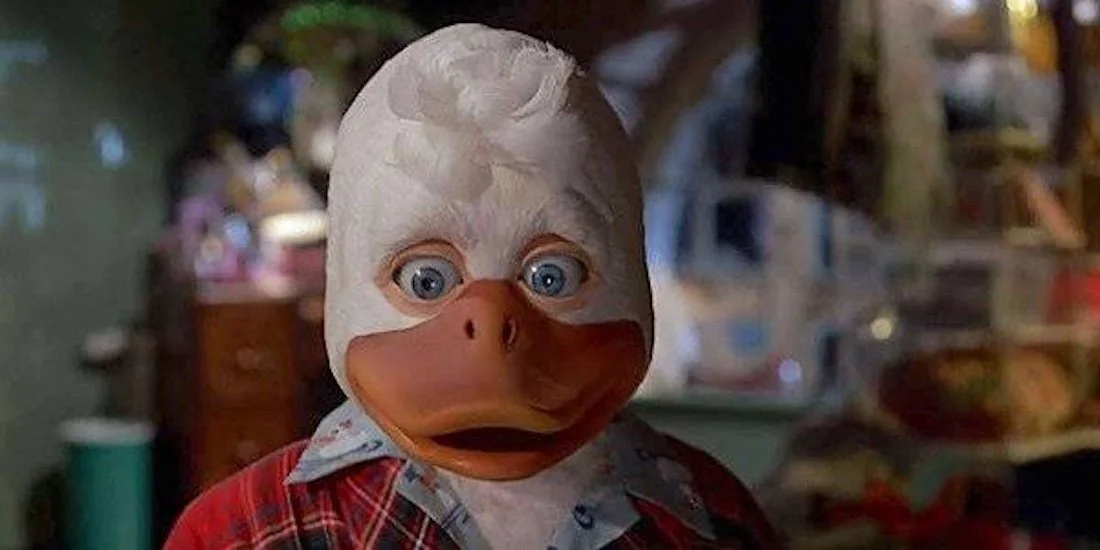
With an estimated production budget of $37 million HOWARD THE DUCK grossed only $37.9 million worldwide ($16 million domestically) falling well short of blockbuster expectations set by the caliber of talent involed. It also swept the Golden Raspberry Awards with four “Razzies.” Universal envisioned this to be their tentpole release of the season and Lucas fancied a fitting tribute to a figure inextricably attached to his salad days. The biggest hiccup came in the unavailability of John Landis who Lucas insisted was the best possible option to direct. Landis allegedly wasn’t into the script citing his disinterest in the car chase at the crescendo claiming a similarity to THE BLUES BROTHERS (1980) and took the job directing ¡THREE AMIGOS! (1986) instead. Co-writer Huyck was then slotted to take the director’s chair much to George’s salt and pepper chagrin.
“Here, all is real and all is illusion.”
The urban legend says what was released was a movie so irredeemably bad that it nearly bankrupted Señor Skywalker forcing him to trade Pixar for a handful of magic beans, brought Universal Pictures to its knees leading studio execs to fistfight in the streets, and banished Marvel Comics from making a movie adaptation of one of their properties ever again… but folksy wisdom tells us that the truth might be a little less dramatic. While it’s true that the lack of success of HOWARD THE DUCK did negatively impact the the pocketbook of producer George Lucas, it was his $50 million investment into Skywalker Ranch, softening of STAR WARS merchandise sales, and recent divorce from Marcia Lucas that really put the strain on his purse strings. And I grant you that Lucas did sell his CGI animation division (what would become Pixar) priced above market value to Apple Computer CEO Steve Jobs, this occurred six months prior to the release of a certain out of favor fowl flavored film.
“Gee, Howard. Sorta sounds like you sold out.”
Now don’t shed too many tears for ol’ George. He lands on his feet. And spoiler alert for the Marvel Cinematic Universe, they’re doing just fine. We’re talking about professionals here. Financial failures roll off them like water off of a duck’s back. Sure, Mark Goldblatt’s THE PUNISHER (1989) and Albert Pyun’s CAPTAIN AMERICA (1990) got relegated to rental shelves and Roger Corman’s THE FANTASTIC FOUR (1994) was made on a micro-budget solely to retain the film rights for producer Bernd Eichinger and never saw the light of day, but floundering fortunes for Marvel movies were reversed with BLADE (1998). Always bet on black.
“No one laughs at a master of Quack Fu!”
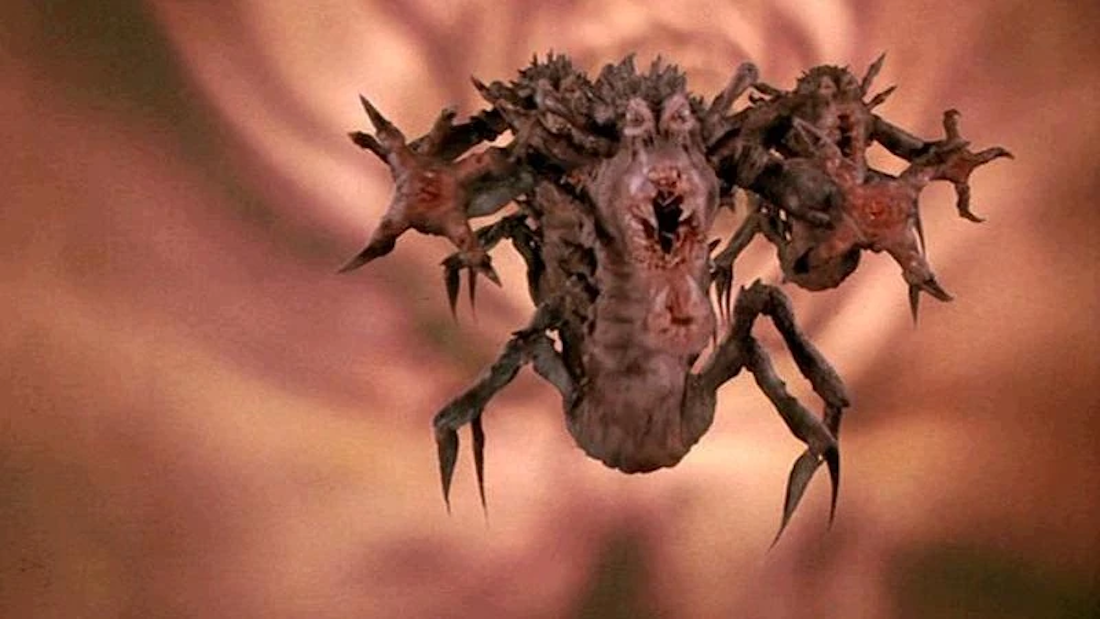
Whether you love or hate the film, few can argue against the impact HOWARD THE DUCK had on motion picture special effects. Tippett’s creature design and effects are top notch and terrifying as per usual and that two million dollar temperamental animatronic duck costume pushed practical effects to their very limits but without the digital wire-removal technology pioneered for the opening sequence where Howard is dragged across the cosmos (duck tits oooh-ooooh sang to the tune of DuckTales), what would become of blockbusters like THE MATRIX (1999) or CROUCHING TIGER, HIDDEN DRAGON (2000)? One must waddle before they can fly. Howard represents the downy feathered phase of that industry altering technology.
“You were great, Duckie.”
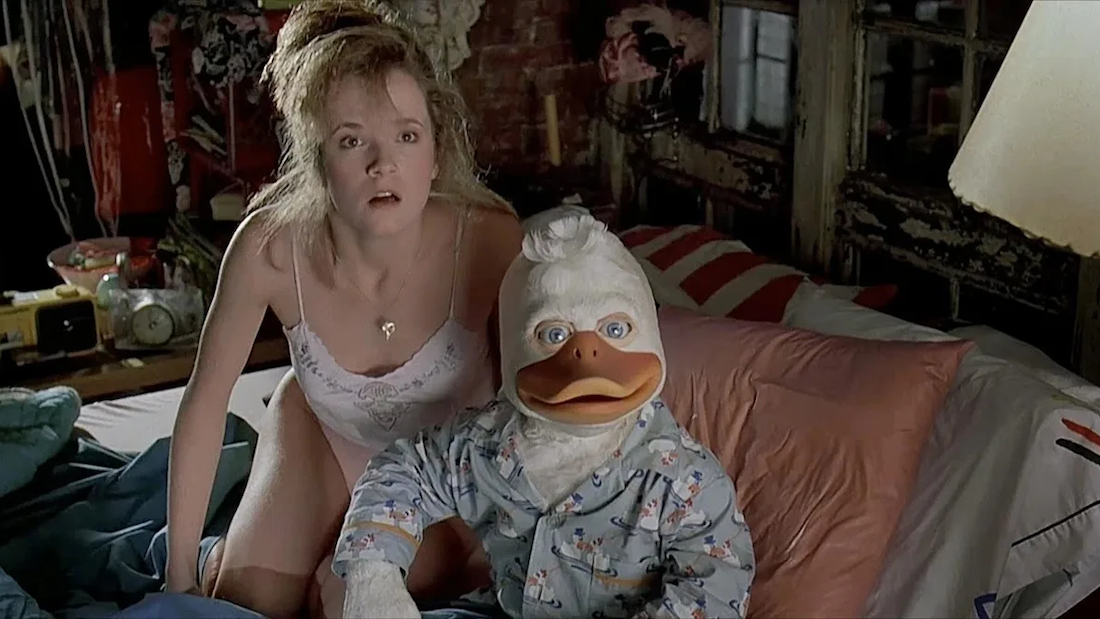
Now here’s where I might get accused of doing too much toot: I actually think HOWARD THE DUCK is a great movie. I’m well aware that celebrated Chicago Tribune film critic Gene Siskel called this a “A stupid film. The story has no center. The duck is not likeable.” and even Howard’s creator Steve Gerber said “What can I say? It sucks.” I still love this serving of neon slathered space shoveller cinema. It’s an ambitious, artistic, amusing, anomalous action adventure that is also aesthetically awesome! There are strong (albeit campy) performances throughout with an earned and developed emotional core. Also, the whole flick is absolutely dripping with totally killer ‘80s kitsch. It gave me hope that a babe like Lea Thompson might go for a stocky guy as long as the puns landed and inspired me to seek out the comics, which I grant you is an entirely different satirical storytelling experience, but it helped foster a love for offbeat comic books for decades to come.
“I've been playing these grungy mong-holes waiting for our big break"
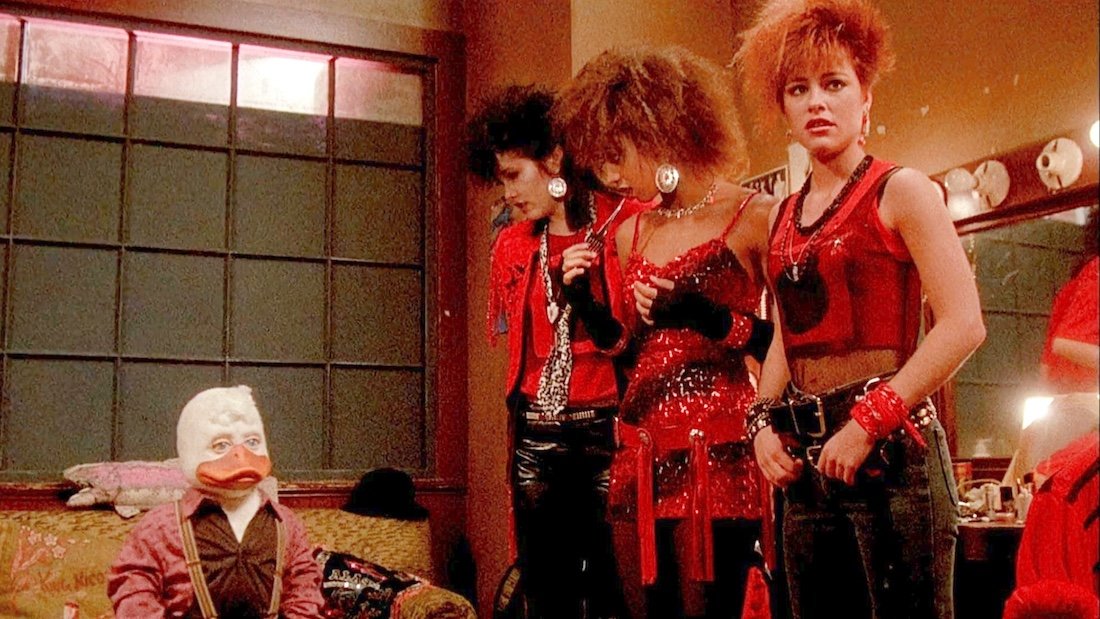
Hello, Duckie. Hello, Thog. It’s time to sing the praises of ch-ch-Cherry Bomb! “Hunger City” and “Howard The Duck” are both certified bangers and to craft Beverly’s band's infectious pop rock hooks the movie makes use of an absolute murderers’ row of music industry masterminds including Allee Willis, George Clinton, Joe Walsh, Stevie Wonder, and Thomas Dolby with Lea Thompson actually singing the tracks in all her ‘80s glam regalia! There’s a bunch of earworm anthems that’ll get your toes tapping and your tailfeathers shook. Then there’s the lush and lovely original score composed by the legendary John Barry who crafted orchestral movements worthy of Philip Marlowe or 007 himself!
“I said beat it!” [growling] [children screaming] “Mutants.”
Don’t call it a quack back but HOWARD THE DUCK enjoyed some accolades of its accumulated cult status via the October 5th 2017 screening of a 70mm print at the famed Egyptian Theater in Hollywood, California as part of that year’s “Beyond Fest.” Lea Thompson, who has long since come to terms with the film’s foibles, embraced the fandom finally taking her bows in front of 400 frenzied fowl flick aficionados. Thompson even pitched directing and possibly starring in a HOWARD THE DUCK reboot for the MCU and while producers loved the pitch they passed citing other plans for Howard. In many spicy and exotic ways, HOWARD THE DUCK is a lot like the in-movie eatery, Joe Roma's Cajun Sushi Cafe. An eclectic mix that may not be for everyone’s tastes but when you’re hankering blackened spicy tuna sashimi with a crab boil maki over truck stop tamagoyaki with a Suntory Sazerac, except no substitutes.
“Ciao for now, Howie.”