
DESTROY ALL MONSTERS (1968)
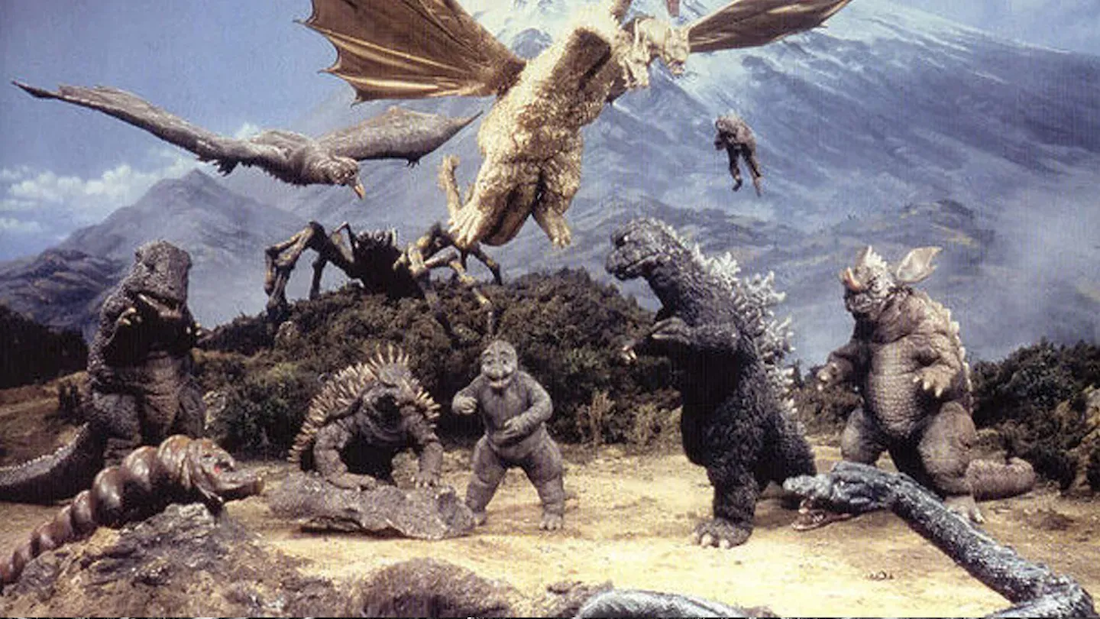
57 years ago, famous Japanese film studio Toho released the most ambitious cinematic crossover at the time named DESTROY ALL MONSTERS, the Godzilla franchise’s ninth film and the Shôwa Era’s chronological conclusion. While the horror films HOUSE OF FRANKENSTEIN and HOUSE OF DRACULA united several of the Universal Monsters in the ‘40s, DESTROY ALL MONSTERS paved the way for future crossovers in franchises like the Marvel Cinematic Universe.
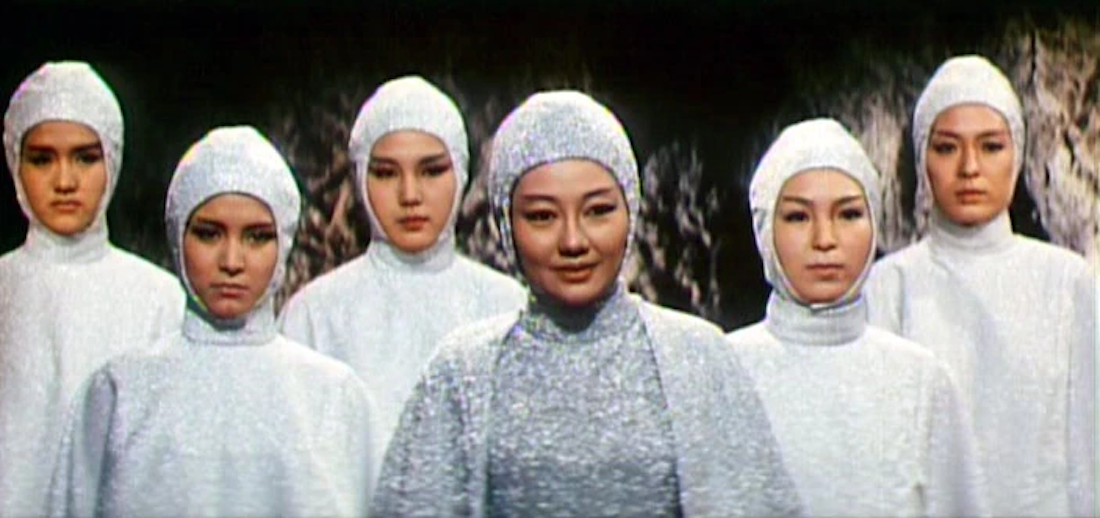
Directed by franchise co-creator Ishiro Honda, DESTROY ALL MONSTERS depicts a futuristic world where humanity has a base on the moon and rounded up all of Earth’s kaiju into an island sanctuary known as Monsterland. An evil alien race named the Kilaaks infiltrate the island, release the kaiju and control them to destroy cities across the globe, with humanity now struggling to figure out the aliens’ plans and stop the kaiju’s rampage. This conflict culminates in a final clash between Earth’s kaiju and Godzilla’s archenemy King Ghidorah.
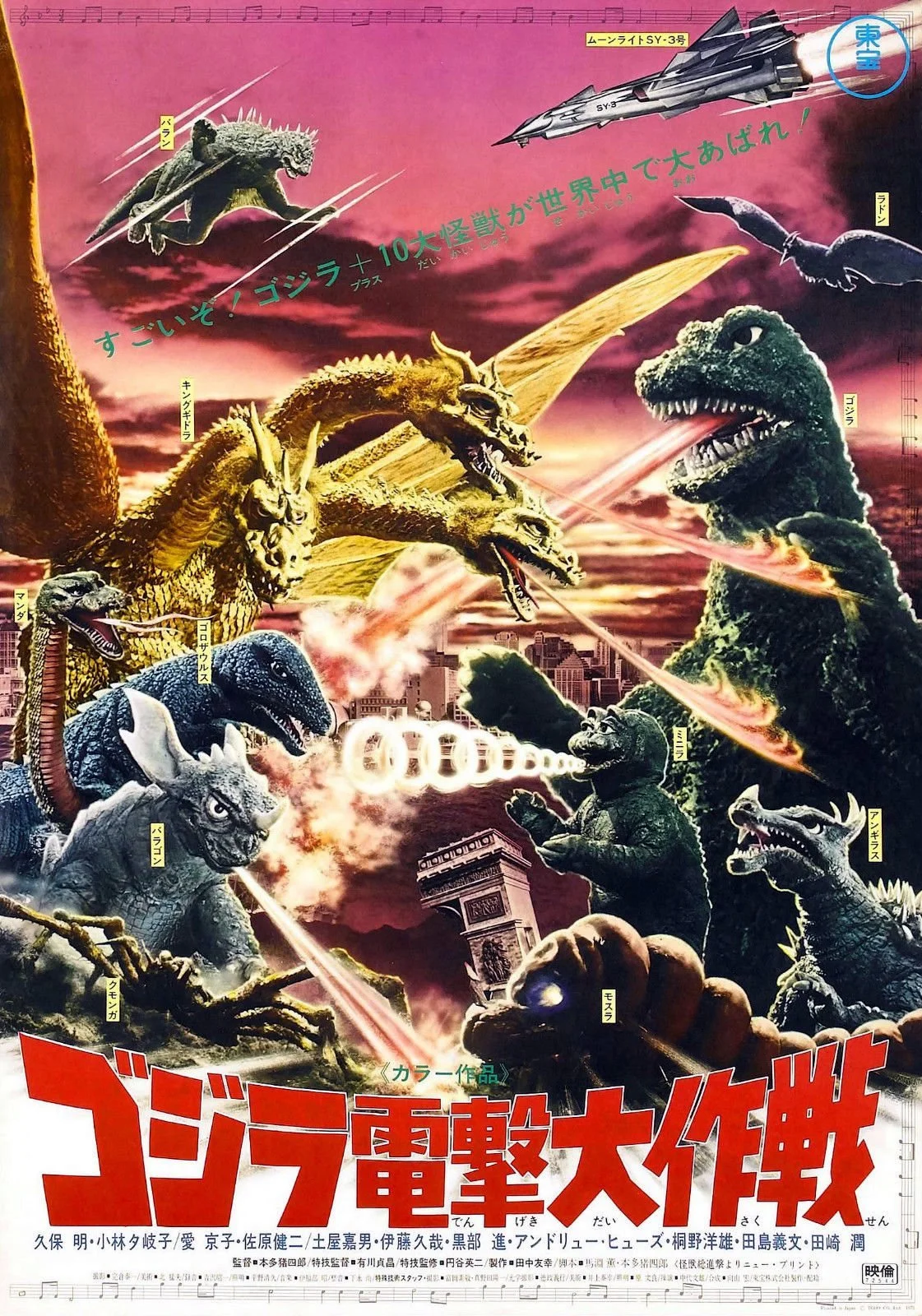
DESTROY ALL MONSTERS boasts the appearances of 11 of Toho’s kaiju from its past films, which is the Godzilla franchise’s largest ensemble at this point. The film’s cast includes: Godzilla, Minilla, Mothra, Rodan, King Ghidorah, Anguirus, Manda, Baragon, Varan, Gorosaurus, and Kumonga. Among the large group, only a few of them directly fight Ghidorah in the third act. The kaiju action is still relatively well-paced, with three major sequences happening around every 15-20 minutes. Besides some compositing mishaps, tokusatsu pioneer Eiji Tsubaraya’s effects hold up well for the time period.
Screenwriter Takeshi Kimura and Honda’s script mostly prioritizes the alien invasion plotline over awesome kaiju fun until the very end, hurting the film’s entertainment value. DESTROY ALL MONSTERS’ plot is basically the humans and Kilaaks outsmarting each other in increasingly convoluted ways. Attempting to rehash INVASION OF ASTRO MONSTER on a much larger scale, the plot gets very repetitive after the first act. The humans find the devices controlling the kaiju? The Kilaak’s main controller device is actually on the moon. The humans gain control back of the kaiju? The Kilaaks send in Ghidorah to fight them.
Since the plot relegates the kaiju to being glorified flying saucers, revising their escape to be their own doing could’ve been more creative. Nature finding a way JURASSIC PARK-style may’ve worked because the film establishes all the ways Monsterland imprisons the kaiju. Exploring Godzilla and the others overcoming these precautionary measures could’ve led to a fun sequence. Perhaps the film couldn’t really have the kaiju take center stage due to the technological and budgetary limitations of the ‘60s.
Is DESTROY ALL MONSTERS a satisfactory conclusion to the GODZILLA franchise’s Shôwa era? Despite the film being well-directed, having decent effects, and iconic action sequences, budgetary limitations prevent this movie from reaching the fantastic premise’s full potential. DESTROY ALL MONSTERS’ ending does nicely cap off Godzilla’s heroic character development in most of the era’s films. However, the Heisei Era’s GODZILLA VS DESTROYAH far more poignantly ends the kaiju’s journey. 36 years after DESTROY ALL MONSTERS’ debut, Toho unleashed another kaiju royal rumble, named GODZILLA: FINAL WARS.
GODZILLA: FINAL WARS’ fight scenes and epic kaiju battles amplify the silly fun that perfectly fits the premise. As filmmaking techniques grow and change over time, we still haven’t gotten a successor to DESTROY ALL MONSTERS and GODZILLA: FINAL WARS in the 21 years after the latter’s release. Although Ghidorah awakening all the world’s monsters in 2019’s GODZILLA: KING OF THE MONSTERS evoked DESTROY ALL MONSTERS, there’s still so many ideas for a proper new take.

If a filmmaker reimagined DESTROY ALL MONSTERS again, it’d be best to stretch the premise across a whole trilogy, cramming in every kaiju from the Godzilla franchise and Toho’s other tokusatsu films. The plot would more or less be the same: In the future, an alien race takes control of Earth’s kaiju to destroy the world. The first film can introduce kaiju from the Shôwa era, the second film will add kaiju from the Heisei era and then the final film wraps everything up with the Millennium era’s kaiju.
As DESTROY ALL MONSTERS and GODZILLA: FINAL WARS had around 10 kaiju each, it’s extremely ambitious for this trilogy to feature around 50, with glorified toy commercial GODZILLA ISLAND and dozens of video games having similar rosters. Between GODZILLA: FINAL WARS and possibilities for more crossover films, DESTROY ALL MONSTERS’ influence can’t be understated.
Ultimately, DESTROY ALL MONSTERS is a bold, entertaining and flawed attempt to create a fittingly gigantic crossover. With director Takashi Yamazaki working on another film in the franchise after directing GODZILLA MINUS ONE, it’s likely DESTROY ALL MONSTERS’ premise will be earnestly revisited soon.