

MOTHRA (1961)
The Indigenous Mother
Generation after generation, kaiju movies are discovered and loved. They are timeless not for the special effects, but for their human themes, larger than life fantastic creatures, and an enduring love and hate relationship with disaster. As a kid, I loved the model sets. I marveled at the ingenious ways they made “the shot” happen. Even more, I loved the kaiju themselves. It wasn't a stretch for me to love tokusatsu movies. I am and always will be a dinosaur kid. While Godzilla is forever king, and Gamera is a friend to all children. It is Mothra that we pray to at night to protect us. She is fierce with integrity. She is queen. She is Mother.
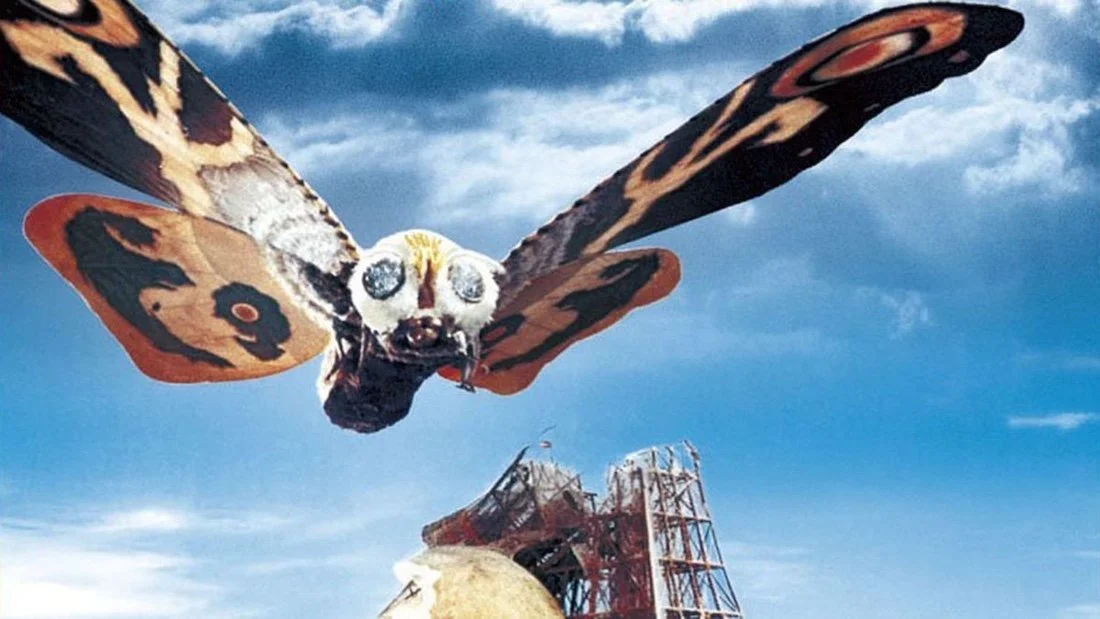
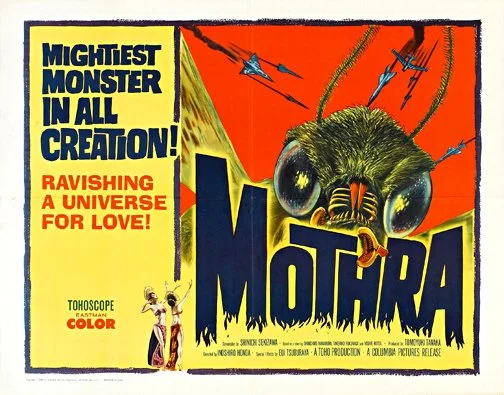
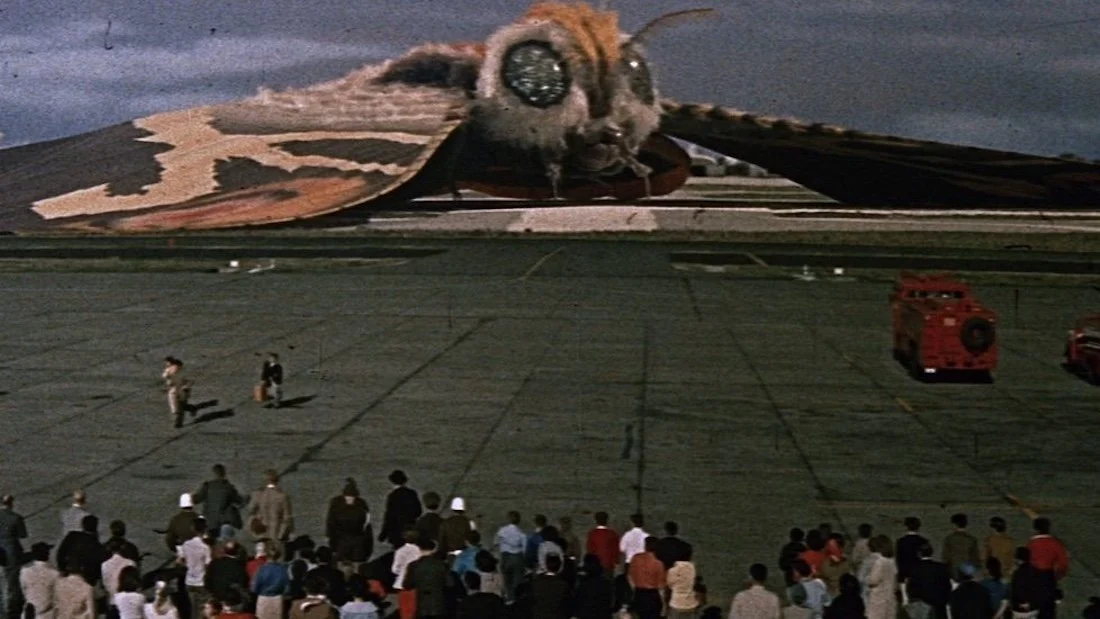
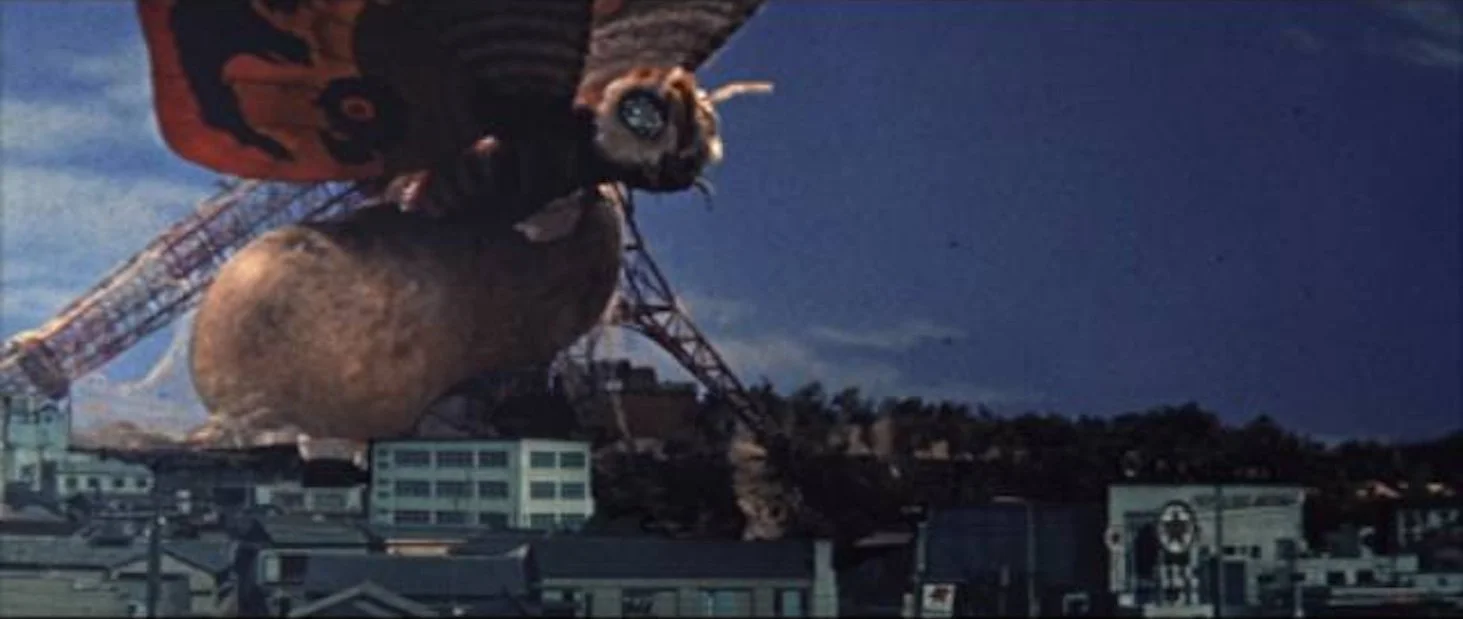
MOTHRA, released in 1961 and directed by Ishiro Honda, is a female butterfly-like kaiju that protects the indigenous people of Infant Island. Infant Island is a fictional supposedly uninhabited tropical island between Japan and Micronesia. In the film, a Japanese science team explores the island looking for answers about protection from radiation. Unfortunately, the team is funded and led by a salacious and greedy nightclub owner from the also fictional land of Rolisica, who kidnaps the peaceful one-foot-tall female guardians inhabiting Infant Island. He renames these two tiny guardian women, “The Singing Fairies” and exploits them in his show. The fairies, also called Shobijin, and the indigenous natives of the Infant Island call upon Mothra to rise and return the two tiny guardians back home to Infant Island. The film follows the people of Tokyo as Mothra rains destruction for their crime. The screenwriters pulled a lot of inspiration from the film KING KONG (1933) especially with the motivation to sell them as a sideshow attraction. The scene where Mothra tries to scale Tokyo Tower and is shot down feels like a love letter to KING KONG and the Empire State Building scene.
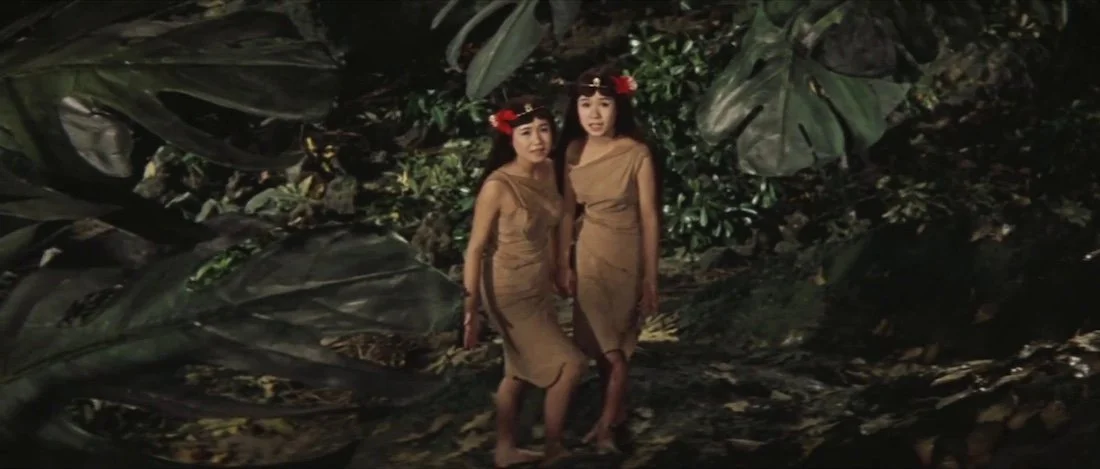
It is often noted that Godzilla is a response to the atomic bombs dropped in Japan. In my mind, that makes Mothra nature's response as to what happens when we endanger indigenous cultures. The natives of Infant Island were peaceful, gave aid to outsiders, and were content to remain uncontacted. It should be noted that the Japanese exploration team in the film felt it was best to leave the discovery of the Infant Island inhabitants a secret so that they could continue their way of life uninterrupted and not be at risk. It was the Rolisican nightclub owner that funded the expedition who returned and kidnapped the guardians for financial gain. It is not lost on me that the ultimate evil doer in this film is the westerner, as the fictional Rolisicia is theorized to be a mix of Russia and the United States. It is optimistic writing from Japanese screenwriter Shinichi Sekizawa who seemed to have forgotten that Japan too has a record of destroying indigenous cultures like the Ainu from northern Japan and the Ryukyuans, now Okinawa. The quiet assimilation can even be seen in this film. Initially the singing fairies are presented as exotic and portraying an Indonesian inspired dance. As shows progress, they dance and dress in classical Japanese tradition. The Japanese are not immune to the idea that the western idea of modernity is superior.
The theme of protecting indigenous cultures and protecting nature go hand in hand. In the modern world, where capitalism has ushered in intense climate change, the focus seems to be on new ways to create sustainability with the environment. We set aside national parks and protect endangered species. All mostly good and well-intentioned actions, but we often forget that one of our greatest resources for balancing environmental sustainability lies in our indigenous communities. These communities have passed down hundreds of years of traditional knowledge and ecological management that have proven sustainable long term. Removing indigenous cultures from their homelands even with the intention to preserve land as in the case in the San tribe from Namibia Game Park, while still allowing diamond mines and lodges for wealthy big game hunters destroys both the environment and the native tribes all under a hypocritical guise of conservation. Other examples of the destruction of indigenous cultures and environments currently happening are in the Amazon with uncontacted tribes, the Arctic with the Inuit peoples, and Native Americans here in the United States to name a few.
Serious attempts at conservation need to include indigenous cultures both in the discourse and physical implementation. While the best option is to leave these lands untouched and uncontacted, protecting indigenous cultures and helping them remain on their native lands has proven to be very successful in sustainability. This is the lesson I see in MOTHRA: If you disrupt the equilibrium of these delicate but powerful places, you will absolutely pay the price. The destruction of indigenous homelands indirectly leads to the overall destruction of nature everywhere. Ultimately, we all share the same space and protecting one protects the other. Mothra is a super soldier on nature's defense force, but she is also a divine guardian of indigenous culture. This is well illustrated with the symbolism of rolling the rock away, the cycle of rebirth and transformation. The fact that her transformation was made more intense after being shot with two atomic weapons provided by the pseudo-Western power again reaffirms her righteous mission.
An aspect of the Shobijin characters I appreciated was that, even after being captured, they still do not wish any harm on the modern people of Tokyo. Although they know the destruction is inevitable, they have no ill will towards others and simply want to be returned home to live quietly in peace. The film makes repeated attempts to instill this idea that coexisting peacefully is the desired outcome as seen in the etched Mothra rock at the end of the film which is a prayer for peace. This is what almost all indigenous and uncontacted tribes desire as well: the right to exist and practice their traditions peacefully and sustainably.
As a kid, I loved watching MOTHRA because I loved that she is a mother-type kaiju. Her mission felt justified, and she stopped as soon as the twins were returned. I loved that she was protecting the underdog. I loved her design and, of course, I loved the general feel of how fun a tokusatsu movie can be. Now as an adult, I love this film even more. I connect with it on a deeper level. I appreciate and take to heart the lesson it's trying to teach me: We must learn to coexist peacefully with nature, with others like us, and with technology. We must learn to lift and love our indigenous brothers and sisters, because they hold the key to balancing the old ways with the new. If we don't, Mothra will roll back the stone and come kick our ass.