
TriStar’s Kaiju Experiment
The year was 1998, and director Roland Emerich was coming off the mammoth success of INDEPENDENCE DAY two years earlier. He was arguably one of the hottest directors going, and so he seemed like a slam dunk to direct the first American adaptation of Toho Studios’ beloved king of the monsters, GODZILLA. It was a coveted property to western studios, with TriStar Pictures being the lucky American studio given the opportunity. I remember being excited to watch the giant reptilian/amphibian take on all comers. And I was not alone: the marketing campaign had audience anticipation of seeing the new mammoth beast at a fever pitch. It all seemed like a perfect alchemy of events aligning for a smashing success. Unfortunately, something went wrong.
To no one’s shock, GODZILLA was a modest box office success, but nothing like TriStar pictures had hoped when they were granted the rights to craft their own King of the Monsters. Unfortunately for fans of the franchise, it would take over a decade and a half before another studio would be given the chance to play in Toho’s sandbox again.
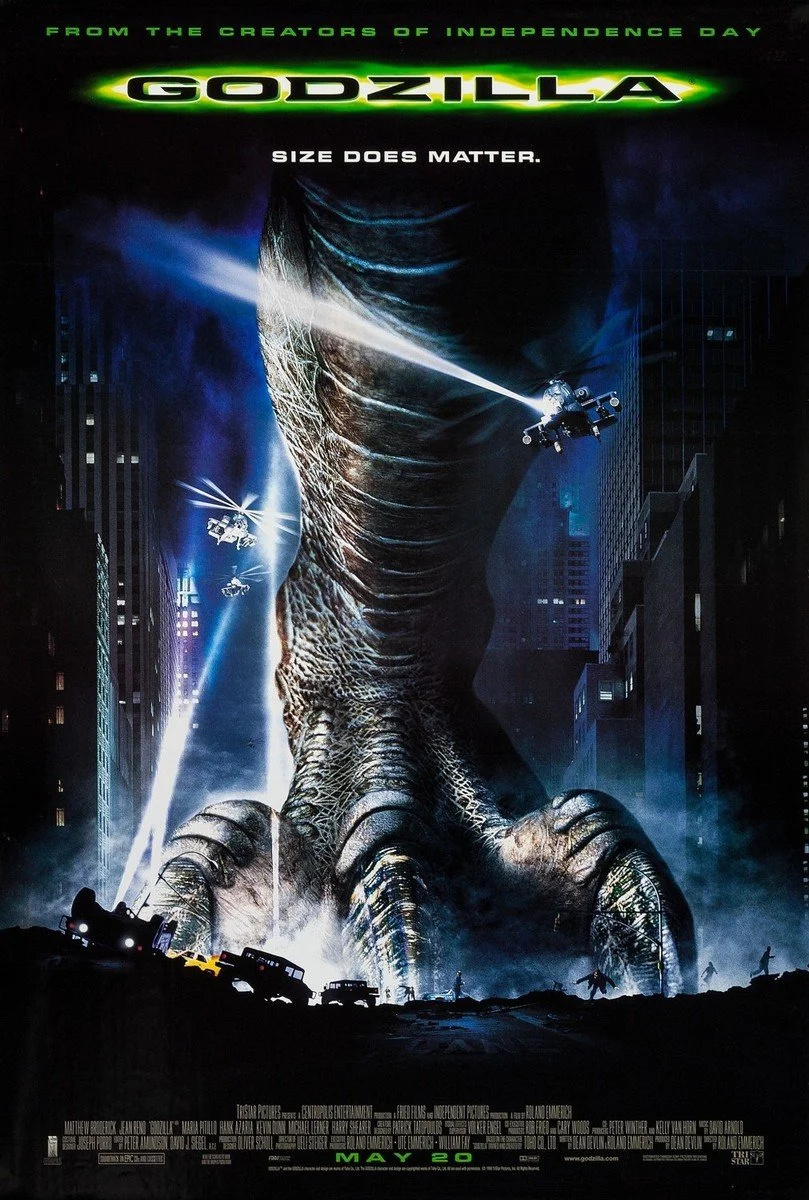
So where did Tristar’s take on the king of the monsters fall short? I won’t lay the blame for the film’s shortcomings at the feet of the cast. There are many bright spots among the seeming cast of thousands. It stars Matthew Broderick as an egghead of an everyman scientist plucked from his low intensity job studying the effects of radiation from man-made nuclear activity on the earthworm. Kevin Dunn acquits himself well as Colonel Hicks, tasked by his superiors with getting a handle on the problem (even if when he is introduced the military doesn’t exactly know what the problem is only that it’s massive). Vicki Lewis is great as a fellow scientist, who has a much greater appreciation of Broderick’s abilities than anyone else—even if she thought he was wrong for the job initially. Maria Pittilo is great as a spunky reporter, who just happens to be Broderick’s ex (as has a way of happening in a lot of screenplays).
The rest of the cast is rounded out by Michael Lerner as the beleaguered Mayor of NYC. Harry Shearer is in excellent form as a scumbag anchorman and the boss of Pittilo’s character. Then there is Hank Azaria playing a brave and reckless camera man, who gets the first look for the world at the creature, with grainy footage of the beasts’ enormous legs but little else. Finally, there is Jean Reno and his band of merry French spies, who, while doing an admirable job of adding humour, also seem unnecessary. Now I don’t want to get bogged down listing every minor character, but I must add it was nice to see Al Leong in a role that didn’t require him to have jumper cables hooked up to anyone, or firing a machine gun maniacally. There are other actors doing good work including Doug Savant as a lower ranking military man, who spends most of the film in mortal fear of the beast, which is about as much character development as a lot of the secondary characters are allowed.
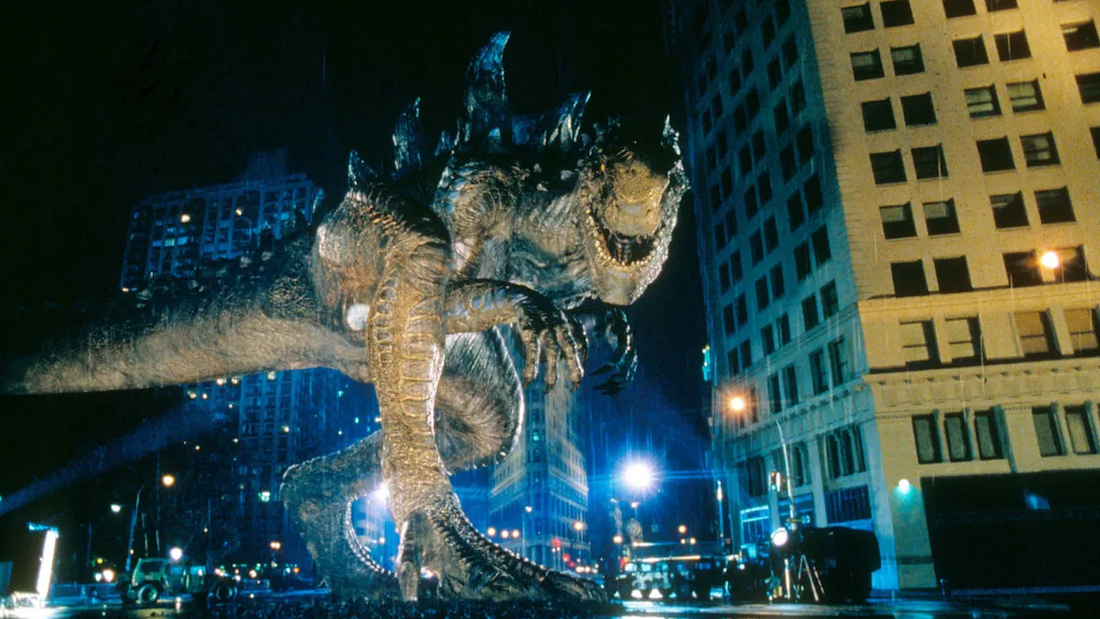
1998’s most difficult hurdle was in the creation of a new Godzilla. It was agreed early on in production that a new direction was needed for the titular beast. It couldn’t just be a man in a suit as far as the producers were concerned. It had to look massive and intimidating and so came the finished product from the mind of Patrick Tatopolous. Now, while I don’t think they erred in their design, a part of me does wish that the monster of the film looked more like its Toho counterpart. But, at least in this regard, the production was damned either way: if they had hewed too close to the original look of the beast, they would have been ridiculed, and deviating too much also leads to derision.
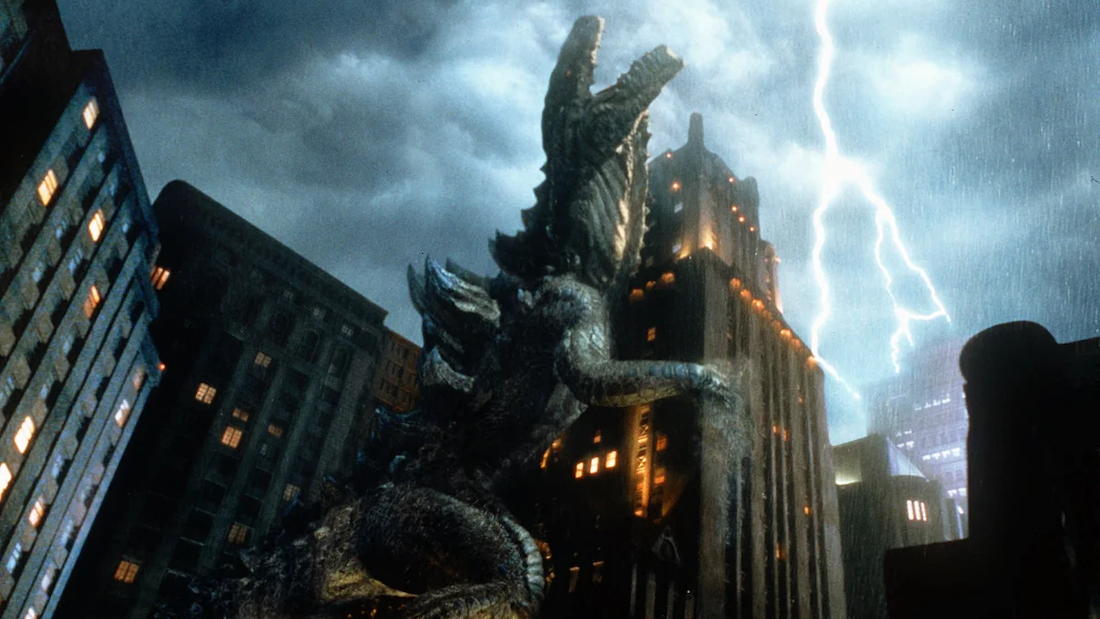
If I had to guess where the film was let down, it is in the story. For a film like GODZILLA to work, the story needs to be straightforward. It already has the titular monster to carry the picture. It was already a bulky movie if the French Foreign Legion subplot could have been entirely excised from the proceedings. The screenwriters do their best to make all the elements of the film coalesce, but I can’t help but think how much better the film might have been if it had instead focused on the American contingent in their pursuit of overcoming Godzilla, even if it meant alienating the rest of the world’s film viewing market. The story’s second stumbling block is that Emmerich and screenwriter Dean Devlin were not happy with just a single giant Kaiju, and strangely decided they needed many miniatures of Godzilla. For 40 minutes, they kill off the title character and overcompensate with two hundred or so miniature versions that just happened to be birthed in the world’s most famous arena, Madison Square Garden. I am not dumb enough to think I know better than the people who made INDEPENDENCE DAY, however I think the film would have worked better if the filmmakers had excised the French foreign legion subplot and kept the audience focused on the lone Kaiju.
I hope this piece doesn’t dampen everyone’s spirits. GODZILLA (1998) does have enough going right that the film’s runtime doesn’t feel entirely wasted. I will say however that TriStar Pictures (and audiences) would have been better served if they had kept things simple. It’s an understandable urge to swing for the fences every time but, to borrow another baseball cliché, you can’t score if you don’t get on base.