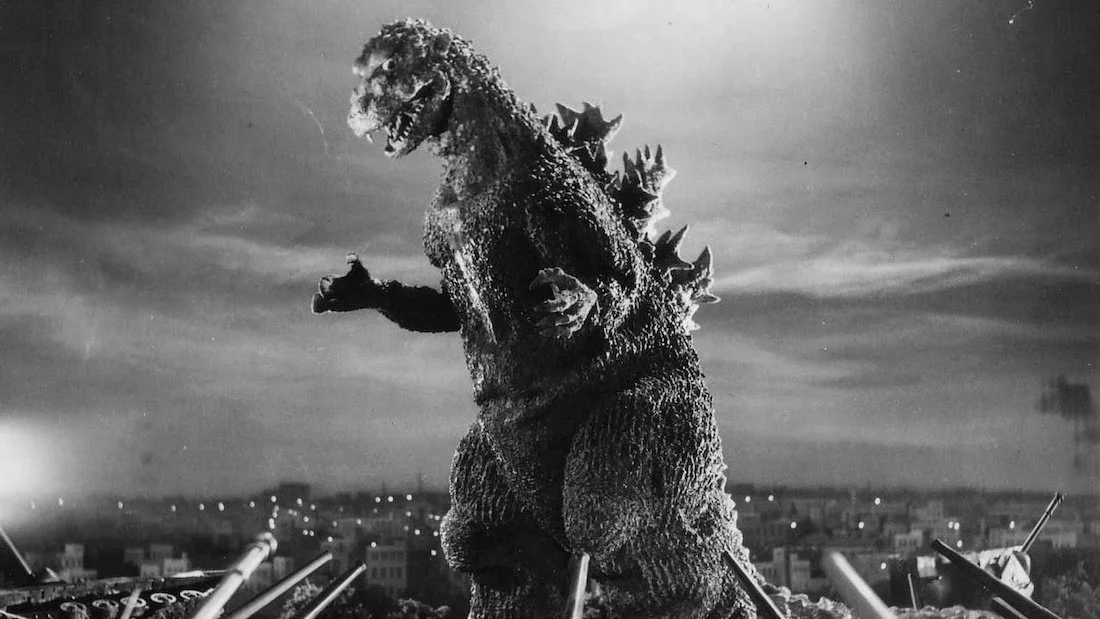
To this day, it is fascinating that many still see Godzilla as a campy movie monster or even a hero. Not just a hero but a friend. I first saw GODZILLA: KING OF THE MONSTERS! (1956), as a small child, and Godzilla scared me. Just like many who saw JURASSIC PARK (1993) for the first time, seeing a T-Rex attack on screen was both exhilarating and frightening. This was my JURASSIC PARK; I was scared but kind of amazed, even though the movie is in black and white. When Godzilla first appeared, peaking over a mountain, I used to get underneath a blanket. To many, Godzilla looked fake, but not to me at that age. He was the “bad guy” and scarier than King Kong. As time went on and I got caught up with the later iterations, I saw Godzilla as comedic or a hero, like many other fans did. Growing up, I had a Godzilla toy on top of my TV for years. Godzilla was cool. Except maybe in the late ‘90s when Roland Emmerich’s US-produced GODZILLA (1998) hyped and then disappointed many, including my 12-year-old self. However, the birth of this cinematic icon goes a lot deeper than a guy in a rubber dinosaur suit or boring CGI. We must go back to the beginning.
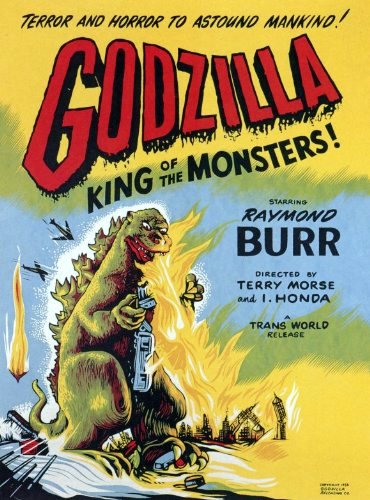
GODZILLA: KING OF THE MONSTERS! (1956) is not the actual introduction of the character to audiences. The film is re-edited with additional scenes made for American audiences. The original is GODZILLA (1954), also known as GOJIRA to Japanese audiences. The plot for both films is generally the same. Ships begin disappearing off the coast of Japan, and villagers in Odo Island believe the cause is a creature named “Godzilla.” Not just any creature but one with radioactive footprints that emerges from the sea. We learn that Godzilla was probably awakened by hydrogen bombs (more on that later). Of course, the villagers are right, and Godzilla attacks Odo Island and later invades Tokyo, Japan. Godzilla kills people and destroys everyone in its path. Pretty standard for a Godzilla movie, right? But the story is much more than that.
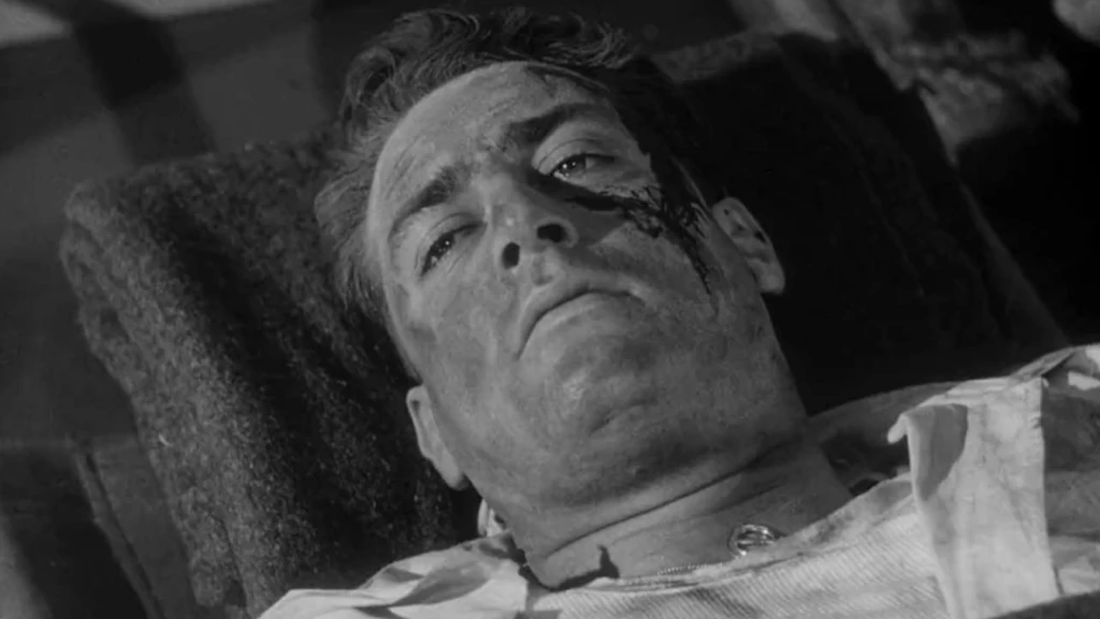
The main difference from the original version is that the US version is shown through the eyes of an American reporter named Steve Martin (played by Raymond Burr). His character was inserted into the original film as a visitor to Japan who also serves as the narrator of the original story. It’s an impressive use of stand-ins and clever editing. Martin narrates many of the scenes from the original version and inserts himself as an American caught in the war between Japan and Godzilla. Undoubtedly, at that time, this made the film more marketable for international audiences outside of Japan. Overall, the film still works, and it is not as jarring to view the juxtaposition of what was filmed later in the United States. Burr introduces the film with a great monologue describing the devastation of Godzilla while the character is in the hospital with others seriously injured. We are shown many people in pain and suffering from Godzilla’s destructive atomic breath, almost as if they were injured by a bomb in a war. That was very intentional.
What is ironic about the first American version of Godzilla is what the character represented. GODZILLA: KING OF THE MONSTERS! was released just over a decade after the United States detonated two atomic bombs over Hiroshima and Nagasaki. One might have seen this film in the 1950s as just a King Kong rip-off or sci-fi B-movie, but it isn’t. Godzilla represents the dangers of nuclear war. A creature that appears without warning, which can annihilate an entire civilization in just seconds with an atomic breath. It doesn’t get any more blatant than that. So, it is fascinating that for many young American audiences (like me), this was not initially understood. Even as the American version tones some of these nuclear themes down, the fear of what atomic testing and nuclear weapons can do to the world is still in the film. One scene stands out, and it doesn’t involve Godzilla on screen. A character named Dr. Serizawa (played by Akihiko Hirata) creates a weapon called an Oxygen Destroyer that is powerful enough to kill Godzilla. However, when approached to use his weapon, he violently refuses because of the fear that it would fall into the wrong hands. Sound familiar? Not just a movie trope about a scientist who is conflicted with his creation, but one might view it as a reflection of those who created the atomic bombs. If one does not use the weapon, the reality is that their world and all they love will be destroyed. Is it worth it? A great dilemma at the core of the film that I had never noticed until I rewatched this film as an adult.
The themes of GODZILLA: KING OF THE MONSTERS! resonates today. For a film made about 70 years ago, it still looks amazing, and Godzilla looks terrifying. Godzilla is a monster/hero/friend that was born as an allegory for fears of nuclear war. It is one of the most fascinating origins of an icon that many non-Japanese filmmakers cannot replicate even today. Or maybe some audiences or filmmakers cannot come to terms with what the character represents. What is scarier, Godzilla or nuclear war?