MOTHER TRUCKIN’ MAY: DUEL (1971)
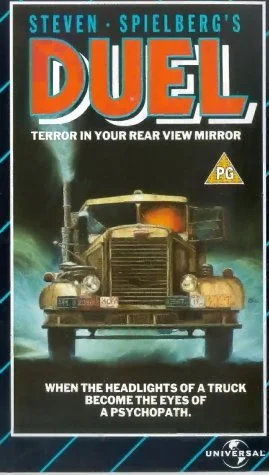
Before Steven Spielberg scared generations with a shark, aliens, and dinosaurs, he took audiences for a suspenseful ride in his debut feature, DUEL (1971). A made-for-television film that was so well-received, it was then released in theaters internationally and would launch the groundbreaking career of one of our greatest filmmakers. The plot is simple –a salesman named David Mann (played by Dennis Weaver) is followed and terrorized on the highways of California by an anonymous truck driver. What starts with simply passing a semi-truck on a two-lane highway turns into a nightmare as Mann cannot continue his journey without the semi-truck terrorizing him wherever he goes. Like most of cinema's great monsters and villains, we don't really know the truck driver's motivations, and it just continues to go after Mann like a wild animal or serial killer. The film could have just been a simple B-horror movie, but it is much more groundbreaking and thrilling than one would initially perceive.
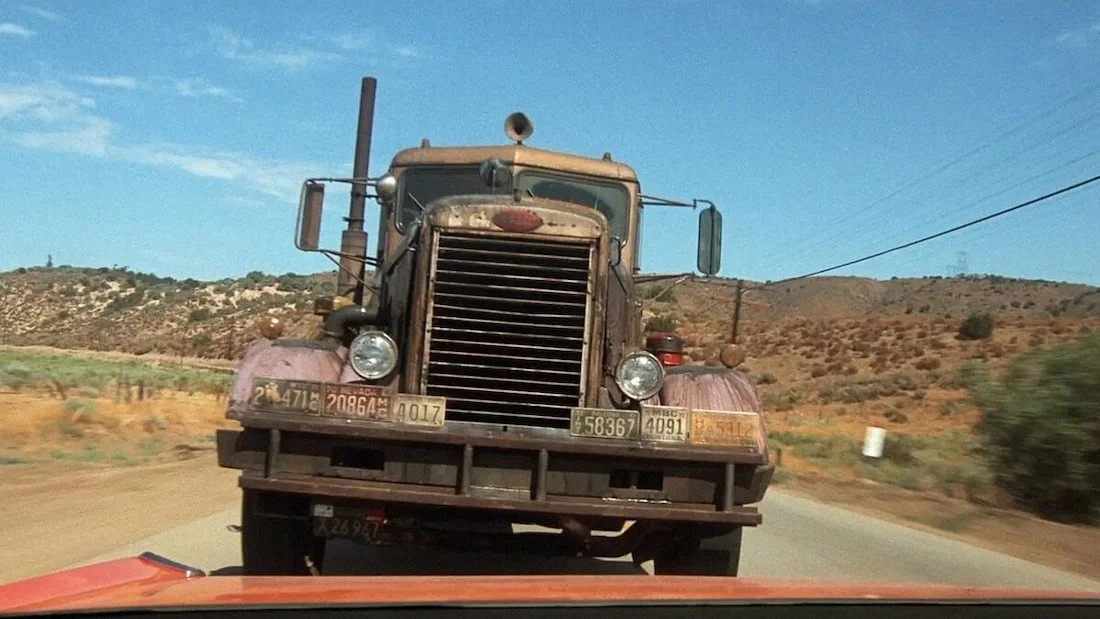
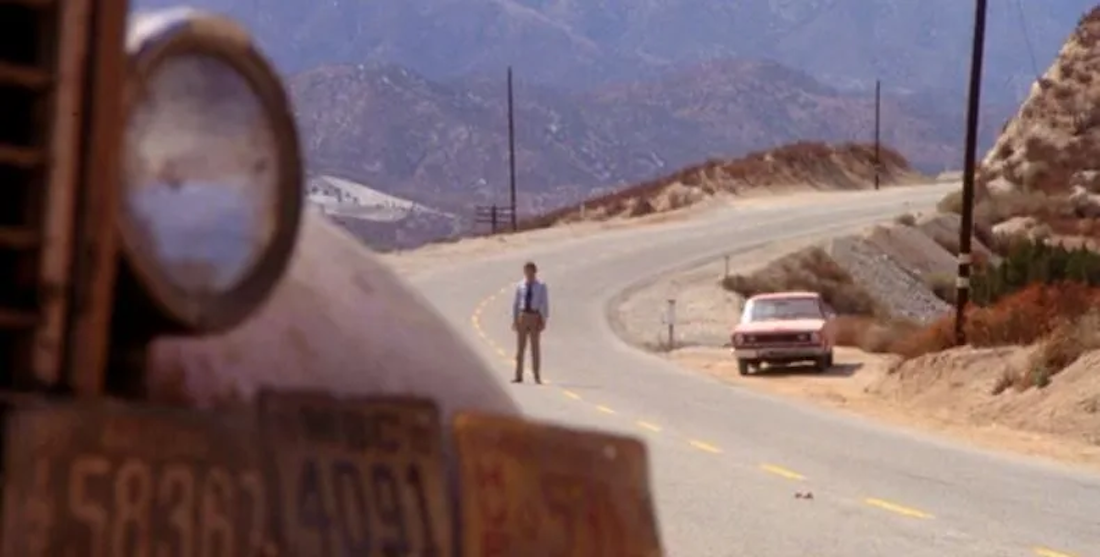
I remember it playing on cable in the afternoon as a kid and learning later it was Spielberg’s first feature. It was always mentioned in his career retrospectives and appeared to be always described as his precursor to JAWS. I never sat down to watch it in its entirety until more recently, and it stands out as probably one of his best films. Truly a “test drive” of what he would do to build suspense in JAWS and many of his later films. One key element is that you never see the driver of the semi-truck. Except for his feet in one scene and briefly his arms, the audience only views the truck. There is no dialogue spoken between Mann and his antagonist. It truly makes it appear as if it is “man vs. machine.” The semi-truck is also dark, worn down, and very ominous. It has multiple license plates, which makes you wonder what the backstory of this truck is. Has it been doing this to other people around the country? In many scenes, we see the truck rapidly approaching from a distance, building suspense like the fin of the shark in JAWS. Like in JAWS, Mann cannot understand how this truck is able to catch up to his car, just like how the shark is able to chase the boat with three barrels attached. It defies logic and makes our monster more terrifying. Is this truck supernatural or some type of force of nature? I have wondered over the years if that was hinted by Spielberg.
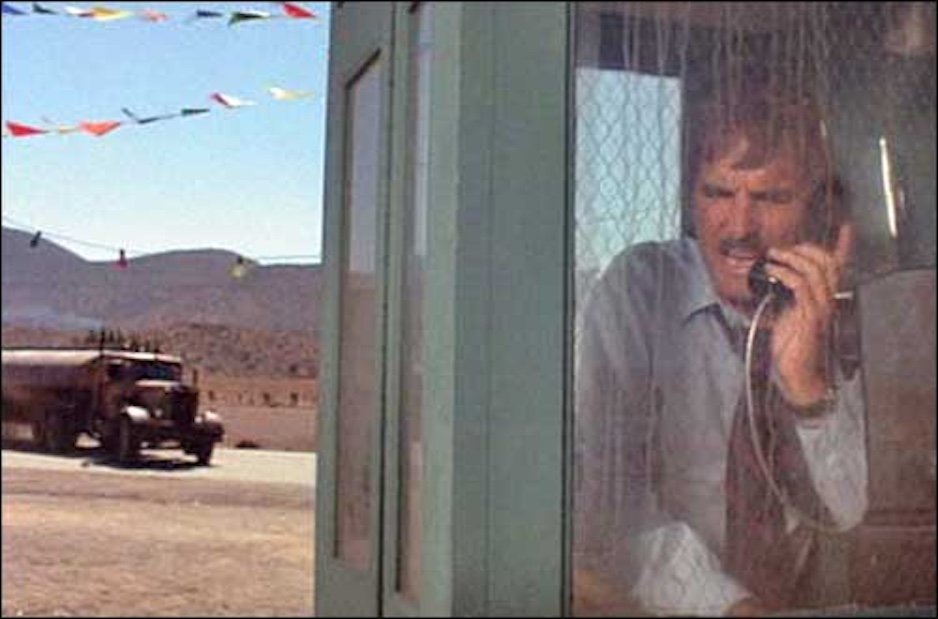
For a made-for-TV movie, DUEL looks amazing. There are many beautiful shots that capture the landscape of 1970s Southern California. The lack of dialogue for most of the film makes one focus on the setting, which is heightened with great cinematography. As the film opens, you only hear Mann listening to various radio stations, which immerse you in the world we are entering. Many may not know now, but there was a time on a road trip, you had to switch to many radio stations to find something you liked listening to. It gives the audience a feeling that you are in the car with Mann on this trip. There are shots that make one realize driving on the highway can be so lonely. Hardly any passing cars, no rest stops for miles, and just the open road. To many who have taken long road trips or don’t like to drive alone, there is the fear of what they would do if someone just kept tailgating them. And not just following you, but to the point where they were trying to stalk and kill you? You may have nowhere to go and no one to help you. It’s a perfect setup that feels more grounded and realistic because you can tell this was shot on location. Nowadays, such sequences may be shot on a green screen or studio backlot that takes you out of the movie.
A film like this that centers on its lead actor so much can only work if the actor can provide a performance that connects with the audience. Luckily, Dennis Weaver delivers. He is an everyman. A salesman is trying to get home. There is no backstory that he has some type of special driving expertise or maybe in law enforcement, so he doesn't appear to have experience dealing with physical confrontation or able to outmaneuver the truck on the road. He is way out of his element. We do get a little insight in a phone conversation with his wife that he may avoid confrontation, so we know having something to face him head on is way out of his comfort zone. Weaver’s performance as the story progresses is filled with such palpable paranoia, frustration, and anger that one watching can only continue to grow their anxiety while watching his character fall into madness. You even hear his inner thoughts, which is an interesting choice for the audience to hear, but it connects you where if you were alone on the road, you would be talking to yourself too and having the same thoughts. It is a reactive and physical performance that carries the film that a lesser actor would not have been able to pull off.
DUEL is a must-watch. Not just if you are a fan of Spielberg or nostalgic for old-school TV movies. It is a perfectly crafted suspense thriller that is on par with any thriller you see today. But if you are a huge fan of JAWS, the climax of DUEL has a distinctive “roaring sound” that is in both films and imagery of the shark and truck that cannot be unnoticed. The films are spiritually connected. As you watch it you truly are experiencing a filmmaker learning how to be a master of his craft while creating a sense of fear that may stick with you while you are on the road passing a stranger in the fast lane. The open road may be just as dangerous as the open sea.