MOTHER TRUCKIN’ MAY: SMOKEY AND THE BANDIT PART III (1983)
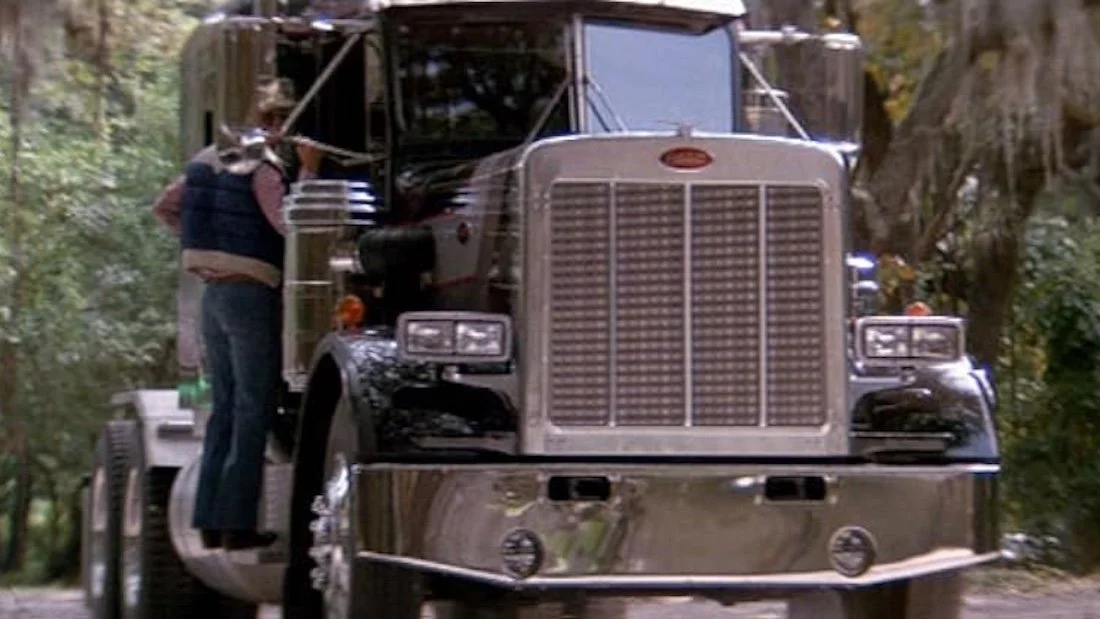
In the summer of 1983, multiplex audiences gathered in their communal darks to witness the end of a great cinematic saga that began in 1977, struck back in 1980, and had returned for one last ride. It started like a fairy tale already fondly remembered. Most still know the words by heart:
“Once upon a time, there was a famous Sheriff. It was not so long ago in our very own galaxy...”
SMOKEY AND THE BANDIT PART III opening with a RETURN OF THE JEDI joke is like a dinosaur shaking hands with an asteroid. Whether given full credit as the dawn of the modern blockbuster or partial as a revision of Spielberg’s fishy prototype, there’s no debating that STAR WARS changed cinema. Compare the big hit of 1976—ROCKY—to the heavyweights that followed—SUPERMAN, STAR TREK: THE MOTION PICTURE. Plus or minus a KRAMER VS. KRAMER, the age of the movie star was over; long live the concept. STAR WARS was not only the highest-grossing film of its year, but all time, eventually dethroned by itself. What’s easy to forget and nigh-impossible to imagine now, as the thirteenth Star Wars movie crowds the big screen and eighteen Star Wars shows and counting pile up on the little one, is that the silver medal of ’77 went to a good ol’ boy in a Trans Am just trying to sneak Coors across state lines.
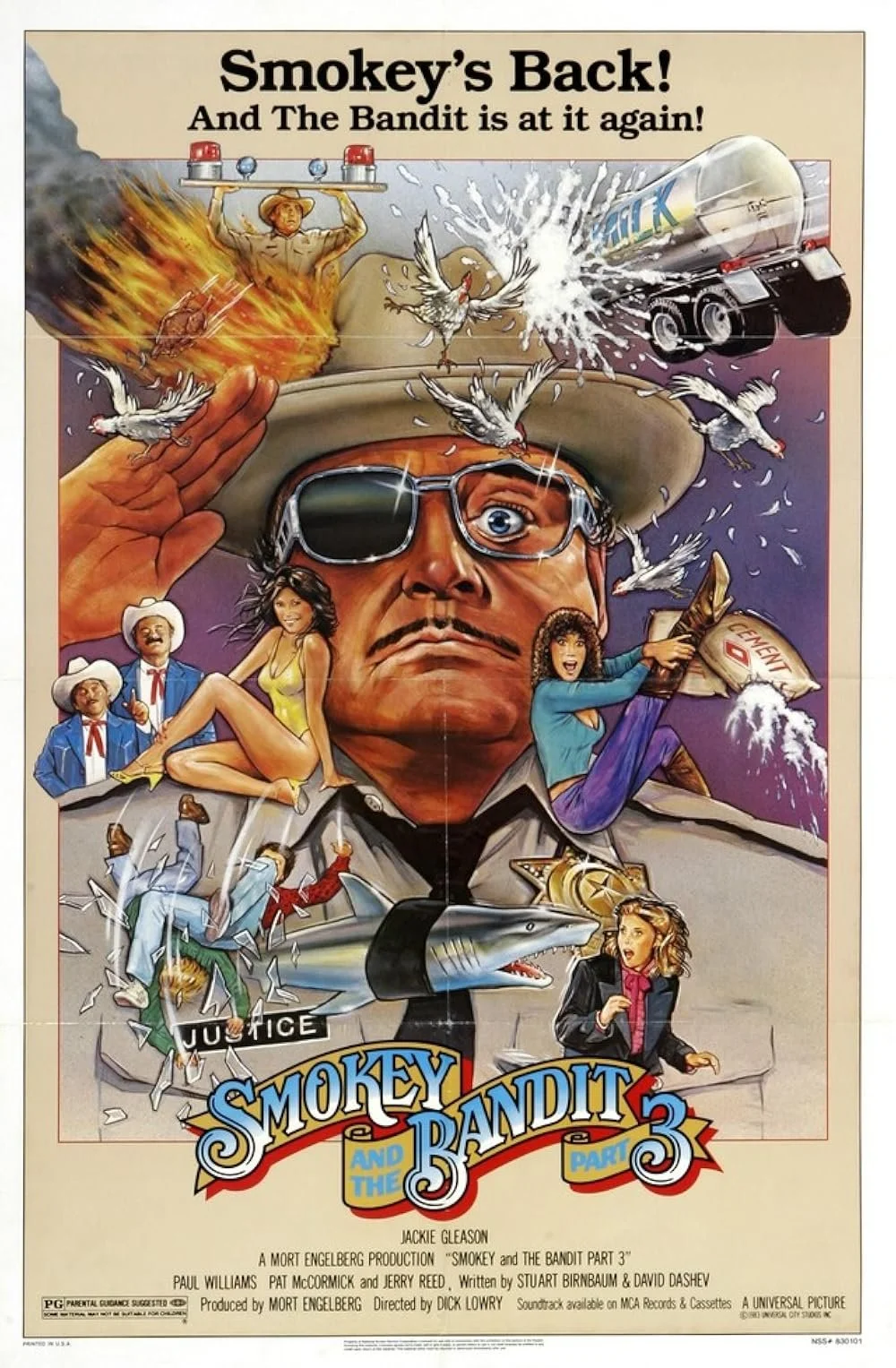
SMOKEY AND THE BANDIT and STAR WARS are rebel yells for very different rebellions. The snide and gauche may suggest that the former is a century-long echo of the Confederate original, but that sells both SMOKEY and the American South short. The film is a hooting, hollering celebration of the anti-metro set; the most cosmopolitan locale represented is Jonesboro, Georgia. Director and legendary stuntman Hal Needham has no use for city slickers, not even as easy comic relief, opting instead for a fantasy as vividly realized as any of George Lucas’—an endless highway trafficked only by all-seeing truckers and bumbling police, where barroom brawls are the going rate for a decent hamburger and every hitchhiker is the love of your life. This raucous, reckless, country-fried vision was almost as seductive as that galaxy far, far away—SMOKEY’s slow northward march across the country snuck it to second place without ever winning an individual week at the box office.
But the rebellion of STAR WARS was for nerds, and they can yell a lot louder than a V8 engine. In 1980, The Bandit had a rematch with the Millennium Falcon. EMPIRE STRIKES BACK won the year in a landslide. SMOKEY AND THE BANDIT II took eighth, not even the biggest hit for distributor Universal; COAL MINER’S DAUGHTER edged it out despite only playing one-third as many theaters. Audiences weren’t tiring of vehicular mayhem, but THE BLUES BROTHERS offered it to them with a candy-coating of high-concept and urbanite irreverence. Movie stars hadn’t gone extinct just yet, but tabloids made it no secret that Burt Reynolds and Sally Field, who fell in love on the first film, were retracing their steps this time around.
To even consider a SMOKEY AND THE BANDIT sequel for 1983 was a death wish, and that’s before Needham and Reynolds washed their hands of it to make STROKER ACE. What’s left? A cop and a car.
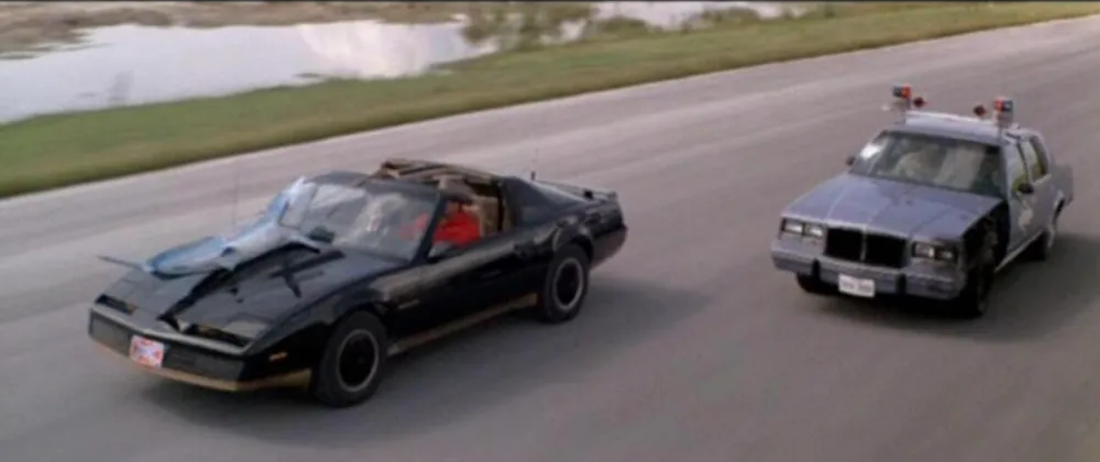
SMOKEY AND THE BANDIT PART III, then, was a product of simple math. Quoth the teaser trailer: “Smokey IS the Bandit!” The original incarnation of PART III was shot with Jackie Gleason returning as both Sheriff Buford T. Justice and The Bandit, the resemblance explained only as a deranged figment of the former’s imagination. This long-standing piece of Internet myth was finally confirmed by the 2016 upload of a shooting script. To date, no footage has been found aside from the recycled stunts with Gleason’s heavier-set double, but there’s no doubt as to the cumulative effect—test audiences roundly rejected the gimmick. Left with half a movie that nobody particularly liked and mere months until release, Universal ordered reshoots and sprang for the next best thing to Burt himself.
Jerry Reed did not need SMOKEY AND THE BANDIT PART III. Just the previous year, he topped Billboard’s country charts with “She Got the Goldmine (I Got the Shaft)” and headlined a two-hour ABC special, featuring a special appearance by no less than his BANDIT co-star. Money aside—and there couldn’t have been much, considering the $7 million budget—it was probably out of a devotion to his pals and their nest eggs like the one actively destroying Reynolds’ career at the same time. After all, if Burt and Hal were still playing the cornpone hits, why shouldn’t he?
Within and without the film, SMOKEY AND THE BANDITPART III exists solely because nobody had anything better to do. Big and Little Enos Burdette still make a silly wager on a long drive, but this time they want the driver to fail for their own amusement. Upstanding lawman Buford T. Justice agrees to the illegal terms—beat the clock or lose his badge—only because he can’t stand retirement with his 47-year-old son, Junior, who also somehow retired. Cledus “Snowman” Snow accepts the Burdettes’ offer to run interference just for the giddy novelty of pretending to be his best friend. Never was the SMOKEY franchise bought or sold on plot, but what little there is here is fueled entirely by boredom. This is a victory lap on four flats.
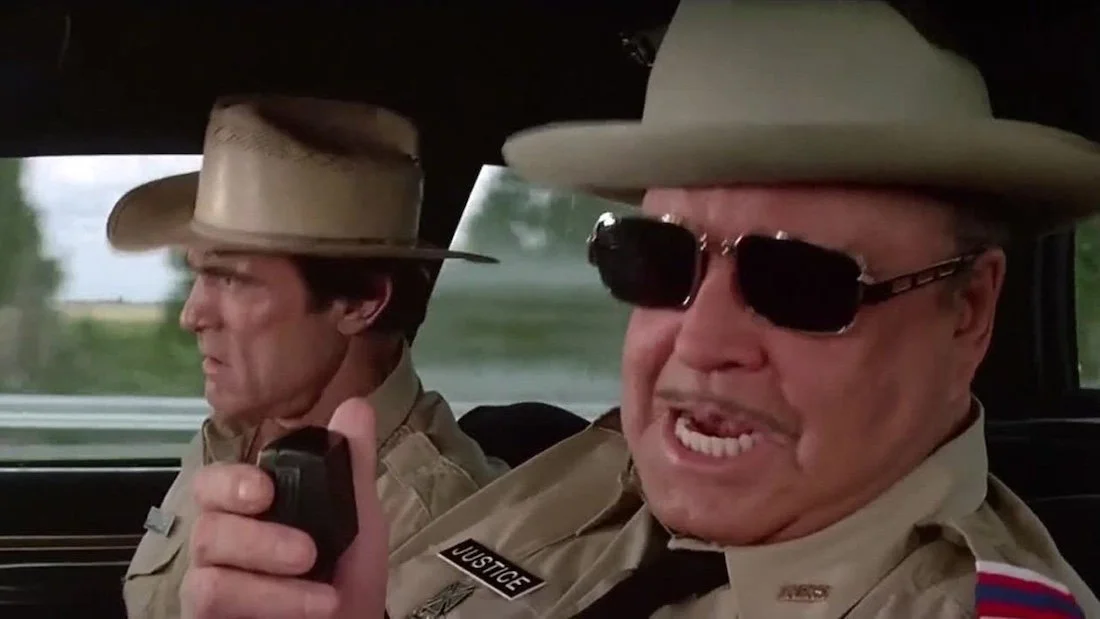
At its worst, PART III is what naysayers might assume the original film was, sight unseen. In the other runs, Gleason’s generational gift for mellifluous bigotry is an inter-stunt diversion to be laughed at. Here, as the de facto protagonist even after reshoots, it’s tougher to cackle along when he punches out a Richard Simmons analogue or mugs at Spanish-speakers giving him directions. In a moment of convoluted apologia for the character that doubles as a treatise on various denominations of Southern pride, Justice thwarts an attempted hate crime by a truck full of comic-relief Klansmen—license plate: the Confederate flag—before revealing that, although he would never join, his wife only quit when she realized the robes made her look like an “iceberg with legs.” Ba-dum-tss. At the other end of the bad-taste spectrum is a reactionary doubling down on T&A; PORKY’S, another Florida cheapie, almost tripled the take of SMOKEY AND THE BANDIT II at one-quarter the cost. Between a detour through a no-tell motel and a brief nudist interlude, this may be the most flesh any PG-rated film ever got away with before the dawn of PG-13, but nobody’s heart is it in. “Poontang” is visibly dubbed down to “party time.” When fleeing the sunworshippers, Buford pauses for a brief eulogy of his time and place in this world: “Gimme the good old days, when a pair of boobs were a couple of dumb guys.”
There is exactly one beautiful frame in SMOKEY AND BANDIT PART III, the last. After a one-shot cameo from Burt Reynolds that only makes Reed’s delighted impersonation more humiliating in retrospect, Buford hits the road in hot pursuit of The Bandit once again. Junior chases what’s left of the cruiser on foot, shouting after his “daddy” in the bourbon-haze of an interstate sunset. As it freezes and the credits roll, famed songwriter John Stewart’s “Ticket for the Wind” strums in to soulfully remind what comes next, what always comes next.
I’m behind you now, and you can never win
I’m behind you now, and your days are getting thin
I’m behind you now with a ticket for the wind.
It’s a song too elegiac, married to an image too dignified, for SMOKEY AND THE BANDIT PART III. This isn’t just the end of a franchise but a region of the national imagination. Sure, Hal and Burt reunited the following year for CANNONBALL RUN II, which was its own retirement party for the Johnny Carson-class of stars, but the NASCAR-centric STROKER ACE scraped in $20 million less than PORKY’S II: THE NEXT DAY. As for SMOKEY AND THE BANDIT PART III? It made even less than a re-release of the three-year-old original PORKY’S. It may not have deserved much better—this is, was, and will always be a shoddy piece of work—but the good ol’ boy dream of yuks, trucks, and the open road didn’t deserve to die with it. The Cinematic South will never rise again, and that’s a shame, because with all these constantly waged star wars, I could really go for an ice-cold Coors.