
MOTHER TRUCKIN’ MAY: The “Truck Rascals” Series (1975-1979)
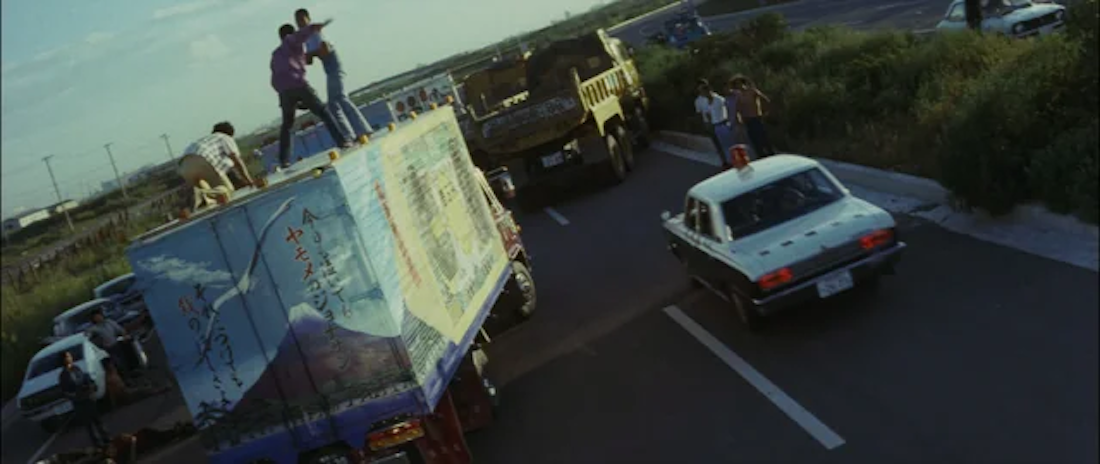
The TRUCK RASCALS series spanned 10 movies over just five years, from 1975 to 1979. Each film was directed by Norifumi Suzuki, who, outside of this series, was perhaps best known for his works SCHOOL OF THE HOLY BEAST, SEX AND FURY, and entries in the GIRL BOSS series. This series, also known as TORAKKU YARO or simply TRUCK GUYS, had similarities to the long-running TARO-SAN films in that both series saw the gruff but sweet-hearted leading man fall in love with a "Madonna" figure before (at least in most cases) ultimately playing a strong supporting role in helping the lady he loves find her way into the arms of another man. At the core of every TRUCK RASCALS movie is the 'First Star' Momojiro Hoshi, played with charisma by the great Bunta Sugawara, who had recently finished the epic BATTLES WITHOUT HONOR AND HUMANITY yakuza series just the year before. Momo and his buddy Jonathan (Kinya Aikawa) travel Japan in their highly decorated trucks in every episode, delivering goods across the country and meeting colorful new faces everywhere they go. The trucks that Momo and Jonathan drive are dekotora, or art trucks, and they look a little like Las Vegas mixed with a holy shrine, all decked out with ornamentation, neon lights, painted murals, and catchy slogans.
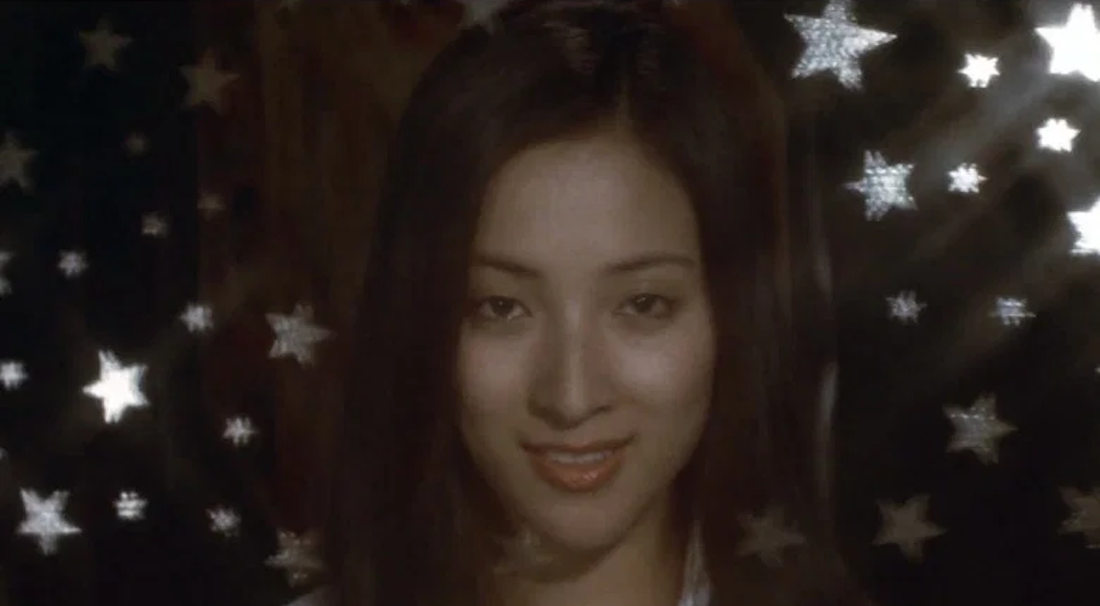
Every entry in the series follows pretty close to an established formula, and we can expect to see a few key moments to transpire every time. Momo might be a gruff and horny guy who frequents bathhouses with naked ladies and plays games with prostitutes, but his ultimate goal is to fall in love and get married (sometimes Momojiro is specific about wanting to wed a virgin, but he grows less picky about that as the series progresses). In every film, Momo's gaze falls on a beautiful young woman, and—with the exception of one film that does away with this effect—the screen frames the girl with dazzling stars that sparkle around her head. It then becomes Momo's goal to woo her by learning about her interests and performing random examples of heroism with the help of his friends. Things rarely go according to plan for poor Momo, though, as misunderstandings, rival truckers, and the cops always complicate things.
For Jonathan's part, he's usually trying to make things better for his family, or he's just looking to get laid. Despite having a wife (Masumi Harukawa, INTENTIONS OF MURDER) and approximately ten kids at home, Momojiro's best friend always has wandering eyes. Together and apart, Momo and Jonathan frequently get into trouble and often end up at odds with each other, only to ultimately remember the value of their friendship before the credits bring each story to a close.
I made the perhaps ill-advised decision to watch every film in the series in the month of May, leading up to writing this piece. While I would argue that every entry is good (or at least pretty good), the formula can get repetitive and may not be well-suited to a movie marathon. Some of the highlights of the series are enjoying the supporting cast, including the tough guys who got to play the trucker rivals, and the young actresses chosen as the female leads. Other highlights include enjoying the variety in locations and the occasional miniature-aided special effects sequences. But ultimately, this series belongs to Bunta Sugawara, who is great in every entry, even if sometimes his character and the film's humor do feel dated at times.
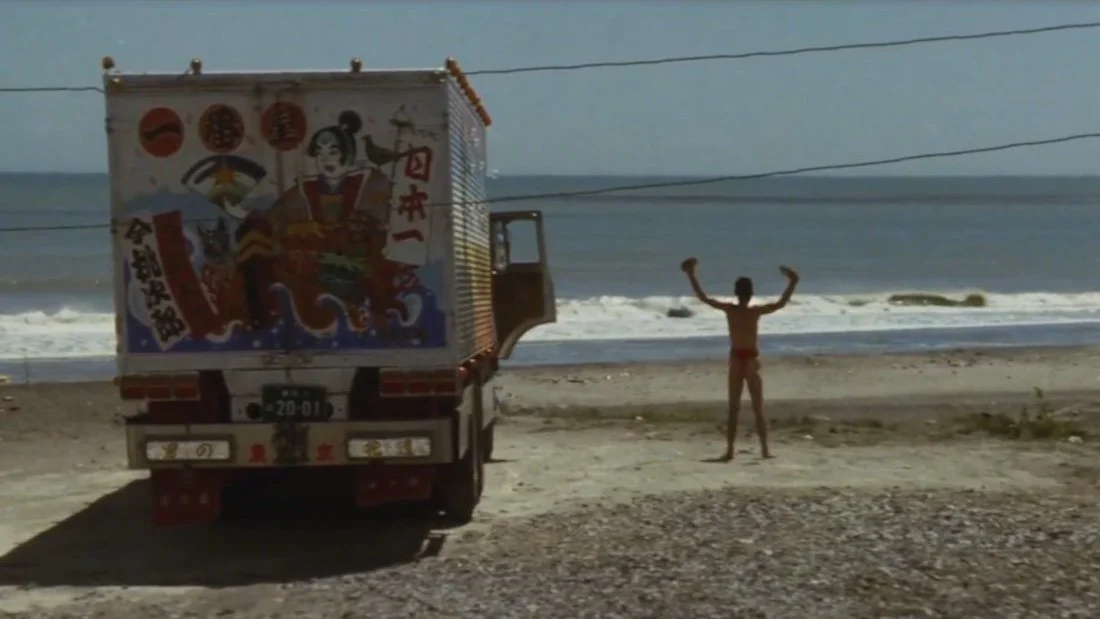
In the first film from 1975, subtitled NO ONE CAN STOP ME, Yutaka Nakajima (THE STREET FIGHTER) plays the leading lady and Makoto Sato (BLIND WOMAN'S CURSE) plays the rival driver, Dragon. Compared to how cartoony the comedy could get and how over-the-top the rivals eventually developed into, the first film plays things pretty reserved. Despite that, I really enjoyed what Sato brought to the role of the rival. While every film is pretty much a standalone story and you could enter the series from virtually any point without getting lost, the first film is obviously a good place to start, and it does represent some of the formula at its best.
THE WILD TRUCKER (1975) continues Momo's long trek across the country looking for love. In this film, he crosses paths with a beautiful college student, whom he tries to impress by diving into the books of the famous novelist Osamu Dazai. I think this is one of the weaker films in the series, at least in large part because it follows the beats of the first film too closely. One bright spot is character actor Kunie Tanaka (SWORD OF THE BEAST) as Borsalino 2, a yakuza-themed rival who clashes heads with Momo throughout the story.
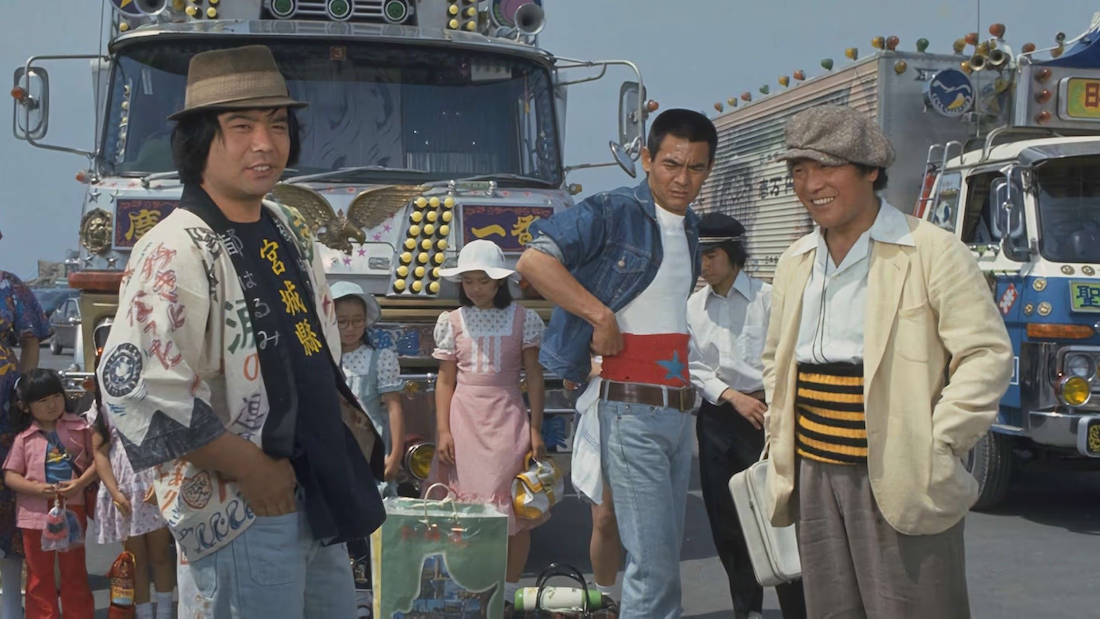
In TRUCKSTER GOES TO HOKKAIDO (1976), Momo stops for a while in farm country to help a young woman (Yoko Shimada, 1980's SHOGUN) who is struggling to run a horse ranch on her own. This film is perhaps best remembered by me for the graphic baby-horse birth and the scene where Momo essentially trips on his own hard-on. It's a fine film, but not one of my favorites from the series.
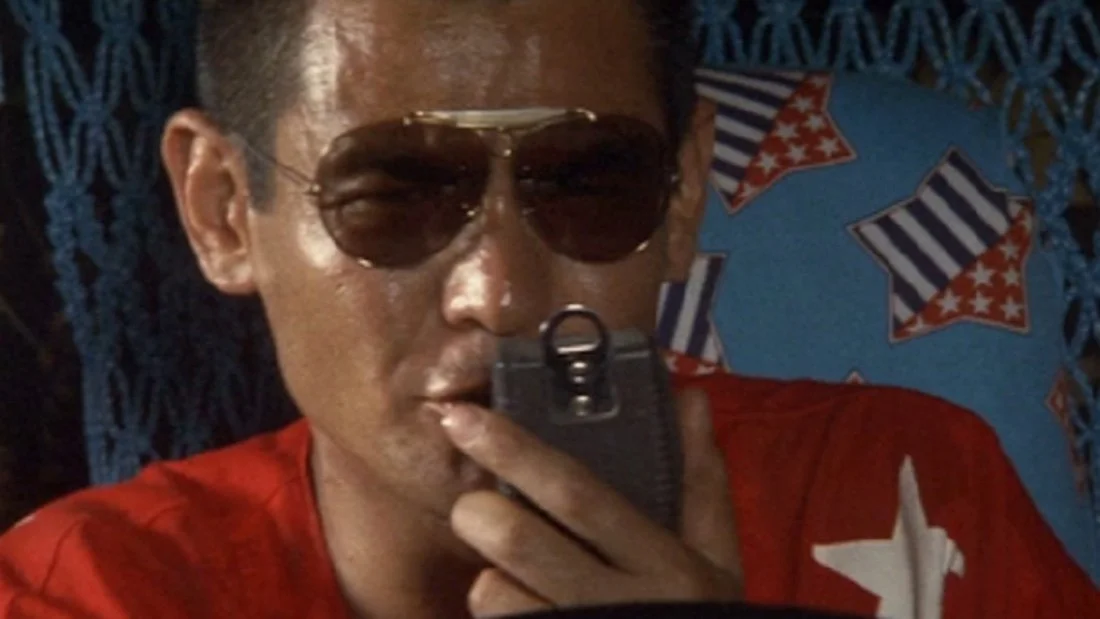
Things start to improve with TRUCK RASCALS IN FEVER HEAT (1976). Jonathan gets a dramatic subplot that dominates much of the runtime, in which he and his wife debate whether to put one of their children up for adoption to support the family financially. Momojiro has multiple love interests in this entry, and each woman gets to put in good work. Chieko Matsubara (TOKYO DRIFTER) has a relatively small role but practically steals the show. The film also features a supporting turn by Nobuo Kaneko (IKIRU).
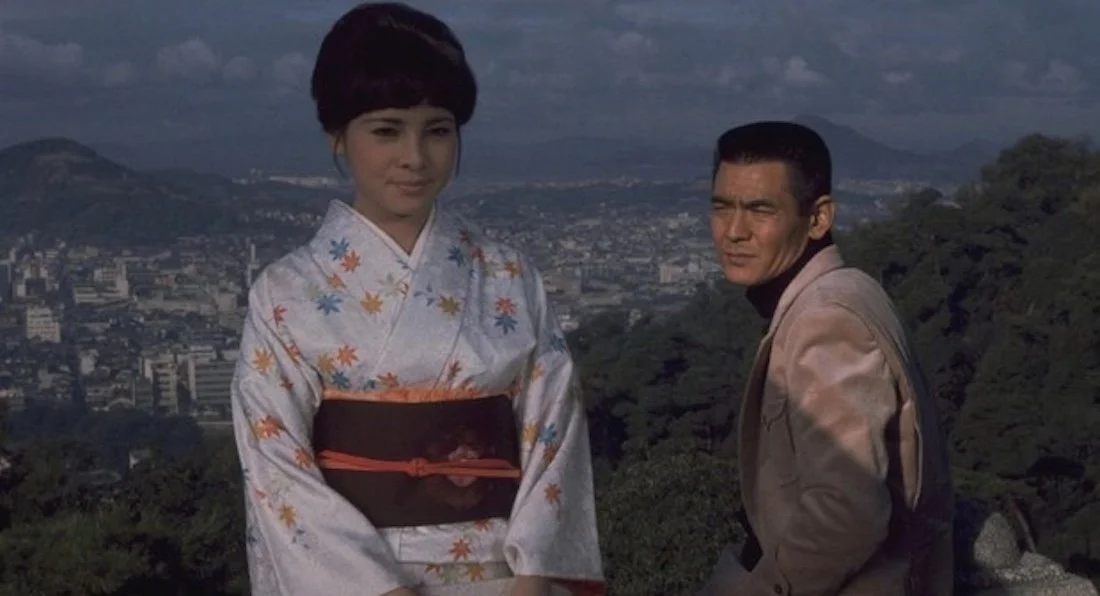
In 1977's TRUCKSTER OF GUTS, Momo falls in love with a ghost who tells him to go to Sado, Niigata. There, he meets the ghost's doppelganger, who is working as a schoolteacher for a small class of students. Unlike most other films in the series, Momo and the leading lady begin a real and respectful romance. However, things get complicated. Adding to the complications is Team Jaws, a shark-themed band of truckers led by an ultra-aggressive Sonny Chiba (KILL BILL). This is one of my favorites in the series, showcasing drama, comedy, and a little bit of tragedy with confidence.
The next TRUCK RASCALS movie was I AM A MAN OF HONOR. The rival trucker in this film is the LONE WOLF AND CUB star Tomisaburo Wakayama. Amusingly, the trucker's radio call sign is 'Lone Wolf and Cub,' as he drives cross-country with his young son in the cab. I quite liked this entry.
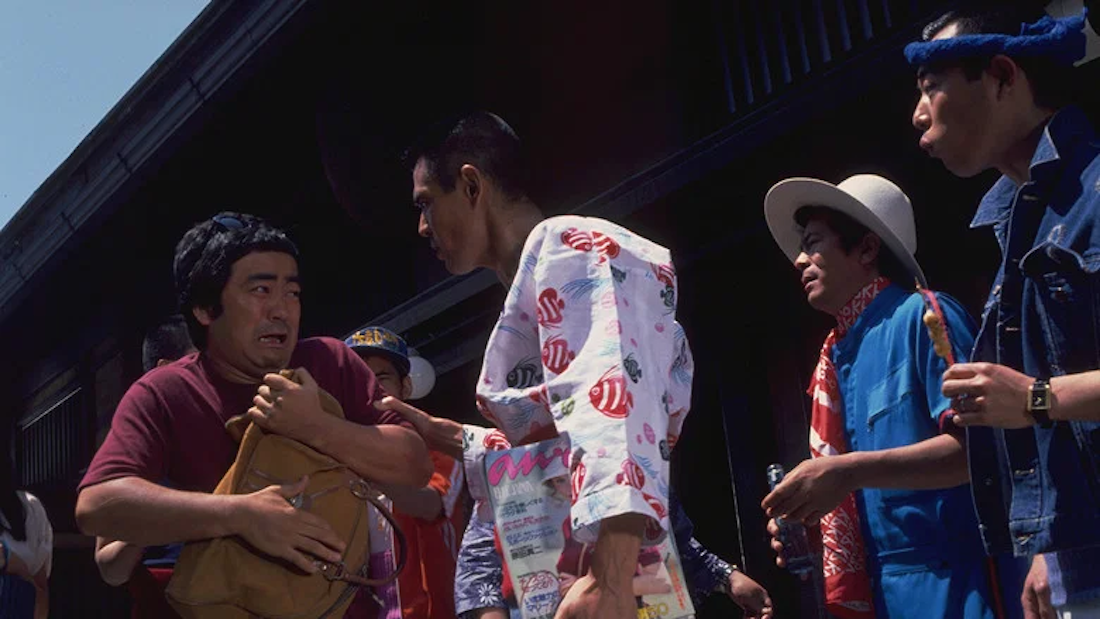
TRUCK RASCALS: ANOTHER ODYSSEY OF MOMOJIRO is something of an oddball in the series, but I like it. At the start of the film, Momo is obsessed with UFOs and wants to have a close encounter with a woman from outer space. We get some fun, albeit odd, sequences focusing on this part of the story before Momo eventually falls in love with a dolphin trainer (Mieko Harada, RAN) who barely seems to notice him. Instead, he spends a lot of time with a woman he doesn't want (Kirin Kiki, SWEET BEAN). This one may divide some viewers, not least because of the lack of truck action or a memorable rival, but I liked that it did something different at a time when the formula was starting to grow stale for me.
1978's TRUCK RASCALS GO TO THE NORTH has a fun rival trucker played by Toshio Kurosawa (LADY SNOWBLOOD), who is freshly returned from the U.S. and goes everywhere with a miniature attack dog. In this one, Momo falls in love with a single mother, played wonderfully by Naoko Otani (ZIGEUNERWEISEN). Kunie Tanaka makes a return visit to the series, this time playing a new character. This film is the only one in the series to do without the iconic theme song or the starry imagery when Momo falls in love with a girl. These departures from the norm lend added gravitas to the story, making for a more dramatic and grounded tale.
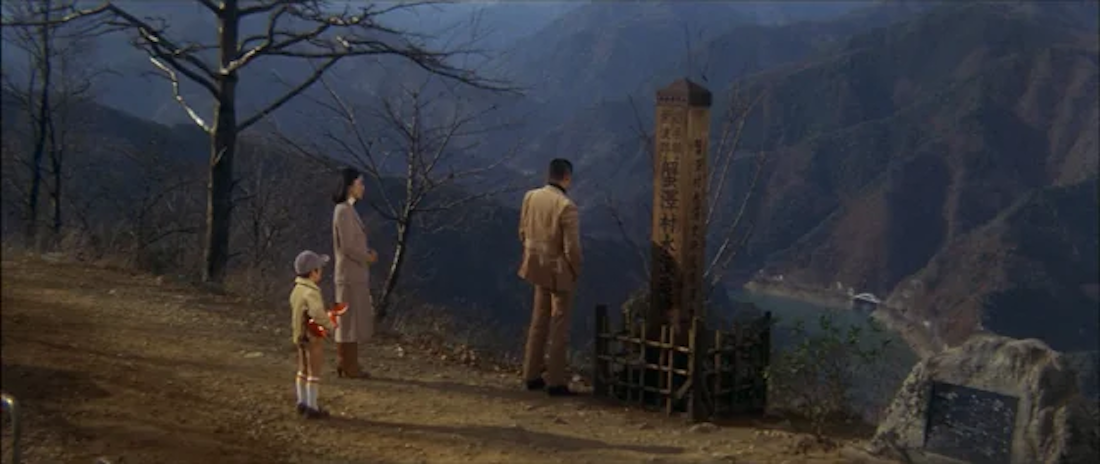
1979's A 5,000 KILOMETER RUN UNDER THE SCORCHING SUN is probably the most visually appealing entry in the series. Production values all look top-notch, and director Suzuki makes good use of the locales. Miyuki Ono (BLACK RAIN) plays the leading lady, and Takeo Chii (LAST DAYS OF THE BOSS) plays the rival hellbent on defeating Momojiro, with both providing spirited performances. This, the ninth film in the series, deftly handles both comedy and tragedy, and sets us up to go out on a high note.

Unfortunately, I found the final film in the series to be the most distasteful. It can be a little difficult throughout the series to shrug off the humor and sexism as 'signs of the times,' but I managed. For me, as an animal lover, it can be more difficult to shrug off dog fighting. The tenth and final film, RUN TRUCK RASCAL, RUN!, also features the least likable rival. Bunta Sugawara, Kinya Aikawa, and Masumi Harukawa all remain in fine form, though. It's not a bad film (it's a Christmas movie!); it just has some bad parts in it. Still, one wishes the series had gone out on a higher high.
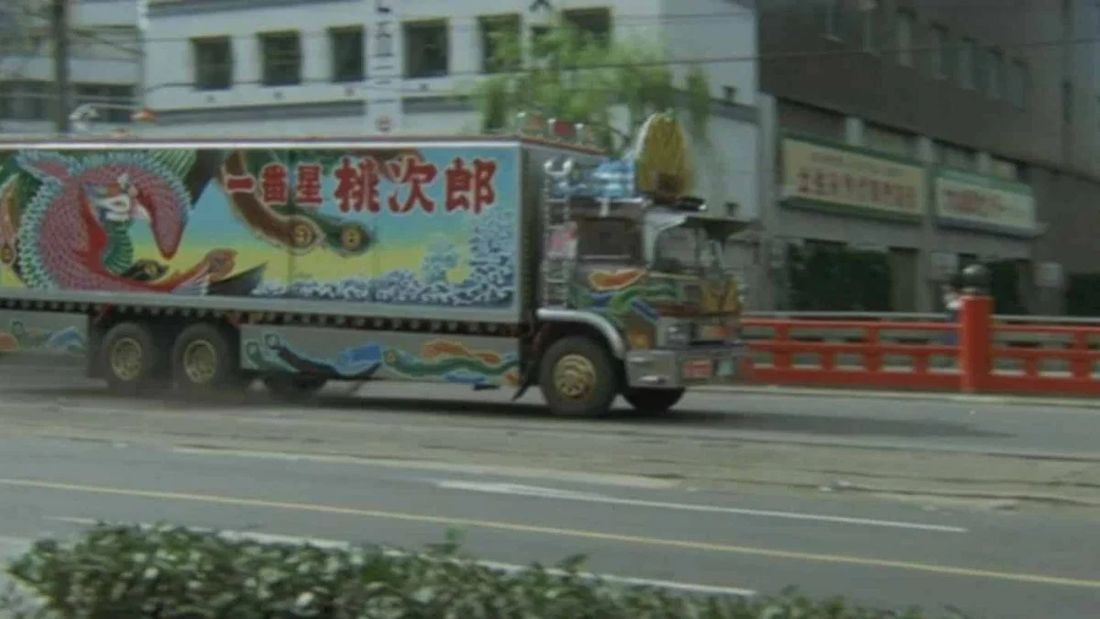
Before watching these films, my only awareness of their existence in Japanese pop culture and cinema was a throwaway joke in Nobuhiko Obayashi's 1977 horror-comedy classic HOUSE. Now, I'm a fan. I do wish I'd taken more time to spread them out a bit, so that the formula didn't get to me the way it sometimes did. But even so, they're a special piece of Japanese cinema, featuring one of the country's coolest leading men in one of his funniest performances.