
UFOctober: INVASION OF THE BODY SNATCHERS (1956)
The Original Red Scare Doppelgänger
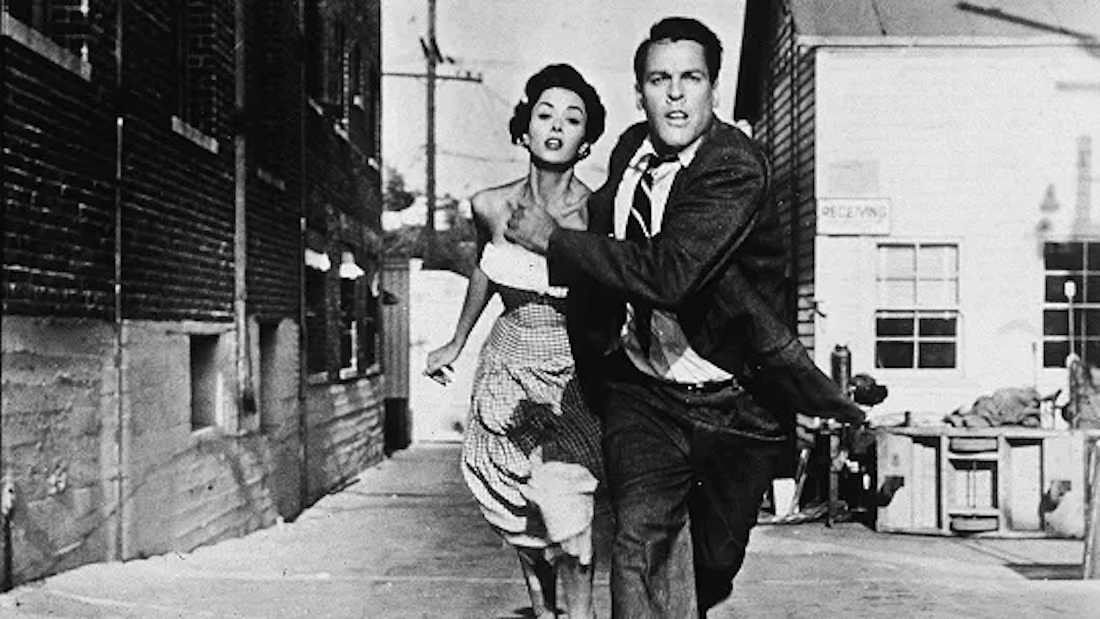
INVASION OF THE BODY SNATCHERS wasn’t the first doppelgänger horror story, but it was one of the most iconic. You can trace the roots from the original novel The Body Snatchers and film adaptations to other iconic horror landmarks like LITTLE SHOP OF HORRORS the musical, and THE STEPFORD WIVES, which also took on the horrors of distrusting neighbors and your own family. BODY SNATCHERS talks about an invasion, while STEPFORD WIVES talks about a betrayal. And LITTLE SHOP? It emphasized don’t give blood to strange plants.
Aliens that can impersonate our loved ones after assimilating you? Mind-controlling you, which humans can’t do? (We can’t; the CIA did a series of unethical projects using drugs to prove that human minds right now can’t be directly controlled with twentieth century resources and technology.) Such paranoia plays on the fears of the Red Scare, that anyone could be “the enemy”. So do the pods that grow where plant life can’t thrive, including car trunks.
“Memories Or Not…”
Dr. Miles Bennell recounts to another doctor how patients were coming to see him with strange accusations about their neighbors. Boys were running from their parents, allegedly because they were playing truant, and familiar businesses were closing shop. An old flame reported her cousin claiming that someone or something had replaced “Uncle Ira”. Later, the accusers would recant their statements.
The doctor realizes something is wrong, however, when said truant boy is dragged crying to his office; he claims that his “mother” isn’t her and is afraid of her “getting” him. His grandmother tries reassuring Jimmy that no one’s getting him, that he’s safe. The doctor finds a compromise: sedative in case the boy is sick and having a delirious fever, but that he can stay at his grandmother’s house for the night to get some sleep and peace of mind. Problem solved, and they both agree not to call his “mother” when he screams that she’s not his mother. At least, the doctor promises young Jimmy they won’t, only to ask his nurse to dial the boy’s mother so she won’t fret. (Some things never change, half a century later.)
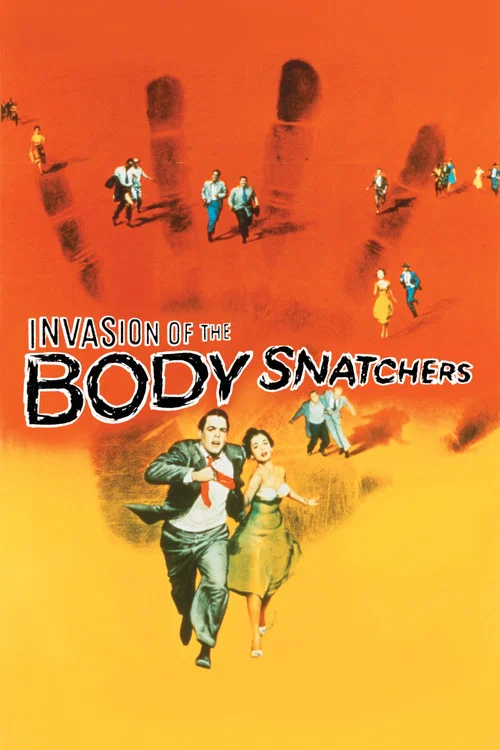
Such strange happenings, but Dr. Bennell attributes the accusations to a form of hysteria. He clarifies that it’s not madness, not a broken mind, just a case of nerves. Nuclear war threatens the quiet suburbs, they’re only ten years out of a war with Germany, and happy marriages erupt in divorce while everyone believes in domestic tranquility. Being worried is a natural response. The doctor has returned to town from Reno, as has his old flame Becky Driscoll. Despite that, his own instinct suspects all is not right. Dr. Kaufman, the town psychiatrist, reports that other patients have come to him with the same concerns. Then they emerge perfectly fine and withdraw the accusations.
One married couple, however, shows him definitive proof that something is wrong: bodies growing in the basement. Each is a doppelgänger of a town resident; not all of them, but enough to indicate that something is wrong. The doctor mistakes the first body for a corpse until he realizes that it has no fingerprints. Unfortunately, the body disappears with the proof. So does the next one, Becky Driscoll while the doctor is unable to rouse the real Becky from her bed. These doppelgängers knock out the originals, sedate them and replace them before taking over their lives.
How do you stop an invasion like this? You can’t, especially when lacking evidence. The cops don’t want to investigate, finding rational explanations for the lack of fingerprints and the bodies appearing in random places. They yell at civilians for not reporting the bodies sooner, threatening to put them in the cells. You soon wonder if aliens replaced the cops as well, and who you can trust.
Belief (Or Lack Thereof)
The aliens also invade using plausible deniability. They can suggest explanations, move the bodies, and dismiss worries. Soon they’ll assimilate their accusers, who insist that everything is fine. Human memories and biases aid them. Who needs telltale emotions when you have numbers on your side?
Dr. Kaufman believes that the solution is mundane: their town has a serial killer. (That premise by itself, a serial killer leaving bodies in neighbors’ homes, transporting them when no one sees them, is scary enough.) The killer used acid to burn away the fingerprints, with dim lighting and the power of suggestion. They should leave that investigation to the police while helping their neighbors stay safe.
Logical explanation, and in another movie the doctor would be right. Unfortunately, he’s in a B-movie where puppetry supplies the special effects. He never sees a pod, which was more proof than a body, as we find out at the end of the movie.
The Monster Isn’t Under The Bed
Proving an alien invasion in 1956 America is harder than it looks. The authority figures find the accusers hysterical and don’t have the means to protect them from involuntary replacement. A kid is the first one to warn the protagonist, but he gets sedated in response. The next day, he acts excited to go back home and spend time with his mother, the woman he claimed was an impostor. Dr. Bennell is concerned but lacks proof. When the proof starts blooming in greenhouses, however, the doctor realizes the whole town has been taken over. Proof only matters if they get it to the right people.
A 2026 viewer’s first instinct is noting how portable cameras weren’t the norm in the 1950s, not even affordable at the time. (Look at Xerox camera machines available for auction; they’re several thousand dollars minimum.) No smartphones, Internet, or social media either, and definitely no generative AI. As a result, the suspicious residents with bodies in their basements can’t take photos for evidence. They also can’t create redundancies of that evidence with photocopies. The silver lining is that a prankster can’t use generative AI to fake a hoax, which thank goodness.
Phoning for help also doesn’t work; the operator tells Dr. Bennell that all lines to major California cities are busy when he tries to contact the FBI. (Idealistic man, considering the FBI in real life thought cleaning ladies were Communist spies.) Dr. Bennell realizes the police must have been replaced as well, given the threats that the local cop gave him and Jack. Even if no one believed in the hoax, the doctor could have dialed an international friend and sent video evidence of the pods in the greenhouse. He would have redundancies at hand.
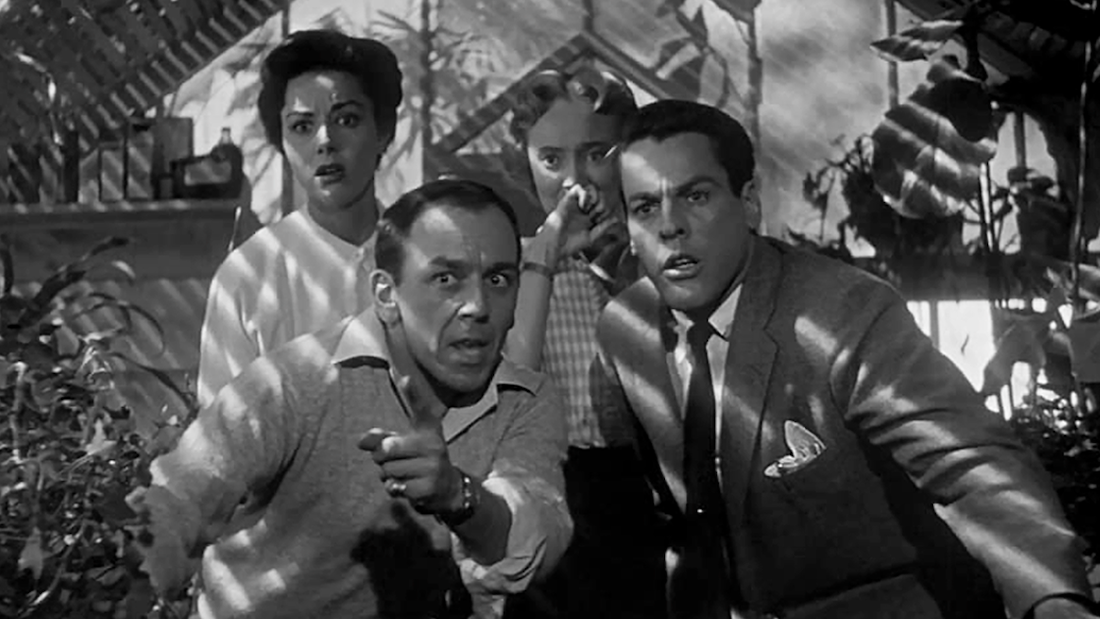
Could better technology have stopped the invasion? Not necessarily; the aliens absorb everything from their host, including memories and skills. Ergo, they could think of ways to bypass delivering evidence in real-time nationally or internationally. Still, it’d be a matter of out-thinking the doppelgangers and having backups. In the film, Dr. Bennell has no backup, only the tech at hand, his wits, and three neighbors who believe him. Soon, however, it’s down to just him.
Becky’s assimilation proves the aliens consider Dr. Bennell a threat. The aliens learn as fast as he does, and it’s implied they have redundancies given that Dr. Bennell finds at least two doppelgangers of Becky. Though she claims she made the mistake of falling asleep in the mine in the climax, my theory is she had already been assimilated when he broke into her father’s house and carried her out of bed. It’s strongly hinted that the doctor arrived too late when he couldn’t wake her initially. Becky becomes a literal load for him to carry at the end of the movie before she reveals her true colors. Consistently, she trips him up, including screaming. The aliens can feel human emotions, but they choose not to express them. That capacity makes them scarier.
When You Need To Feel
INVASION OF THE BODY SNATCHERS argues that normal emotions and gut checks are part of being human. Sure, humans are terrible, and we don’t need a plant to replace us for other types of invasions to happen. Deadening ourselves and becoming cynical isn’t the answer, however; we need to keep feeling everything.
At least one remake would remove the slight bit of hope when another doctor believes Dr. Bennell after they hear of a crash victim carrying a truck of “giant seedpods.” The 1978 version aims for a complete downer ending that the doctor doesn’t get people to believe him in time. Other remakes keep hope.
We thankfully haven’t discovered alien impostors waiting to assimilate us in our sleep since the 1956 movie’s premiere. Humans are duplicitous enough as it is. We still have crises where a danger can spread in the blink of an eye, with little preparation for the consequences. Do feelings matter? Yes; so do redundancies and constantly doing experiments. Don’t forget to feel, but also don’t forget to always have backups. You never know when a giant seedpod will come in handy for a government project.