
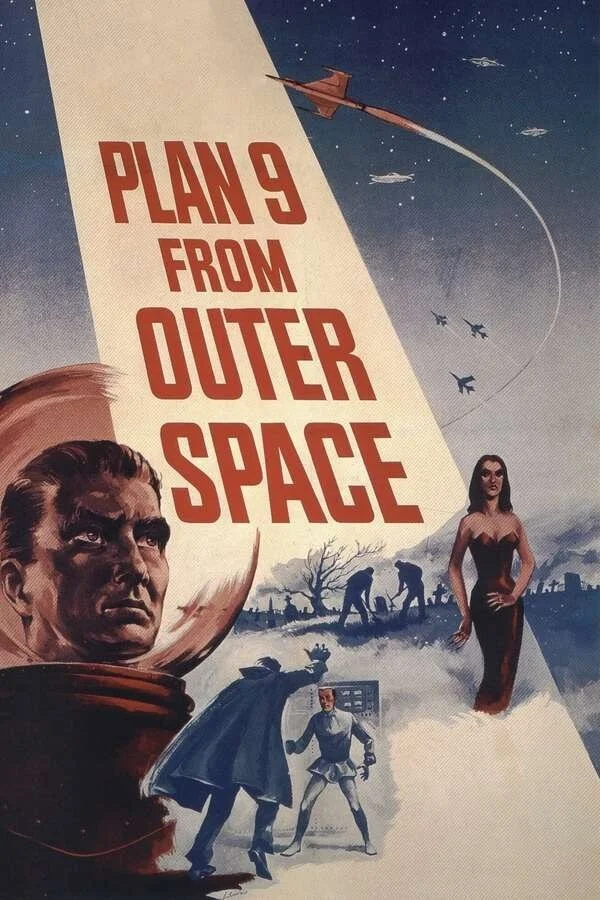
UFOctober: PLAN 9 FROM OUTER SPACE (1957)
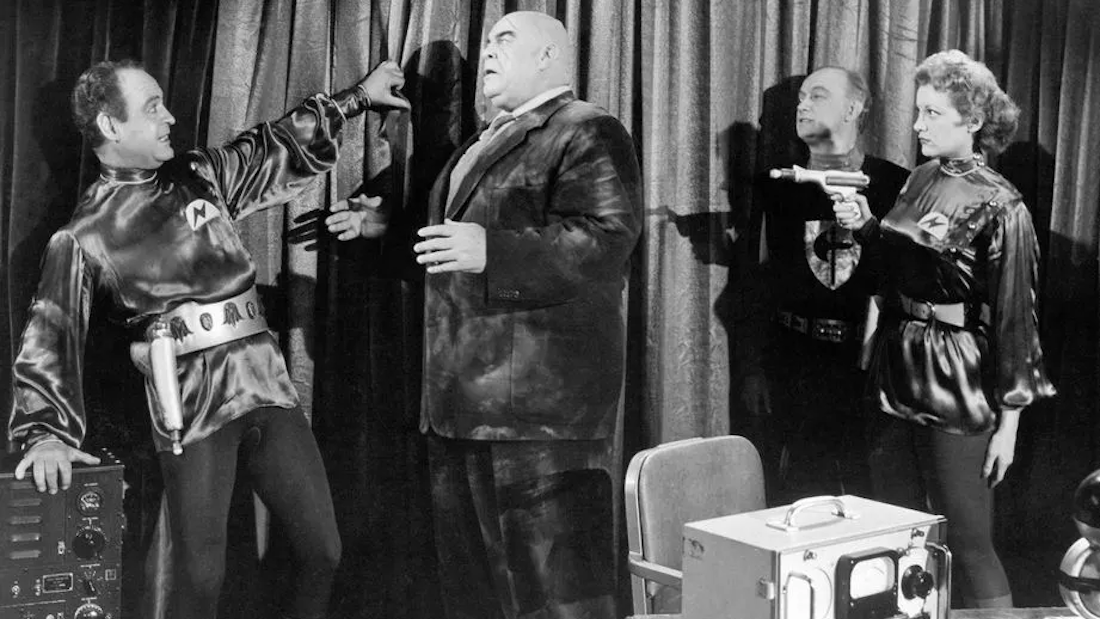
Ed Wood’s PLAN 9 FROM OUTER SPACE (1957) is often considered the worst movie ever made, alongside Tommy Wiseau’s THE ROOM (2003). The sci-fi/horror feature presents its cosmic odyssey on poorly-made sets, including small silver discs approximating UFOs flying across a flimsy backdrop and astroturf for the graveyard scenes. The simple, perhaps lazy, aesthetic feels almost satirical in tone and approach. During the previous 10 years, sci-fi and horror engaged in a well-rehearsed tango centered around the fear of the unknown, with such films as INVASION OF THE BODY SNATCHERS (1956) and IT CAME FROM OUTER SPACE (1953) setting the pace for must-see B-movie popcorn flicks.
Intentionally or not, PLAN 9 FROM OUTER SPACE poked fun at the genre that seemed ready to pop any minute. From tasteless cardboard humor to terribly wooden performances (with an exception or two), the campy cult classic forged its own place in horror history without so much as an intention. The visual style, the script, and the star-studded appearances of Vampira (the first horror host) and Bela Lugosi conspire to make one of those pure so-bad-it’s-good slices of cinema. Film always works in cycles. The same thing would later happen to slashers in the 1980s—audiences reached their limits and the splatter films quickly fell out of favor. Ed Wood’s film sits at the culmination of the bygone B-movie, locking away the decade like a dusty old chest in an attic somewhere.
Themes of Existential Dread and Humanity’s Ephemeral Nature
The film opens on a funeral. Men and women gather around a fresh grave to pay their respects. Criswell, infamous psychic known for his wildly inaccurate predictions, can be heard, faintly at first but then growing in intensity. “There is a time to live, and there’s a time to die,” he says. “It’s always a shock to those left behind.” The solemn, quiet moment teases a far more profound and earnest tale about heroism and the ticking timebomb of death. Instead, PLAN 9 FROM OUTER SPACE unmasks itself as a terribly grim scene not unlike Willy's Chocolate Experience in Glasgow circa 2024.
When Lieutenant John Harper (Duke Moore) becomes collateral damage, a priest presides over his funeral and reads from John 15:13: “Greater love hath no man than this, that a man lay down his life for his friends.” The passage instills a powerful message about loyalty and love. Humanity flits away the sands in the house glass, and it’s that fleeting sensation that tingles throughout the film in tiny itches. It’s cleverly disguised behind after-school melodrama and laughable absurdity.
Peculiar Performances and Iconic Line Readings
The film is not short on strange acting choices. Aliens Eros (Dudley Manlove) and Tanna (Eros
Joanna Lee) lead the charge with some especially goofy (and wonderfully so) performances, complete with criss-cross entrance gestures–demonstrating their subservience to their Ruler (John Breckinridge). Mechanical physicality hammers home the satirical nature of the story, even if not deliberate, and gives the actors constraints in which to play and experiment as they so desire. Even Vampira’s performance feels strange and not quite there.
Paula (Mona McKinnon), the wife of airline pilot Jeff Trent (Gregory Walcott), emerges as the MVP of the film. Her line delivery is unmatched. When Jeff reveals that he’s seen a flying saucer, she replies with a bright, shocked lilt in her voice, “A saucer? You mean the kind from up there?”
Later, Jeff shrugs off the alien threat for one far too close to home–that in the cemetery. In an old-school manner, Paula proclaims, “The saucers are up there…” She looks up. “And the cemetery's out there…” She looks right. “But I'll be locked up in there…” She looks left. McKinnon’s comedic timing, both verbal and physical, serve to iron out some of the coarse edges of the film.
Dracula and Vampira Come to Play
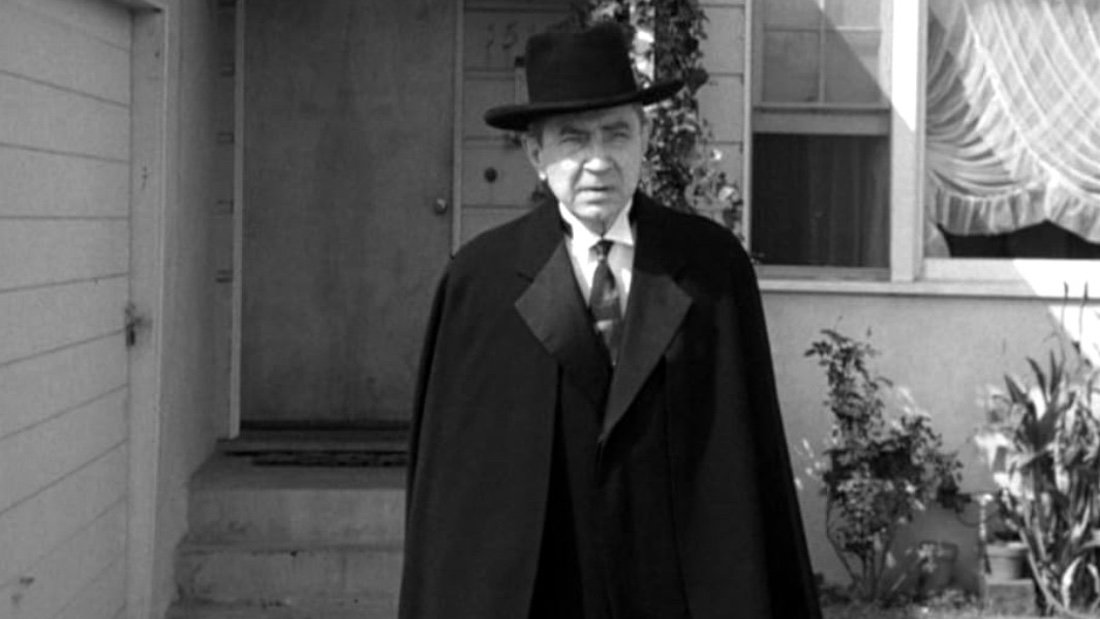
Bela Lugosi plays an unnamed man/ghoul, but he emulates the physicality and performance of his most iconic role, Dracula. He drifts through the space, much like Dracula would float up a spiral staircase. It’s haunting and quite appropriate for his resurrection. Lugosi only needs to curl the edges of his smile or partially raise an eyebrow to elicit screams from a tense audience.

Vampira’s appearance in PLAN 9 FROM OUTER SPACE is one of the few surviving film performances from her. The Vampira Show did not survive; only a few clips exist, and the rest is considered lost to time and humor error. Her unspoken role taps into the subconscious mind, where evil waits until the time is right.
Portraying an otherworldly being, Vampira emerges from the shadows. Her wide-set eyes penetrate the soul, hypnotic and witchy. A clear line can be drawn from Vampira to Barbara Steele to Elvira to Jessica Lange to Mia Goth. The lineage of smoldering, insidiously dangerous actors follows one obvious trajectory. And it all started with Vampira in PLAN 9 FROM OUTER SPACE, a deliciously stupid and wildly entertaining relic to another time where horror movies still felt new.
