
UFOctober: SIGNS (2002)
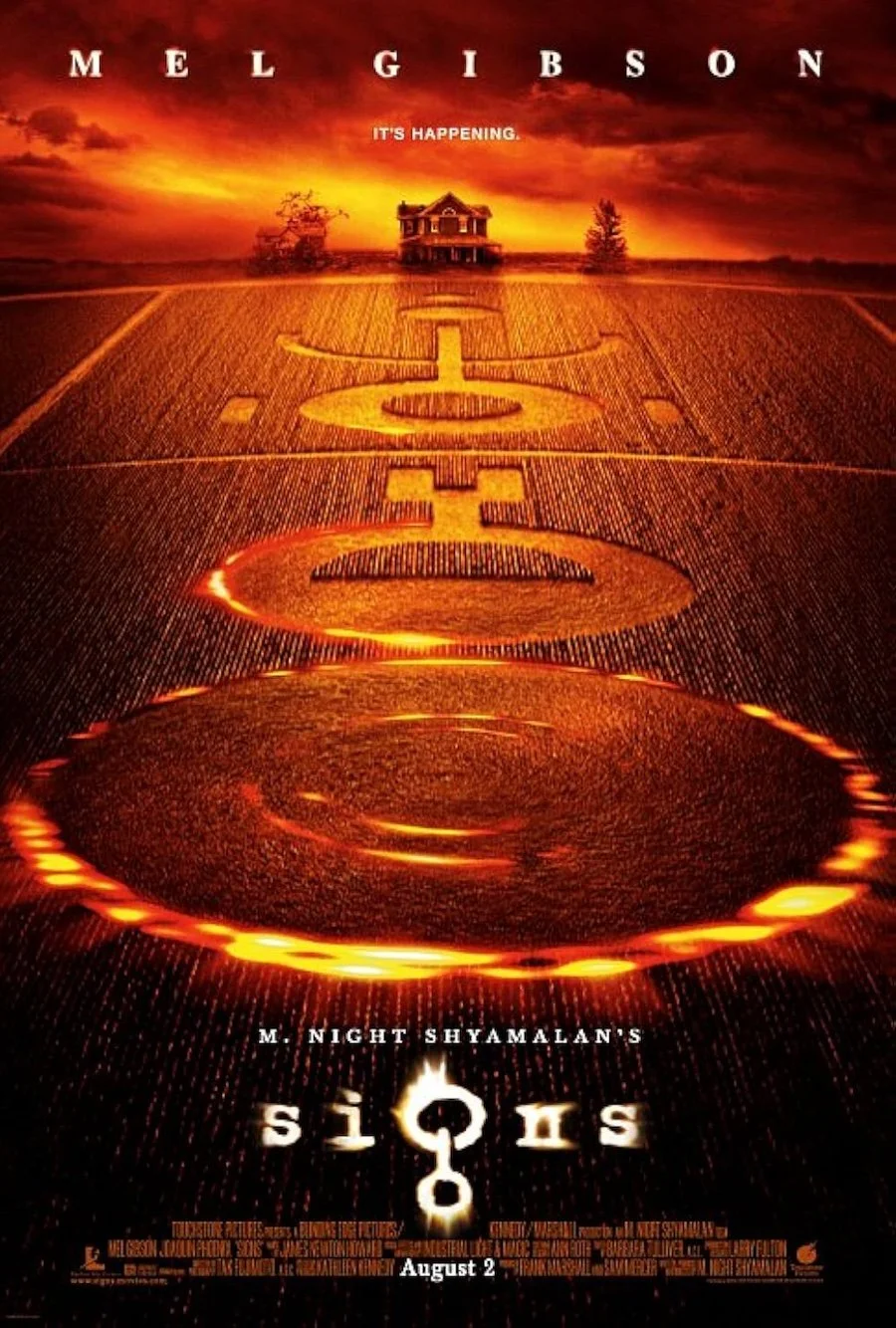
Who doesn’t like an alien invasion blockbuster? INDEPENDENCE DAY (1996) and WAR OF THE WORLDS (2005) easily come to mind, and they're great in their own way, but my personal favorite has always been M. Night Shyamalan’s SIGNS (2002). When I first saw this as a teenager, I was expecting to see an action thriller with Mel Gibson fighting aliens, maybe with a twist like Shyamalan's earlier film, THE SIXTH SENSE (1999). Instead, I left the theater with overwhelming catharsis and self-reflection. The poster and the commercials leading up to its release focused on crop circles, which are a phenomenon that has been associated with “aliens from outer space” trying to tell us a message or, of course, giving us “signs.” But that is not what the story of the film is about. Shyamalan created a story that resonates with many who, like me, wonder if we are not alone in the universe, but on a much more personal level beyond the simple question: are we alone in the universe?
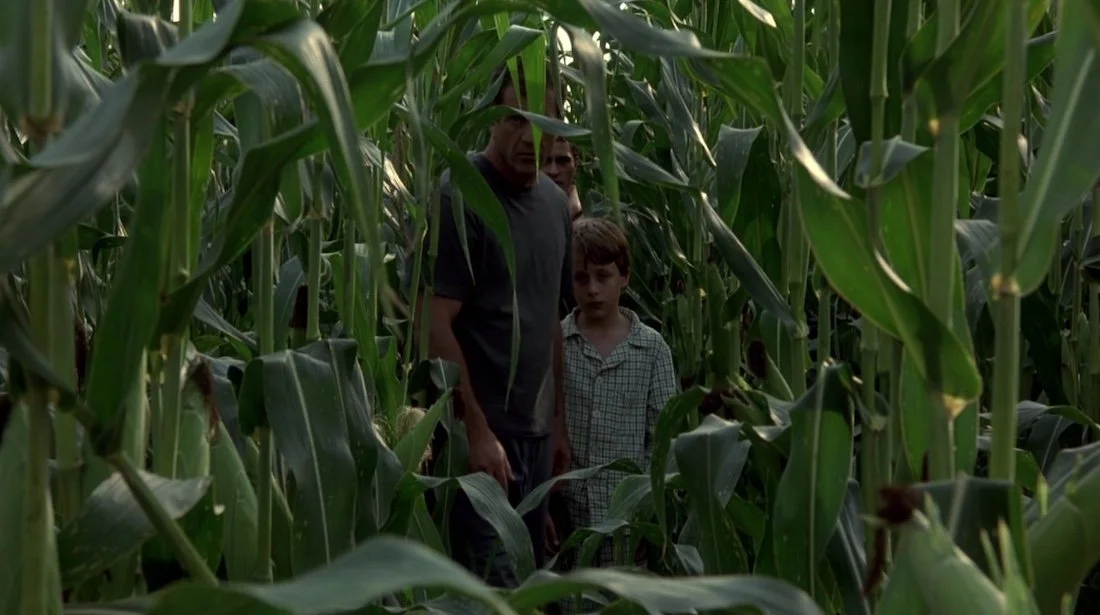
Nonetheless, Shyamalan’s profound story is only impactful as the world a filmmaker puts on screen. We don’t get a science fiction story across many planets or a protagonist trying to save the world. Instead, the film’s main focus is the Hess family who live in a rural area surrounded by cornfields. The patriarch of the family is Graham Hess (Mel Gibson), and his two young children, Morgan (Rory Culkin) and Bo (Abigail Breslin). They also live with Graham’s younger brother, Merrill (Joaquin Phoenix). The feel of the film from the very beginning also gets under my skin because the family feels so isolated. We see their home surrounded by what appears to be miles of cornfields. No nearby neighbors or city sounds. A sense of dread and loneliness resonates through many of the scenes, which primarily take place in the Hess’ home. Even a sequence when they take a trip into town feels so lonesome despite their interaction with a few other characters. Getting away from the city can be peaceful, but instead Shyamalan creates this eerie and secluded ambiance. Looking back, that was probably his intention, as we learn the family is dealing with the aftermath of a very personal tragedy. The grief and loneliness we feel when we lose a loved one can make us feel that isolated from the world, even in a home surrounded by family. Shyamalan captures that gloomy detachment in almost every frame of the film
Every great horror movie—and yes, SIGNS is a horror film—has to have a great score. From the very opening title, composer James Newton Howard delivers suspenseful and ominous music that stays with you even when the movie ends. I remember watching this for the first time, and my heartbeat beating faster every time the violins got louder. The score elevates each suspenseful sequence, including some of the quieter moments in the film. Once again emphasizing a feeling that provokes dread, mystery, and detachment.
One cannot ignore our very recognizable leads, Mel Gibson and Joaquin Phoenix. They are two actors whom the camera captures so well in their emotions and facial expressions. They provide phenomenal performances and are believable as brothers, and their presence elevates this film. Phoenix, in particular, provides some surprisingly comedic moments, and Gibson’s face, without even saying words, provides such a view of a tortured soul grappling with the recent tragic loss of his wife and the impending doom of a possible alien invasion.
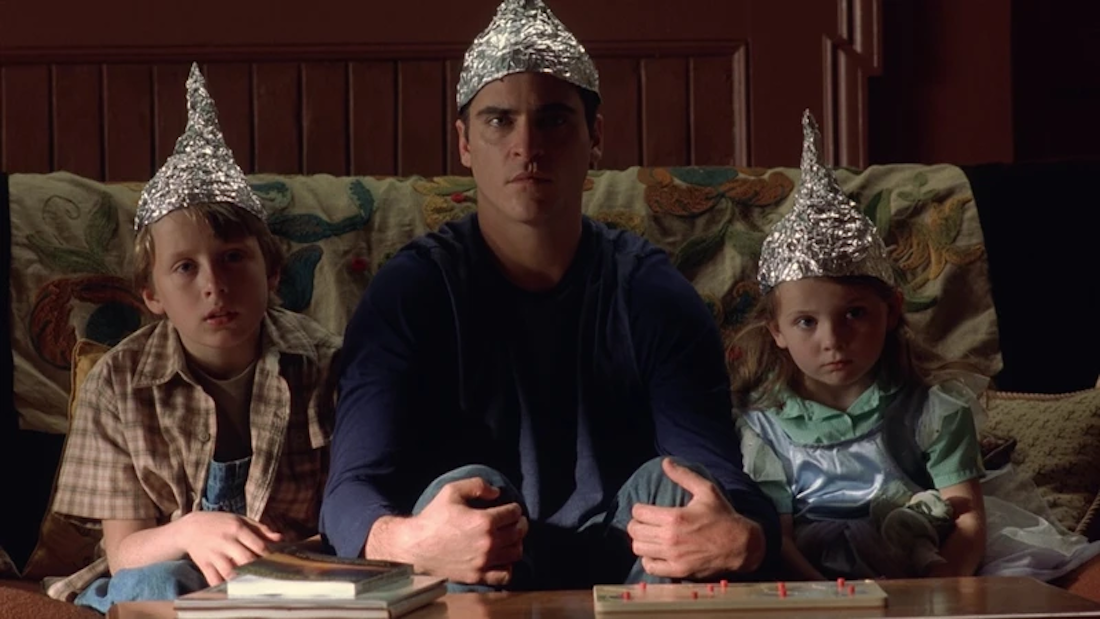
The most powerful scene (and my personal favorite) in the movie is the two characters discussing on a couch what the arrival of these alien invaders means to them. Graham is not just dealing with the death of his wife, but is an Episcopal priest who appears to have been a major leader of their community. Merril, appears to be the opposite—much less conservative and a former baseball player trying to make ends meet by now living in with his brother’s family. The two discuss whether the sight of the UFOs is the end of the world. Gibson eloquently describes the idea of two groups of people: One who believes these sightings of extraterrestrials are “signs” of a miracle, and the other group who believes this is all just happenstance. Basically, he is describing people who take comfort in believing in a higher power, and then there are those who do believe we are all alone; everything is just a coincidence. No god is protecting us, even if things go bad. It’s a haunting scene as we learn Graham has devastatingly lost his faith. Gibson and Phoenix are just so believable we are glued to every word of their discussion. The scene is so haunting and possibly more terrifying than other, more direct horror sequences in SIGNS. This story is not just about aliens or UFOS. There is no friendly alien telling us to “phone home,” or a national monument being blown up by a spaceship. The story is about what we choose to believe in when we are at our lowest, and when the world may be coming to an end.
I saw SIGNS as a teenager and, like many young people, you think about things like this at this time in your life. Is there a God? Do things happen for a reason? Was that a coincidence? The story truly resonates with those who continue to navigate life, wondering, when you look at the stars in the sky, whether we are not just alone in the universe but if something is looking out for us. Even as an adult, things happen in life where you wonder whether this happened for a reason. As you grow older, this type of existential question continues to be pondered. It is a great crisis Shyamalan brings to the forefront of this blockbuster in a truly masterful way of cinema. Even watching this movie 24 years later, I can't help but still look for “signs” in my everyday life and will continue to do so, probably because of this movie.
Spoiler alert for animal lovers: If you love dogs as I do and like to know ahead of time if their pets survive, unfortunately, they do not. Arguably one of the film’s weaker plot devices concerning animals in the story.