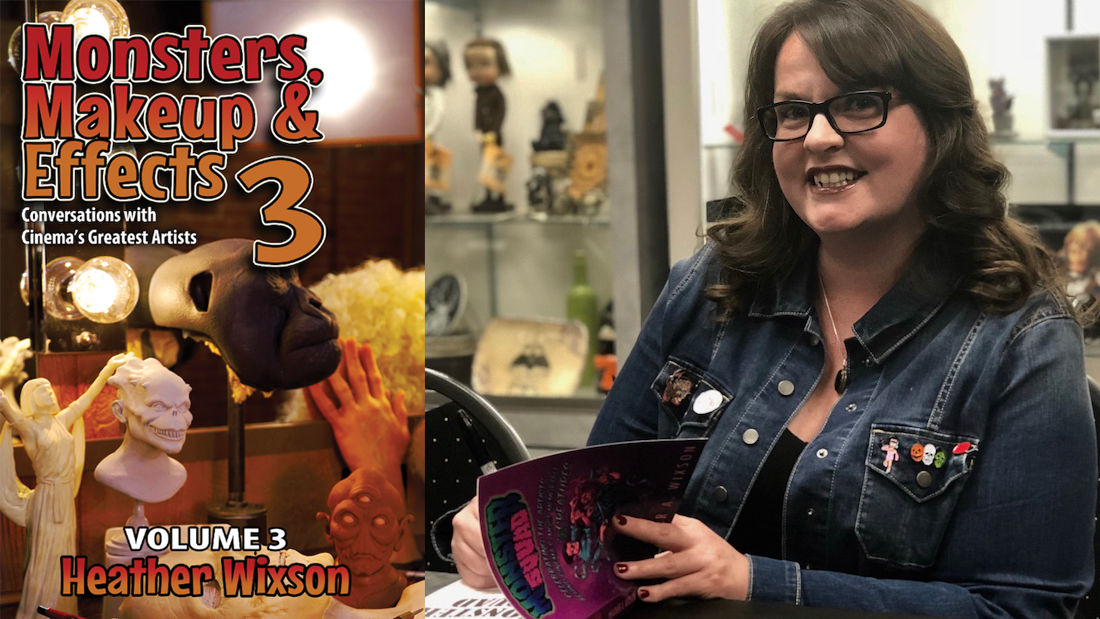
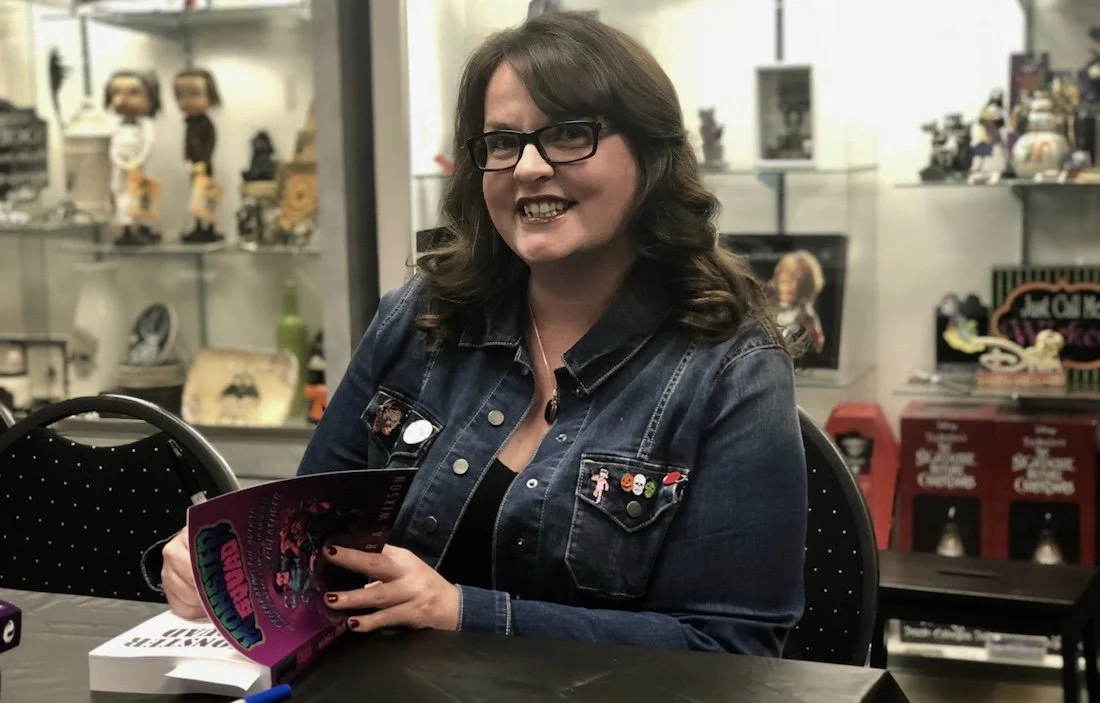
Heather Wixson has been covering films and the horror scene for quite a while now. Working with Dread Central, Daily Dead, her own Ghost blog—From The Desk of The Horror Chick, and even this site—she’s been constantly exploring films that we love and why we love them. She’s also been writing about make-up f/x teams for about 10 years in a series of books. Her latest Monsters, Makeup & Effects Volume 3, comes out December 1. Pre-order your copy today!
The talented writer sat down to speak with us ahead of her new book and talk about her inspirations, some industry insights, and more.
Neon Splatter: Growing up, what were some of your favorite monsters in movies or elsewhere?
Heather Wixson: One of the first that really like left an impression on me, I think was Barlow in SALEM’S LOT. I knew who Dracula was, but this vampire just really scared the crap out of me—the weird bluish tinge and just the unnaturalness of his existence, and he didn't talk and the way that he would move. That was probably the first one that really stuck with me where I was like, “oh my God.”
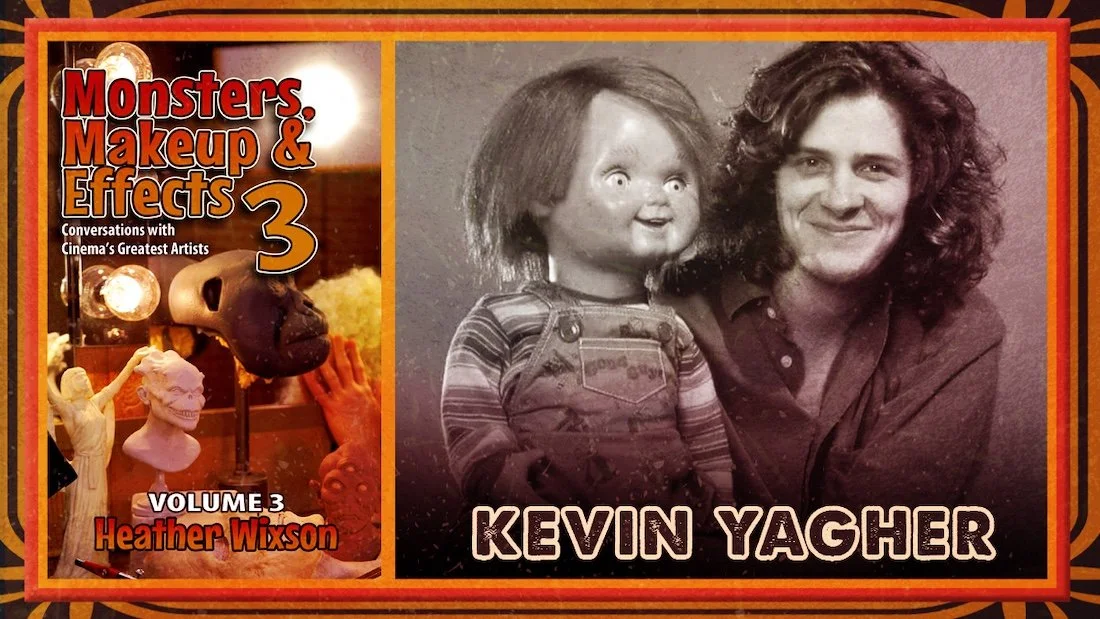
And then I would say probably the next one that destroyed me as a kid was Freddy. But then of course—like I think for most kids—the fear turned into fandom, which is strange. But again, it was the texture of Freddy. I think that really was off-putting to me and I think that's something that doesn't get talked enough about. As much as I love NEW NIGHTMARE and I love the cool '90s Freddy, but A NIGHTMARE ON ELM STREET 1 and 2, there's such a gooey texture in those two, between David Miller and Kevin Yagher. It just felt so scary. And then they kind of cleaned him up a little bit as they got into DREAM WARRIORS and DREAM MASTER and then it became cool and then all of a sudden I was like I need Freddy on my wall!
But I do remember being completely undone also by like all of the different monstrosities in John Carpenter’s THE THING because I saw that when I was five, which—yeah, it's not a movie I would typically show a five-year-old but it was fun for Heather. Also, I recently had been attacked by a dog in our neighborhood, so my fear of dogs was very high after that movie. But the stuff that they did in that movie—most of Rob Bottin’s work and then Stan Winston coming in and helping out, as well—I just had never seen anything like that. I don't even know that we've seen a lot of movies try to do that. There's a few that do a really fantastic job in their own right but nothing has ever been like THE THING and nothing I think will ever be like THE THING again
NS: I think that's a fair assessment because of the talent and how much was done with what resources they had. Just the imagination on display.
HW: Yeah, I think THE VOID gets really close—especially for them being super low budget. There's some really cool stuff in that one. But I think THE THING’s the one—that's an earmark for so many horror fans which is kind of amazing considering back then it was just sort of this bastard child. Now it's so revered and loved, which probably doesn't help John Carpenter back then but hopefully helps a bit now.
NS: When did you first become aware of makeup effects artists being behind some of your favorite movies?
HW: Growing up, my best friend’s dad worked for the Warner Electro Atlantic distribution center that was near O'Hare. So we would always get a lot of cool records and stuff, and one of the tapes he brought home—and I don't know why they had it because I think it was under Columbia but somebody there got it—and he brought home the videotape of “Thriller.” What was really cool about that was, after you watched the music video, there was this hourlong “making of” documentary. And even though I'd already been introduced to AN AMERICAN WEREWOLF IN LONDON at that point—because my mom took me when I was three—I didn't really know who John Landis was and I didn't know who Rick Baker was. But all of a sudden, these two gentlemen are in front of me and they're like “we're gonna walk you through how we put all this stuff together.” And seeing Michael Jackson in the chair being made up as a werewolf, this guy who's like this pop singer who's so recognizable turning into this thing, I was like, “wow, he's like just completely immersed in that makeup.”
And seeing the process of that, seeing them make up the different zombies and talking about how the different intentions which went behind the different zombies—“well, these are graveyard zombies, these are the dancing zombies, these have to move a certain way so we have to use certain materials...” I was maybe six at the time I saw that video And I didn't know what half of what they were talking about meant, but I knew it was my first sort of pulling up of the veil. And I just loved it. I think that weekend we probably watched that tape like 15 times. I was obsessed.
As I got a little bit older, I started to put together like names. Because I got really obsessed with movie posters for some reason. And probably one of the first names I recognized, like regularly, was Wes Craven. And I don't know why, but it was just like, "Oh, I saw his name on this” and “I saw his name on this." And I was like, "Oh, that's the NIGHTMARE guy."
And then what happened was, I remember my first time watching TERMINATOR and Stan Winston's name coming up like that. And I was like, "Oh, interesting." And then—this is the most random of Stan Winston's movies that he was doing in that phase of his career—but another movie that we used to watch a lot, for some weird reason, because I spent a lot of time at my best friend's house since my mom worked a lot when I was a kid, but her parents loved Andy Kaufman. So, we watched HEARTBEEPS a lot.
NS: That is odd, yes.
HW: Like of all the movies! Stan's name would show up. And I was like, "Why does that seem familiar?" And then I put it together and I was like, "Oh my gosh, it's the TERMINATOR guy!" Because the Terminators were terrifying to me, too.
And then it was just like, I don't know, I just started to really obsess on details. I don't know if that was like things in my childhood that were never diagnosed or whatever. But I just really started to hone in on all these different details. And I do remember it was for [NIGHTMARE ON ELM STREET 3], the Fangoria that came out. And just seeing them talk about all these different effects artists. And that just blew me away. Like I'd never seen any of the movie yet, but I saw the cover of it. And that was when you could buy Fangoria at the grocery store. I ran up to my mom and I'm like, "Please, can I get this?" And she's like, "Okay, fine, whatever." Not realizing that she just had changed my life in one tiny little moment. But I couldn't get enough. I think I was even reading Rolling Stone. I just got very obsessed with the details of how these things that we loved got made and put together. Whether it was music, movies, TV, you know—music videos, too, because that used to be a real fun art form. Like all of it, I could not get enough.
NS: What made you start the Monsters, Makeup & Effects series?
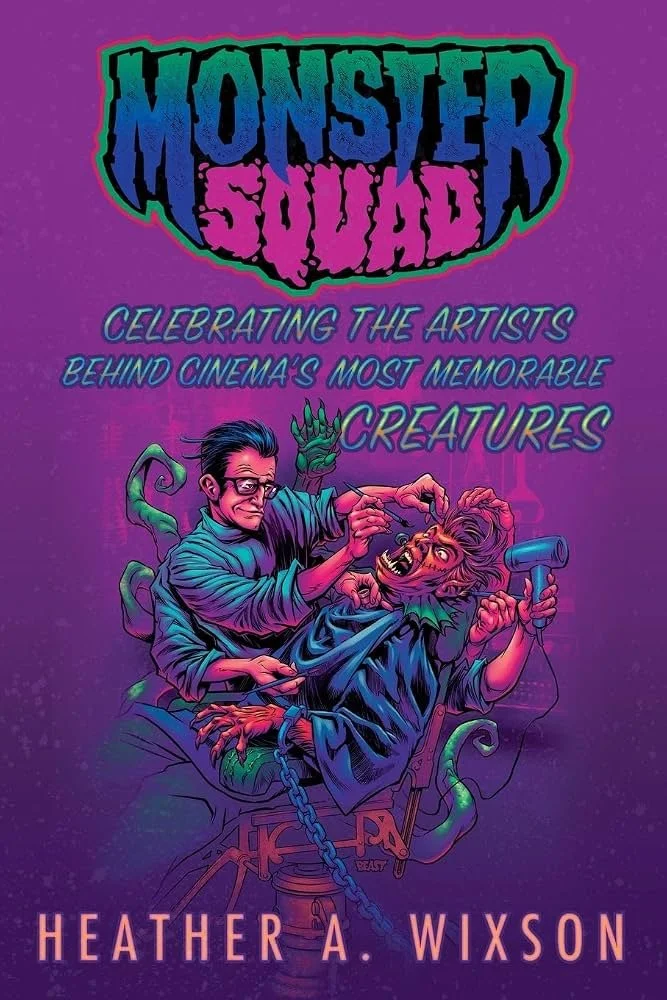
HW: Yeah, I mean, it all started with an initial book I did back in, I started in 2016 and it came out in 2017. And that original one was called Monster Squad. And I never anticipated turning it into a series. But how it first started out is I was doing—so it kind of ties back to Stan Winston. For years, when I was at Dread Central, I did a couple of annual Stan Winston weeks there. And then when I moved to Daily Dead, I wanted to bring that back because I just really enjoyed showcasing all the different stuff that he was known for and that his crew was known for.
He was one of the rare studios—up there with innovation with Rick Baker. They would have guys that would go in and they were basically called “lifers,” they weren't going anywhere. And there were guys who started there in the early ‘80s who were there until Stan passed away, which shows you sort of the kind of guy Stan was. He was very business-minded, but he was very family-minded, too, and people were a family to him and he treated everybody with respect. And it was just interesting because the second year I did Stan Winston week at Daily Dead, I was like, “you know, I'm always kind of showcasing the effects of these different movies. I want to talk a little more about Stan.” And so I started reaching out to people beyond the effects world. I was talking to the guys who had worked with him on different projects, but then I even reached out to somebody like Peter Hyams who worked with Stan on THE RELIC, and Steve Miner, they did LAKE PLACID together.
And it was interesting because it was during one interview with Howard Berger—because Howard was somebody who lived kind of close to Stan. I think it was like a mile or two away, realized where Stan’s shop was, knew he wanted to get into effects, and Howard would go and visit the shop as a kid. And Stan would only let him come visit if he would show Stan his report card, which I always thought was kind of cool.
So basically that was this huge thing in Howard's life. And Howard went through the loss of parents and Stan came and sat Shiva with him, and stuff like that, and just really was there for him. And we talked about all this different stuff. And there was at one point in the interview, he said to me, “you know, nobody ever asks me about this stuff.” And then, after we were done, I sat there and I thought about it and I was like, “why isn't anybody asking them about thisf?” Like, why are we only focusing on the actual creations and not the creators?
I'd made some friends in the effects world and I was like, “okay, well maybe let's see what happens.” You know? I'm gonna reach out. If I can get 20 interviews, fantastic—I've got a book. Let's see if I can do this. And the first two people I reached out to were Tom Woodruff Jr. and Alec Gillis. I'd done so much with them and had really been championing them—especially after the debacle of THE THING (2011). If they say yes, then I'm going, I'm doing this. And they both agreed to it immediately, which was incredible. Then I basically just sat down and I thought about some of my favorite characters I'd seen over the years, some of my favorite creations, and though, “who do I wanna talk to for this?”
And then that was just kind of it. I spent pretty much an entire year just trying to get in touch with people, but I was putting out feelers for other interviews, just in case, and then everybody kept saying yes. So the 20 interviews suddenly turned into 33 interviews. What am I gonna do? So, I did the first book with my first publisher, which was okay, I mean, I think I made like $60 total, honestly, from the release of that book.
So originally, we were taking this series to 100 interviews through Fangoria, back when they were really focused on publishing, pre-COVID. And then, as we know, things kind of took some shifts there. And so this big Fangoria book project I had fell apart, and I was like, “oh my God, what am I gonna do?” Thankfully, Robert Kurtzman connected me with my current publisher now, and Michael's been great. I know I'm not making big blockbuster books. I'm not the name—the people involved are the names. So it's been an uphill battle. But just the idea of being able to put these stories out there in a way that I don't think a lot of people have seen means a lot. And it's crazy to me to think that I've been doing this for like 10 and a half years. I'm so tired, I love it. I'm like, "I just have to do one more of these things." But it's been so rewarding. And just hearing people talk about things that they don't typically get to share and highlight about themselves and their careers and their real lives.
And then just getting to know some of these folks...unfortunately, because of the ages that we are...before they're gone, being able to give them their time, before we don't have that opportunity anymore, has been a real joy. To quotie Bill Moseley from HOUSE OF A THOUSAND CORPSES, "it's a real blessing." But it is, it is. I know that sounds corny, but it has been. And then anytime getting to see their wins or getting to see their name in a movie now, it makes me giddy. I turn into that kid again.
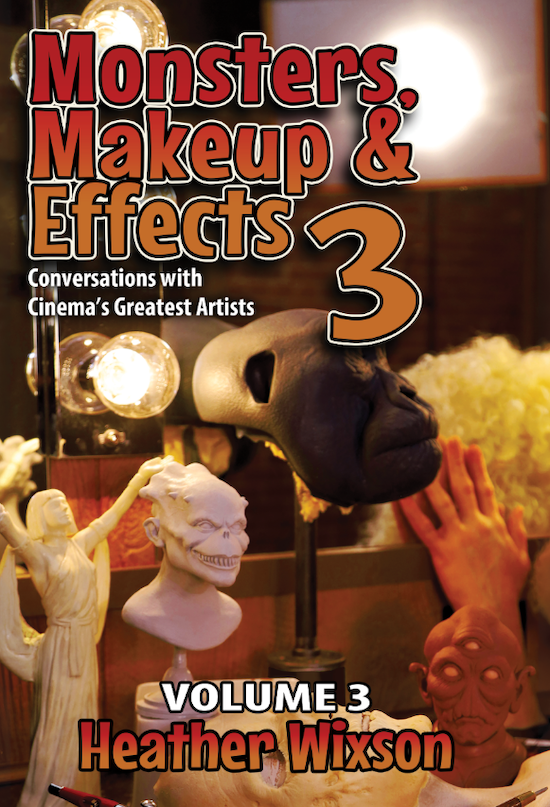
NS: You're now entering your third volume of this. Is it hard to find more stories to tell, more people to profile? Or do you honestly just feel like you're just scratching the surface because there are so many?
HW: There are so many. And I think also too, when I originally started, I was really focused on sort of the heyday of the '70s through the '90s. And unfortunately, now that I've been doing this so long, I'm like, “oh, I guess we can start moving into the late '90s, early 2000s.” That's retro at this point, too. And it's interesting because I still have banked...I think another 14 interviews. So I still have to find the last six to make the full 80.
But there's so many people out there that I haven't been able to connect with. I mean, I will admit—and I don't mean to sound like this is weird—but there's a lot of women from that era who worked in special effects who don't wanna talk. And that's been a little heartbreaking because being in horror—and I'm sure you see this too, but it's way better now, I should say—but, when I first got into horror, it was a dude club.
NS: Absolutely.
HW: It was bro city. There'd be times I'd be on set visits, I was the only girl there. Or maybe it was myself and like Staci Wilson. I could count on one hand the amount of women working at major horror websites when I started in the late 2000s. I'm so glad to have seen that changed. But it was an intimidating environment to come into. And I'm wondering if a lot of the women back then were kind of working on it. So I've always wanted to be more balanced. The women just...a lot of them don't really talk about it or a lot of them kind of got pushed in and out of the industry in like a year or two. But I've been really trying to make sure it's not the “old white guy club.” I mean, there's so many talents.
I've been really trying to talk to different artists from around different parts of the world because I'm also really always curious about how different is it in these other places than it is here. Like David Marti, who eventually connected with Guillermo Del Toro, was working in Spain and sending faxes to Dick Smith when he started and that was his education in special effects.
Somebody like Gionnetto De Rossi—who's in this new book and I was his last interview actually before he passed—and just hearing the stories because his dad was this huge film makeup and effects guy in Italy at the time and did the iconic CLEOPATRA makeup for Elizabeth Taylor. Which basically not only changed movies but it changed the makeup industry. So just hearing his stories—because he fought tooth and nail never to get involved with movies—and there he was yeah. There’s plenty of other places to dive into—I want to start to get a little bit into some of the folks who kind of came in at the tail end of the ‘90s and really started making their mark in the 2000s.
It's crazy. So, when I moved to Los Angeles, I moved to LA with a job and then like a couple months later, they lost their funding and I got let go. But in the meantime, I'd become friends with Robert Hall—he was sort of a controversial figure at the time but for some reason we clicked. He was an effects guy worked on like THE CRAZIES, worked on The Terminator TV series, and worked on Buffy and Angel. Rob basically created his own little mini-franchise with LAID TO REST. But Rob was a particular flavor, I guess is the way to say, but for some reason we got along really well and I don't know why but we did. I remember they needed help in their office and he's like “do you want to come work with me?” and I was like “sure!” And this all came about because I went to his office because I'd seen his 2005 movie, LIGHTNING BUG, and I was really impressed by that. This kid who came up from a trailer park—and maybe that's what it was, because I was a kid who grew up in a trailer park. One day, I was like “Rob, let's talk about your story.” And so, I sat with him for like two hours on a Sunday, we talked about his life and everything. And I did articles about that—that was back in like 2009—and then I got to work with him and run his office and go through a bunch of different productions which was pretty cool. Then things went bad there...he was going through a lot of rough stuff, I ended up getting shingles couldn't go back to work for a while, got fired by his then-pornstar girlfriend (who was like 23), you know. It's whatever. It didn't end well. But I always had a tinge of sadness honestly, because I just don't like to leave shit bad.
And I knew he was going through stuff. I won't go into specifics, but you could probably connect those dots. But I knew he was going through a lot. And I'd always hoped that—my goal, honestly, when I started this was one day, I want to bring it back to Rob. I wanted to have reconciliation. Because I knew who that guy was behind all that stuff. And unfortunately, he died in 2021. But he was out in LA because he had to move back to Georgia because he kind of lost everything and had to rebuild. And he was working on a project, and they found him in his hotel room. And I remember Brad Miska actually reached out to tell me. And that just really hit me hard because this dude had it all. He had a shop. It was successful. It was an amazing house. It was a really great life. And I wanted to be able to go back and celebrate the good parts of that journey And I never can now. So, I always think about that. And that's one of the reasons why I'm like...for a lot of these artists who just maybe they only get reached out to because “oh, can you talk to me about how you made the mechanics for this or that?” I want to make sure people understand who these folks are because they give us so much.
Hollywood is a hard place. I know folks are not curing cancer by making movies and things like that. But they put so much on the line for our entertainment. And I just want people to understand who the people are behind these things that we love and these moments that we grow up cherishing because that matters.
NS: You profile a lot of very famous names, especially in Volume 3—like Stan Winston, the Chiodo Brothers, Kevin Yagher. There's also some who are lesser known, even to genre super fans. And I was just curious, who are some of the unsung heroes that you wish more folks—I know that the answer is going to be “all of them”—but besides “all of them,” who are some of the ones that you profiled in the most recent volume that you wish more people knew this name or that person.
HW: When I first started this, the one person that I thought of—I was like, why don't more people talk about him? Thankfully they do now, which is kind of amazing. But it was Tony Gardner—how do you not know the guy who worked on THE BLOB and THE RETURN OF THE LIVING DEAD and all those crazy amazing things. All the new Chucky stuff—he's even in SEED OF CHUCKY! And yet if you asked most horror fans who Tony Gardner was 10 years ago they didn't know. That's not a slight to Tony whatsoever, that was just what the awareness was for fans. So seeing how that's changed for him has been amazing because we also spent like five hours on the phone doing different calls and stuff. For me, he was sort of the first real unsung hero I was like “everybody needs to know Tony Gardner” and now they do and it's amazing and I love that.
I think for me, one of the people that I think doesn't really get talked about enough is Rick Lazzarini. He had a really fun run in the ‘80s and made some wacky stuff which I think is cool—but he also got to make the new Slimer when they did GHOSTBUSTERS in 2016—and I know everybody has opinions about that movie, but just having a real practical Slimer back was incredible to me. The stories he shares...we talked about NIGHTMARE ON ELM STREET 2 a little bit, like the stories he has from that and just kind of like owning up to the mistakes he made back then where he's like “I thought I had his under control and then I made the worst looking possessed parakeet ever!” It's funny because I don't know like awareness is now or like is different than it was when i started this.
So, I'm kind of wondering...like somebody like François Dagenais. People don’t know his name as much as they should, right? But then you have these showcases like Hannibal, where people are like so obsessed with that artwork now. Or his little tooth child from Channel Zero — I was like “I don't know who did this but whoever did this is a genius!” And then I put together that he had worked on Hannibal, he worked on SILENT HILL, you know, and also had been heavily involved with the Saw franchise. People always kind of go to the creatures, but if you look at the stuff that they had to put together for some of those Saw movies, it's ridiculous! It has to all look natural, like it can't be fantastical at all. It has to be grounded and the fact that that guy could do stuff like that, do stuff like Channel Zero, and do stuff like Hannibal—it's kind of mind-blowing. And I think a lot of people don't talk about him enough either.
Honestly, out of the K.N.B. guys, I think Robert Kurtzman is the guy that gets talked about the least. And yet I just revisited WISHMASTER and it just struck me how freaking awesome WISHMASTER is! I knew it was cool back then but it's just gotten even better as I've gotten older and it's aged so well. The way that the script just really leans into the effects. And Kurtzman being behind the camera in the various ways for that film is just really cool. And I don't think that gets enough credit. Like...he spawned a franchise basically, you know?
Or Bob Keane, who was somebody who was extremely important in the UK. The fact that he kind of got to sneak in and work on Star Wars movies, but then also like, you know, was doing HELLRAISER—NIGHTBREED alone should give him carte blanche amongst horror fans. That is just a monster show for the ages and I love it. You know, getting to do something like CANDYMAN or like even DOG SOLDIERS. I love that.
So yeah, that's the thing. When I first started off, I didn't wanna just go after—and obviously no offense because they're the fricking godfathers—but I didn't wanna just go after the Rick Bakers, the Tom Savinis, and that kind of stuff from the onset because I knew that there were so many other artists out there, you know. Rick Baker is obviously responsible for the brilliance we see on the screen for AN AMERICAN WEREWOLF IN LONDON, but there were 41 other guys on that set who helped work on that film and made that movie possible. So, it was about going to different people and talking to different folks who were in parts of different aspects of those productions that I really wanted to do.
And I know folks might say, “well, you have a Stan Winston tribute—you’re kind of breaking your own rules” in Volume 3. But that was intentional because of how this all sort of started. I wanted to talk to Matt [Winston] because I really wanted, for anybody who maybe hadn't seen Stan's book, to be able to just hear more about Stan's life and understand the things that he did and why he was more than THE TERMINATOR. He was more than JURASSIC PARK. You know, he was a guy who forever changed the industry of special effects in ways that aren't really seen by fans. Like unionizing, or having artists just recognized in credits, that was something that Stan fought for. He and Rick Baker were the ones who fought for the Oscar, you know, and then had to go up against each other for that first one, you know. It really is me trying to just fill in these gaps of the history of this world.
NS: Through all the profiling that you've done, with all the interviews and looking at their lives, are there any unifying aspects that many of the artists share — like personality traits, or influences, or even life events that's happened across multiple artists.
HW: It's strange because for as many interviews as I've done, no two people have really walked the same path. But I will say, more often than not, it all comes down to access to the movies. Where it's like, no matter if you're living in California, or Ohio, or you're living in a small town in Montana—like all of these people I think with the exception of one that I've interviewed, came to be curious about this world, because of something that they saw in a movie.
And then from there, it was like, they would figure out like, well, where do I go? For some of them, it was finding Famous Monsters in Filmland, some of them it was finding Fangoria, some of it was finding Starlog.
I think the only exception to sort of movies being the thing was Michelle Burke. And that was because she had a really crazy story. She was one of something like 13 or 14 kids and living in a small town in Ireland. And basically when she turned 18, her parents were like, “okay, you're done, you're out.” Which wasn't mean, that's just how it was because they still have like eight other kids to raise. Very small house in the Irish countryside. So, she moved to Canada with her brother and just started working on stuff.
And like, and even when she started in makeup, it was glamour makeup, it wasn't even effects. But she started to realize as Canadian productions were starting to show up more and had that access she was like, “oh, I should really start to learn this.” So it's interesting, but I think more often than not, there is this moment in a movie that oh, it seems to be that trigger.
Actually, I did a series on Daily Dead years ago because I think, for a lot of us, we have that one spark. Where we see something and that's...like that's our moment. And so I would regularly ask people—and it wasn't just effects people, it was directors and actors and more—what was your “aha” moment where you realized, this is it, this is the life for me.
I'm sure it's the same for musicians. You know, it wasn't just like, “I'm gonna pick up this random instrument.” I'm sure at some point they're hearing something. And it just triggered this response where they're like, I need this to be in my life.
As we sit here and watch all the crazy stuff that happens with streaming and access to movies and stuff, and we need to make sure we're preserving these movies and things like that. I mean, who knows what kids are getting inspired by now?
NS: You are obviously ridiculously well-versed in production information and behind the scenes stuff already based on your writing and other work you've done over the years including these books—but what was something that you learned from your interviews that truly surprised you like “oh that was how that was done” or like that person did this?
HW: I think one of the most surprising things is that uh that i learned was that i think Jennifer Aspinall basically created The Toxic Avenger with like $50 and like...how do you do that? How do you create an entire character on $50 that would become iconic and literally launch a studio? That was the face of Troma and they gave her like $50.
NS: Which tracks.
HW: A lot of the Chiodo Brothers’ stories surprised me um because all I knew was that these were some fun guys, like based on their characters and stuff. I'm like “well, these have got to be like some fun guys just to sit around and talk with.” But then hearing how coming up on the east coast and how they were making their way through formal studio productions and things. I'm trying to remember...I think Charles won an award at Cannes for a student film that he did. I think it is really interesting that none of them had anticipated that their entire careers would be spent together—and yet here we are! They all kind of went off and like made their own paths, and yet it all kind of came back together
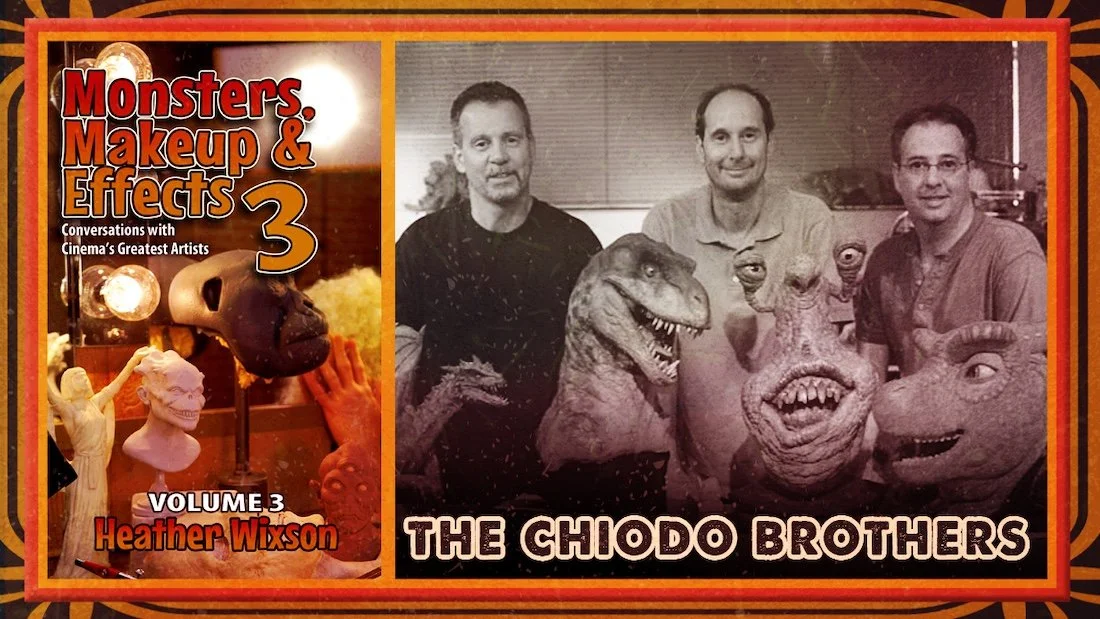
I also didn't realize either—speaking of the Chiodos—from Stephen, about working on the VINCENT short which basically was the birth of Tim Burton's career. I can't even imagine sitting in a room with a baby Chiodo and a baby Tim Burton, making a stop motion short that would forever change the industry. The ripple effects of that short. And I didn't know that Stephen was involved—I just always thought it was, like, weird Tim Burton sitting in a room.
NS: What's next for your writing?
HW: Well, as of yesterday, a current project that I've been working on got announced, which is the In Search of Darkness book for the '90s horror, and that's very interesting. Because I do remember when I was working with them on the '80s horror, I was like, "We should do something for '90s." And they were like, "people don't like the '90s that much." Here we are.
But I was really honored to be involved with the first three docs for the '80s, and then also to be one of the co-writers for the '80s book. But I've been really trying to put a lot into this new ‘90s book. And—this isn't anything against the format of the documentaries themselves, because it isn't. They're amazing, and fans love them, and there's a reason why. But there's only so much you can do without giving people a 40-hour documentary to sit through.
You have to distill it to a degree. You just have to. So my goal when I work on the books is to give the fans a bit more. More of the history, more of the context. So I've been really spending hours with each movie with special features and commentaries and all this stuff, just to really give folks the best look at a lot of these movies. And it's been really fun, because I do -- '80s for me is formative, because that was my decade. But '90s, I think, for a long time really didn't get the appreciation. And I know that there's some lean years in the '90s. But that's true of pretty much every decade. If you look at 1989, we were on a downtrend for that. So that's been really fun to be able to immerse in all these movies that I love and just hopefully making something that the fans are going to enjoy for that.
And then I've just been really busy with the special features work that I've been doing, just coordinating a lot of stuff for 88 Films. Because of them, actually yesterday morning I got to interview Jay Chadaway yesterday. He’s a composer. And it wasn't for SILVER BULLET, but SILVER BULLET is one of my favorites. I love that score so much. Then I put it together that he was so formative in Star Trek and the Picard flute thing. So we got to talk about that a lot too, which was really cool, and talked about Patrick Stewart and stuff. It was really, really fun.
And recently I got to talk to David Patrick Kelly for another project, which was awesome. And so my goal is I was able to take some of the in-depth interviews I did earlier this year and turn them into articles for my Westober series. which was like this I had like two and a half hours with Patrick Lussier and then I spent like an hour and a half on the on the phone with Heather Langenkamp and so got to do some really fun stuff with that so a lot more of these conversations once the releases come out I'm going to be able to like do more with those right on my side of things so I'm very excited for that.
We've also been really busy with Hammer too sure doing a lot of stuff I really want to see how DRACULA came out so because we did I think four featurettes on DRACULA. I got to celebrate Peter Cushing, which I was really excited about. I mean, I love Christopher Lee. I know it is it's the Christopher Lee show...but Peter Cushing's Van Helsing I just love so I was like “I want to celebrate him.”
NS: Lastly, where can people find you around the web?
HW: Probably the best place is my Ghost site. I kind of stepped away, it didn't dawn on me that like I would ever go should go back, right? I stepped away from Daily Dead which had nothing to do with Daily Dead—I absolutely love Jonathan. I'm so happy the site's still going and I am so happy for his success. But everybody was like “if you're writing again, why didn't you go back to Daily Dead?” And I think it was just more to back to doing it like on my terms—not that they gave me bad terms, because like I said I would I would take a bullet for him sure but still.
NS: It's just a progression of a career — that just happens.
HW: I just want to like ramble on about stuff and I just I knew I didn't want to do junkets. There's nothing against it, I just didn't love it anymore. So it makes sense to move on so I can just go do my own ramblings.