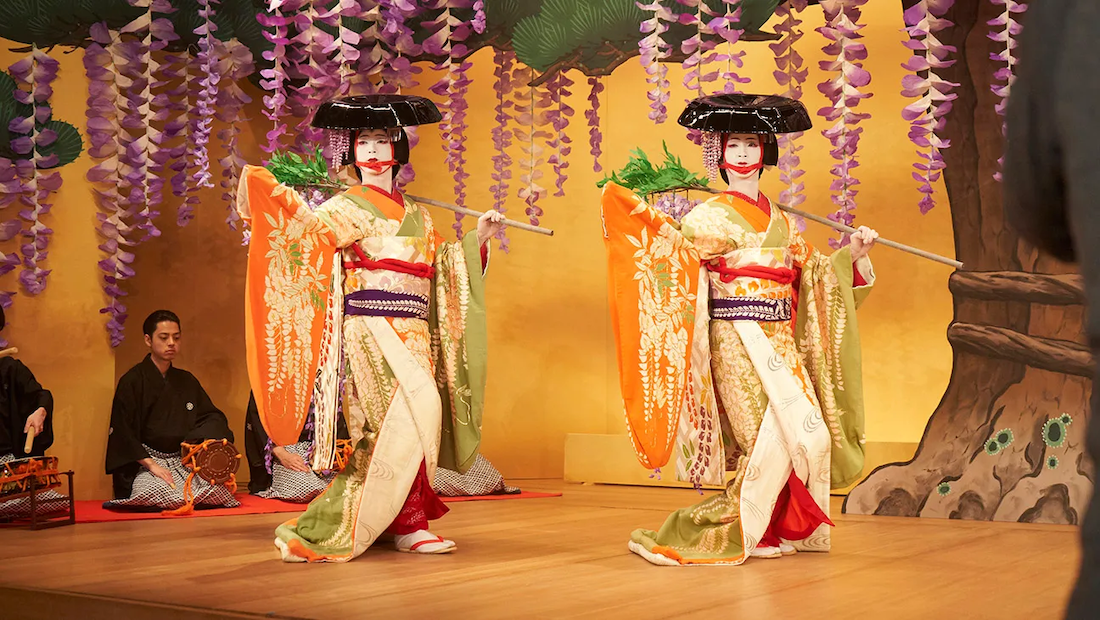

Beauty & Commerce Collide: The Power of KOKUHO (2025)
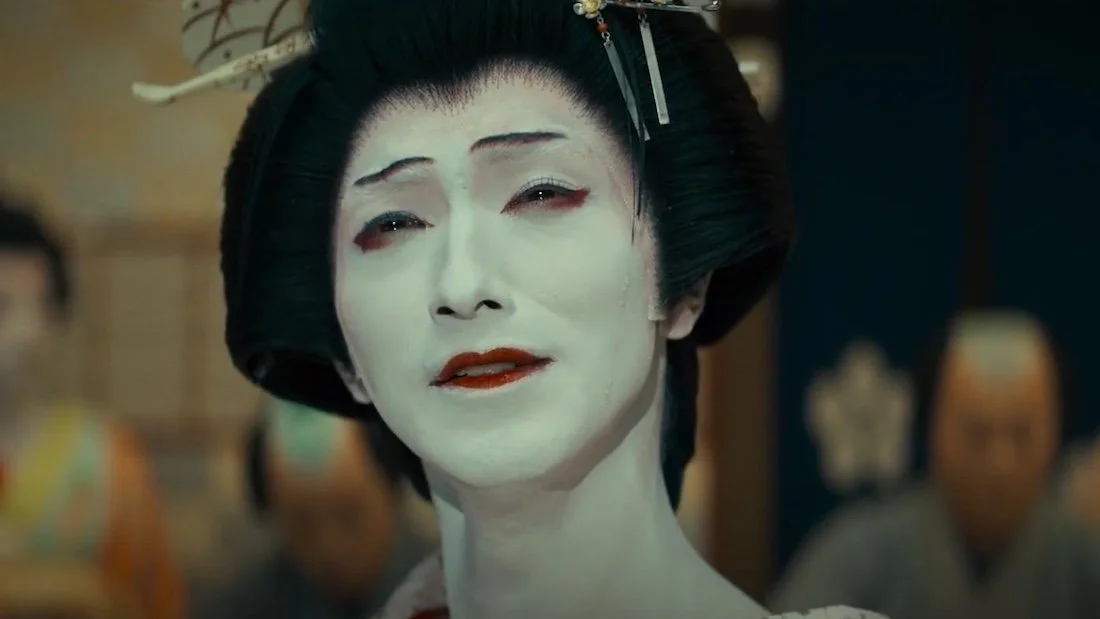
A couple years ago, I decided that I wanted to teach myself about the Japanese traditional art of Kabuki theater. As an Okinawan American, I had some familiarity with the traditional music and dances of Japan, and I understood that beyond the spectacle and stereotypes, there was something much deeper to the art of kabuki. I suddenly needed to know what that was, so I began reading books, following different YouTube channels, and watching any kabuki performances I could find. The initial learning curve was steep and frustrating, but then there was the Eureka! moment where I could finally feel it, It all made sense! Now I see Kabuki theater as the apex of where traditional Japanese arts harmonize into one performance that showcases not only the beauty of Japanese art but also preserves the cultural tapestry of 400 years of history.
I am a big believer in listening to the universe and letting it guide me to some degree. I could not have known that my interest in kabuki theater would soon coincide with an award-winning movie that would become a Japanese and international phenomenon that would also revive interest in this traditional art form. I am thankful for the universe guiding me to the moment that I got to sit in a movie theater, electric with excitement, full of a year’s worth of knowledge, ready to watch the movie KOKUHO (2025) in all its visual and audio glory.
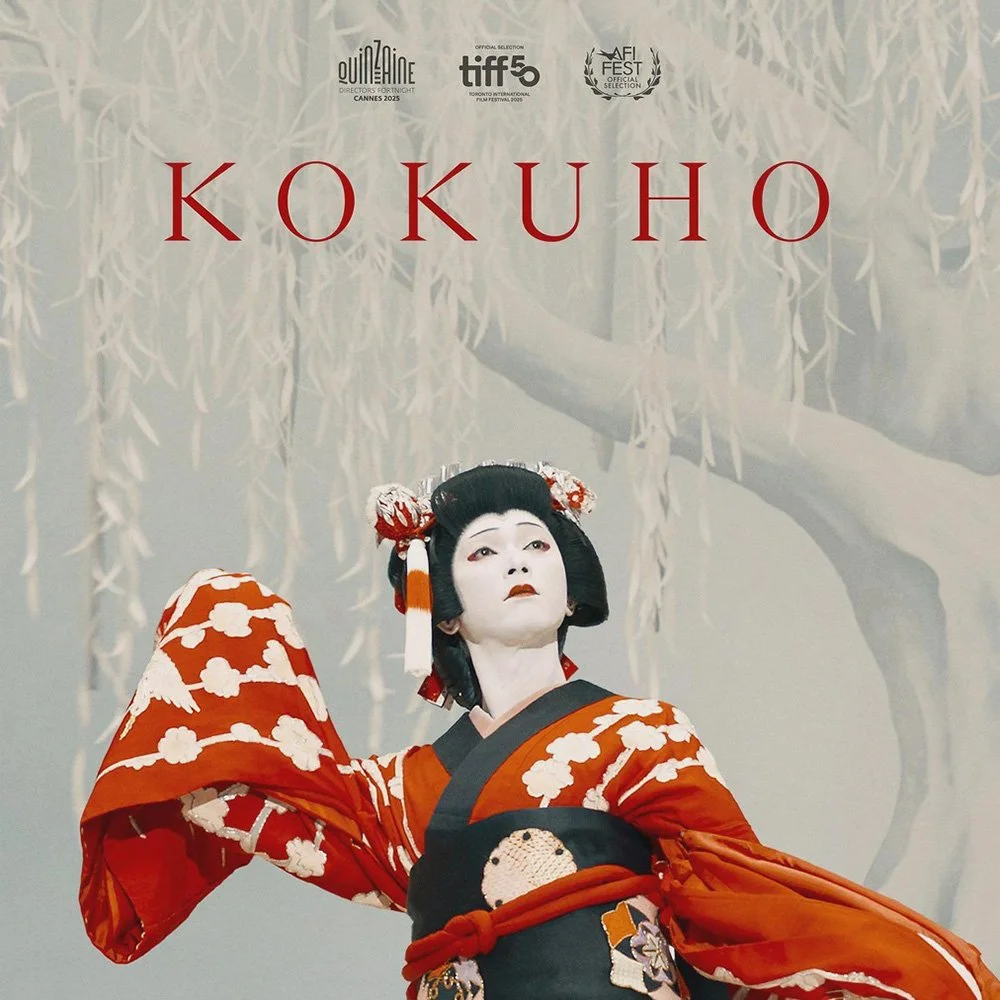
KOKUHO is based on a book by the same name written by Shuichi Yoshida. It is directed by Sang-il Lee, and stars the iconic actors Ken Watanabe and Min Tanaka, alongside up-and-coming stars Ryo Yoshizawa and Ryusei Yokohama. It follows the rise of a famous kabuki onnagata actor (male playing female roles), who ultimately becomes a national living treasure (Kokuho). Kokuho is a title bestowed by the Japanese Emperor on experts in their art form who preserve and represent the intangible importance of Japanese culture. The heart of the story is how much and what people are willing to sacrifice for their art, as well as acknowledging the very real people who get hurt along the way.
The movie is patient in its storytelling and accessible to people who know nothing about kabuki. It is well written and so engaging that even my son who had no experience with kabuki was engrossed in its beauty and how it captured the heart behind the art form. The score is elegant and supports the film but doesn’t pull focus from it. It is visually one of the most stunning and gorgeous movies I have ever seen. The use of colors, sets, and costumes transfer the extravagance of kabuki to film effortlessly. There is a scene towards the end where I was already sobbing, but then a moment of striking visual change occurred, and I gasped so hard that I was literally speechless. I will remember that moment as one of my favorite movie-watching experiences for the rest of my life. The performances by the cast were flawless. For all of this and more, it has become the most successful live action Japanese film to date and reignited an interest in kabuki theater to people young, old and all over the world.
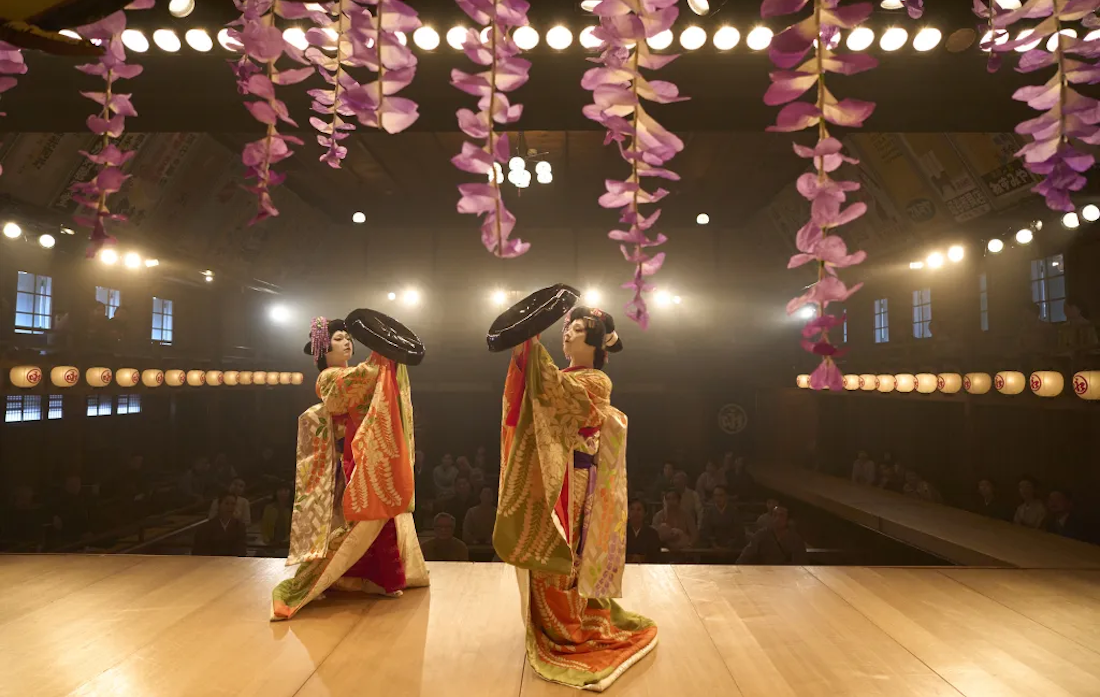
Kabuki theater, as far as we know, first began around 1603 during the Edo Period as a unique mix of dance and song performed by troupes of women. These women often performed in red light districts to increase engagement wherein they would then profit from sex work after the show. The commotion of these kabuki shows, and their post-performance chaos, led to the banning of women from performing kabuki. Since then, kabuki theater on the professional level has remained mostly a male dominated art form, and the modern form of kabuki we see now is called “Yaro Kabuki”. It is passed on through kabuki families from one son to another. Ideally, it is a blood son who succeeds the family name, but there are examples where the head of a kabuki household will “adopt” a talented apprentice as his son to pass on the name. The film KOKUHO is very loosely based on Japan’s current living onnagata national treasure, Bando Tamasaburo V, who is an adopted son of the Bando house. The young actors Ryo Yoshizawa and Ryusei Yokohama who play the rising kabuki actors, were trained over a year and a half by another kabuki living national treasure, Nakamura Ganjiro IV.
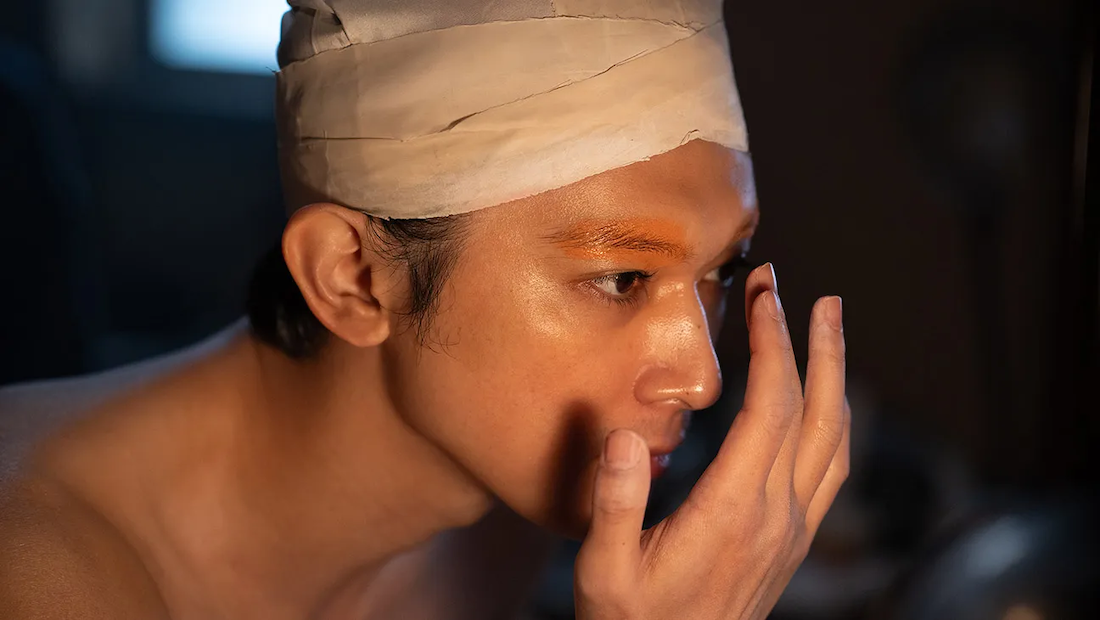
One of the most compelling arguments this makes is in the existence of the film itself. This movie was a risk. Kabuki, while a well-known Japanese treasure, has suffered greatly since World War II. It is no longer as popular as it once was and kabuki houses around Japan were slowly closing. The book’s success helped the filmmakers and producers believe that this story was universal in its feelings and could reintroduce kabuki to people who knew nothing about it. Expensive, intricate, coupled with a long time and effort commitment makes it surprising to many this film was supported in production as strongly as it was. There was a clear vision, and the people behind it had a lot of faith that this story would resonate with audiences. They believed it NEEDED to be made. I LOVE movies like this. I celebrate movies like this. I understand that as a business, movies are a product and the investment should match the output. But, making a film, versus selling a film are two very different concepts. One is art, and one is business. Sometimes you get both, and what a happy day that is, but often you get one or the other
I believe the world needs more art. I believe that supporting movies with great heart and passionate vision deserve and need to be made. I believe that big, expensive, and loud films like THE BRIDE! (2026) and others that feel “risky” as investments, should be encouraged. The future of film I want to see is one where we are willing to take chances on auteurs, and new movie experiences. I want a future in film where audiences want to be challenged and inspired. As in the case of KOKUHO, a movie that was probably met with the initial criticism that it was not relevant, has instead reignited and introduced new generations to a centuries old art passed down lovingly through faithful families and patrons. Isn’t that what film as an art form is supposed to do as well, preserve and share the importance of stories and culture?
I know that KOKUHO may seem intimidating to the mainstream viewer, but it is not as inaccessible as it may look from the outside. In fact, most classical and traditional art need not be as inaccessible as it seems. This is a choice we make culturally every day, because we choose capital success as the primary goal, when in an ideal world the goal should be to feel something bigger than ourselves. So, if you want to see a movie that will make you feel and see something big, I beg you to give KOKUHO a chance. It is a powerful and beautiful film. It is also the future of film that I want to see: A world where we let the stories of art and humanity take the lead.