Review: TEENAGE SEX & DEATH AT CAMP MIASMA (2026)

An array of promotional film posters, merchandise, and notable news articles fill the opening title sequence of writer/director Jane Schoenbrun’s third feature TEENAGE SEX & DEATH AT CAMP MIASMA. Schoenbrun establishes a playful tone as the film alludes to beloved ‘80s slasher franchises such as Friday The 13th and The Texas Chainsaw Massacre while simultaneously commenting on what studios and audiences demand from a director's creative vision.
Hannah Einbinder (Hacks) stars as Kris, a shy, queer filmmaker hired to reboot the iconic Camp Miasma franchise. She ventures to the legendary sleepaway camp currently owned by the star of the first film in the franchise, Billy Presley (played by the iconic Gillian Anderson). Billy, now an alluring recluse, takes an immediate interest in Kris. Their conversations about the franchise gradually evolve into something far more personal. As time passes, their connection progresses into a psychosexual dreamscape with moments of bliss, brutality, and excitement sprinkled within their interactions. Reality begins to erode and Kris spirals into an unreliable narrator as the world of Camp Miasma consumes her perception of art, desire, and the world around her.
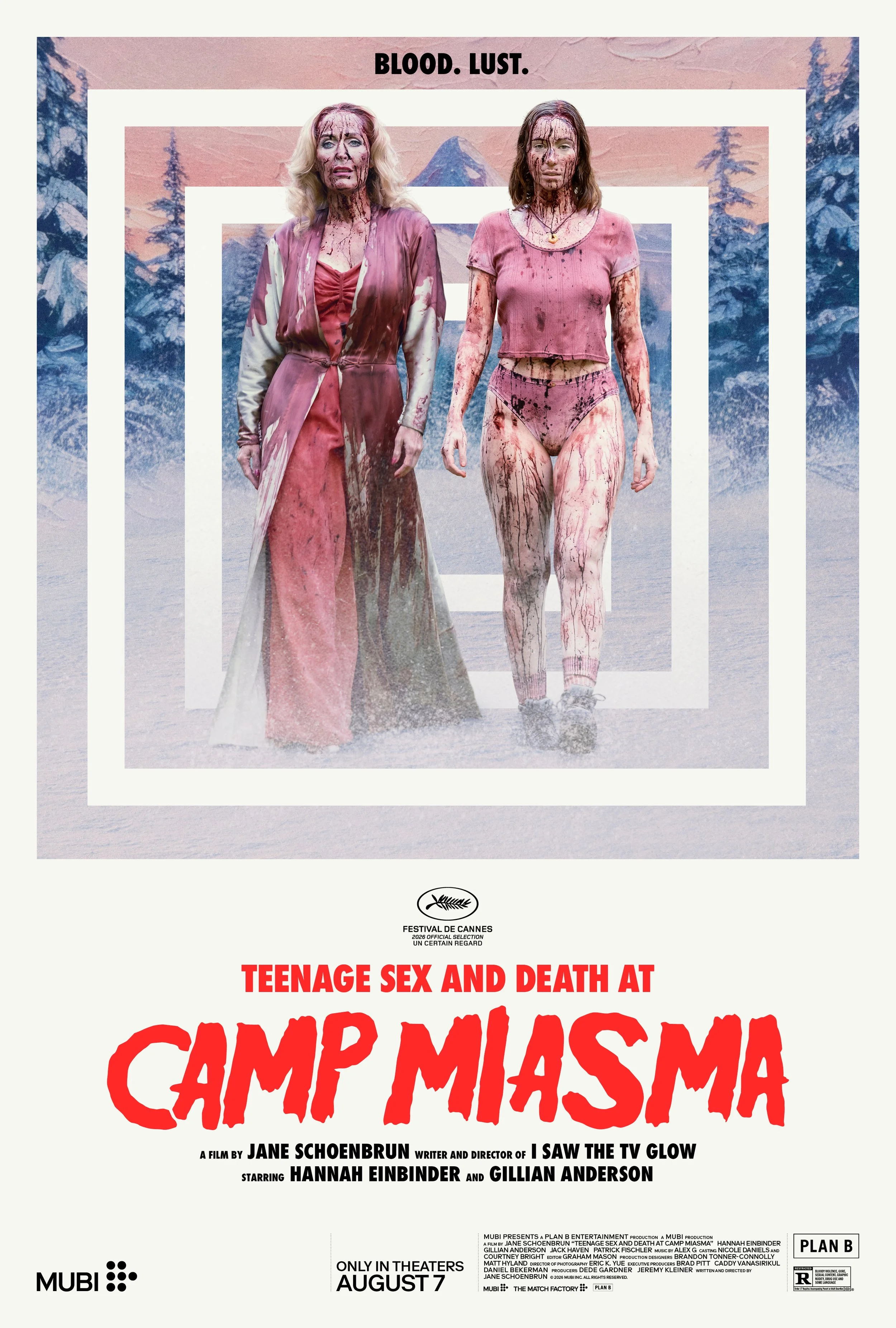
Schoenbrun continues their visually stunning style with nostalgic throwbacks as seen in their sophomore film, I SAW THE TV GLOW. Set backgrounds appear hand-painted and emit a pastel Lisa Frank-vibe which contrasts the brutality of the film’s kill sequences. By night, Billy and Kris confide in one another about physical intimacy and their lifelong discomfort within their own bodies. By day, Kris channels that renewed sense of purpose into conversations with her agent (Sarah Sherman, Saturday Night Live) and studio executives. The director’s use of lighting also reflects the sexual repression of the film’s characters and the journey to become more in tune with one’s body. Over the film’s 106-minute runtime, a seasonal shift from winter to summer mirrors Kris' growing comfort with both her sexuality and her physical body.
Sexual identity, gender expression, and dysmorphia are all thematic elements that Schoenbrun utilizes in their work. References to the 1983 classic SLEEPAWAY CAMP and Schoenbrun’s personal experiences provide impactful commentary on sexual relationships and bodily dysmorphia. The franchise’s antagonist, “Little Death,” is a poetic reference to an orgasm and the brief loss of consciousness, or a deep state of emotional release that follows. Kris and Billy both disclose to one another that they’ve experienced dissociation during sexual encounters. Kris states that “sex has always been in the background or distraction” and that work is their primary partner despite being polyamorous. She elaborates that “art is where she hides from love and sex.”
Arthouse audiences will appreciate the film's visual experimentation, while viewers less familiar with the genre will still find an emotionally engaging story through its humor, performances, and vulnerable central relationship. The film's meta structure and its commentary on franchise reboots also offer pointed observations about the pressures creatives face within the industry. Their combined experiences help ignite the desire to embrace their palpable chemistry and indulge in a salacious hunger that they’ve deprived themselves of for a long time. Candy becomes one of Schoenbrun's most intriguing recurring motifs. While several aspects of the film can be open to interpretation, it’s a sweet (pun intended) way to embrace desires that may otherwise be frowned upon by society while also evoking the nostalgic pleasures of moviegoing. Additionally, since Billy starred in the original franchise film as the final girl, the candy motif can serve as a way to provide visual confirmation that it’s okay to embrace innocence again and heal from the trauma she experienced from her initial sexual encounters in youth.
Flashbacks to the original Camp Miasma create a film-within-a-film structure that further reinforces the movie's love affair with '80s slasher nostalgia. Elder millennials, in particular, will love a lengthy kill sequence with the use of a Snorricam shot to the entirety of “Long December” by The Counting Crows. Einbinder and Anderson shine on screen with palpable chemistry, comedic timing, and embody a unique kind of vulnerability through relatable characters. It's also refreshing to see queer identity explored through such an unapologetically raw arthouse lens complete with close-up facial shots of orgasms, surreal dreamlike sequences, and copious amounts of blood.
TEENAGE SEX & DEATH AT CAMP MIASMA is filled with artistic talent and a singular vision with contextually layered storytelling. It's a visual and visceral exploration of queer identity within a horror story that also unfolds into a love story not just with another person but with oneself. At one point, Billy tells Kris that the Camp Miasma films aren’t complex, they’re stories of “flesh and fluids.” Schoenbrun pays homage to this notion but also enhances the narrative by creating a film that’s both beautiful and liberating, crafted with equal parts comical carnage and carnal pleasure. Like the best cult classics, TEENAGE SEX & DEATH AT CAMP MIASMA invites repeat viewings, rewarding audiences with additional layers hidden beneath its own cinematic flesh and fluids.