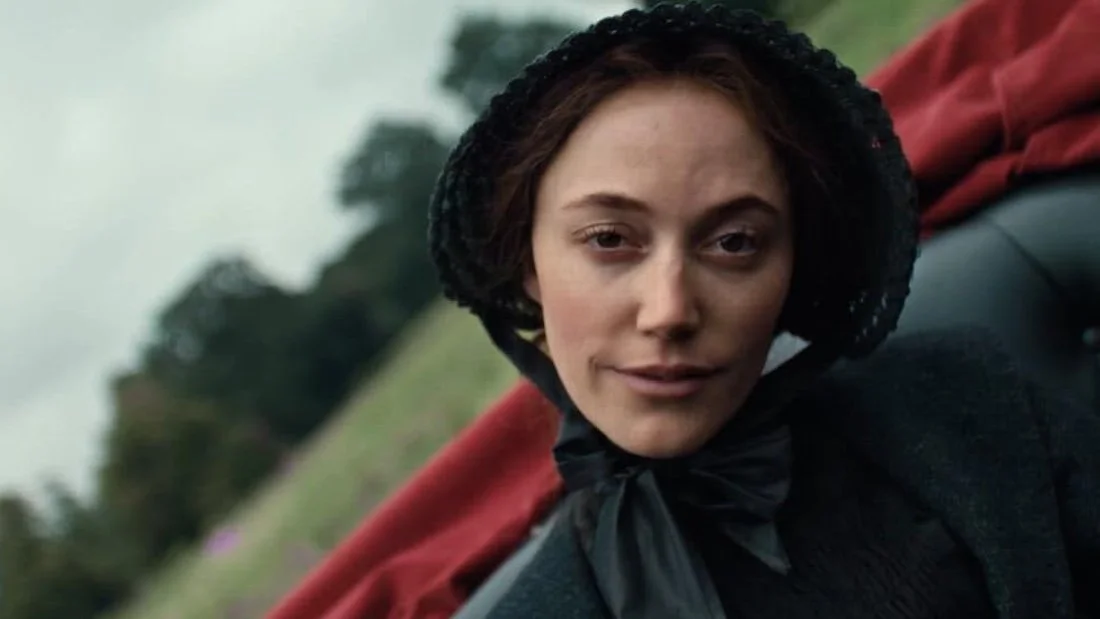
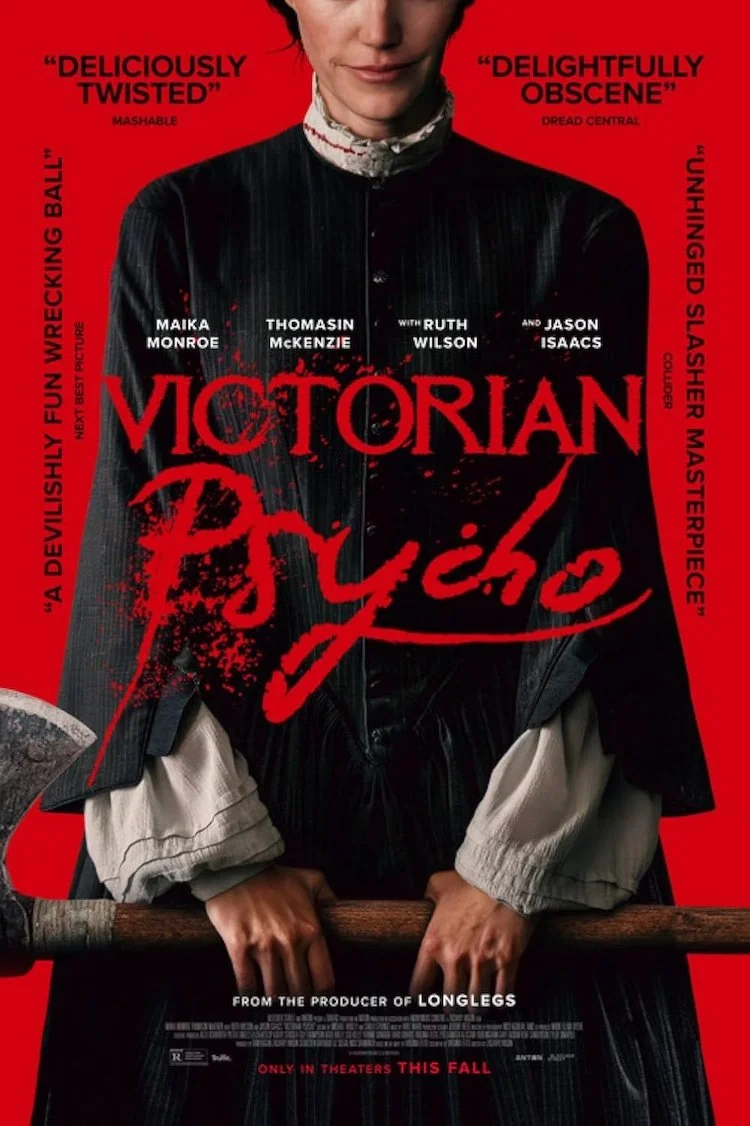
In the late hours of an evening shrouded in moonlight and revenge, a young governess disposes of a body while narrating how “most fear their darkness, but I feel tenderly towards mine; it seeks only to protect me.” Played by a doe-eyed and deranged Maika Monroe (LONGLEGS, IT FOLLOWS), Winifred Notty guides the audience through her journey to becoming a governess at Ensor House, home to the affluent Pounds family in 1858 Ireland. Her first-person narration provides a blunt glimpse into her history, logic, and philosophy, particularly her affinity for violence. Searching for love and belonging, Winifred arrives at the Gothic manor with a concealed purpose: to unlock the life she has always craved.
Director Zachary Wigon (SANCTUARY) brings VICTORIAN PSYCHO to the screen, adapting Virginia Feito's sophomore novel of the same name. Feito herself penned the screenplay, further establishing her versatility as an emerging literary powerhouse. Alluding to Bret Easton Ellis' American Psycho, Feito and Wigon play with stylistic elements reminiscent of Mary Harron's 2000 film adaptation. Both films employ first-person voice-over narration, although Feito's psychopath is a more reliable narrator than the vain and pompous Patrick Bateman. Despite her low social standing as a woman in the Victorian era, Winifred rivals Bateman in brutality, deception, and her sly navigation of influential social circles. However, where Bateman's violence is entangled with masculine vanity and material excess, Winifred's is rooted in a desperate pursuit of love and belonging.
Opening the film with a tilted camera angle and a glazed-over stare from Monroe, Wigon presents Winifred as seemingly harmless while subtly suggesting otherwise. As she attempts to assimilate into the Pounds household as governess to Andrew (Jacobi Jupe) and Drissila (Evie Templeton), Winifred must conceal her rabid past while manipulating her way into the good graces of her employers and sweetly naive coworker, Miss Lamb (Thomasin McKenzie). Proclaiming that she “shall strive to be worthy of this family,” Winifred finds her resolve tested by the household's various power dynamics, particularly those imposed by the children and their parents. Jason Isaacs (HARRY POTTER, A CURE FOR WELLNESS) portrays Mr. Pounds as cruel in his own right, subjecting Winifred to unwanted, insidious advances while exercising an equally disturbing approach to disciplining his daughter, whose fertility is prioritized over her education. Meanwhile, Golden Globe and Olivier Award winner Ruth Wilson (THE AFFAIR) embodies the stern and deeply insecure Mrs. Pounds, issuing subtle threats to Winifred and reminding her of her precarious position within the household at every opportunity. Beneath the family's polished exterior lies a familial tyranny that complicates the distinction between civility and monstrosity.
Winifred spends her days tutoring the children, projecting her morality, or lack thereof, onto their impressionable minds. Philosophical discussions of right and wrong, along with lessons in proper manners and polite society, are comically juxtaposed with Winifred's compulsive homicidal pastimes. She exhibits the defining characteristics commonly associated with psychopathy: manipulation, a profound lack of empathy, and a callousness masked by a lustful passion for violence. Even the sight of beet juice awakens her visceral fascination with bloodshed. Her body erupts into physical convulsions as she struggles to suppress her desire to kill and inflict harm through murder or cannibalism. Monroe is captivating in these physical performances, fluctuating between a stoic serial killer's stare, a playful parental figure, and a frenzied maniac with startling precision. Despite Winifred's atrocious acts, Monroe evokes a strong sense of empathy for a woman who might otherwise be dismissed as irredeemable. Beneath her brutality lies a discarded individual who was never afforded the love and care she craved, either in childhood or adulthood. This multifaceted characterization suggests a potential antihero, an interpretation amplified by Feito's darkly comedic dialogue and the cast's impeccable timing.
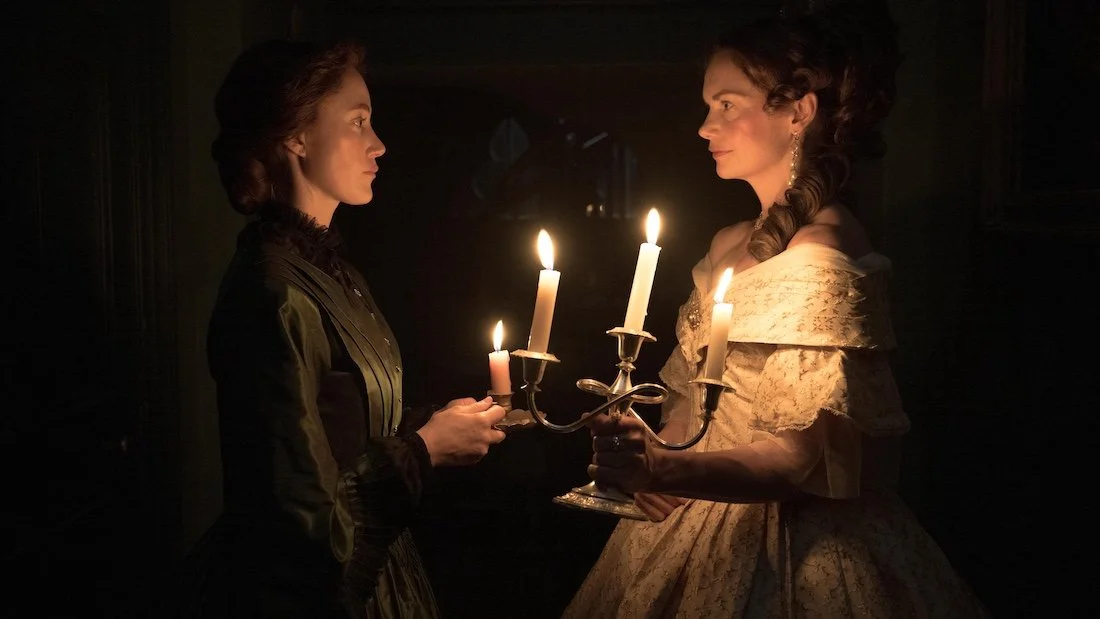
Wigon captures Winifred's psychotic breaks through intimate close-ups and carefully composed profile shots, often framing her alongside other inhabitants of the manor as though they can perceive only half the monster she truly is. Director of photography Nico Aguilar beautifully utilizes shadows and candlelight to further demonstrate the dark recesses of Winifred's psyche and when her true self begins to surface. To visually convey her mania and paranoia, Wigon employs rapid camera pans and Steadicam shots that draw viewers into Winifred's increasingly unstable perspective. Her descent into madness is accompanied by composer Ariel Marx (SHIVA BABY, BIRTH/REBIRTH), whose lyrical melodies create an auditory spiral oscillating between whimsy, dread, and delusion. A previous collaborator of Wigon's on his 2022 film SANCTUARY, Marx crafts a cascade of cacophony that aptly captures the volatility of feminine rage. Unlike the more calculated expressions of violence depicted in films such as BASIC INSTINCT and SINGLE WHITE FEMALE, Feito's portrayal of feminine rage is messy, impulsive, wild, and feral. It defies the expectations of restraint and obedience imposed upon women in Victorian society, making Winifred's unbridled fury particularly refreshing to witness on screen.
Monroe's talent radiates through layers of blood splatter and dirt. Frequently cast as the final girl, she demonstrates an equally compelling ability to inhabit the role of villain rather than victim. Her eccentric physical performance remains grounded in the lavishly constructed world surrounding her. Costume designer Allison Byrne and production designer Jeremy Reed capture the ornate aesthetics of the period, providing a convincing historical backdrop against which the characters' depravity unfolds. In the third act, secrets are exposed and Winifred's mask slips entirely, unleashing a storm of salacious bloodshed. Wigon employs a dreamlike sequence of surreal circumstances to convince the governess that she has finally achieved her purpose. Yet, as she begins to process the scene unfolding around her, she realizes that she has lost control entirely. An inventively crafted kill sequence serves as an act of catharsis, but one tinged with fear and disappointment in her true self. The darkness she simultaneously embraces and attempts to conceal grows triumphant.
VICTORIAN PSYCHO operates on a spectrum of monstrosity, challenging what constitutes a socially acceptable form of evil, who is permitted to experience rage, and who possesses the privilege to act upon it. Questions of nature versus nurture permeate Winifred's journey, complicating the boundaries between villainy and victimhood. By shredding the veil of polite society and exposing the brutality concealed beneath its veneer of respectability, Feito and Wigon successfully subvert the feminine rage trope with wicked humor and stylized appeal.