

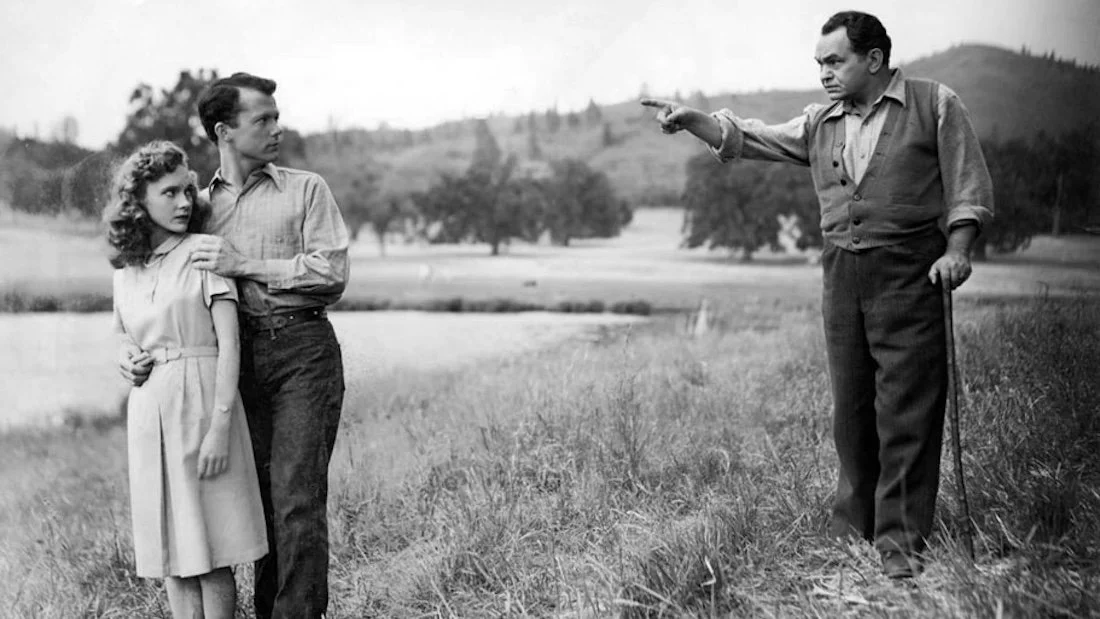
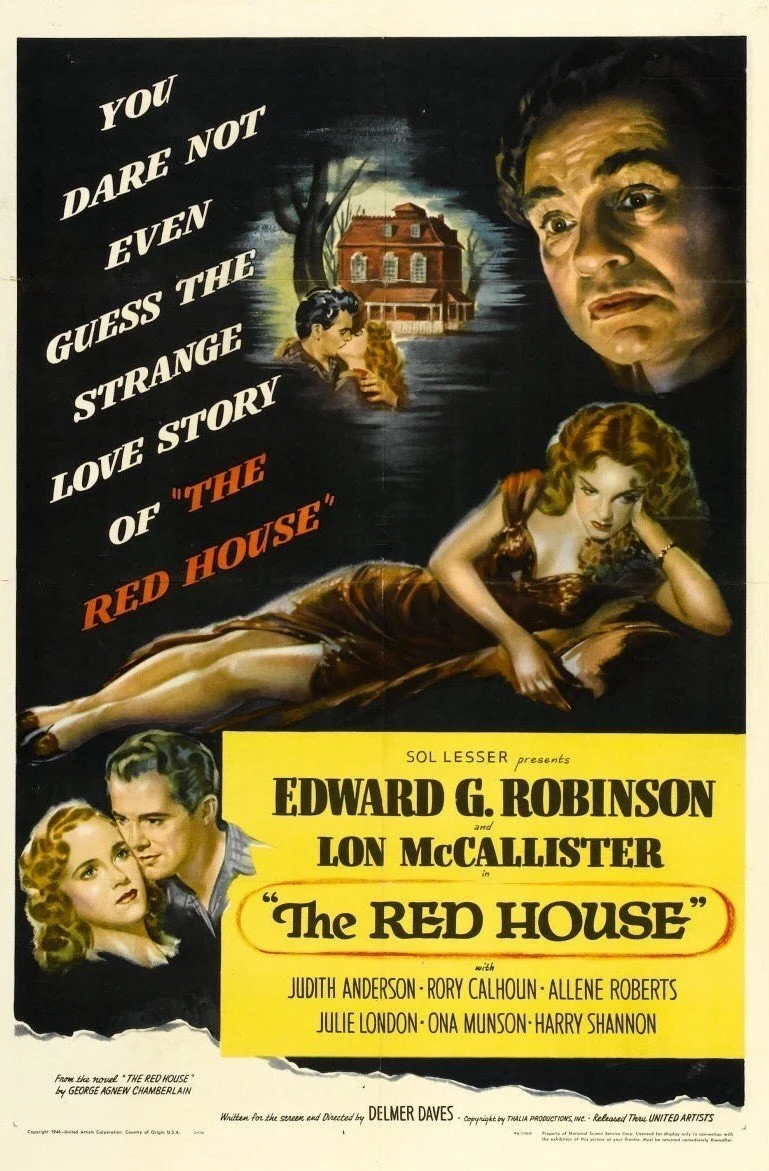
Pre-1950s horror movies just hit differently. They’re far less reliant on jump scares, and even when they do have them, they’re scarce and incredibly effective (see: the bus scare in 1942’s CAT PEOPLE). Films such as THE OLD DARK HOUSE and DRACULA lean into evoking an unsettling, bone-chilling mood that insidiously crawls up your backbone. It’s not about jolting you awake. It’s about instilling paranoia and fear into your bones. You can toss THE RED HOUSE into that ring, as well. Director Delmer Daves and co-writer Albert Maltz adapted the 1945 novel of the same name by George Agnew Chamberlain into a simmering psychological drama about jealousy, lies, and inevitable retribution. The past never stays dead, really. It waits for its moment and then pounces.
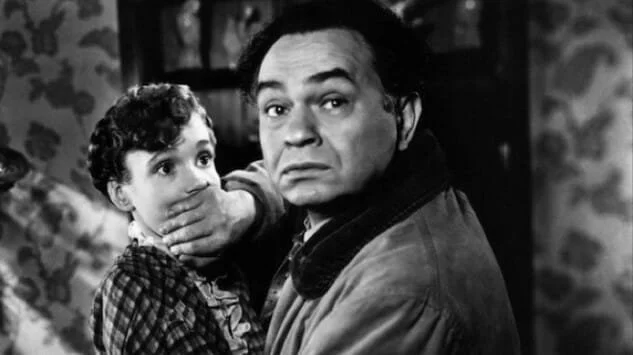
In her first big picture, Allene Roberts plays Meg Morgan, a quiet, mousy farm girl who catches the eye of a local boy named Nath Storm (Lon McCallister). On a secluded farm, Meg lives with her adoptive parents, Pete (Edward G. Robinson) and Ellen (Judith Anderson), and by all accounts, life couldn’t be better. But beneath the idyllic exterior, Pete and Ellen harbor a dark, deadly secret inside a red house located in the surrounding woods. When Nath looks for work, Meg suggests to Pete that he hire him to work around the property. Pete obliges, and he becomes instantly infatuated with the young teen. After work late one evening, Nath mentions that he'd better be getting back home and says he’ll take a shortcut through the woods, much to Pete’s agitation. Pete sternly warns him to stay out of those gnarly and overgrown paths. Naturally, Nath ignores his warnings and ventures into the darkness–and quickly regrets it. He hears moans echoing along the tree trunks and ultimately retreats and spends the night in the Morgans’ barn.
This simple setup stages everything that comes soon after. Daves lets the story burn slowly, like a row of taper candles on a silver candelabra. There’s an intense focus on character, allowing the actors, particularly Robinson and Anderson, dig their teeth into the material. As intrigue around the mysterious red house grows, the character dynamics become more fractured and difficult to tame. Roberts’ performance makes a considerable shift as things grow increasingly dire for Meg and Nath, eventually leaving everything she has on the table. THE RED HOUSE makes it incredibly easy for you to care about and root for the young kids. When they finally make it out to the red house, looming sad and abandoned, there’s a shocking eeriness that soaks every inch of the screen.
Cinematographer Bert Glennon, who worked on over 100 films—including 1953’s HOUSE OF WAX—expertly transmits an inescapable impending doom when the story requires it. He playfully tangoes between light and shadow, offers unique static shots and angles, and invites the audience into the world Daves has created. Nighttime scenes are especially haunting, with the audience given a front-row seat to dangerous madness lurking behind every stump and around every bend in the trees. The visual style pairs well with Pete’s collapsing mental state. He falls further away from sanity, while the style and look seem exposed for the viewer to revel in.
THE RED HOUSE works best with blackout curtains drawn and no other light sources other than the sharp crackle of a TV set. This little-talked-about film fits snuggly next to other standouts of the era, including THE SEVENTH VICTIM, GASLIGHT, THE SPIRAL STAIRCASE, and THE DARK MIRROR, and finally deserves its roses after all these years. Delmer Daves masterfully pieces together the story with an ambitious and torturous spirit that brings human desperation to the surface. The alarming upheaval of rural utopia and the shedding of tradition shatter the American dream. The sins of one generation contaminate the next, and the cycle forever repeats.
80 years later, THE RED HOUSE feels primed for a deep-dive 4K release via the fine folks over at The Criterion Collection. Start to finish, the horror/mystery captures the breathtaking beauty and tragedy of 1940s storytelling. The performances, the camera work, the script, and Delmer Daves’ well-crafted narrative all conspire together to erect a film that doesn’t get nearly enough credit for what it achieved. It was only his fourth feature film that he directed and proved, beyond a shadow of a doubt, his strengths behind the camera. He would go on to work on such films as 3:10 TO YUMA and AN AFFAIR TO REMEMBER, among a slew of others. It was evident in those very early days that Delmer Daves was and is an important voice in cinema.
