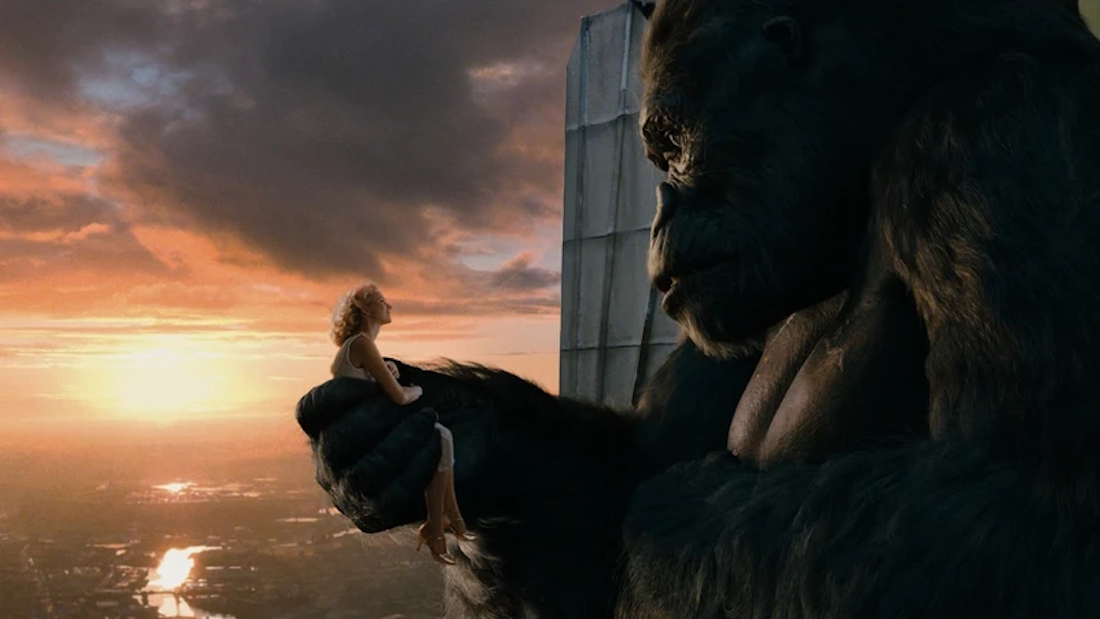

KING KONG (2005)
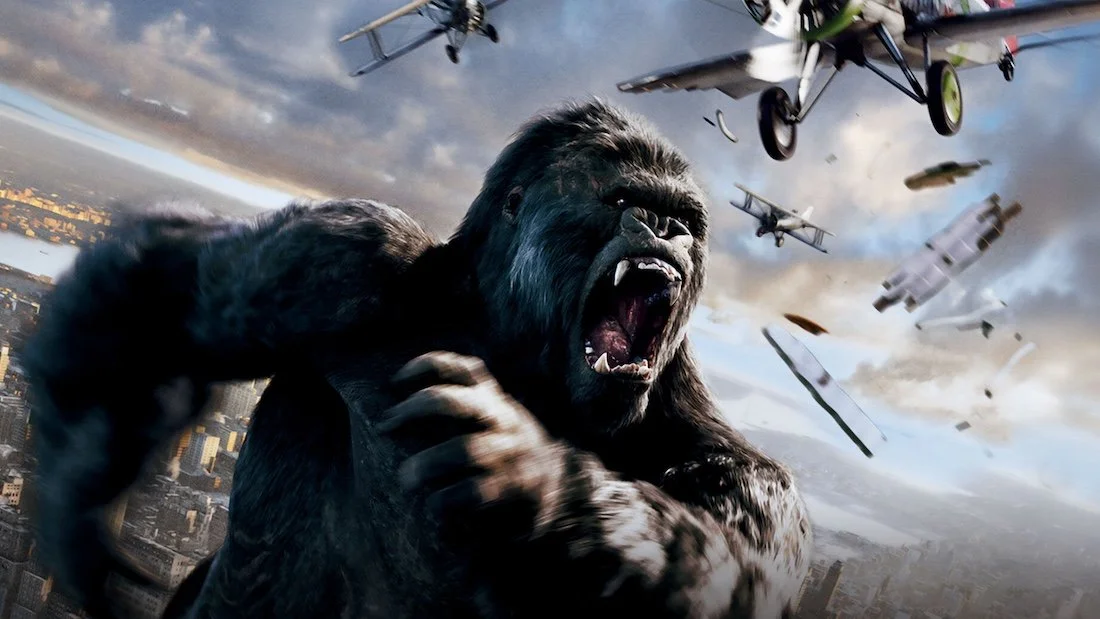
Peter Jackson’s OTHER Return Of The King
In 2005, Peter Jackson returned to the box office with a new cinematic spectacle given carte blanche after successfully making a trilogy of epic and highly regarded films out of Tolkien’s The Lord of the Rings. Jackson’s take on Middle Earth was so widely regarded by the industry that it was bestowed a best picture win for the trilogy capper, THE RETURN OF THE KING. To say that people were eagerly anticipating his follow up is not hyperbole. For his return he chose a beast that hadn’t been seen properly since 1976’s KING KONG (“properly” means it excludes that unfortunate 1986 follow up, KING KONG LIVES).
Jackson’s film is a more faithful remake of the Merrian Cooper-directed, Fay Wray-starring 1933 KING KONG—a far wiser choice than making a modern adaptation of the material, as the 1976 movie attempted. It is one of the many wise decisions Jackson makes in his quest to return the massive ape to the silver screen. The reasoning of oil being behind the 1976 picture never really moved the story forward with the same sense of purpose. Like the original 1933 KING KONG, the film follows a movie crew to a deserted island in search of untold of beasts, which doesn’t make the character of Kong himself seem like an afterthought of a character. Having him be a secondary goal to a bunch of oil men would see the value in never made sense since their only interest ever seems to be destroying the natural beauty of the world in pursuit of money. The characters in Jackson’s iteration all seem much more sincere in their approach, more concerned with showing the world something to be awed by rather than a second-place trophy in search of their real goal (more oil).
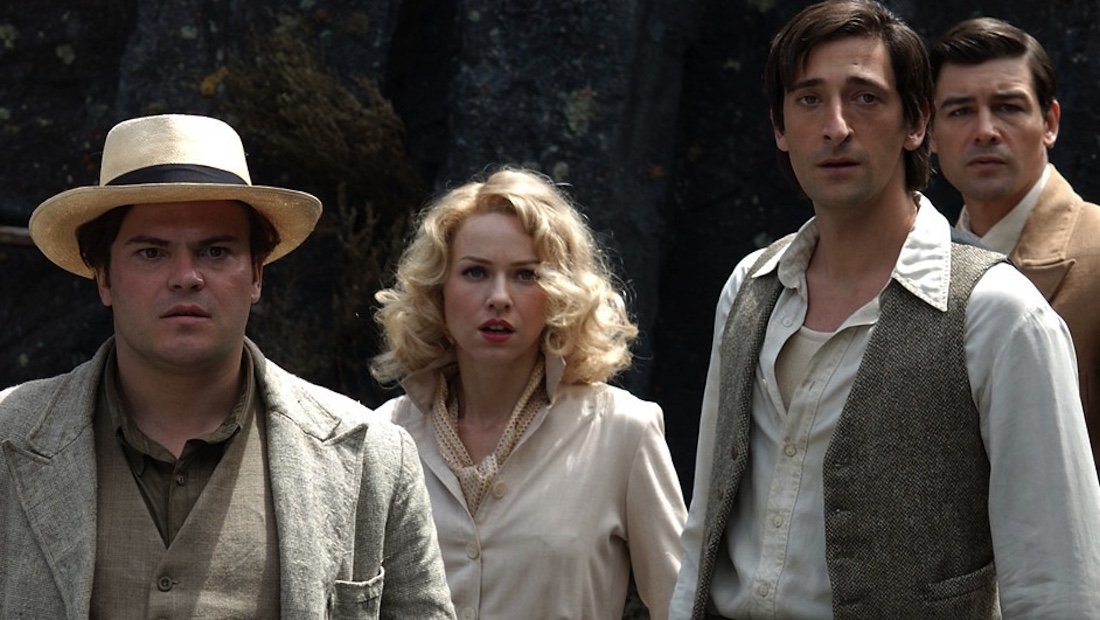
The cast of 2005’s KING KONG is stacked with great performers who all serve a greater purpose in story and themes. The movie opens with the introduction of Naomi Watts’ Anne Darrow, a likable hardscrabble Vaudevillian working with an equally hardscrabble troupe. Next on the call sheet is Jack Black, playing ambitious and morally dubious filmmaker Carl Denham. Then we encounter Adrien Brody, playing playwright Jack Driscoll, whose heart belongs to the theatre but who makes his daily bread writing piecemeal for the moving picture shows. We are also introduced to Colin Hanks’ Preston, a fellow filmmaker working under Denham’s duplicitous tutelage. Thomas Kretschman does excellent work as Captain Englehorn, the equally shady captain of the steamer that takes the film crew on the voyage to Skull Island. Peter Jackson late career regular Andy Serkis is along for the ride as the ship’s chef Lumpy. Jamie Bell features as stowaway-turned-shipmate Jimmy, tutored in the seafarer’s life by Hayes, played excellently by Evan Sharpe. And lastly, Kyle Chandler does excellent work as a charming but cowardly actor meant to be the star of Carl’s picture, Bruce Baxter.
Everything about Jackson’s KING KONG is meant to feel like a massive undertaking. Even just the locations, most of which were shot in New Zealand—including the New York scenes which, while filmed in an artificial version of the great city, still feel authentic and lived in. The eye is easily fooled by what the screen shows it, which is the great magic of filmmaking, and Jackson is a master of the craft. All the creature work is as visually astounding as one would expect from the WETA team. You believe that the crew, as they search for Anne after she is offered to the Kong god as a type of sacrifice, are truly there, in this lost land of legend. The dinosaurs and the other prehistoric beasts that stalk the crew on the mysterious island feel real to the eye. The detail in the creatures is rendered impeccably, never feeling dodgy or poorly lit to hide their seams as some of today’s big budget efforts often feel. Simply put—it’s a visually stunning affair.
The film itself is set during the midst of the Great Depression of the 1930s, and every character in the film, while generally proficient at their stations in life, are also down on their luck. Darrow is left without a theatre in which to work, Denham is considered washed up by the industry, Driscoll is a failure at his dream as a playwright. Even the captain of the ship must take a side hustle in capturing exotic animals just to scrape by. Jackson does an excellent job throughout the film of showing the desperation of each of the characters ensuring that the audience is aware of the stakes.
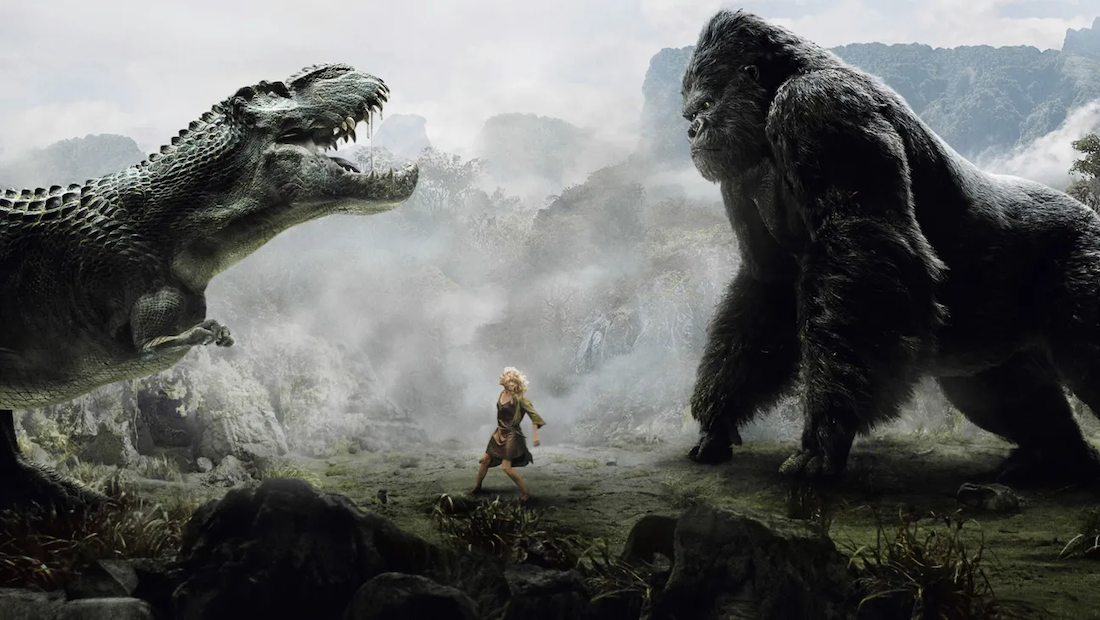
From the wonderfully rendered New York City scenescapes, Jackson transport audiences to the equally impressive habitat of Kong’s Skull Island. It’s one of the three distinct acts that shepherd the picture, through its three hour and change run time. Jackson wisely saves most of the action of the film for Skull Island. The audience witnesses a terrifying shipwreck that allows all the actors moments of heroism as well as showing the awe-inspiring menace of the island. There are also dazzling set pieces including Kong’s battle with a trio of Tyrannosaurs through a labyrinth of vines as the giant beast both attempts to fell the creatures and keep his prize (Darrow) from perishing. The effects crew, DP Andrew Lesnie, and Jackson shoot the sequence masterfully. There are too many other sequences on the island to mention, but they are all visually pleasing.
Of course, this is a story that everyone knows how it ends before the film starts. But that doesn’t mean the ending lacks any stakes or emotional payoff. You feel every bit of Kong’s defeat, whether it’s Kong or Darrow; Jackson shows us all the pain money can buy written on both their faces and it stings. It’s a filmmaker at the height of his powers, not showing off but showing out for the Eighth Wonder of the filmmaking world. Even with the distance from which Denham utters the film’s final line, you see the pain on his face. Even if his pain is tempered by less than altruistic means it’s still fresh as the open wounds on the felled beast’s body.
It can be argued by many kaiju aficionados which beast you prefer, or even which version of their stories is the best. But I think Jackson made a masterpiece with his 2005 retelling of KING KONG, providing a sumptuous visual feast that’s as epic an undertaking cinematically as it is emotionally.