

MOTHER TRUCKIN’ MAY: THE ICE ROAD (2021)
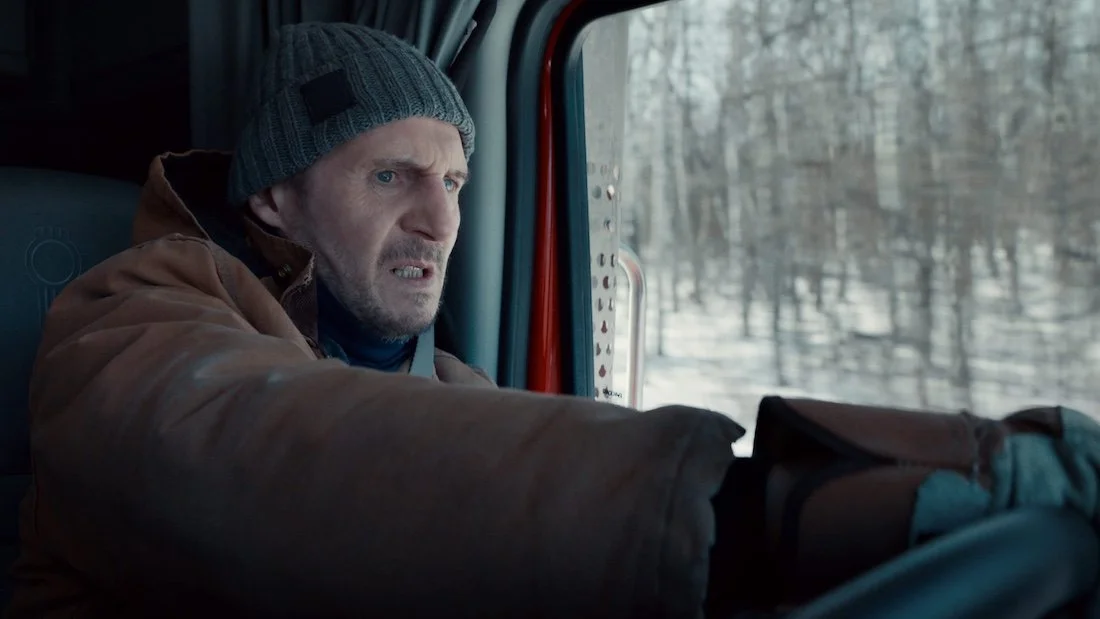
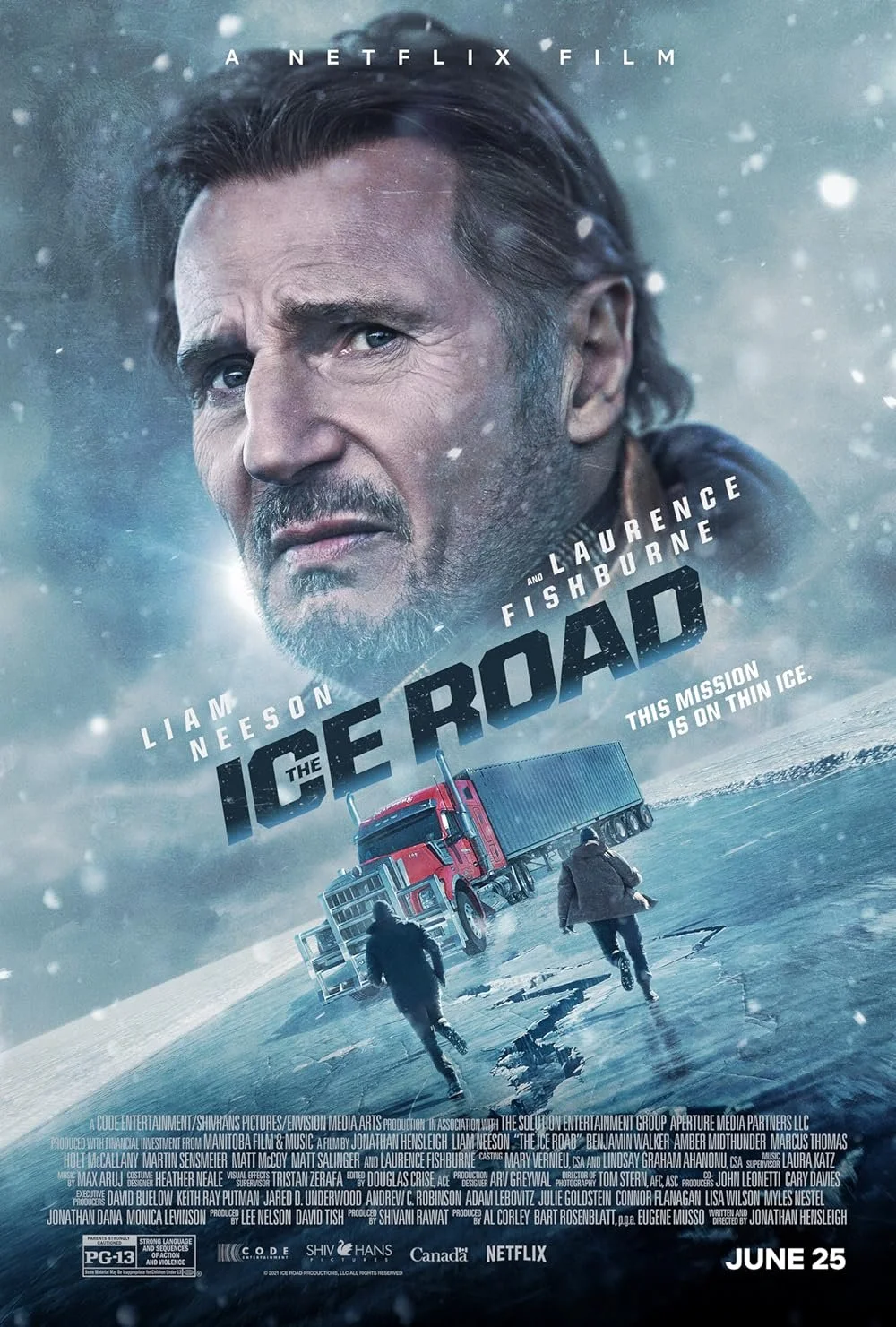
The year is 2021 and although Liam Neeson’s ass-kicking schtick had worn off somewhat with audiences, that did not mean he wasn’t still a capable actor. One who could star in a movie with a seemingly unremarkable premise and lend it an air of easy gravitas. This is my look at the highs and lows of Johnathan Hensleigh’s THE ICE ROAD.
Hensleigh wisely strips Neeson’s character of his usual stoic ass-kicking octogenarian archetype, that was popularized by the likes of Lee Marvin and Charles Bronson of decades past. His character in THE ICE ROAD arrives in the film playing Mike McCann, a trucker who works for an outfit along with his wounded veteran brother he affectionately refers to as Gurty, played by Marcus Thomas. McCann has run out of road with the unnamed trucking outfit the siblings work for after he assaults a coworker in defence of his brother, which establishes that although McCann has little in common with the grandfatherly ass-kickers, Neeson has made a late career out of playing, he still has some fight in him.
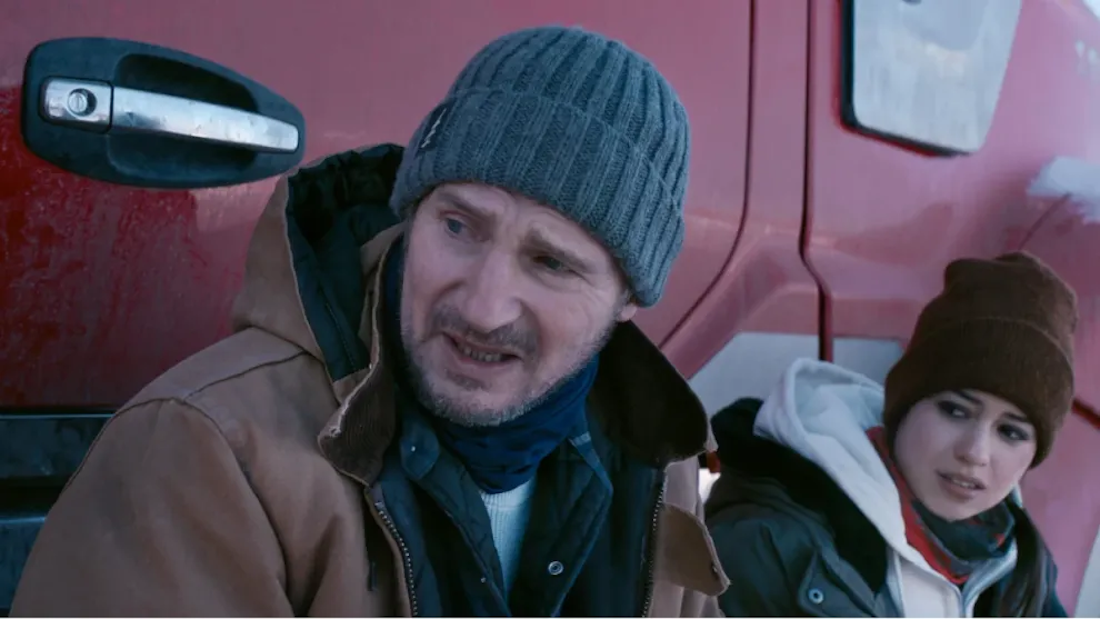
The titular road in Hensleigh’s film winds its way through the winter lands along the frozen lakes and rivers through northern Manitoba. Usually, the roads are used to take food and other supplies to the indigenous reserves that populate the harsh northern Manitoba climes. Of course, no one would pay a nickel to watch a movie about food and supply deliveries to the often-brutal wilds of the northernmost points of The Keystone province. Obviously, such trips have a real-world importance, but they are hardly inherently cinematic, or terribly dangerous despite what shows like Ice Road Truckers would have you believe. The long trips are not without peril but that show highly dramatizes them to keep an audience’s attention.
Hensleigh wisely bakes stakes into the film beyond just routine food, fuel, and supply deliveries. After Neeson and Thomas’ characters are introduced, the audience is shown an explosion at a mine due to excess methane. Here come the stakes: the miners trapped below have 30 hours to be rescued, as the movie informs the viewer no one has lived more than that duration under the inhospitable permafrost. It’s this race against the clock that fuels the rest of the film.
The explosion is the film’s inciting incident. It leads to the introduction of the rest of the cast. THE ICE ROAD’s second-most well-known cast member is Laurence Fishburne who, like Neeson, helps lend natural gravitas to the film as he plays veteran ice road trucker Jim Goldenrod. In an inspired bit of casting, we also meet Amber Midthunder’s Tantoo, who is equal to the task of going head-to-head with the pair of acting heavyweights. Her brother is one of the miners for the fictional Katyak mine trapped below the unforgiving permafrost.
For a movie like THE ICE ROAD, the temptation to overcomplicate matters is too great. Instead of being satisfied with the threat of death for all the miners due to asphyxiation from oxygen deprivation underground, the film adds another layer to the mayhem. Revealing that the initially unassuming Katyak company actuary Varnay (Benjamin Walker) is not what he seems. The mine is also given another human face in the form of Sickle (Matt McCoy), the general manager of the mine, continuing McCoy’s late career streak of playing characters you doubt ever took an honest breath in their lives. It was a directive he gave to shut off the methane sensors which caused the explosion trapping the miners below—damn the safety violations, because aren’t safety measures just the worst?
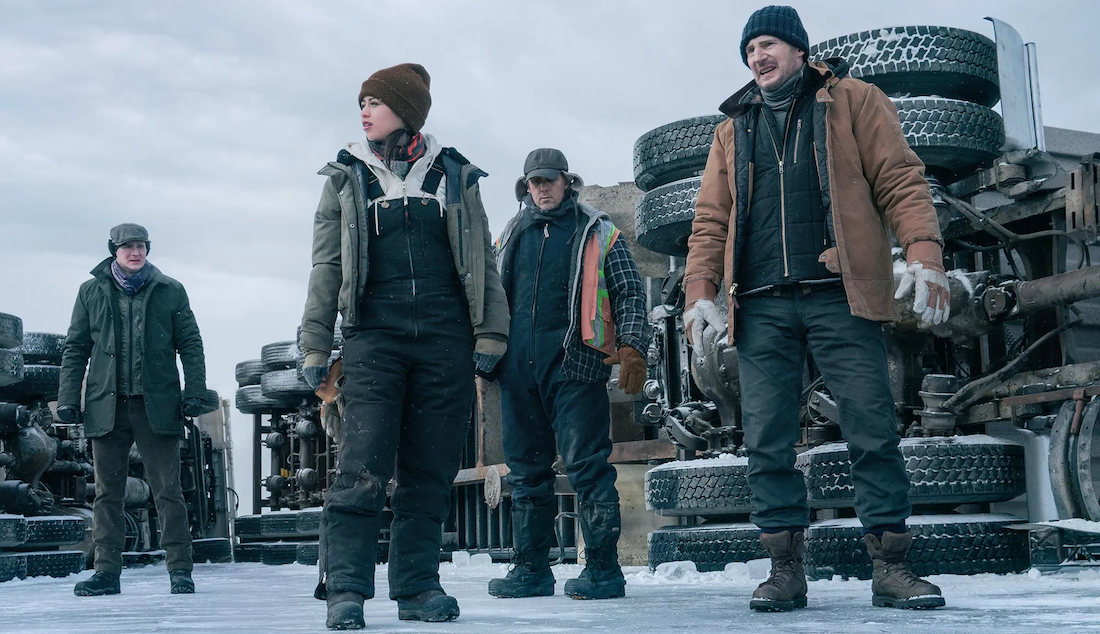
This is the main problem with THE ICE ROAD: The preposterous position that a mining company would purposely endanger its employees for no logical reason. It tries to lend the plot credence, about how some of the men underground purposely turned off the methane censors for a pittance. While trying not to sound too much like a shill for the idea of the nobility of huge corporations, this contrivance honestly almost takes you out of the picture.
My favourite part of Hensleigh’s film is the climactic bridge crossing, which is crosscut with a fight between Varnay and McCann as they tussle in the cab of an abandoned rig. While Walker is effective at conveying menace, the film does its best to put asunder any suspension of disbelief the viewer has, by giving him seemingly nine lives, with him nearly dying multiple times. Thankfully Hensleigh shoots the action capably, but it would have benefitted the movie if perhaps the two moments had not been intercut. The overstuffing of the action does feel in keeping with the film’s overcrowding MO. The tension of the bridge collapsing as they drive a load over it—I can only assume purposely harkening back to films like SORCERER—should have been enough on its own. The moment still feels triumphant, but just barely.
Another of the film’s bright spots is its soundtrack. Hensleigh and his music supervisor Maximilian Eberle assemble tunes—like “All I Do Is Drive” by Jason Isbell—that, while possibly cliché, feel like songs truckers would listen to. It’s a nice touch that lends credibility to the proceedings.
While an imperfect film, THE ICE ROAD gets it right more often than not. The cast is exceptional, including the trapped miners, and filming on location in northern Manitoba (although with heavy CGI in some of the sequences) helps ground the viewer in the world. It could have been a better movie if it had kept things from being too convoluted, but it remains a satisfying enough action thriller.