
GODZILLA VS DESTOROYAH (1995)
"The End." These two words adorned the silver screen for decades. Signaling the end of a tale. However, as time passed, their weight diminished, often used sparingly in remakes or films opting for a “retro” aesthetic. The film industry, naturally, perhaps driven by profit rather than narrative cohesion and the prospect of sequels, raised the question—"Who would want things to end when infinite possibilities exist?"
Maybe that's what makes a film like GODZILLA VS DESTOROYAH so special. It takes the concept of "The End" seriously. By looking back to the past, staring death straight in the face, and creating an indelible kaiju motion picture that ranks among the series' best. While also offering a poignant farewell to the Heisei Era of Godzilla films.
A year after the events of GODZILLA VS SPACEGODZILLA, a sudden natural uranium explosion at sea devastates Baas Island, where Godzilla and Godzilla Junior called home. An unfortunate secondary side effect of the explosion turns Godzilla into a walking nuclear reactor, risking global annihilation.
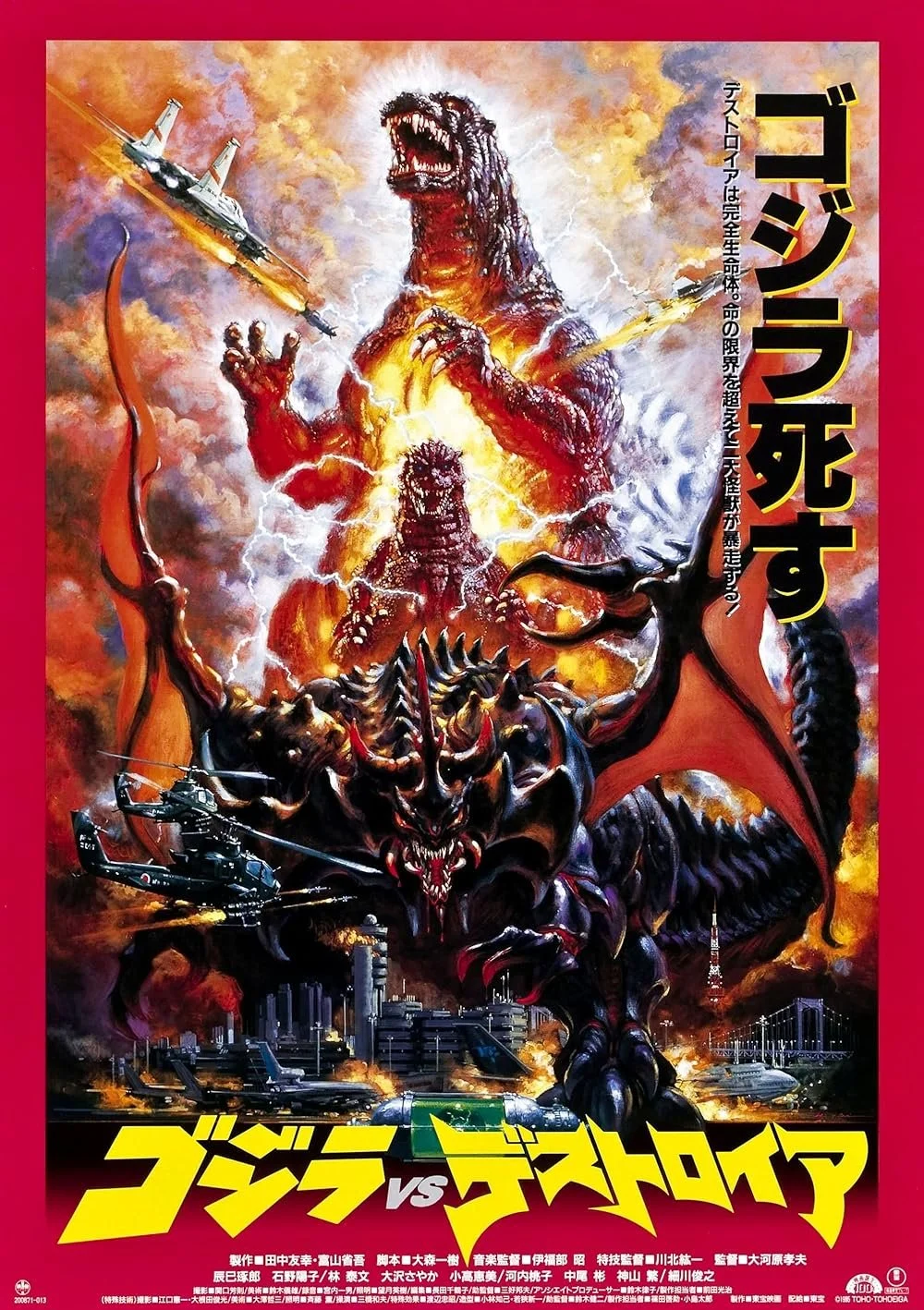
Meanwhile, a Nobel Prize-winning physicist, Dr. Ijuin (Takuro Tatsumi), whose work was inspired by the Oxygen Destroyer that killed the original Godzilla, investigates soil samples unearthed from that battle. To his surprise, Ijuin discovers Precambrian mini crustacean-like organisms, mutated from their contact with micro-oxygen. A fact that becomes all too obvious when they are exposed to air and begin growing in size. Until they too threaten the very safety of the planet.
As much as that plot appears relatively dense, it largely flies by. The script, by returning writer Kazuki Ōmori, weaves everything together in impressive fashion. Tying in the grandchildren of Dr. Yamane, Dr. Ijuin, the Japan Self-Defense Force, and G Force operative Saegusa (Heisei regular Megumi Odaka). Going even further, the cast and crew are loaded with ties to the best of Godzilla's history.
Despite its complex plot, Ōmori's screenplay seamlessly intertwines characters, including the grandchildren of Dr. Yamane and Saegusa, enriching the narrative with ties to Godzilla's history. Kenpachiro Satsuma dons the monster suit again, playing Godzilla for the eighth time. Momoko Kôchi, who co-starred in the original 1954 film as Emiko Yamane, also returns. As does composer Akira Ifukube whose iconic themes were present from the beginning.
It really helps that the story feels like a proper wrap-up to the series. Grand in scale and scope, rather than some calculatedly forced stab at nostalgia. Something that tends to be the case now with most "legacy sequels."
A sense of dread permeates GODZILLA VS DESTOROYAH, balancing moments of levity with a pervasive heaviness. Focusing on an urgent narrative where the fate of the world hangs in the balance, encapsulated in tension-filled set pieces— from Godzilla's initial Hong Kong rampage to ALIENS-esque battles against the mini Destoroyahs (complete with motion sensors) and the final massive kaiju brawl.
Director Takao Okawara mixes the hokey with the creepy in a horror and sci-fi capacity. It also carries a heady weight in examining the effects science and technology can have on the future. Where ideas thought to be good in the past have a way of damaging the future. That's a cautionary POV the series often embraces. How forces of nature and the unknown are best left well alone, lest they destroy our very way of life. Of course, since this is a Godzilla movie, the last bit isn't just allegorical, but eventually manifests in the form of the film's big bad.
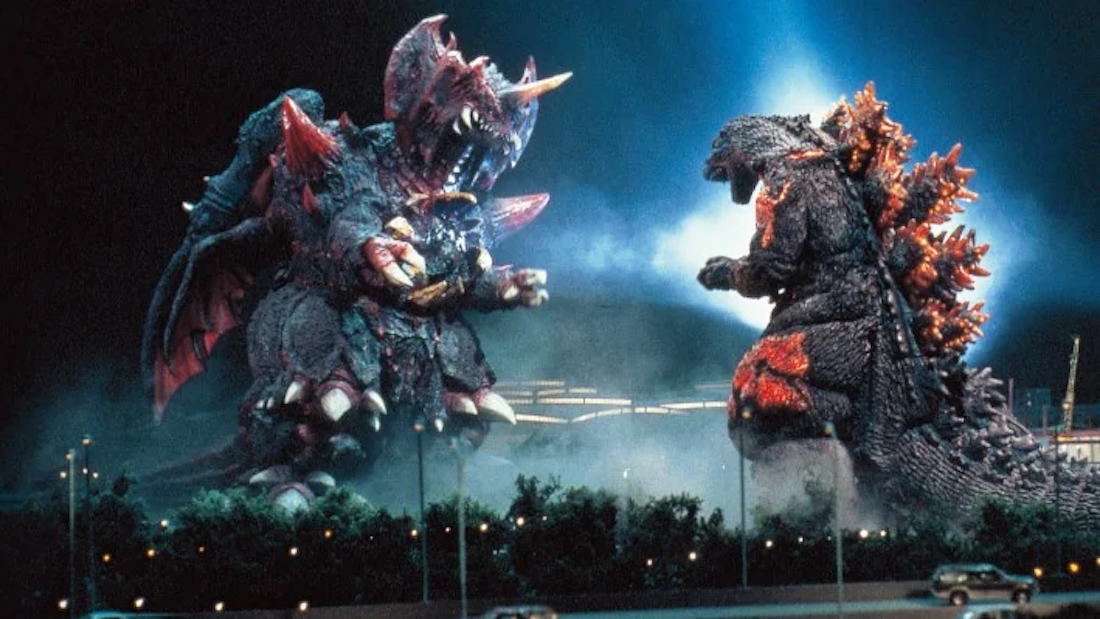
For fans seeking ample Godzilla action, GDOZILLA VS DESTOROYAH delivers, ranking fourth for Godzilla’s screentime. Where the earlier battles follow formula, the final showdown is gloriously chaotic. Destoroyah absolutely decimates Junior. An extremely visceral melee Destoroyah and Godzilla ensues, leaving both monsters bleeding and damaged. A devastating fear at home with the film's more gnarly attitude towards the menacing kaiju.
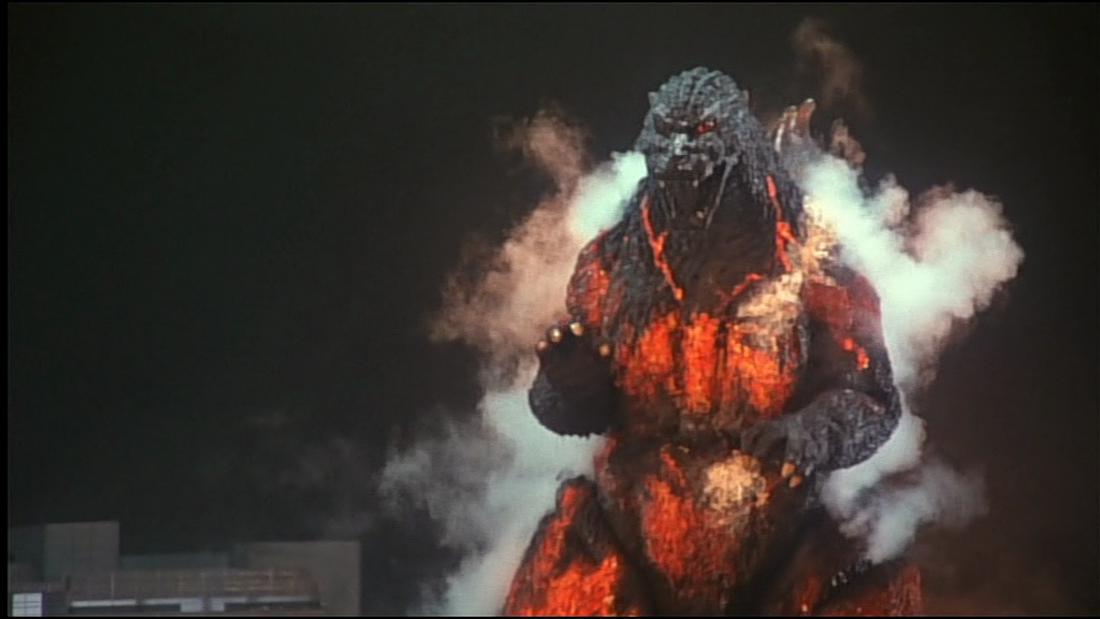
The "burning" Godzilla look is menacing from the moment he appears. With glowing red scales and replacing his traditionally blue hues. His body emits smoke (which caused the actor inside the suit to pass out from the carbon dioxide gas) from his pores. Even his famous atomic breath is replaced by a fiery variation. It's distinctive while maintaining an air of cool. When the eventual meltdown occurs, it's done to a horrific effect, with the giant lizard's scales and flesh being peeled off its bones.
With 38 films in the series (33 Japanese, 5 American), there's a lot on offer when it comes to the world of Godzilla. Some people come for the action. Some people like the kaiju designs. There are even people who come specifically for the human interest side of things. In reality, there's no wrong reason to come to a Godzilla movie. Yet among all the films that have come out to bear the name in the last 71 years, there are two that stand tall in putting their own stamp not just on continuity, but putting a stake in the ground and firmly stating "this is The End". GODZILLA VS DESTOROYAH might not be the perfect Godzilla film for everyone, but it certainly cements itself as one of the most important entries, and one to be cherished by all.